
Black Sea Fleet
The Black Sea Fleet is Russia's southern navy, based in Crimea since 1783 and badly damaged by Ukrainian strikes since 2022.
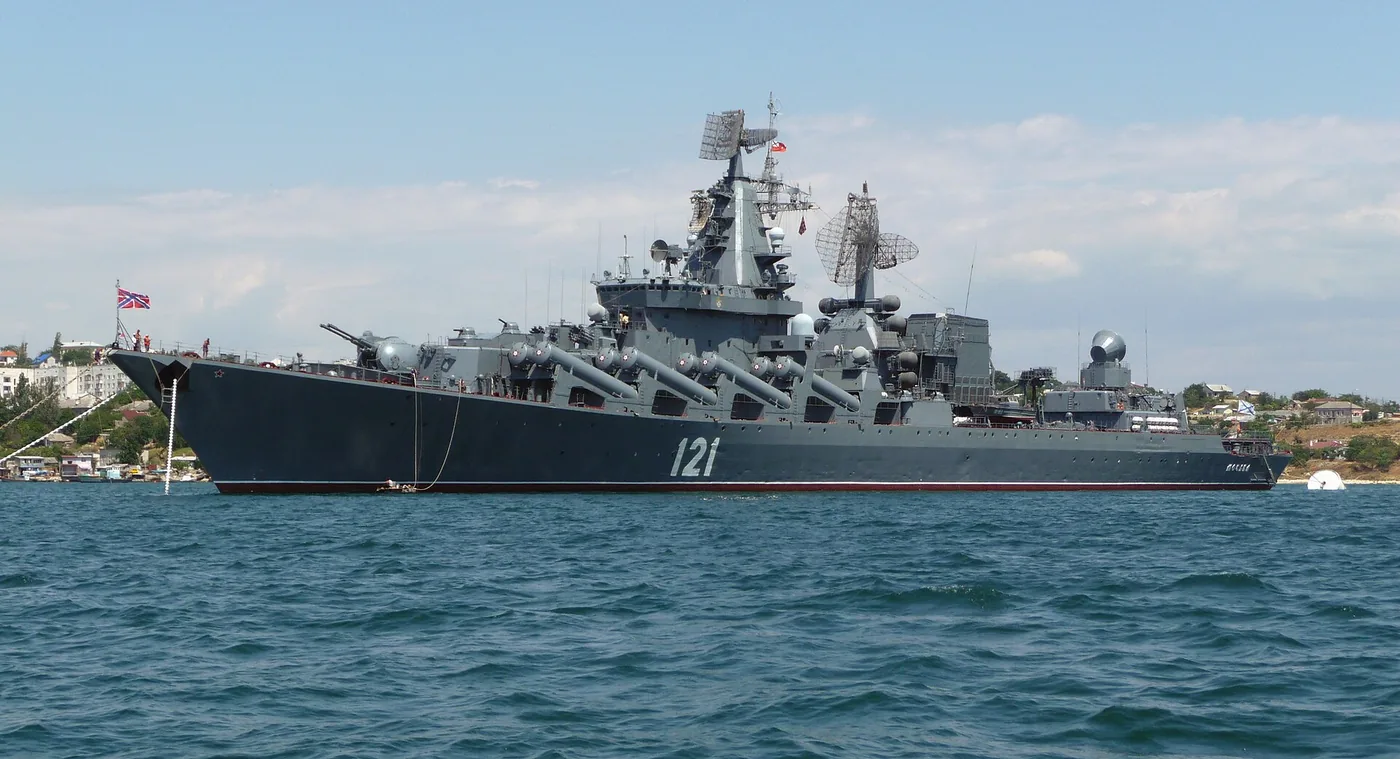
The Black Sea Fleet is Russia's navy in the Black Sea. It was founded in 1783, the same year Catherine the Great annexed Crimea, and has been based at Sevastopol ever since. The fleet exists because Russia needs warm-water access to the world's oceans. Most of Russia's coastline is frozen for much of the year or opens only onto enclosed seas. The Black Sea is different: ships that leave Sevastopol can pass through the Turkish Straits into the Mediterranean and from there to the Atlantic.
Since 2022, Ukraine, a country that began the war with almost no navy, has sunk or damaged roughly a third of the fleet using missiles and explosive drone boats. By 2024, Russia had moved most of its remaining warships out of Sevastopol to Novorossiysk, a port on the Russian mainland about 300 kilometers to the east.
How Russia built the Black Sea Fleet
Prince Grigory Potemkin founded the fleet and its home port on Catherine the Great's orders in 1783. He chose a natural harbor on Crimea's southwestern coast and named the new city Sevastopol. For the next seventy years the fleet grew into Russia's main instrument of power against the Ottoman Empire and in the Mediterranean.
The Crimean War ended that. When British and French warships arrived in 1854, the Russian fleet could not match them. Russian commanders ordered their own ships sunk across the harbor mouth at Sevastopol to keep the allied fleet out. The Treaty of Paris in 1856 went further: it banned Russia from keeping a navy in the Black Sea. Russia worked to undo the restriction for fourteen years and finally renounced it in 1870, after France's defeat in the Franco-Prussian War left no one willing to enforce the ban.
In June 1905, sailors aboard the battleship Potemkin mutinied over rotten meat rations. The mutiny lasted eleven days before the sailors surrendered the ship in Romania, but it became a lasting symbol of the Russian Empire's decline. In 1925, the Soviet director Sergei Eisenstein made the mutiny into a film that became a landmark of world cinema.
In 1918, with German troops occupying Crimea during World War I, Lenin ordered the fleet scuttled at Novorossiysk rather than let it fall into German hands. The Soviets rebuilt it over the following decades.
The Montreux Convention of 1936 gave Turkey control of the straits connecting the Black Sea to the Mediterranean. Turkey can close the straits to warships in wartime. Since Turkey joined NATO in 1952, the fleet's exit to the wider ocean has run through a chokepoint controlled by a Western ally.
How the Black Sea Fleet ended up in Ukraine
When the Soviet Union broke up in 1991, the fleet and most of its bases were on the territory of newly independent Ukraine. Both countries claimed it, and settling the dispute took six years of negotiation and occasional confrontations.
A 1997 treaty divided the fleet. Russia got the majority of the ships and a lease on Sevastopol's main naval facilities until 2017, paying Ukraine about $98 million a year. Ukraine got a smaller share of the ships and sovereignty over the port.
In April 2010, Ukraine's president Viktor Yanukovych extended the Russian lease to 2042 in exchange for a 30 percent discount on Russian natural gas. The deal was so controversial that opposition members threw eggs and smoke bombs on the floor of Ukraine's parliament during the ratification vote. In 2021, Ukrainian prosecutors charged Yanukovych with treason for signing it, arguing that the agreement gave Russia the military presence it later used to seize Crimea.
In February 2014, after Yanukovych fled a revolution, unmarked soldiers seized key buildings across Crimea. Many of them were from forces already stationed at Sevastopol under the lease. Russia annexed the peninsula within a month, and the question of who controlled the base was settled by force.
What happened to Russia's Black Sea Fleet after 2022
When Russia invaded Ukraine on February 24, 2022, Ukraine had almost no warships. Ukraine scuttled its own flagship, the frigate Hetman Sahaidachny, in the first days of the invasion to prevent its capture. On paper, Russia controlled the Black Sea without opposition.
That changed on April 13, 2022. Two Ukrainian-made Neptune anti-ship missiles struck the Moskva, the fleet's flagship, a cruise missile cruiser with a crew of about 500. The Moskva caught fire, its ammunition exploded, and it sank the next day while under tow. It was the largest warship sunk in combat since the Falklands War in 1982.
Ukraine then attacked the fleet without a navy of its own, using explosive drone boats packed with warheads, long-range missiles, and aerial drones. Ukrainian forces struck warships at anchor in Sevastopol and at sea. In September 2023, Storm Shadow cruise missiles hit the fleet headquarters during a leadership meeting. By late 2023, Ukraine had made the western Black Sea unsafe for any Russian surface vessel.
Russia began moving the fleet east to Novorossiysk. By early 2026, around a third of the fleet's combat ships had been sunk or seriously damaged, including frigates, landing ships, and submarines. After Turkey closed the straits under the Montreux Convention, Russia could not easily replace them.
The most significant result was what Ukraine did with the space it cleared. In August 2023, after Russia pulled out of a UN-brokered grain deal, Ukraine opened its own shipping corridor along the western Black Sea coast, with no navy to protect it. In 2024, civilian vessels made over 9,000 trips through the corridor, carrying more than 74 million tons of cargo. A country with no fleet had pushed Russia's navy from half the Black Sea and reopened its own export routes, using weapons that cost a fraction of the ships they destroyed.