
Cleopatra VII
Cleopatra VII was the last pharaoh of Egypt, a Macedonian Greek ruler who allied with Caesar and Antony to keep her kingdom independent of Rome.
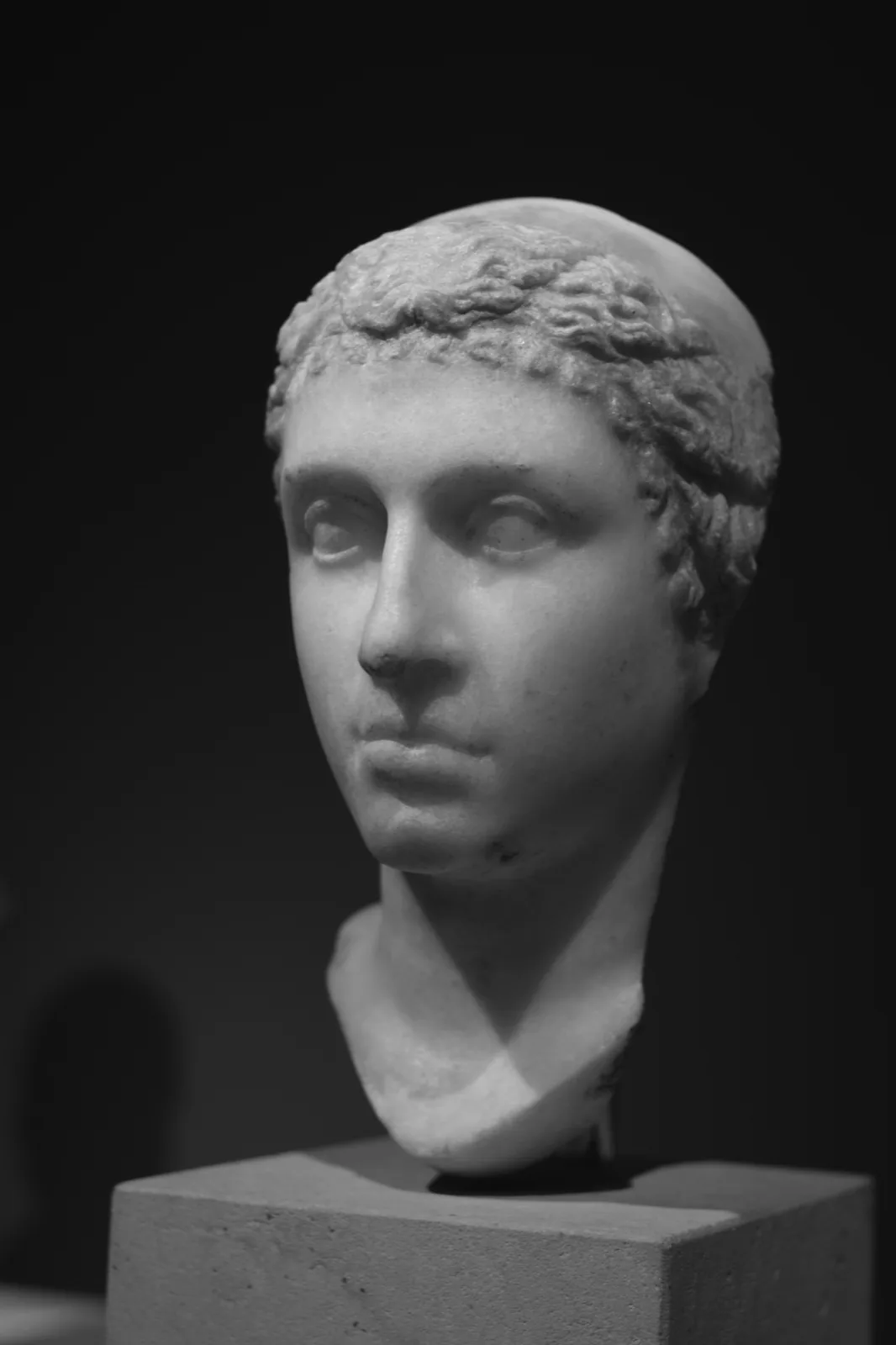
Cleopatra VII was the last pharaoh of Egypt. She ruled for twenty-one years, from 51 to 30 BC. By ancestry she was not Egyptian but Macedonian Greek, a member of the Ptolemaic dynasty that had ruled Egypt for almost three hundred years after Alexander the Great's death. The Greek historian Plutarch wrote that she could speak with Ethiopians, Hebrews, Arabians, Syrians, Medes, and Parthians, rarely needing an interpreter. She was the first Ptolemaic ruler to learn the Egyptian language. For her entire reign she worked to keep Egypt, the richest kingdom left in the Mediterranean, from being absorbed by Rome. She allied first with Julius Caesar and then with Mark Antony, offering Egypt's grain and gold to fund Antony's wars.
How Cleopatra came to power
Cleopatra was born in 69 BC in Alexandria, the capital of Ptolemaic Egypt. Her family descended from Ptolemy I Soter, one of Alexander the Great's generals, who took control of Egypt after Alexander died in 323 BC. The Ptolemies spoke Greek, governed from a Greek city, and married within their own family to keep the bloodline Macedonian. By the time Cleopatra was born, Egypt was the last major Mediterranean kingdom that Rome had not yet absorbed. It was also the wealthiest. Egyptian farms produced more grain than any other Mediterranean state, and its trade routes ran south to the gold and ivory of Africa.
Cleopatra became pharaoh at eighteen, in 51 BC, alongside her younger brother Ptolemy XIII, who was about ten. They were expected to marry and co-rule, as Ptolemaic custom required. Within two years her brother's advisers forced her out of Alexandria.
In 48 BC, Julius Caesar arrived in Egypt pursuing his rival Pompey. Cleopatra needed Caesar's support to get her throne back. According to Plutarch, she had herself smuggled past her brother's guards in a linen sack to reach him. Caesar sided with her. After a short war in Alexandria, her brother drowned in the Nile and Cleopatra was restored to power. She and Caesar had a son, Caesarion, born in 47 BC. She visited Caesar in Rome in 46 BC and was still there when he was assassinated in March 44 BC.
Cleopatra and Mark Antony
After Caesar's death, the Roman world split between Octavian, Caesar's adopted heir, and Mark Antony, who controlled the eastern half. Cleopatra backed Antony. They met at Tarsus in 41 BC, and the alliance quickly became personal. She funded Antony's military campaigns with Egyptian grain and gold. They had three children: twins Alexander Helios and Cleopatra Selene, born in 40 BC, and a son, Ptolemy Philadelphus, born in 36 BC.
Cleopatra's strategy was consistent from Caesar to Antony. Egypt could stay independent only by being the indispensable partner of the most powerful Roman of the moment. She used Egypt's wealth and her own skill as a ruler to buy her kingdom time.
In 34 BC, in a public ceremony in Alexandria, Antony awarded parts of the eastern Roman world to Cleopatra and their children. Octavian used this against them. He framed the coming war not as another Roman civil war but as Rome defending itself against a foreign queen. His propaganda portrayed Antony as bewitched, soft, and no longer truly Roman. The Roman Senate declared war on Cleopatra, not on Antony. The decisive Battle of Actium, fought off the western coast of Greece on September 2, 31 BC, destroyed their fleet. They retreated to Egypt, but their position was finished. Antony killed himself. Cleopatra died shortly after, in August 30 BC, at the age of thirty-nine. Egypt became a Roman province, Octavian became the emperor Augustus, and the Hellenistic age that had begun with Alexander the Great came to an end.
Was Cleopatra Egyptian?
By ancestry, no. The Ptolemies ruled Egypt for nearly three centuries without adopting the Egyptian language. Cleopatra broke with that tradition. She learned Egyptian and presented herself to her subjects as the living goddess Isis. Surviving coins from her reign show a woman with a strong hooked nose, a pointed chin, and curly hair pulled back in a Greek style. Plutarch, writing more than a century after her death, said her beauty was not remarkable in itself, but that her voice and her intelligence were what made her compelling. She was Greek by blood and education, but she governed as an Egyptian pharaoh in ways no Ptolemy before her had.
How did Cleopatra die?
The traditional story says she died from the bite of an asp, a venomous snake smuggled into her rooms in a basket of figs. Many historians doubt it. An Egyptian cobra, the snake usually identified as the asp, can grow to over five feet long and would have been difficult to conceal. Cobra bites are also not reliably fatal, and ancient sources say Cleopatra and two attendants all died quickly.
Plutarch and the Greek geographer Strabo both recorded alternatives: that she carried poison in a hollow hairpin or applied a toxic ointment. The method is uncertain, but the reason is not. Octavian planned to parade her through Rome in his triumphal procession. Cleopatra chose to die rather than be displayed as a captive.
Her son Caesarion, then seventeen, was captured and executed on Octavian's orders. Her three children with Antony were taken to Rome and raised by Antony's former wife, Octavia. Only Cleopatra Selene is known to have survived to adulthood. She married King Juba II of Mauretania.