
Feudalism
Feudalism was the political order of medieval Europe, where kings granted land to lords in exchange for military service and loyalty.
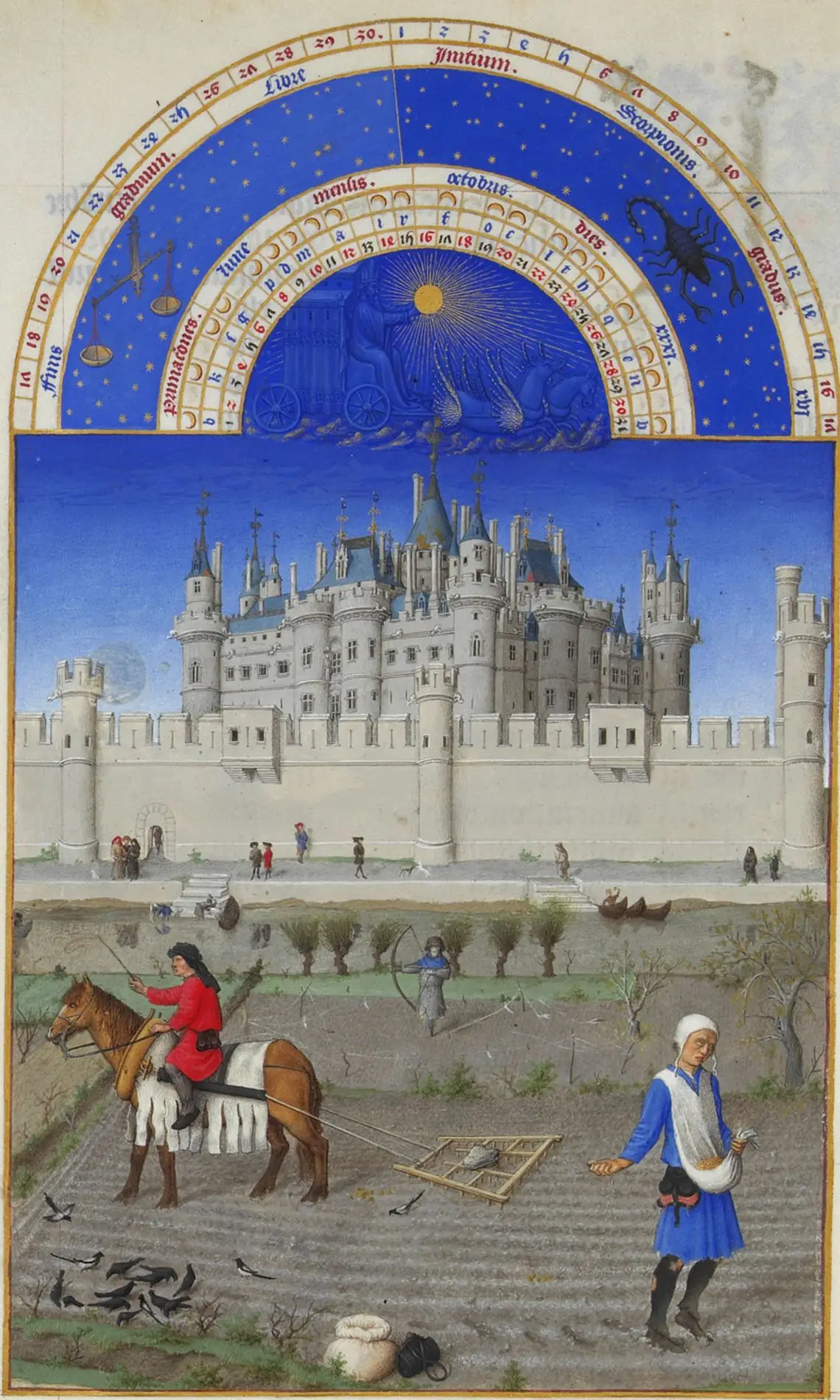
Feudalism is the name historians give to the political and military order that took shape in Europe after central government collapsed in the ninth and tenth centuries. Kings and great lords granted land, called fiefs, to lesser nobles in exchange for loyalty and armed service. Those nobles granted portions of their land to knights on the same terms. At the bottom, serfs farmed the fields and could not leave. The people who lived under this arrangement never used the word "feudalism." It was invented centuries later by lawyers and Enlightenment writers trying to make sense of a complicated past. Some historians now argue the tidy system the word describes never really existed as described. But the basic reality it points to is not seriously disputed: public power in medieval Europe belonged to local lords rather than a central state.
How feudalism grew out of the Carolingian collapse
Charlemagne built the largest empire in Western Europe since Rome and held it together through personal authority and a network of loyal counts. When he died in 814, his son Louis the Pious inherited the empire. When Louis died in 840, his three sons fought over it. The Treaty of Verdun in 843 split the Carolingian realm into three kingdoms, and those kingdoms kept fragmenting.
At the same time, Vikings raided from the north, Magyars attacked from the east, and Saracen pirates struck the Mediterranean coast. Central governments could not protect their people. The people who could protect them were local lords with castles, armed men, and the food to feed them. Power shifted to whoever held the nearest stronghold.
The arrangement that emerged worked through personal oaths. A lord granted a vassal a fief: a piece of land, along with the peasants and income attached to it. In return, the vassal knelt before the lord, placed his hands between the lord's hands, and swore homage and fealty. He promised loyalty and military service, typically about forty days of fighting per year. The vassal rode to war on his own horse, in his own armor, and paid for it all himself. The lord promised protection. This arrangement repeated down the ranks. A king's great vassals had their own vassals, who had vassals below them. Each level owed service upward and protection downward.
How serfs lived under the feudal order
At the bottom of this structure were the serfs. Serfdom was not the same as slavery. Serfs were not owned as property, but they were bound to the land and could not leave the manor without their lord's permission. They worked the lord's fields for part of the week and farmed their own strips of land for the rest. In exchange, the lord owed them protection and a basic guarantee of food.
The economic system underneath the military arrangement is sometimes called manorialism. A manor was largely self-sufficient: it grew its own grain, raised its own livestock, and had its own court where the lord settled disputes. Money barely circulated in the early medieval countryside. A knight's forty days of military service was supported by the year-round labor of the peasants on his land.
How feudalism declined
Feudalism did not end on a single date. It eroded over several centuries as kings found new ways to reclaim the power that local lords held.
One factor was money. As trade revived from the eleventh century onward, a money economy spread across Europe. Kings could collect taxes in coin and use the money to hire professional soldiers. Paid armies were more reliable than vassals who owed only forty days of service and sometimes refused to fight beyond their borders. In England, the practice of paying a tax called scutage, or "shield money," instead of serving in person became common in the twelfth century.
Towns also weakened the feudal order. Growing cities answered to the king or won self-governing charters, not to the local lord. Townspeople were free, and in many parts of Europe a serf who escaped to a town and lived there for a year and a day was considered legally free.
The Black Death, which killed roughly a third of Europe's population between 1347 and 1351, struck the hardest blow. With so many dead, surviving peasants could demand higher wages or simply leave for a lord who would pay more. In England, Parliament tried to freeze wages at pre-plague levels with the Statute of Labourers in 1351, but the law was widely ignored. The old bond tying serfs to the land was breaking.
Gunpowder finished the military side of feudalism. A cannon could bring down the stone castle that had been a lord's source of power for centuries. Kings with artillery could destroy any baron who defied them.
In France, the National Assembly formally abolished feudal privileges on the night of August 4, 1789, during the French Revolution. In Russia, serfdom lasted until Tsar Alexander II abolished it in 1861. But in most of Western Europe, the practical reality of feudalism had been fading since the fourteenth century.
Was feudalism a real system?
Many historians today question whether "feudalism" accurately describes how medieval Europe worked. In 1974, the historian Elizabeth Brown published an influential article called "The Tyranny of a Construct," arguing that the term distorted more than it explained. In 1994, Susan Reynolds went further in her book Fiefs and Vassals, arguing that the neat pyramid of lords and vassals that textbooks describe barely existed in the way historians had claimed. The relationships between lords and their followers varied enormously by region and century, and medieval people did not think of themselves as living in a system.
The criticism has not made the word disappear. Historians still use it, usually with caveats, because it points to something real. After the fall of the Carolingian empire, public power across much of Europe did pass into private hands. Local lords held justice, raised armies, and collected taxes in place of a central state. The word "feudal" remains useful as shorthand for that reality, as long as it is understood as a rough description of how power worked, not a precise blueprint of a uniform system.