
Holodomor
The Holodomor was a man-made famine in Soviet Ukraine in 1932-1933 that killed an estimated 3.9 million people.
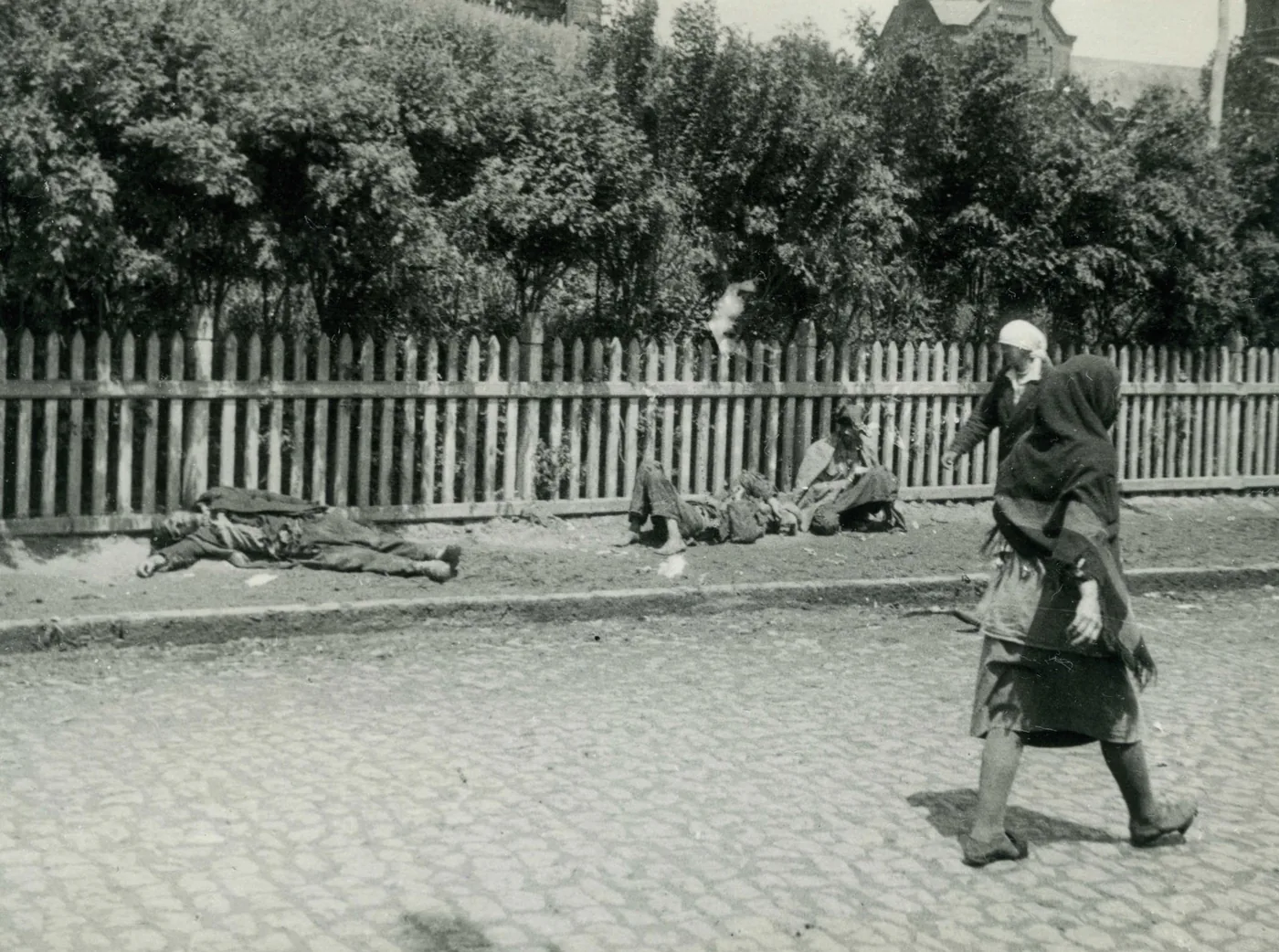
The Holodomor was a man-made famine in Soviet Ukraine in 1932 and 1933 that killed an estimated 3.9 million people. The name comes from the Ukrainian words "holod" (hunger) and "mor" (extermination), meaning killing by starvation. The famine happened in the most fertile farmland in the Soviet Union, while the Soviet government kept selling grain overseas for foreign currency. It did not come from drought or crop failure. It was the result of Stalin's decision to seize peasant farmland for state-run collective farms and to punish anyone who resisted. The great majority of the deaths occurred in 1933.
How Stalin's government created the famine
In 1929, Stalin launched a campaign to collectivize Soviet agriculture. The government ordered peasants to give up their land and livestock and join state-run collective farms. Those who resisted were labeled "kulaks," arrested, deported to the gulag, or killed. Ukraine, the Soviet Union's largest grain-producing region, resisted collectivization more than most.
The Soviet state set grain quotas that the countryside could not meet. When villages fell short, the government sent brigades to seize what remained, taking not just the harvest but seed grain and the food families had stored for themselves. Villages and districts that could not fill their quotas were placed on "blackboards," public blacklists that cut them off from all manufactured goods. Families survived on bark, weeds, and whatever animals they could find. Cannibalism was documented in multiple regions. Some villages lost every resident.
In December 1932, the Soviet government reintroduced an internal passport system. Rural peasants were not given passports, which meant they could not legally travel to the cities to look for food. In January 1933, Stalin signed a secret decree barring starving peasants in Ukraine and the Kuban region from leaving. Ukraine's republic borders were sealed. That same year, the Soviet Union exported about 1.7 million tons of grain abroad.
Ukraine was not the only place affected. Kazakhstan suffered proportionally worse, losing between 38 and 42 percent of its entire Kazakh population. The Kuban and Volga regions in Russia were also badly affected. But late-1932 decrees targeted the Ukrainian countryside most directly. At the same time, the Soviet government arrested and killed Ukrainian intellectuals, clergy, and Communist Party officials in a separate campaign, removing the country's cultural and political leadership alongside its rural population.
How the Soviet Union hid the Holodomor
The Soviet government denied that any famine had occurred for roughly fifty years. It forbade any mention of the event, falsified records, and punished anyone who spoke about it. The 1937 Soviet census, which would have revealed millions of missing people, was suppressed. Several of the senior statisticians who organized the census were arrested and executed.
Western journalists helped conceal the story. Walter Duranty, the New York Times correspondent in Moscow, published an article in March 1933 declaring that Russians were hungry but not starving. He had won a Pulitzer Prize in 1932 for his reporting from the Soviet Union, and his denials carried weight. The Pulitzer Board has repeatedly declined to revoke the award.
Not every journalist went along. Gareth Jones, a Welsh reporter, traveled through Soviet Ukraine in March 1933 and published firsthand accounts of the famine under his own name. The Soviet government revoked his access, and Duranty publicly disputed his reporting. Jones was murdered in Inner Mongolia in 1935, at the age of 29.
Soviet archives were not opened until the late 1980s, under Gorbachev. Only then could Ukrainians begin to count their dead openly.
Was the Holodomor a genocide?
Ukraine and about 30 other countries have formally declared the Holodomor a genocide. The European Parliament passed a recognition resolution in December 2022, by a vote of 507 to 12. Russia does not recognize it as genocide.
Historians are divided. One group argues that the famine was the result of collectivization imposed by force across the entire Soviet Union, not a campaign aimed specifically at Ukrainians. They point to the devastation in Kazakhstan and the Volga region as evidence. Another group points to the specific measures directed at Ukraine: the sealed borders, the simultaneous campaign against Ukrainian intellectuals and cultural leaders, and the January 1933 decree that prevented Ukrainian peasants from fleeing. These historians argue that Stalin's government used the famine to break Ukraine as a nation. Many historians who agree on the scale of the famine remain cautious about applying the legal term "genocide." The disagreement is over the intent behind the policies. Historians agree on what happened.
The Holodomor and Ukraine today
The Holodomor is central to how Ukrainians understand their relationship with Russia. For many Ukrainians, it is proof that Moscow once tried to destroy their nation. The fourth Saturday of November is a national day of remembrance, and memorials stand across the country. Ukraine is one of the world's largest grain exporters today. The Holodomor remains a point of tension between Ukraine and Russia, sharpened by the annexation of Crimea in 2014 and the full-scale war that began in 2022.