
Revolutionary Guards (IRGC)
The IRGC is Iran's ideological military force, founded in 1979 to defend the revolution, now controlling missiles, proxy forces, and major businesses.
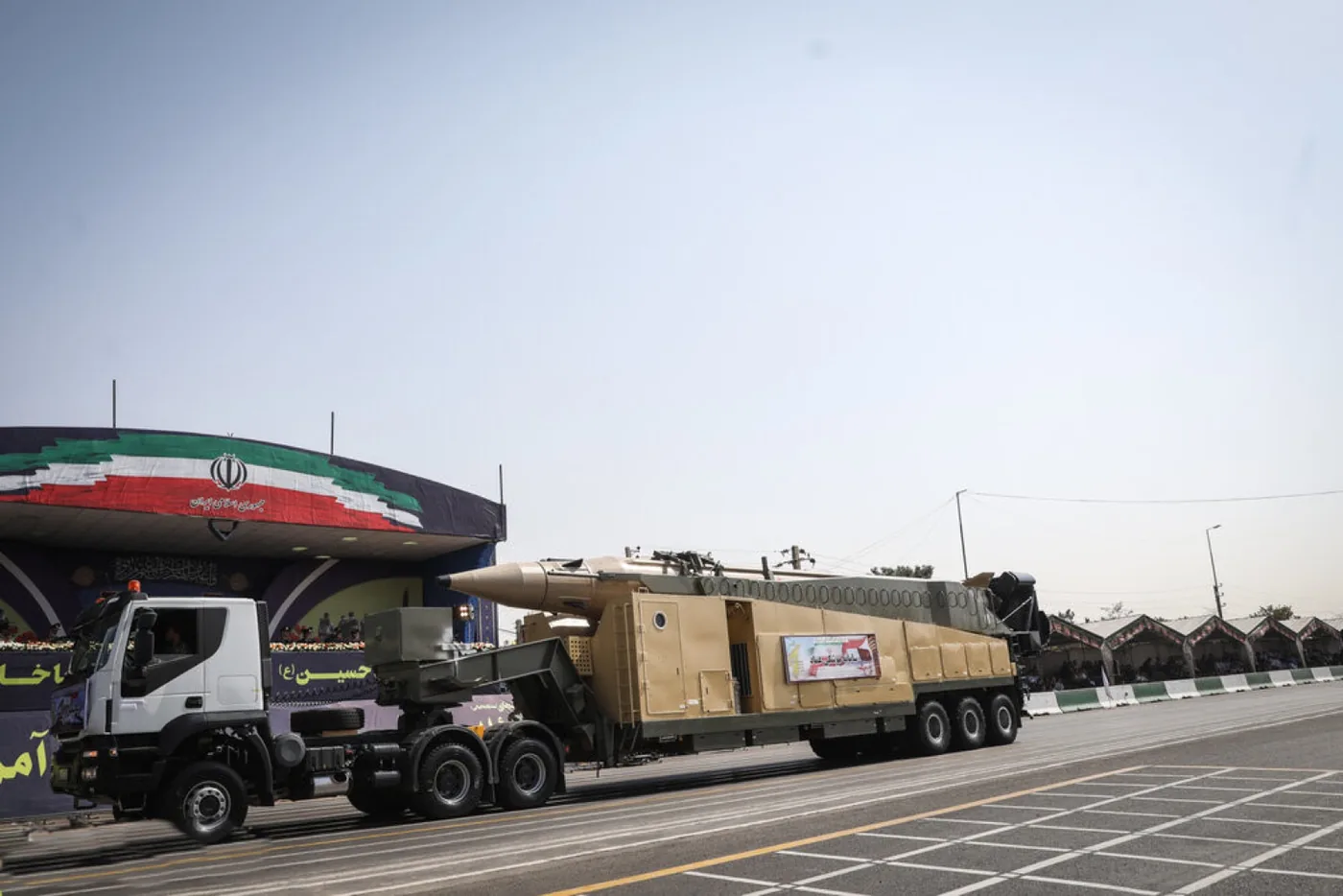
The Islamic Revolutionary Guard Corps (IRGC) is a branch of Iran's armed forces that exists alongside the regular military, called the Artesh. Ayatollah Ruhollah Khomeini ordered its creation in May 1979, shortly after the revolution that toppled the shah, because the new clerical government did not trust the army it had inherited. The IRGC was created to defend the revolution and the clerical system that came out of it. In Persian it is called the Sepah or Pasdaran.
The IRGC reports directly to the Supreme Leader, not to elected officials. It has roughly 125,000 to 190,000 active personnel, with its own ground troops, navy, aerospace arm, and a volunteer paramilitary wing called the Basij. Its Quds Force runs Iran's network of allied militias abroad. Its Aerospace Force manages Iran's ballistic missiles, the largest such arsenal in the Middle East. And its business arm reaches into construction, oil, telecommunications, and hundreds of subsidiary companies. In 2019, the United States designated the IRGC a foreign terrorist organization. No government's military had ever received that designation before.
How Iran built a parallel military
The IRGC started as a merger of several militias of armed revolutionaries. The Iran-Iraq War (1980–1988) transformed it. Over eight years of fighting, the corps grew from a loosely organized force into a professional military with its own command structure. The war gave its officers a shared identity that shaped the organization for decades afterward.
After the war, the IRGC expanded into the economy. Its engineering conglomerate, Khatam al-Anbiya, won government contracts in construction, oil and gas, mining, and telecommunications. By 2010 it controlled more than 800 registered companies, and it gives the IRGC a source of revenue that does not depend on government funding. Veterans of the corps went on to hold seats in parliament, win the presidency, and run major companies. Iran's president from 2005 to 2013, Mahmoud Ahmadinejad, was an IRGC veteran. By the 2000s the IRGC was embedded in how Iran governed, earned, and projected power.
The Basij, a large volunteer militia that operates under the IRGC, became the regime's tool for controlling the streets. Basij members helped crush the Green Movement protests in 2009 and the nationwide unrest that followed the death of 22-year-old Mahsa Amini in police custody in September 2022. During the 2022 protests, security forces killed at least 551 people.
Is the IRGC a terrorist organization?
The United States designated the entire IRGC a foreign terrorist organization on April 8, 2019. No official branch of another government's military had ever received that designation before.
The designation focused on the Quds Force, the IRGC branch responsible for operations outside Iran. The Quds Force arms, funds, and directs allied militias across the Middle East, including Hezbollah in Lebanon, Shia militia groups in Iraq, and the Houthis in Yemen. Qassem Soleimani, who commanded the Quds Force for more than two decades, built those networks and became one of the most powerful figures in the Middle East. The United States killed Soleimani in a drone strike in Baghdad on January 3, 2020. Esmail Qaani succeeded him as Quds Force commander.
Canada designated the IRGC a terrorist organization in June 2024. The European Union followed in early 2026, after years of debate. Sanctions had targeted IRGC commanders and companies for years, but the designations went further by criminalizing any dealings with the IRGC in those countries.
The IRGC in the 2026 war
On February 28, 2026, American and Israeli strikes hit Tehran and killed Iran's Supreme Leader, Ali Khamenei, along with the IRGC's commander-in-chief and several other senior commanders. It was the heaviest single loss the IRGC had suffered since Soleimani's assassination six years earlier. Khamenei's son Mojtaba was installed as Supreme Leader by the Assembly of Experts in March. Ahmad Vahidi, a veteran commander who is wanted by Argentina for his alleged role in the 1994 bombing of a Jewish community center in Buenos Aires that killed 85 people, was appointed the new IRGC commander-in-chief.
The IRGC did not collapse. In the weeks that followed, it was the institution that kept the Iranian state running and organized the country's military response. The IRGC Navy mined the Strait of Hormuz, the passage through which about a fifth of the world's oil moves. It published one narrow corridor close to the Iranian coast as the only approved shipping lane and fired on ships that tried any other route. For months the IRGC decided what it would take to restore normal traffic through the strait.
Nearly fifty years after its founding, the IRGC controls Iran's foreign military operations and a large share of its economy. Since the start of the 2026 war, it also controls the conditions under which oil moves through one of the world's most important shipping lanes.