
Lin Zexu
Lin Zexu was the Qing imperial commissioner whose 1839 destruction of British opium triggered the First Opium War.
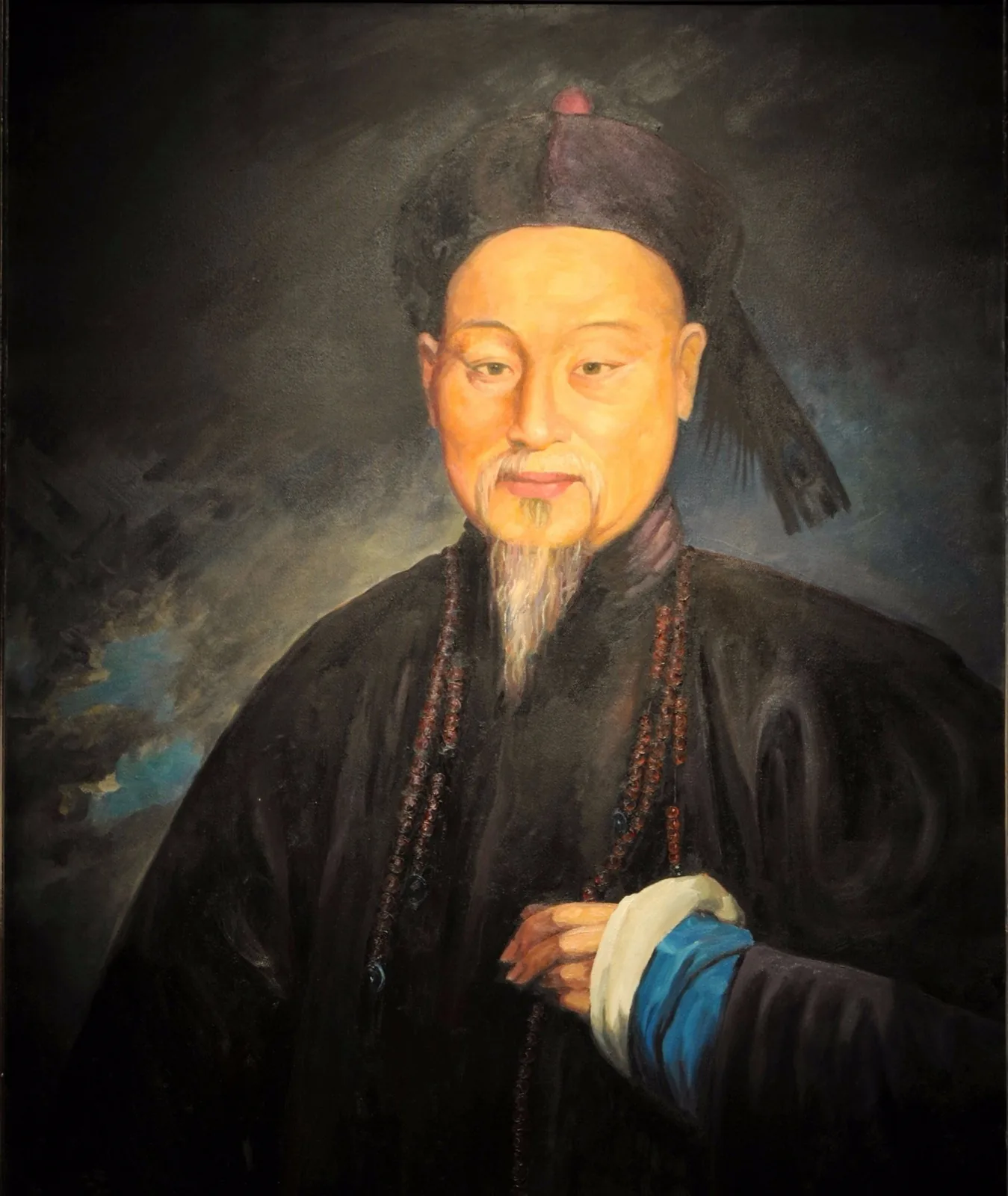
Lin Zexu was a Qing dynasty official who in 1839 seized and destroyed more than 20,000 chests of British opium at Canton. The act gave Britain the pretext to start the First Opium War. Lin had passed China's civil service exams on ability alone and built a name for honesty and competence in a bureaucracy where both were rare. The Daoguang Emperor chose him to shut down an opium trade that was costing the empire its silver and wrecking public health. Lin carried out the mission exactly as ordered. His reward was disgrace and exile. A century later, China made him one of its most honored national heroes.
How Lin Zexu destroyed Britain's opium
Lin was born in 1785 in Fuzhou, in the coastal province of Fujian. His father was a teacher who was poor but insisted his sons study the Confucian classics. Lin proved exceptionally able. He passed the imperial examinations, entered government service, and rose steadily. By the late 1830s he had served as a governor-general in central China and had already cracked down on opium in his jurisdiction with some success.
The opium problem was enormous. British merchants were shipping the drug from India, where it was grown under the East India Company, into China in huge quantities. The drug was illegal under Chinese law, but corrupt local officials let it through. Addiction was widespread, from laborers to soldiers to court officials. For centuries, foreign merchants had brought silver into China to buy tea, silk, and porcelain. Now that silver was leaving the country, spent on opium.
At the end of 1838, the Daoguang Emperor gave Lin the title of imperial commissioner and ordered him to Canton, the only port where foreign trade was allowed. Lin reached Canton in March 1839 and acted fast. He surrounded the foreign trading houses, cut off their food and supplies, and trapped the merchants inside. He ordered every foreign trader to hand over their opium and sign a bond promising never to bring more.
Charles Elliot, the British superintendent of trade, told the merchants to comply, then declared the surrendered opium Crown property. That single move meant the British government now owed the merchants for their losses, and a commercial dispute became a dispute between governments. The traders surrendered about 20,000 chests, roughly 1,000 tons of raw opium. Starting on June 3, 1839, Lin had workers at Humen, near the mouth of the Pearl River, dissolve the drug in trenches filled with lime and salt water, then flush it into the sea. The process took 23 days. Lin invited foreign observers to watch, to prove none of it was being stolen.
Lin also wrote a letter addressed to Queen Victoria. He argued that Britain knew opium was harmful and asked how it could allow its merchants to sell the drug in China. He laid out the damage the trade had done to Chinese families and appealed to the queen's conscience. Queen Victoria almost certainly never read it, but the text was later published in the London Times.
How Lin Zexu's opium seizure led to the First Opium War
Britain treated the seizure as an attack on property and free trade. A modern fleet arrived off the Chinese coast in June 1840, with warships that the Qing navy could not match. The First Opium War lasted until 1842. Chinese forts and war junks fell quickly. The war ended with the Treaty of Nanking, which forced China to open more ports, pay a large indemnity, and cede Hong Kong to Britain. It was the first of the unequal treaties that would define the next century of Chinese history.
The emperor needed someone to blame. He stripped Lin of his titles and sent him to Ili, a remote garrison town in Xinjiang, near the empire's far western border. Lin spent several years in exile before the court restored him in 1845. He served again as a provincial governor. In 1850, the court called him back one last time to fight the Taiping Rebellion. He died on the journey, in Chaozhou, Guangdong province, on November 22, 1850. He was 65.
Why is Lin Zexu a national hero in China?
Lin Zexu failed by every practical measure. The opium trade continued. China lost the war. The treaties that followed began what China calls its century of humiliation. But in the decades after his death, as Chinese nationalists searched for figures who had stood up to foreign powers, Lin became an ideal candidate. He was incorruptible. He had tried diplomacy, through his letter to the queen. And he had lost not because he did the wrong thing but because China's military was no match for Britain's.
Today Lin Zexu is one of the most honored figures of the late Qing era. A memorial hall stands at the site of the Humen destruction in Dongguan, Guangdong. A bronze statue of him stands in his hometown of Fuzhou. Another stands in Chatham Square in New York's Chinatown, with a plaque calling him a "pioneer in the war against drugs." In China, each year China marks the date of the Humen destruction, and Lin's name has become shorthand for clean, principled government service. He is honored as the official who fought the opium trade and accepted the consequences.