
MI6 (SIS)
MI6 is Britain's foreign intelligence service, officially the Secret Intelligence Service (SIS), founded in 1909.
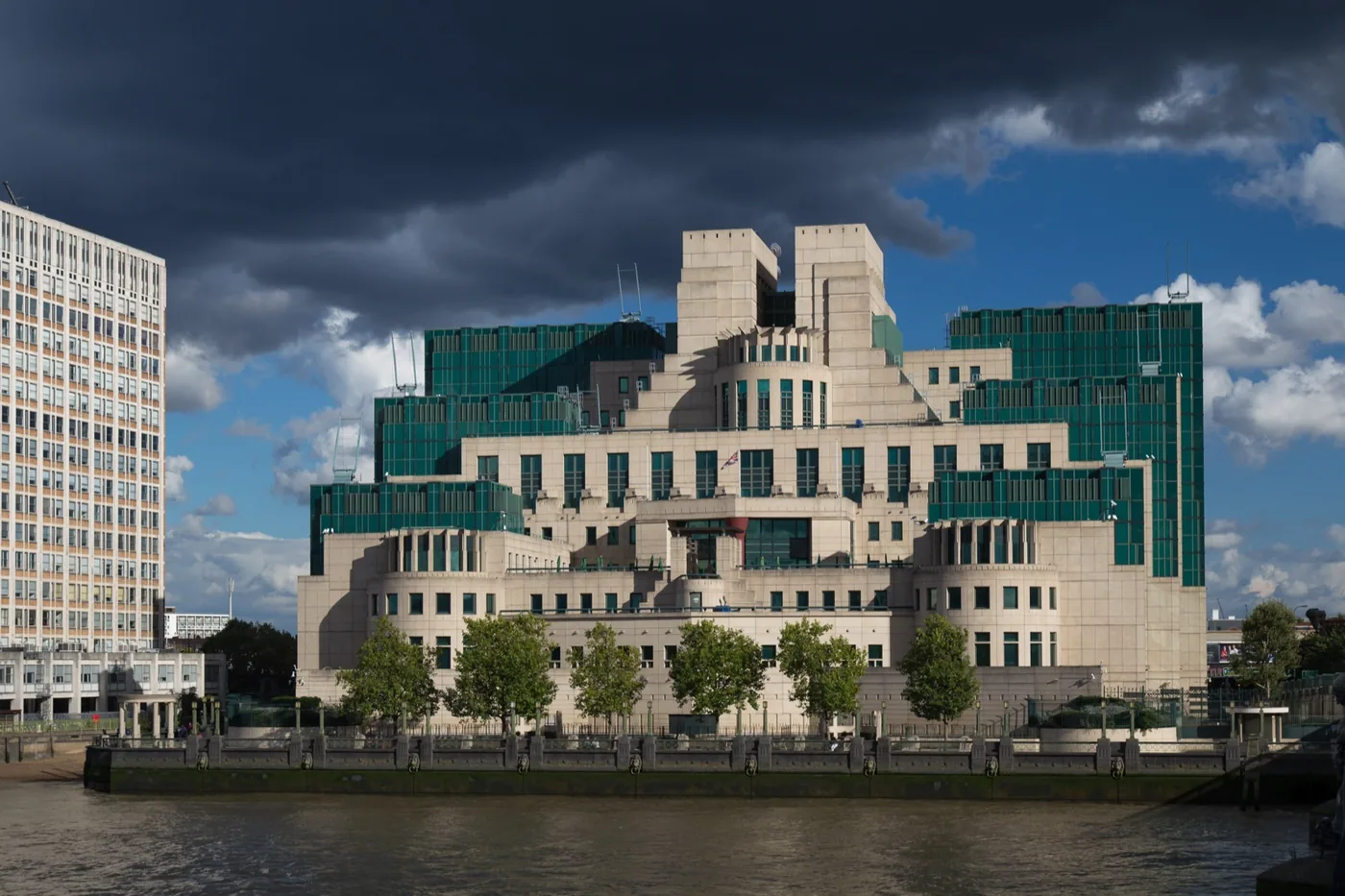
MI6 is Britain's foreign intelligence service, responsible for gathering secret information overseas. Its official name is the Secret Intelligence Service, or SIS, but the old label "Military Intelligence, Section 6" stuck in public use and is the name most people know. MI6 was founded in 1909. No other country's foreign intelligence agency has been running longer. For most of its history, the British government refused to admit the service existed. That changed in 1992, when the government publicly acknowledged it. In 1994, Parliament passed the Intelligence Services Act and gave MI6 a legal basis for the first time. MI6 is also the real-world service that inspired Ian Fleming's James Bond, though its actual work has little in common with the films.
How MI6 started
MI6 grew out of a spy scare. In 1909, the British government set up the Secret Service Bureau to counter fears of German espionage ahead of a possible war. The bureau soon divided in two. One branch watched for threats inside Britain and eventually became MI5. The other collected intelligence abroad and became MI6.
MI6's first chief was Mansfield Cumming, a Royal Navy officer who had been forced ashore by chronic seasickness. Cumming usually signed his correspondence with a single letter, "C," written in green ink. Every chief of MI6 since then has gone by the title "C," a tradition now more than a century old. In the James Bond films, the chief is called M instead. In October 1914, a car accident in France killed Cumming's son, Alastair, who was driving. Cumming's leg was so badly injured it had to be amputated. He replaced it with a wooden one and, according to colleagues, liked to startle visitors by stabbing it with a letter opener.
During the Second World War, MI6 ran agent networks across occupied Europe and worked closely with the codebreakers at Bletchley Park. The wartime alliance with American intelligence, which became the CIA in 1947, laid the foundation for what is now one of the closest intelligence partnerships in the world.
MI6 and the Cambridge Five
MI6's worst security failure was the Cambridge Five. All five were young men who had studied at Cambridge University and were secretly recruited by Soviet intelligence in the 1930s. Most of them came from privileged British families. The most damaging of the five was Kim Philby. Philby's father, St John Philby, was a British Arabist who served as an adviser to King Ibn Saud of Saudi Arabia. Kim Philby joined MI6 during the war and rose through its ranks until, by late 1944, he was head of Section IX, the division responsible for operations against the Soviet Union. He also served as MI6's liaison to the CIA in Washington. The entire time, Philby was working for Moscow.
In 1951, two other members of the group, Guy Burgess and Donald Maclean, were tipped off that Maclean was about to be exposed and fled to the Soviet Union. Suspicion fell on Philby, and he was forced to resign, but he denied everything and was never charged. In January 1963, facing exposure again, Philby defected to Moscow from Beirut. He lived there until his death in 1988.
The damage was severe. Philby had handed over the names of agents working for Britain, and some of them were killed. The scandal poisoned the relationship between MI6 and the CIA for years. It also inspired a generation of spy fiction, most famously John le Carre's "Tinker Tailor Soldier Spy."
What does MI6 stand for?
MI6 stands for Military Intelligence, Section 6. The numbering comes from the First World War, when British military intelligence was organized into numbered sections. Section 5 handled domestic security and became MI5. The foreign service took the label MI6 during the Second World War. The system produced other numbered sections too, most of them long gone, but MI5 and MI6 stuck.
The service's official name is the Secret Intelligence Service, and its staff and the rest of the British government usually call it SIS. But MI6 remains the name most of the world uses, and the service itself now accepts both.
What MI6 does today
MI6 is a relatively small agency. Its main job is human intelligence: finding people in foreign countries who have access to secrets and persuading them to share those secrets with Britain. It also carries out limited covert operations abroad. Its work is overseen by government ministers and by Parliament's Intelligence and Security Committee.
MI6's closest partner is the CIA. MI6 and the CIA's forerunner worked together in the Second World War. The two agencies nearly split over the Philby affair and eventually repaired the relationship into what both sides now treat as their most important intelligence partnership. It sits within the broader Five Eyes network, which links the intelligence agencies of the United States, the United Kingdom, Canada, Australia, and New Zealand. One of their first major joint operations was the 1953 coup in Iran. MI6 drew up the original plan after Iran expelled British diplomats and intelligence officers, and the CIA took over the operation on the ground.
MI6 moved into its current headquarters at Vauxhall Cross, on the south bank of the River Thames in London, in 1994, the same year Parliament passed the Intelligence Services Act. After more than 80 years of official secrecy, Britain's foreign intelligence service now publicly lists its address and advertises for recruits on its website.