
Montreux Convention
The Montreux Convention is the 1936 treaty that gives Turkey control of the Bosphorus and Dardanelles and sets rules for warship passage.
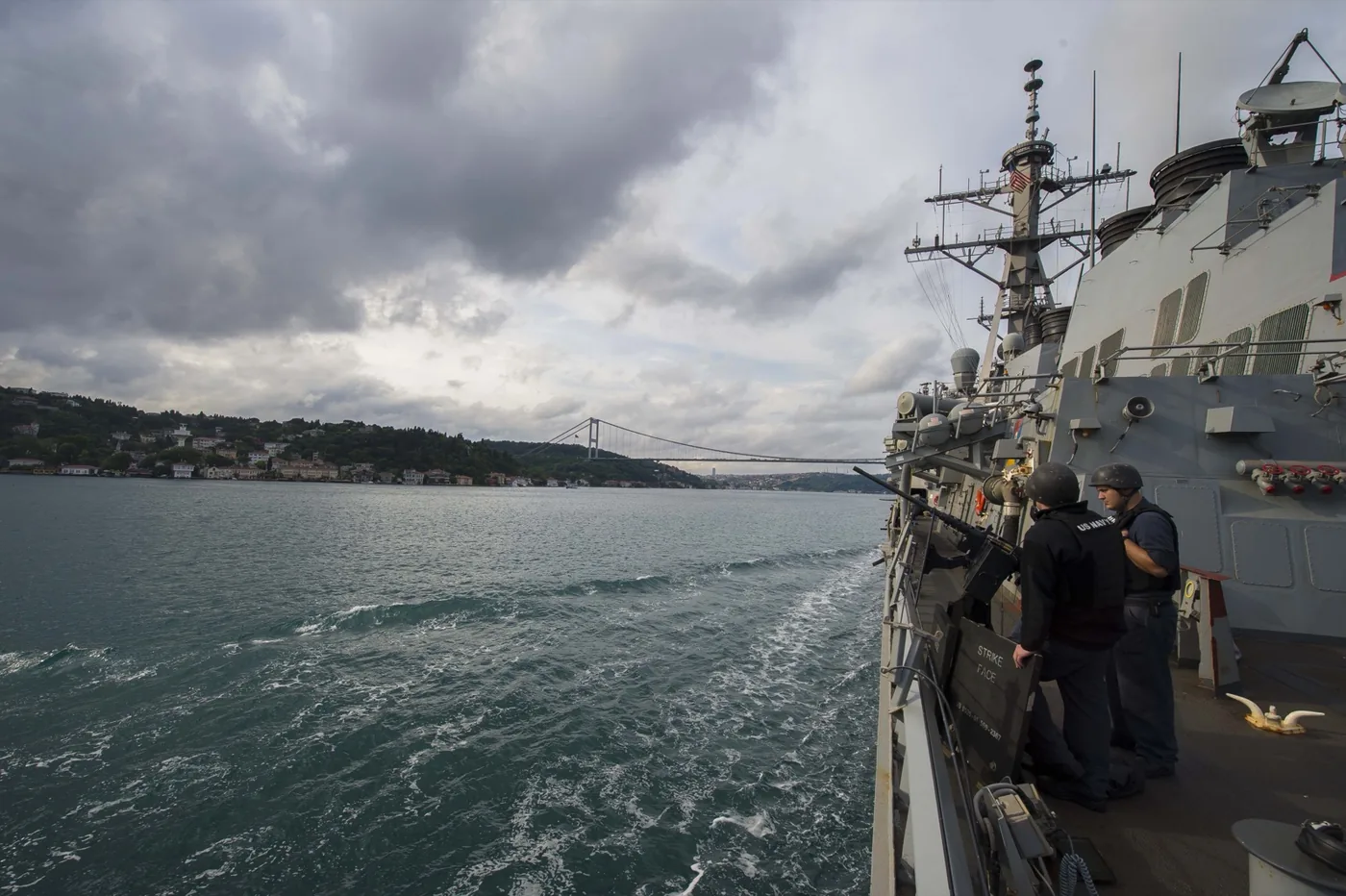
The Montreux Convention is a 1936 treaty that gives Turkey full sovereignty over the Bosphorus and the Dardanelles, the two waterways that form the Turkish Straits and rank among the world's busiest maritime chokepoints. These narrow passages connect the Mediterranean to the Black Sea. Under the convention, merchant ships of any country can pass freely. Warships can transit too, but under strict limits that favor Black Sea states over outside navies. Turkey can bar all warships from the straits if it is at war or believes war is imminent. The convention has been in force for nearly ninety years. It shaped the Cold War standoff in the Black Sea, and in 2022 Turkey invoked it to block warships after Russia invaded Ukraine.
How Turkey regained the straits
For centuries the Ottoman Empire controlled the Bosphorus and the Dardanelles. After the empire's defeat in World War I, the 1923 Treaty of Lausanne demilitarized the straits and placed them under an International Straits Commission that reported to the League of Nations. Turkey could not fortify the waterways that ran through its own territory.
By the mid-1930s the arrangement was falling apart. Italy invaded Ethiopia in 1935, and the League failed to stop it. Turkey's president, Mustafa Kemal Atatürk, saw the League's failure as an opening. If the body that guaranteed the straits regime could not enforce its own rules, Turkey had a case for taking the straits back.
On July 20, 1936, Turkey and nine other countries, the Soviet Union, Britain, France, Australia, Greece, Romania, Bulgaria, Yugoslavia, and Japan, signed a treaty in Montreux, Switzerland. Its official title is the Convention Regarding the Regime of the Straits. The International Straits Commission ceased to exist. Turkey won the right to fortify the straits again and station troops along both shores. The treaty was a diplomatic victory for Atatürk: Turkey had regained full military control of its most strategically important waterways without a war.
What the convention allows and restricts
The convention draws a sharp line between merchant ships and warships. Commercial vessels of any flag may pass through the straits freely, day or night, in peacetime and in most wartime situations.
Warships face a tiered system. Countries that border the Black Sea, including Russia, Romania, and Bulgaria, get more latitude and shorter notice periods. Non-Black Sea powers face strict caps. Their warships must displace no more than 10,000 tons each. No more than nine can be in transit at once, and their combined tonnage in transit cannot exceed 15,000 tons. Aircraft carriers belonging to non-Black Sea powers are barred entirely. Once inside the Black Sea, non-Black Sea warships may stay no longer than 21 days, and their combined tonnage there is capped at 45,000 tons.
In wartime, the rules tighten. If Turkey is neutral in a conflict, warships belonging to countries at war may not pass through the straits. If Turkey itself is at war, or considers itself threatened with imminent attack, it can close the straits to all warships at its own discretion.
Who controls the Bosphorus Strait?
Turkey does, under the terms of the Montreux Convention. Turkey decides whether ships meet the convention's requirements, and Turkey alone can invoke the wartime closure provisions.
That authority drew worldwide attention on February 27, 2022, three days after Russia invaded Ukraine. Turkey's foreign minister announced that Turkey recognized the conflict as a war, triggering the convention's wartime provisions. Turkey closed the straits to all belligerent warships. The closure barred Russia from sending additional naval vessels into the Black Sea. Warships sailing back to their registered home base were exempt. The decision helped Ukraine survive Russia's early naval pressure on its Black Sea coast.
The convention has frustrated both sides of the Black Sea for decades. The tonnage caps restrict how many NATO warships can operate in the region at once, which is why the alliance has never kept a large standing fleet there. Russia, for its part, has resented that its Black Sea Fleet must pass through Turkish-controlled waters every time it sails for the Mediterranean. In the mid-1940s Moscow demanded that Ankara renegotiate the convention and grant the Soviet Union a share of control over the straits. Turkey refused and aligned with the West. The standoff became one of the reasons President Truman announced the Truman Doctrine in 1947, pledging American support for countries resisting Soviet pressure.
One proposal could change the current arrangement. Turkish President Recep Tayyip Erdogan has backed Kanal Istanbul, a planned artificial canal that would run parallel to the Bosphorus. Because an artificial canal is not a natural strait, it could fall outside the convention's scope, giving Turkey the ability to collect tolls and write its own passage rules. As of 2026, full construction has not begun, and the project faces political opposition and uncertain financing. The Montreux Convention, ninety years old, remains the legal framework that determines who can bring warships into the Black Sea and on what terms.