
1973 Oil Embargo
The 1973 oil embargo was a ban on oil shipments to the United States by Arab producers, paired with production cuts that quadrupled the price of oil.
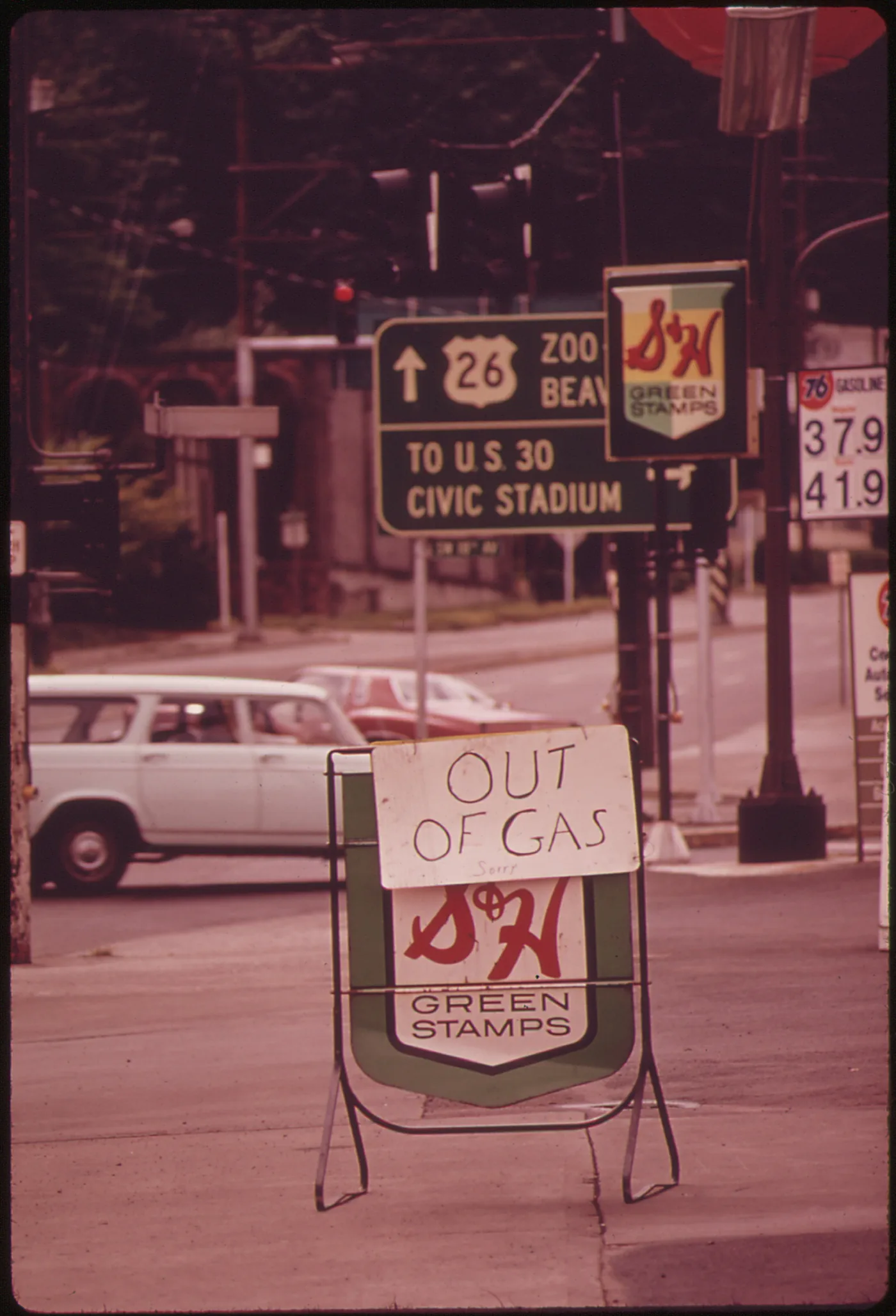
In October 1973, the Arab members of OPEC stopped shipping oil to the United States and cut production for the rest of the world. The price of crude oil quadrupled in less than three months, from about $3 a barrel to nearly $12. Gas stations across the country posted "Sorry, No Gas" signs, and lines at gas pumps wrapped around city blocks. The embargo lasted until March 1974. It was the first time oil-producing countries successfully used their control of the world's most important resource as a political weapon, and it reshaped American foreign policy and the global economy for decades.
What caused the 1973 oil embargo?
Egypt and Syria attacked Israel on October 6, 1973, during Yom Kippur, the most solemn Jewish holy day. Egyptian forces crossed the Suez Canal and Syrian tanks pushed into the Golan Heights. As Israel's losses mounted, President Richard Nixon ordered Operation Nickel Grass, a large airlift of American weapons to Israel. Over 32 days, U.S. Air Force cargo planes delivered more than 22,000 tons of tanks, artillery, and ammunition.
The airlift enraged the Arab world. Saudi Arabia's King Faisal had warned Washington for months that continued support for Israel would have consequences. Faisal was an ascetic ruler who lived simply, spoke sparingly, and chose his words with care. For years he had avoided using oil as a political tool. In December 1972 he privately reversed that position. In July 1973 he told a Washington Post reporter that Saudi Arabia would find it "difficult" to continue working with the United States if American support for Israel stayed at its present level. Nixon sent the weapons anyway.
On October 17, OAPEC, the Organization of Arab Petroleum Exporting Countries, met in Kuwait and announced a 5 percent monthly production cut. Two days later, Nixon asked Congress for $2.2 billion in emergency aid to Israel. OAPEC responded by cutting off all oil bound for the United States and the Netherlands. The ban was later extended to Portugal, South Africa, and Rhodesia.
In practice, the ban on shipments mattered less than the production cuts. Oil is interchangeable, and tankers can be rerouted, so barrels meant for one buyer often reached another. The output reductions were what tightened the global market. By November, Arab producers had cut output by 25 percent. OPEC ministers met in Tehran and set the price directly. By January 1974, a barrel of crude oil cost $11.65, nearly four times what it had cost before the war.
How the oil embargo hit the United States
Americans felt the shortage right away. Lines at filling stations wound around blocks, and drivers spent hours waiting to buy gas. Some states rationed fuel by license plate number, letting odd-numbered plates fill up one day and even-numbered plates the next. Congress cut the national speed limit to 55 miles per hour. The government tried year-round daylight saving time to save energy.
The economic damage ran deeper than gas lines. Unemployment rose from 4.6 percent in October 1973 to 9 percent by May 1975. Inflation hit 12.3 percent in 1974, up from 3.4 percent two years earlier. Many economists had thought rising prices and rising unemployment could not happen at the same time. The combination became known as stagflation. The era of cheap fuel that had powered postwar growth had ended.
What ended the 1973 oil embargo?
OAPEC lifted the embargo in March 1974, after Secretary of State Henry Kissinger negotiated a disengagement agreement between Israel and Egypt. But ending the embargo did not bring back cheap oil. Prices stayed near their new level, and the cartel had learned that it could dictate the global price of crude.
Power shifted to the producer states. Saudi Arabia's oil revenues increased sixfold between 1973 and 1975. The petrodollar system took shape as oil-exporting countries recycled their new wealth through Western banks and dollar-denominated investments.
How the 1973 oil crisis reshaped energy policy
The consuming nations built new institutions to prevent another shock. In 1974, the major oil-importing democracies formed the International Energy Agency to coordinate stockpiles and organize shipments during shortages. In 1975, Washington established the Strategic Petroleum Reserve, a set of underground salt caverns on the Texas and Louisiana coast that can store up to 714 million barrels of emergency crude. That same year, Congress set the first mileage requirements for new automobiles, requiring automakers to roughly double the average fuel economy of their fleets within a decade.
Energy dependence became a permanent concern of American foreign policy in the Gulf. The United States built a military presence in the Persian Gulf, pursued domestic drilling, and eventually developed shale oil to reduce its reliance on imports. Europe took a different path, growing dependent on Russian pipeline gas, a reliance that became painful when Russia restricted supplies after invading Ukraine in 2022.
In 2026, Iran shut down the Strait of Hormuz, and oil prices climbed above $100 a barrel. In 1973, producing countries held back their own crude. In 2026, a single producer blocked the waterway that its neighbors' crude must pass through. Both crises showed that the world's dependence on oil from the Middle East remains a strategic vulnerability more than fifty years after the 1973 embargo.