
Petrodollar
The petrodollar is the system, built in 1974, by which most of the world's oil is priced and sold in US dollars.
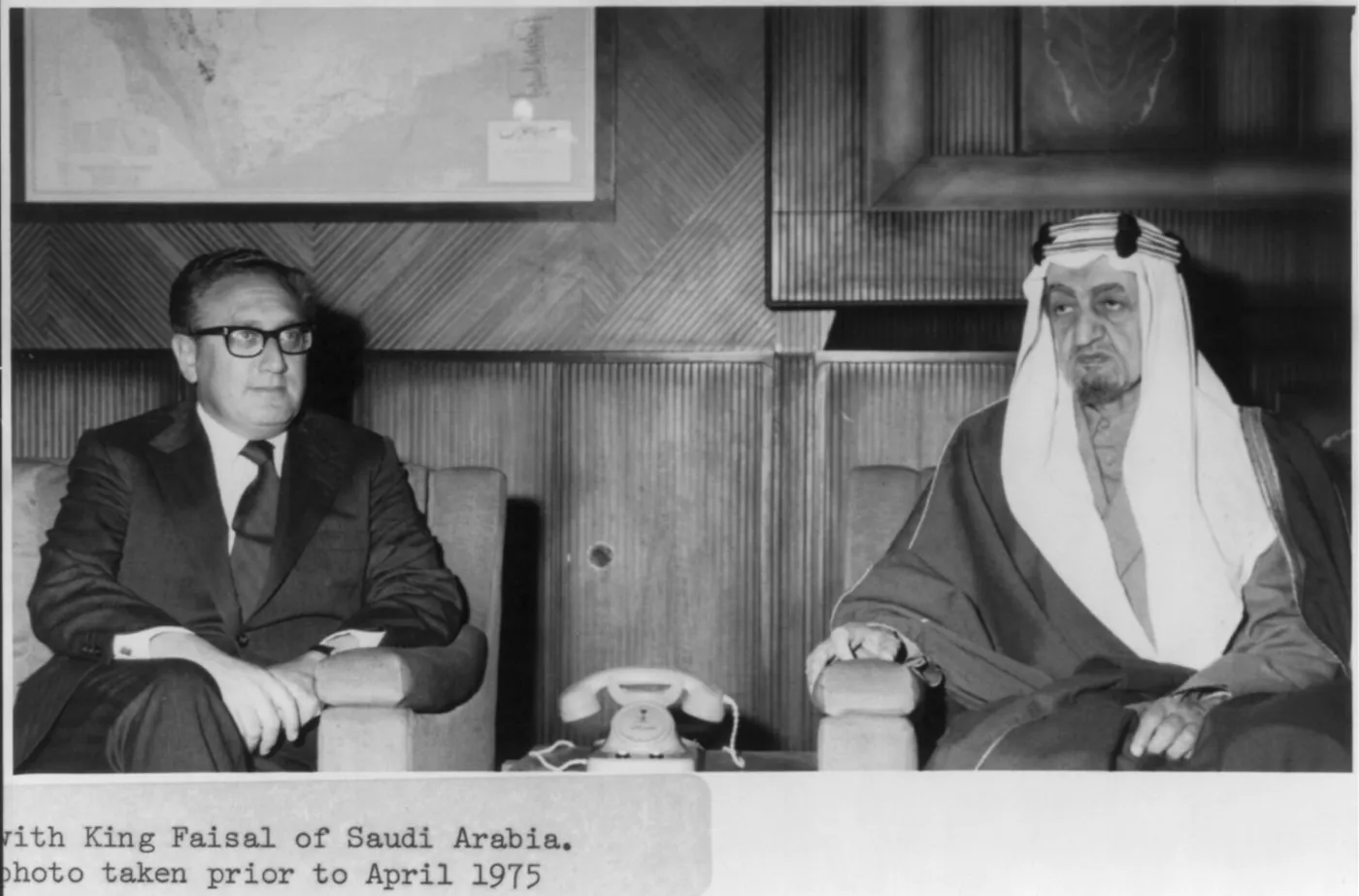
The petrodollar is the arrangement by which most of the world's oil is priced and sold in US dollars. It took shape in 1974 through a series of deals between the United States and Saudi Arabia, and it still holds: roughly 80 percent of global oil trade settles in dollars. Because oil is the world's most traded commodity, every country that imports it needs a supply of dollars to pay for it. That built-in demand lets the US government borrow more cheaply than it otherwise could. It also gives Washington the power to punish adversaries by cutting them off from the global financial system through sanctions.
How the petrodollar system started
In 1971, President Richard Nixon ended the dollar's convertibility into gold, a move known as the Nixon Shock. The dollar was no longer backed by anything physical, and it needed a new source of global demand to hold its place as the world's reserve currency.
Two years later, an Arab oil embargo quadrupled the price of crude. Oil-exporting countries, Saudi Arabia above all, were suddenly holding enormous sums of cash. The United States saw a chance to solve two problems at once: give the dollar a new anchor and channel that cash back into the American financial system.
In 1974, Secretary of State Henry Kissinger traveled to Saudi Arabia and negotiated the political half of what became the petrodollar system. The understanding was straightforward. Saudi Arabia would keep pricing its oil exclusively in dollars and spend a large share of its surplus on American weapons. In return, the United States would protect the House of Saud, the Saudi royal family. King Faisal, who ruled Saudi Arabia at the time, was austere and deeply religious, but he saw the strategic value of an American security guarantee. He was assassinated by his own nephew in March 1975, less than a year after the deals were struck, but the arrangement outlived him.
Treasury Secretary William Simon handled the financial half. Simon was a former bond trader at Salomon Brothers who understood exactly how to channel money into US government debt. He flew to Jeddah in July 1974 and persuaded King Faisal to invest Saudi oil revenue in US Treasury bonds. To close the deal, Simon created a special "add-on" channel that let Saudi Arabia buy Treasuries outside the normal public auction. King Faisal insisted the purchases stay secret, and the Treasury obliged, hiding Saudi holdings under a generic line item labeled "oil exporters" in its monthly reports. The holdings stayed hidden for 41 years, until Bloomberg uncovered them through a Freedom of Information request in 2016.
The effects were large and fast. Oil-importing countries everywhere needed dollars to buy crude, so they held dollars and bought dollar-denominated assets. Saudi Arabia recycled its oil revenue straight into US government debt. By 1977, Saudi Arabia alone held roughly one-fifth of all US Treasury bonds held abroad. The French finance minister Valéry Giscard d'Estaing had already given this kind of advantage a name in the 1960s: "exorbitant privilege," the power to import real goods using a currency that only the United States could create. The Bretton Woods system had provided that privilege through gold convertibility. The petrodollar replaced it with oil.
Is there a petrodollar treaty?
No. No signed document created the petrodollar system. What existed was a series of separate agreements: the Kissinger security understanding, the Simon Treasury channel, and several arms deals. None of them were combined into a treaty or written into law.
A widely shared story claims that the United States and Saudi Arabia signed a secret 50-year pact in 1974 that expired in June 2024. Fact-checkers and economists have debunked this repeatedly. The 1974 agreements created a joint economic commission, not a binding contract that locked Saudi Arabia into pricing oil in dollars for a fixed number of years. Saudi Arabia prices its oil in dollars because doing so serves its interests, not because a treaty requires it. The lack of any formal obligation is part of what keeps talk of ending the system alive.
Why the petrodollar still matters
The petrodollar does more than lower American borrowing costs. Because global trade runs through dollar-denominated banks and payment networks, Washington can exclude a country from the dollar system and effectively shut it out of international commerce. The United States has used this power against Iran through decades of financial sanctions and against Russia after its 2022 invasion of Ukraine.
Those same sanctions have pushed some countries to look for alternatives. Since 2022, Russia has settled oil sales in rubles, yuan, and rupees instead of dollars. China has pushed Saudi Arabia to accept yuan for some crude purchases, and in 2023 Saudi Arabia's finance minister said publicly that the kingdom was open to settling trade in other currencies. The BRICS group of nations has discussed settling trade in local currencies rather than dollars. For a closer look at the forces working for and against the dollar's dominance, see Is de-dollarization really happening?
The shift is real but slow. No rival currency or financial system currently matches the depth and openness of US financial markets. The petrodollar system has no treaty behind it and no expiration date. It lasts because the rest of the world still finds the dollar more useful than any alternative.