
Maximilien Robespierre
Maximilien Robespierre was a French lawyer who led the Reign of Terror during the French Revolution and was guillotined in 1794.
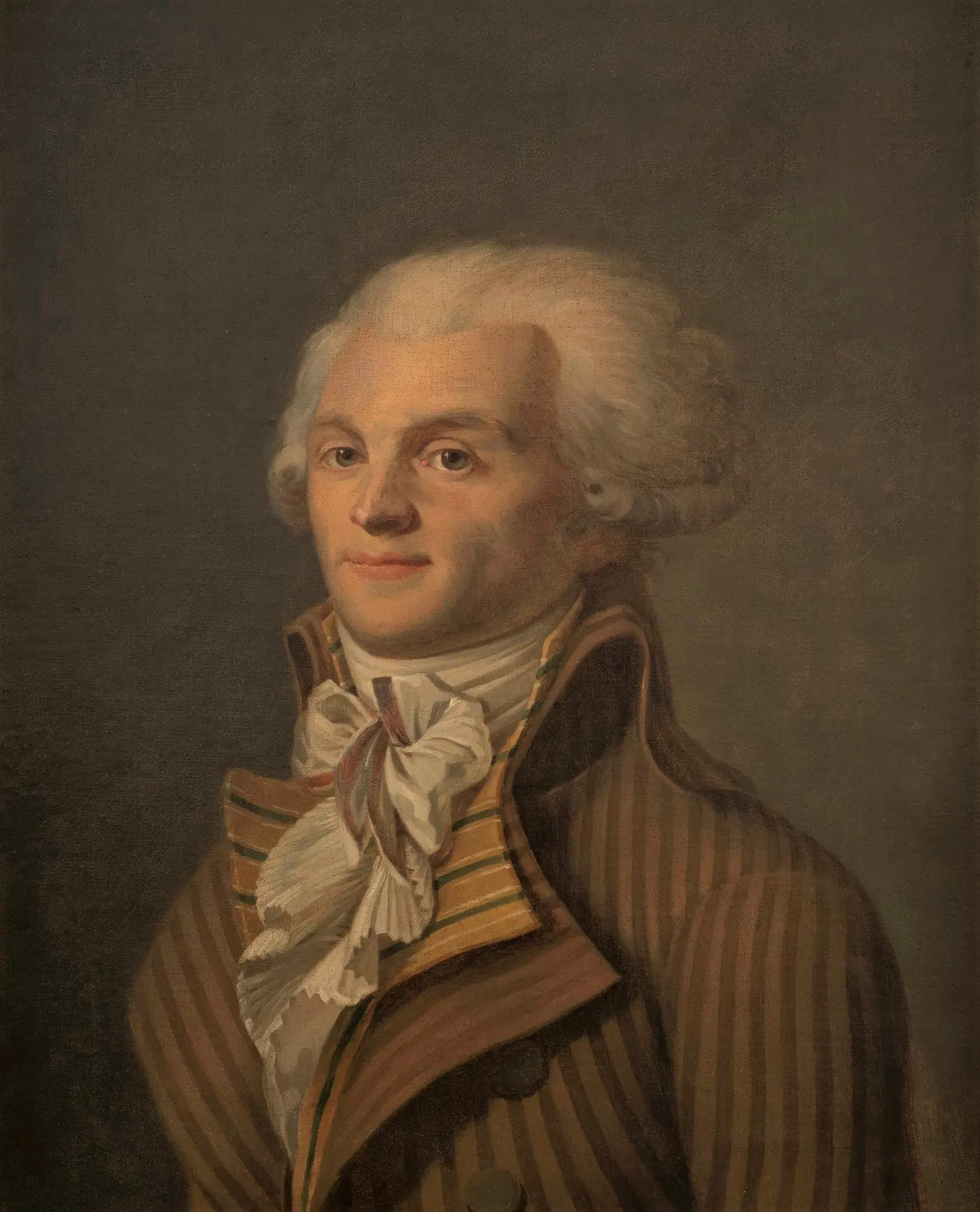
Maximilien Robespierre was a French lawyer who became the most powerful figure in the French Revolution and the driving force behind the Reign of Terror. He was born in 1758 in Arras, a provincial city in northern France. His allies called him "the Incorruptible." No bribe, no faction, and no personal relationship seemed to sway him. That reputation made him trusted during the Revolution, and it made him dangerous. Robespierre believed France could become a republic governed entirely by virtue, and that anyone who stood in the way deserved to die. Between 1793 and 1794, under his authority, about 17,000 people were sentenced to death across France, and tens of thousands more died in prisons or were killed without trial. On July 28, 1794, Robespierre himself was guillotined without trial.
How Robespierre rose during the Revolution
Robespierre's mother died when he was six. His father, also a lawyer, abandoned the family when Robespierre was nine. Relatives raised him, and a scholarship paid for his education at Louis-le-Grand, an elite school in Paris, where he spent about twelve years and developed a devotion to the Enlightenment philosopher Jean-Jacques Rousseau and to ancient Roman ideas about civic duty.
Robespierre returned to Arras, practiced law, and built a reputation for defending poor clients. In 1789 voters in Artois elected him as one of their delegates to the Estates-General, the assembly that King Louis XVI had summoned to address France's financial crisis. Robespierre was 30 and small-framed. He made little impression at first.
He found his audience at the Jacobin Club, a radical political society with affiliated chapters across France. Through relentless, moralizing speeches, Robespierre positioned himself as the voice of the Revolution's left. He powdered his hair and dressed immaculately long after revolutionary fashion shifted to plainer dress. He lived in rented rooms in the home of a carpenter named Maurice Duplay. The Duplay family gave him a home life he had never had. Early in the Revolution, Robespierre argued publicly for abolishing the death penalty.
How Robespierre and the Committee of Public Safety built the Terror
By 1793 the young Republic was under attack from every direction. Foreign armies pressed its borders. Royalist and Catholic peasants in the Vendee had revolted. Food shortages caused riots in the cities. In July 1793 Robespierre won a seat on the Committee of Public Safety, a twelve-member body given emergency powers to save the Republic.
The Committee governed by emergency decree. Robespierre provided the arguments that justified the killing. In a speech to the National Convention on February 5, 1794, he argued that a republic depended on virtue, and that during a revolution, only terror could protect it. "Terror is nothing but prompt, severe, inflexible justice," he told the Convention. He meant the systematic execution of anyone the Republic considered an enemy.
The Committee turned on one faction after another. It had the moderate Girondins executed in October 1793 and the Hebertists, an ultra-radical faction, in March 1794. In April 1794, Robespierre turned on his former ally Georges Danton, one of the Revolution's most prominent figures, and had him executed after Danton called for the killings to stop. Each purge shrank the circle of people who felt safe.
In June 1794 the Law of 22 Prairial made the killing faster. It denied the accused defense counsel and gave juries only two choices: acquittal or death. Before the law, the Revolutionary Tribunal in Paris averaged about three death sentences a day. Afterward, it averaged about twenty-eight. Across France, about 17,000 people were sentenced to death. Thousands more died in crowded prisons or were killed without trial in the provinces, where soldiers used mass drownings and shootings to put down revolts.
Why was Robespierre executed?
By summer 1794, members of the National Convention feared they would be the next targets. On 9 Thermidor (July 27, 1794), a group of deputies acted first. They shouted Robespierre down when he tried to speak and voted for his arrest.
Robespierre and his allies retreated to the Hotel de Ville, Paris's city hall, but could not organize a defense. That night, soldiers from the Convention stormed the building. In the chaos, a pistol shot shattered Robespierre's jaw. Whether he tried to shoot himself or was shot by a gendarme named Charles-Andre Merda is still debated. He spent his last night in pain, conscious, with a bandage holding his jaw together.
The next afternoon, July 28, Robespierre was executed without trial. The Convention had declared him an outlaw, which under Revolutionary law meant no trial was required. About twenty of his followers were executed with him. With Robespierre dead, the Terror ended. The period that followed is called the Thermidorian Reaction.
Why Robespierre still matters
Lenin's Bolsheviks looked to Robespierre as a model. The Khmer Rouge followed the same logic in Cambodia decades later. In each case, a movement that promised to purify a nation on behalf of the people turned its violence on the people themselves.
Robespierre never personally carried out an execution. He believed he was building a just society. That belief, combined with unchecked power, produced a government that killed tens of thousands of people in barely a year.