
SAVAK
SAVAK was the secret police of Iran's Shah, founded in 1957 with CIA and Mossad help and dissolved after the 1979 revolution.
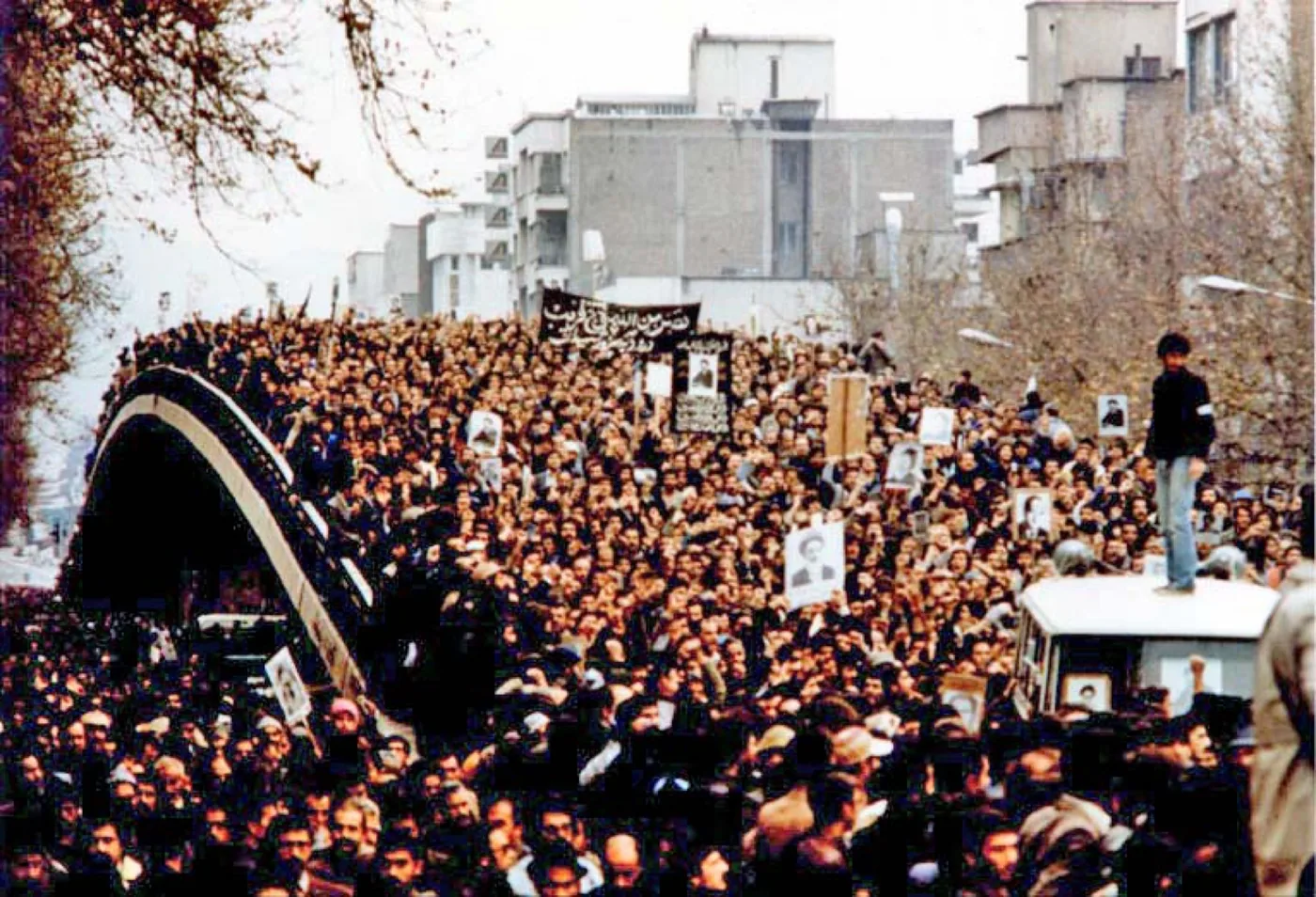
SAVAK, short for Sāzemān-e Ettelā'āt va Amniyat-e Keshvar ("Organization of Intelligence and National Security"), was the secret police of Iran under Mohammad Reza Shah. It operated from 1957 to 1979. The CIA and Israel's Mossad helped create it, and its job was to identify and suppress anyone who threatened the Shah's rule. SAVAK ran a network of informers that reached into government offices, universities and factories. Its interrogation centers used torture routinely. By the 1970s, most Iranians believed SAVAK could be listening to any phone call and any conversation in any cafe. In 1975, Amnesty International said Iran had one of the worst records on torture of any country in the world. SAVAK kept the Shah in power for twenty-two years, but it also helped cause the revolution that removed him.
How the Shah built his secret police
The Shah owed his throne to a foreign coup. In 1953, the CIA and Britain's MI6 overthrew Iran's elected prime minister, Mohammad Mosaddegh, and strengthened the Shah's rule. The Shah wanted to make sure he never needed rescuing again. In 1957 he created SAVAK, with American and, later, Israeli advisers helping to design its structure and train its officers. French intelligence also contributed.
The first director was General Teymur Bakhtiar, a member of the powerful Bakhtiari tribe who had trained at France's Saint-Cyr military academy. Bakhtiar served as both SAVAK director and deputy prime minister, which gave him unusual influence over the government. He built SAVAK into a personal power base so effectively that the Shah came to see him as a threat. The Shah dismissed Bakhtiar in 1961. Bakhtiar went into exile and began plotting against the Shah from Iraq. In 1970, SAVAK agents tracked him to a hunting trip in Iraq and killed him.
Nematollah Nassiri took over as director in 1965. Nassiri was the same military officer who, as a colonel in August 1953, had driven to Mosaddegh's house to deliver the Shah's dismissal decree on the night of the coup. He ran SAVAK for thirteen years, and under him the agency grew larger and its methods grew harsher. SAVAK first went after the Tudeh Party, Iran's communist movement, and other leftist groups. By the late 1960s and 1970s, it increasingly went after the religious opposition, especially the followers of Ayatollah Khomeini.
How SAVAK operated
SAVAK's core staff numbered roughly 5,000 to 6,000 full-time agents. Its real reach came from a much larger network of part-time informers, sometimes estimated in the tens of thousands. Informers reported from government ministries, factories, university campuses and mosques. Much of SAVAK's power came from the fact that Iranians did not know which of their neighbors worked for it.
The agency censored newspapers and monitored universities. It vetted government appointments. Anyone suspected of opposing the Shah could be taken to one of SAVAK's interrogation centers. Torture was standard practice. Methods included beatings, electric shock and sleep deprivation. Evin Prison, built in northern Tehran in 1972, became one of the most notorious of these centers.
International attention grew through the 1970s. Amnesty International and Western journalists documented SAVAK's methods and published them widely. The Shah, who wanted the world to see him as a modernizer, found SAVAK's growing reputation an embarrassment.
How SAVAK helped cause the revolution
SAVAK shut down every legal way for Iranians to oppose the Shah. It suppressed opposition parties, silenced the press and arrested activists. That left only one institution beyond its full control: the mosque. Shia religious networks operated through thousands of local mosques and seminaries across the country. SAVAK could monitor them, but it could not shut them down without provoking a direct confrontation with the clergy.
When people killed by the Shah's security forces were mourned, the traditional Shia forty-day mourning cycle brought crowds together again and again. In Shia Islam, mourners gather forty days after a death. Each gathering became a protest. Each protest produced more casualties, more funerals forty days later, and more protests after that. This cycle set the rhythm of the revolution in 1978. In revolutionary posters and Friday sermons, SAVAK interrogators appeared as stock villains. Prisoners who died in SAVAK custody became martyrs for the opposition.
The monarchy fell in February 1979. Revolutionaries tracked down and arrested SAVAK officers across the country. Nassiri, SAVAK's long-serving director, was tried by a revolutionary court and executed by firing squad on February 15, 1979. SAVAK was formally dissolved.
What replaced SAVAK?
The Islamic Republic did not go long without a secret police. An interim intelligence organization called SAVAMA took over some of SAVAK's functions after the revolution. In 1984, the government established the Ministry of Intelligence and Security, known by its Persian acronym VEVAK. Critics noted that the new agency used many of the same methods, and sometimes the same prison cells, against different dissidents. Evin Prison, built by SAVAK, remained in use under the Islamic Republic and still holds political prisoners today.