
Security Dilemma
The security dilemma is the trap in which one country's defensive moves look like preparations for attack, making both sides less safe.
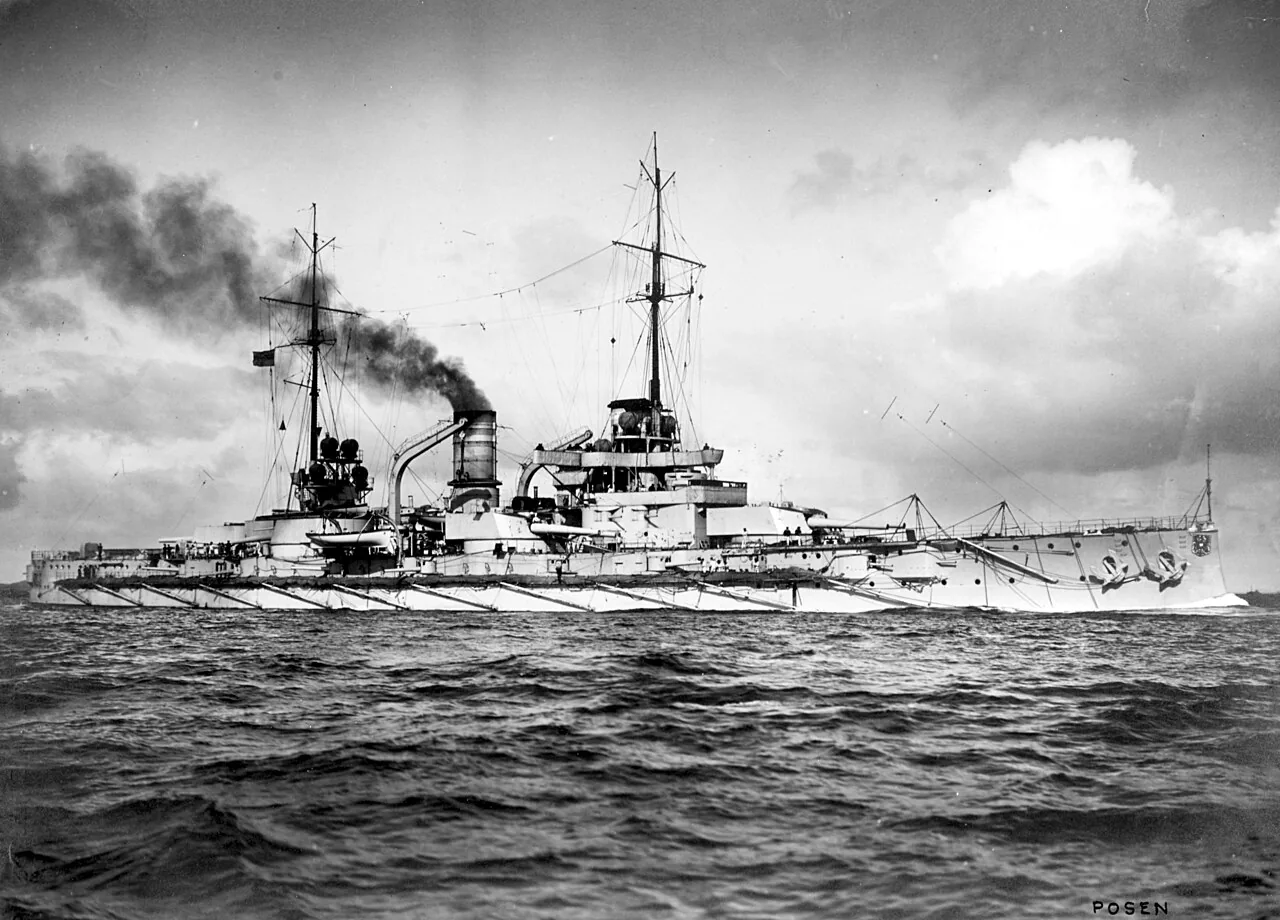
The security dilemma is a problem in international relations: when one country builds up its military for defense, other countries cannot be sure the buildup is defensive, so they arm themselves in response. Both sides spend more and feel less safe than before. The political scientist John Herz gave the concept its name in a 1950 article in the journal World Politics. Herbert Butterfield, a British historian, reached the same conclusion independently around the same time. The security dilemma arises because no world government can guarantee any country's safety, and because no country can see inside another country's decision-making. A government can count another country's missiles, but it cannot know what the person who commands those missiles will decide to do ten years from now. That uncertainty, combined with caution on both sides, produces an arms buildup that neither side wanted.
How Britain and Germany built warships against each other
The naval arms race before World War I is the best-known example. In 1898, Germany began building a large battle fleet under Admiral Alfred von Tirpitz. Tirpitz wanted diplomatic prestige and leverage for Germany. His goal was not to invade Britain. But Britain depended on imported food, and any large fleet in the North Sea could cut those supply lines. From London, the German buildup looked like a direct threat to British survival, whatever Tirpitz's actual intentions were.
Britain responded by building HMS Dreadnought, a battleship so powerful when it launched in 1906 that it made every existing battleship obsolete. Germany answered with its own dreadnoughts, starting with the Nassau class in 1907. Each new ship on one side justified the next ship on the other. When war broke out in 1914, both governments had spent enormous sums on their navies, and both were more afraid of each other than when the buildup began. Each country's defense had become the other's threat.
Why some arms races are more dangerous than others
The political scientist Robert Jervis published the most influential analysis of the security dilemma in 1978, in an essay titled "Cooperation Under the Security Dilemma." Jervis identified two factors that determine how dangerous the trap becomes.
The first is whether offensive and defensive weapons can be told apart. Fortifications and coastal guns are clearly defensive. They pose no threat to other countries. Long-range bombers and armored divisions stationed near a border look threatening regardless of the owner's intentions. When offensive and defensive forces look alike, any new weapon a country builds for its own protection can look like a step toward war.
The second factor is whether offense or defense has the advantage in practice. When it is easy to conquer territory and the side that moves first wins, countries cannot afford to wait. Crises move quickly, and small miscalculations can start wars. In 1914, every major army's planners were convinced that whoever mobilized first would win. That belief helped turn a crisis in the Balkans into a world war in weeks. When defending is easier than attacking, countries can afford to verify what their rivals are doing, and reassurance between them becomes possible.
How countries try to reduce the security dilemma
Countries have tried several approaches. Arms control treaties allow inspections and verification. Countries notify their neighbors before military exercises. Rivals set up hotlines so that a misunderstanding in the middle of the night does not become a war by morning.
Some weapons are deliberately designed to signal defensive intentions. Missile submarines are hard to find and hard to destroy, and their main use is to strike back after being attacked first. A country that puts its nuclear weapons on submarines is showing that it plans to retaliate, not to start a war.
Missile defense creates the opposite problem. A missile shield is defensive in name. But a country that can stop incoming missiles might consider attacking first, because it no longer needs to fear retaliation. The ABM Treaty of 1972 addressed this by limiting defensive missile systems rather than offensive ones. By agreeing not to build nationwide defenses against each other's nuclear missiles, the United States and the Soviet Union both made a first strike less attractive, because retaliation was guaranteed. The United States withdrew from the treaty in 2002.
The security dilemma today
Several current disputes follow the security dilemma's pattern. NATO's expansion toward Russia's borders looks, from Moscow, like preparation for an attack, even though NATO describes itself as a defensive alliance. China has built military bases on artificial islands in the South China Sea, describing them as defensive. The United States has responded by sailing warships through the area, which it describes as upholding freedom of navigation. Japan has increased its military spending significantly, citing threats from China and North Korea. Cyber tools present their own version of the problem: the same software that collects intelligence can shut down power grids, and the target cannot tell the difference until it happens.
In every case, both sides describe their own moves as defensive and their rival's moves as aggressive.
The most difficult part of the security dilemma is deciding whether a rival is a genuine aggressor or a frightened neighbor reacting to a threat it genuinely perceives. Treating a real aggressor as though it were simply reacting defensively is how appeasement failed in the 1930s. Responding to a scared neighbor as though it were planning an attack is closer to what happened in 1914. The security dilemma matters because countries must make that judgment with limited information, and the cost of getting it wrong is high.