
Seven Sisters
The Seven Sisters were seven Western oil companies that controlled most of the world's oil from the 1940s to the 1970s.
The Seven Sisters were seven Western oil companies that dominated the world's oil industry from the 1940s to the 1970s. Together they held roughly 85% of all known oil reserves that were not American or Soviet. For about thirty years, executives in New York, London, and Houston decided what oil cost. The countries that produced it had almost no say.
The name was coined by Enrico Mattei, the head of Italy's state oil company ENI. He wanted to join the group. They turned him away, and he called them le sette sorelle, "the Seven Sisters," as an insult. Mattei had fought as a partisan commander in the Italian resistance during World War II. After the war he was supposed to shut down Italy's failing state oil company, but he rebuilt it into a rival instead. He died in 1962 when his private plane crashed near Milan. Italian investigators later found evidence of a bomb on board. No one was ever charged.
How seven oil companies divided up the world
Three of the Seven Sisters came from the breakup of Standard Oil. In 1911 the US Supreme Court ruled that John D. Rockefeller's company was an illegal monopoly and split it into dozens of smaller firms. Three of the largest fragments became sisters. Standard Oil of New Jersey later traded as Esso and then Exxon. Standard Oil of New York, once known as Socony, became Mobil. Standard Oil of California, called Socal, became Chevron.
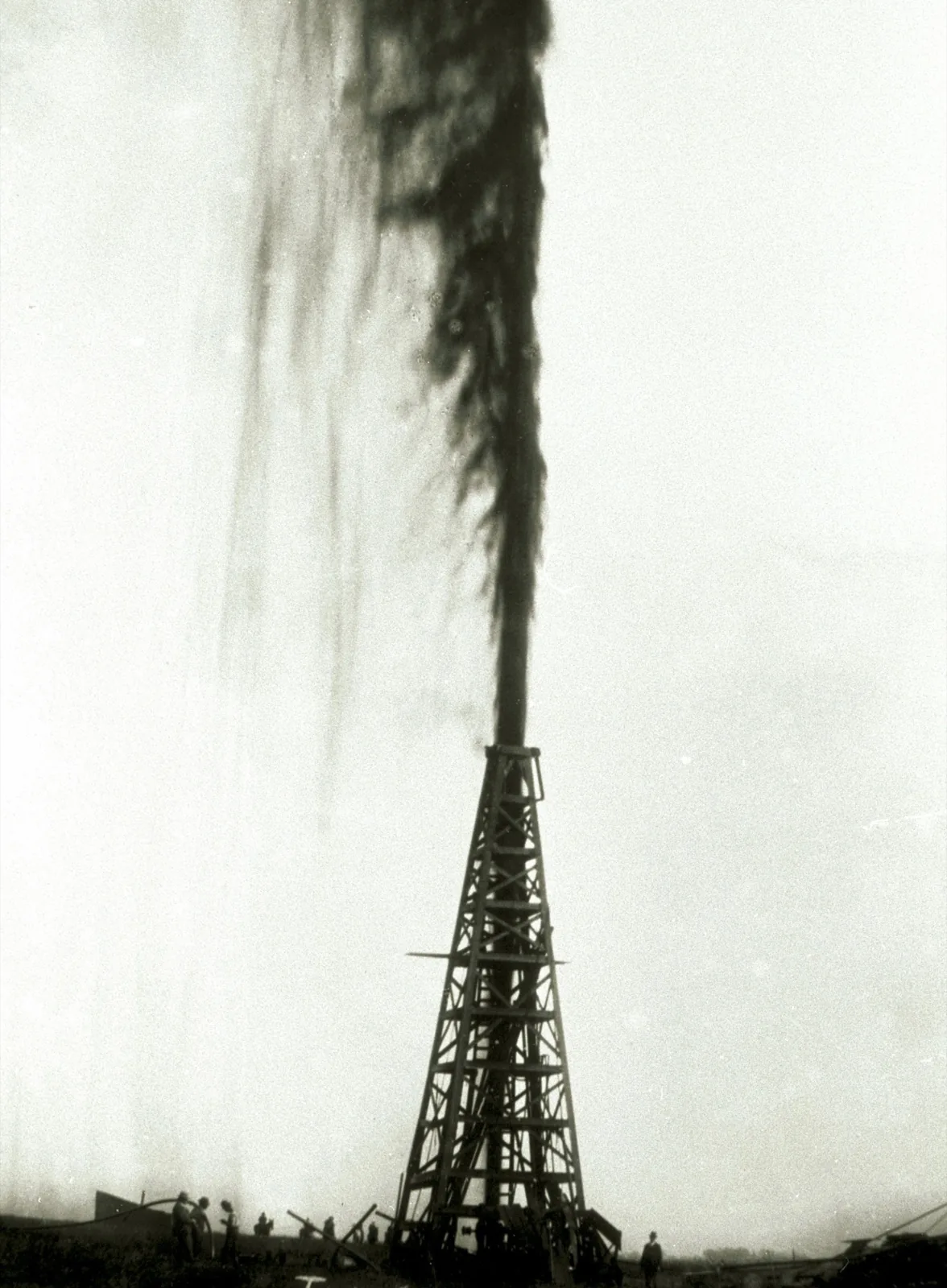
Two more grew out of the Spindletop oil gusher near Beaumont, Texas. On January 10, 1901, a well there blew a column of crude oil over 150 feet into the air. It produced about 100,000 barrels a day, more than any well the world had seen. Gulf Oil and Texaco were both formed in the rush that followed. The last two were European: Britain's Anglo-Persian Oil Company (later BP) and the Anglo-Dutch Royal Dutch Shell.
Each company controlled the full chain of production, from drilling the oil to selling it at the pump. They competed on paper, but in practice they cooperated. A secret 1928 meeting at Achnacarry Castle in Scotland brought together the leaders of Jersey Standard, Shell, and Anglo-Persian. They signed what became known as the As-Is Agreement. It froze market shares at existing levels, banned price wars, and divided the world's oil markets among the signatories. The other sisters joined over the following years. The arrangement stayed secret until a US Federal Trade Commission report exposed it in 1952.
How the Seven Sisters lost control of oil
Under the system the sisters built, producing countries received a fixed royalty and had no voice in how much oil was pumped or what it sold for. That began to change in the 1950s.
In 1951, Iran's prime minister, Mohammad Mossadegh, nationalized the Anglo-Iranian Oil Company. In 1953, a coup organized by the CIA and MI6 overthrew him. A Western consortium took over the oil fields. But the idea that a government could take back its own resources spread across the oil-producing world.
In 1960, Iran, Iraq, Kuwait, Saudi Arabia, and Venezuela founded OPEC in Baghdad. The sisters paid little attention at first. For more than a decade, OPEC lacked the leverage to challenge them. That changed in October 1973, during the Yom Kippur War, when OPEC's Arab members cut production and imposed an embargo on countries that supported Israel, including the United States. Within months, oil prices had increased nearly fourfold. In the United States, gas stations ran dry and drivers waited in lines that stretched for blocks.
Nationalizations followed across the producing world. Saudi Arabia nationalized Aramco fully by 1980. Governments in Venezuela, Libya, Kuwait, and elsewhere took back their oil fields. The power to set oil prices moved from corporate boardrooms to OPEC meetings in Vienna.
The Seven Sisters oil companies
The seven companies, with their later names:
- Standard Oil of New Jersey (Esso, then Exxon)
- Standard Oil of New York (Socony, then Mobil)
- Standard Oil of California (Socal, then Chevron)
- Anglo-Persian Oil Company (Anglo-Iranian, then BP)
- Royal Dutch Shell
- Gulf Oil
- Texaco
The Seven Sisters today
The seven companies did not disappear. Once nationalizations cut off their access to reserves and competition grew fiercer, they combined into a handful of giant firms that came to be called supermajors.
Exxon merged with Mobil in 1999 to form ExxonMobil. Chevron absorbed Gulf Oil in 1984 and then Texaco in 2001. BP bought Amoco in 1998. Shell stayed independent.
Four descendants of the original Seven Sisters remain among the world's largest corporations: ExxonMobil, Chevron, Shell, and BP. But by 2007 their share of global oil and gas production had fallen to about 10%, and they held roughly 3% of the world's proven reserves. They still explore, drill, refine, and sell fuel worldwide, but they no longer decide how much oil the world produces or what it costs.