Anglo-Persian Oil Company
The Anglo-Persian Oil Company was a British firm that controlled Iran's oil from 1909 to 1951 and is the ancestor of BP.
The Anglo-Persian Oil Company was a British oil company founded in 1909 after the first commercial oil discovery in the Middle East. The British government owned a controlling stake and used the company to fuel the Royal Navy. It is the direct ancestor of today's BP.
The company operated under a concession that promised Iran just 16 percent of net profits. In practice, the British Treasury often collected more in tax from the company than Iran received in royalties. That gap made the Anglo-Persian Oil Company the most visible symbol of foreign exploitation in Iran. In 1951, Iran's prime minister, Mohammad Mosaddegh, nationalized the company. Two years later, Britain and the United States organized a coup to overthrow him. The company was eventually renamed British Petroleum and then shortened to BP.
Who discovered oil in Iran?
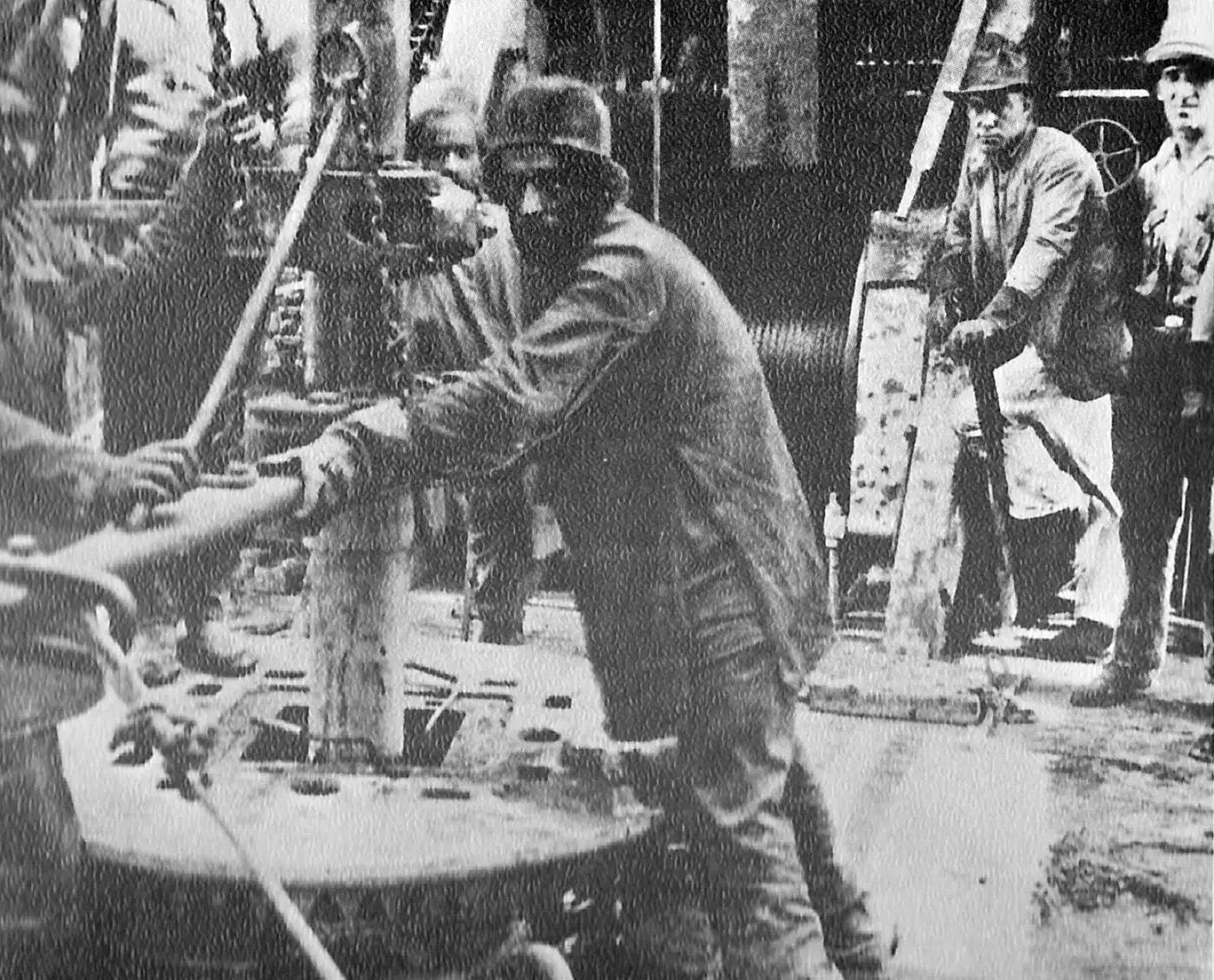
A drilling team led by the British geologist George Bernard Reynolds struck oil at Masjed Soleyman, in southwest Persia, on May 26, 1908. It was the first commercial oil discovery in the Middle East.
The money came from William Knox D'Arcy, a businessman born in Devon, England, who had made a fortune in gold mining in Queensland, Australia. In 1901, D'Arcy bought a concession from Persia's shah, Mozaffar ad-Din Shah Qajar. The concession gave D'Arcy exclusive rights to explore for oil across most of Persia for sixty years. It covered about 480,000 square miles, everything except the five northern provinces near Russia. In return, Persia received £20,000 in cash, £20,000 in shares, and a promise of 16 percent of the company's annual net profits.
Reynolds drilled for seven years in desert conditions and spent more than £500,000. By early 1908, D'Arcy's backers at Burmah Oil had lost patience. They sent Reynolds a telegram ordering him to stop drilling, dismiss his crew, and come home. Before the order took effect, oil shot fifty feet above the rig at Masjed Soleyman. On April 14, 1909, D'Arcy and Burmah Oil incorporated the Anglo-Persian Oil Company to develop the find.
How the British government took control of the company
In 1912, the Anglo-Persian Oil Company built a refinery at Abadan, a port city near the Persian Gulf. The Abadan refinery became the largest in the world. By the 1930s it was processing more than four million tons of crude oil a year.
By 1914, the Royal Navy was switching from coal-fired engines to oil, and a European war was approaching. Winston Churchill, then First Lord of the Admiralty, wanted a guaranteed fuel supply at a fixed price rather than depending on the open market. Churchill pushed Parliament to buy a 51 percent stake in the Anglo-Persian Oil Company for £2.2 million, about £330 million in today's money. Parliament approved the purchase in August 1914, days after the First World War began.
The British government now controlled a company that pumped another country's oil. The concession promised Iran 16 percent of net profits, but the company's accounting methods could shrink that figure. In 1935, Persia's government asked the world to use the name Iran, and the company became the Anglo-Iranian Oil Company. The name changed, but the imbalance did not. By 1950, the Anglo-Iranian Oil Company was paying the British Treasury about £50 million a year in taxes while paying Iran about £16 million in royalties. Britain earned roughly three times more from Iranian oil than Iran did. Iranian workers at the Abadan refinery lived in poor conditions while dividends went to London.
How the Anglo-Persian Oil Company became BP
By 1951, the company's terms had become a national cause in Iran. Mohammad Mosaddegh, Iran's prime minister, nationalized the Anglo-Iranian Oil Company and placed its assets under a newly created state oil company. Britain responded with a naval blockade of the Abadan refinery and threatened legal action against any tanker that loaded Iranian crude. Iran's oil exports, which had run at about 600,000 barrels a day, fell to almost nothing.
When economic pressure failed to remove Mosaddegh, Britain's MI6 and the American CIA organized a coup in August 1953 that overthrew him and restored Mohammad Reza Shah to full power. The full story is told in the Orbis article on Operation Ajax.
In 1954, a new agreement established an international consortium to manage Iran's oil industry. The old company, now renamed the British Petroleum Company, kept 40 percent. Five American oil companies took another 40 percent. Royal Dutch Shell took 14 percent and a French company took the remaining 6 percent. The agreement recognized Iran as the legal owner of its oil, but the consortium decided how much was pumped and what it sold for.
The company later dropped every reference to Persia and Iran from its name and became simply BP. The 1953 coup is still cited in Iran as the defining example of Anglo-American interference. The arrangement in which a Western company and its government earned far more from Iranian oil than Iran did outlasted the company itself and shaped Iranian resentment toward the West for decades.