
Mohammad Mosaddegh
Mohammad Mosaddegh was Iran's prime minister who nationalized the Anglo-Iranian Oil Company in 1951 and was overthrown by a CIA and MI6 coup in 1953.
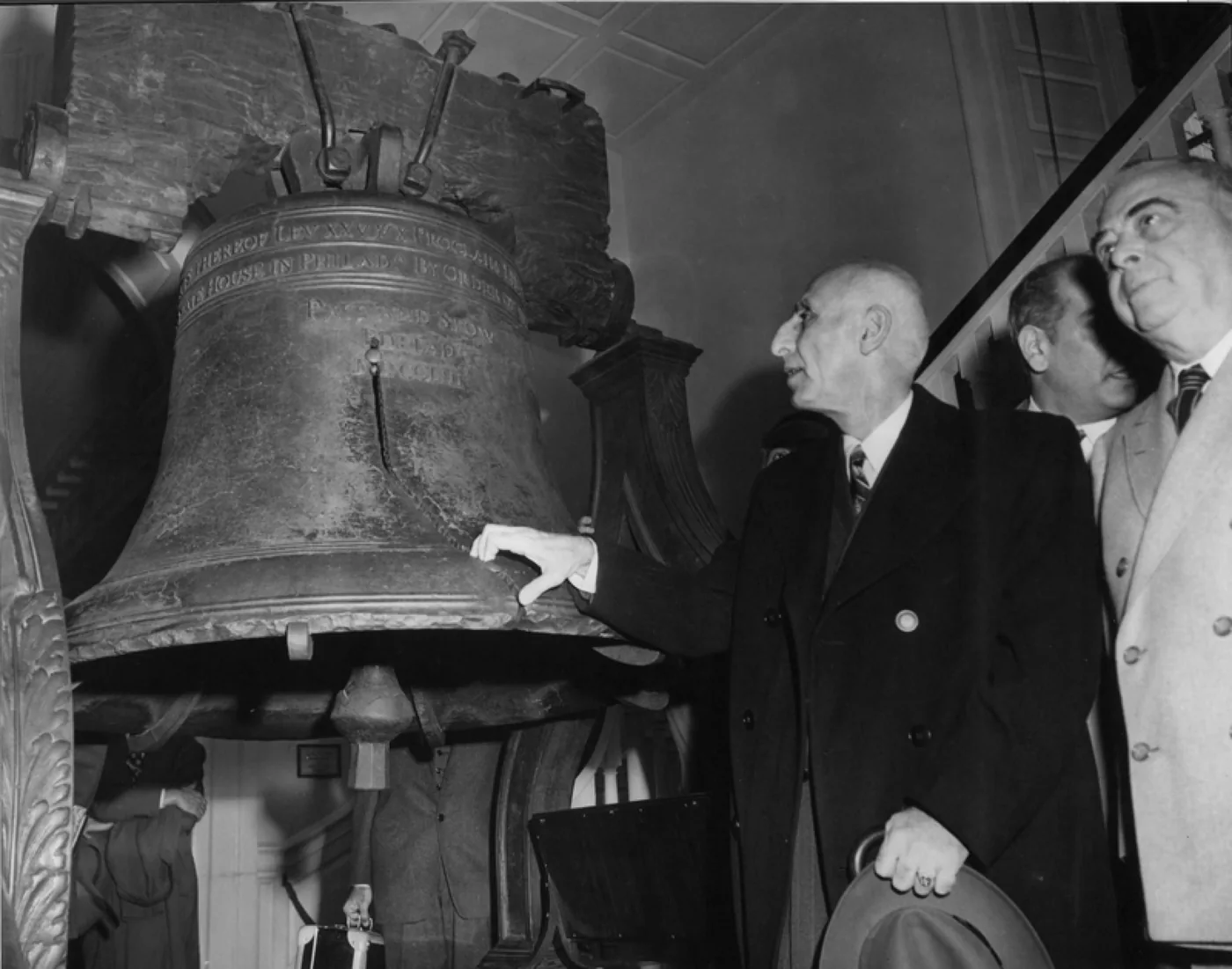
Mohammad Mosaddegh was Iran's prime minister from 1951 to 1953. He came from an aristocratic family, wept openly during parliamentary speeches, and sometimes received foreign diplomats while lying in bed in his pajamas. In 1951 he nationalized the Anglo-Iranian Oil Company, which controlled Iran's oil and was one of Britain's most valuable overseas assets. Time magazine put him on its cover as Man of the Year for 1951. In August 1953, the CIA and Britain's MI6 overthrew him in a coup. He spent the rest of his life under house arrest and died in 1967. For Iranians, his overthrow remains the defining example of Western interference in their country.
How Mosaddegh nationalized Iran's oil
Mosaddegh was born in 1882 into a prominent family. His mother was a princess of the Qajar dynasty, which ruled Iran at the time, and his father served as finance minister. He was a Shia Muslim who studied law in Paris and then at the University of Neuchatel in Switzerland, where he became the first Iranian to earn a doctorate in law from a European university. He entered politics during Iran's Constitutional Revolution in the early 1900s. Before becoming prime minister, he served as governor of two provinces and as finance minister. He had a reputation for being impossible to bribe.
The issue that made Mosaddegh a national figure was oil. The Anglo-Iranian Oil Company, the ancestor of today's BP, pumped oil from southwest Iran and paid Iran a small share of the profits. In 1950, the company paid the British government about 50 million pounds in taxes. That same year, Iran received only about 16 million pounds in royalties. The British government was earning roughly three times more from Iranian oil than Iran was.
Mosaddegh spent months in parliament documenting the gap. In March 1951, the Majlis, Iran's parliament, voted to nationalize the oil industry. In April, the Majlis made Mosaddegh prime minister to carry out the nationalization.
How Britain and the CIA overthrew Mosaddegh
Britain responded with an economic blockade. The Royal Navy moved warships into the Persian Gulf, British technicians left the oil fields, and company lawyers threatened to seize any tanker that loaded Iranian crude. Oil exports from Abadan, home to the world's largest refinery, dropped to nearly nothing. Iran's economy shrank. The coalition that supported Mosaddegh, which included nationalists, clerics, and members of the communist Tudeh party, began to fracture under the pressure.
Britain wanted Mosaddegh removed but could not do it alone. President Harry Truman refused to help. When Dwight Eisenhower took office in January 1953, his administration agreed, fearing that Iran's instability would push the country toward the Soviet Union. The CIA sent an officer named Kermit Roosevelt to Tehran to run the operation, which the Americans code-named TP-Ajax and the British called Boot. The plan relied on bribed military officers, paid crowds, and planted newspaper stories.
The first attempt, on August 15, 1953, failed. Iran's monarch, Mohammad Reza Shah, fled to Rome. The second attempt, on August 19, succeeded. Soldiers shelled Mosaddegh's house, and he surrendered the next day. General Fazlollah Zahedi took power. The full story of the coup is told in Operation Ajax: the 1953 coup that created modern Iran.
What happened to Mosaddegh after the coup?
Mosaddegh was tried for treason by a military court. He served three years in prison, then was placed under house arrest on his family estate at Ahmadabad, near Tehran. He lived there for the rest of his life, under guard and cut off from public life.
Iran's oil was handed to a Western consortium. British Petroleum, as Anglo-Iranian renamed itself, kept 40 percent. Five American companies took another 40 percent. Iran was recognized as the legal owner of its oil, but the consortium controlled production and pricing. Mohammad Reza Shah, restored to power by the coup, founded the SAVAK secret police in 1957 with American and Israeli help and ruled for another 22 years.
Mosaddegh died on March 5, 1967, at age 84. The Shah's government refused to allow a public funeral or burial in a public cemetery. Mosaddegh was buried beneath the dining room of his house at Ahmadabad, to prevent his grave from becoming a site of pilgrimage.
Why Mosaddegh still matters in Iran
For Iranians across the political spectrum, Mosaddegh's overthrow is remembered as the moment a democratic government was destroyed to protect foreign oil interests.
The memory shaped events long after Mosaddegh's death. When Mohammad Reza Shah was admitted to the United States for medical treatment in October 1979, Iranians remembered that the previous time the Shah fled the country, in 1953, the CIA had put him back on the throne. Two weeks later, students seized the US embassy in Tehran, the same building that had housed the CIA's coup planners, and held 52 Americans hostage for 444 days.
The United States denied its role for decades. In 2000, Secretary of State Madeleine Albright acknowledged that "the United States played a significant role in orchestrating the overthrow." In 2013, the CIA released its own internal history confirming its central role. Mosaddegh held power for two years, but the memory of his overthrow has shaped Iran's relationship with the West for more than seven decades.