
Shipping Container
The shipping container is a standard steel box introduced in 1956 that cut the cost of ocean freight and made global supply chains possible.
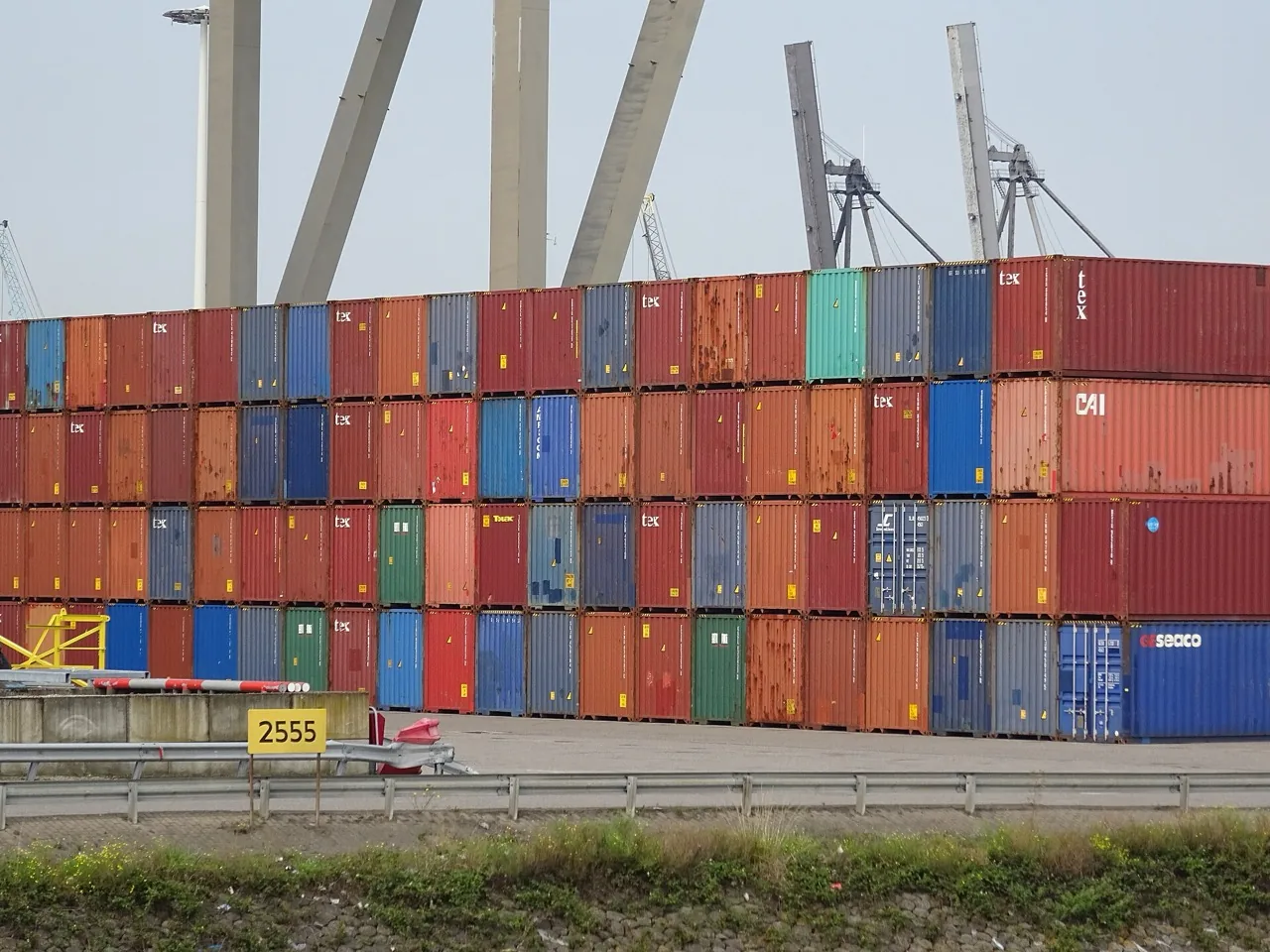
The shipping container is a standard steel box, usually 20 or 40 feet long, that carries nearly everything traded by sea. Before it existed, dockworkers loaded ships by hand, one crate, barrel, or sack at a time. A ship could spend as long in port being loaded as it spent crossing the ocean, and cargo was frequently stolen, dropped, or damaged. In 1956, a former trucking company owner named Malcom McLean put 58 metal boxes on a converted oil tanker and sailed them from Newark, New Jersey, to Houston, Texas. According to the shipping historian Marc Levinson, hand-loading loose cargo cost $5.83 a ton. Loading McLean's containers cost 16 cents. That difference remade global trade.
How Malcom McLean invented container shipping
McLean did not come from the shipping industry. He grew up in Maxton, North Carolina, managed a gas station after high school, and bought his first truck in 1934. He started by hauling dirt for highway construction and moved into long-haul freight. By the mid-1950s, McLean Trucking was one of the largest trucking companies in the United States. McLean had spent years watching longshoremen unload his trailers at the docks, lifting out one crate at a time. His idea was simple: instead of unloading the cargo, put the whole box on the ship.
On April 26, 1956, McLean's converted World War II tanker, the Ideal-X, sailed from Port Newark carrying 58 metal containers on its deck. It reached Houston five days later.
A container is useful only if every port, crane, truck chassis, and rail car can handle the same box. In the early years, rival shipping lines built containers of varying dimensions with incompatible lifting hardware. None of them worked with anyone else's equipment. In the 1960s, the International Organization for Standardization (ISO) set standard lengths of 20 and 40 feet. It also defined a standard corner fitting: a steel block welded to each corner of the box, shaped so that any crane or locking mechanism can grab it. McLean had patented his corner-fitting design. He released the patent royalty-free so that the whole industry could use a single standard. That decision cost his company, Sea-Land, its main competitive advantage. It also made the modern container industry possible.
How the container opened the Pacific
The Vietnam War showed that the system could handle real volume. The American military faced severe supply problems getting equipment to its forces, and in 1967 it hired McLean's company, Sea-Land, to ship containers to Cam Ranh Bay. In 1968 alone, Sea-Land moved more than 60,000 container loads through the port. The contract gave Sea-Land guaranteed cargo heading west to Vietnam. Rather than send the ships back empty, McLean began stopping at Japanese ports on the return leg, picking up manufactured goods bound for the United States. That return route became a foundation of the trans-Pacific container trade.
Before containers, moving goods across an ocean was expensive enough that most products had to be manufactured close to where they were sold. Cheap, reliable freight changed that. If shipping a part across the Pacific costs almost nothing and the delivery date is predictable, a manufacturer can source components from wherever they are cheapest and assemble them on the other side of the world. Containerization made that possible years before the trade deals that usually get credit for it. The biggest GATT rounds and special economic zones came later.
Containerization also changed the ports themselves. Container handling required large open yards for stacking, and the old city docks did not have the space. Ports moved to deep-water sites like Elizabeth, New Jersey, and Rotterdam. Tens of thousands of dockworkers lost their jobs within a single generation. London's and New York's old port districts went quiet. Decades later, both were rebuilt as offices and apartments.
Shipping containers today
McLean's first shipment was 58 boxes. Today's largest container ships, like MSC's Irina class, carry more than 24,000 twenty-foot equivalent units (TEUs). In 2024, the world's ports handled more than 900 million TEU movements.
These ships are too large for the canal locks that existed when container shipping began. The Panama Canal added a third set of locks at a cost of $5.25 billion, completed in 2016, to handle bigger vessels. The system's scale also makes it vulnerable at a few narrow points. In March 2021, a single container ship, the Ever Given, ran aground and blocked the Suez Canal for six days, holding up an estimated $9.6 billion in trade per day. Starting in late 2023, Houthi attacks in the Red Sea forced most major shipping lines to reroute around the Cape of Good Hope, adding ten to fourteen days to Asia-Europe voyages. A handful of maritime chokepoints can raise the cost of shipping for the entire world.
Customs authorities physically inspect only a small fraction of the hundreds of millions of containers that move each year. The same standardization that made the system fast and cheap also made it hard to monitor. The ownership of port infrastructure has become a political question too: Chinese state-linked firms now own shares in port facilities across Europe, and several governments treat those investments as a security concern.
The shipping container started as one trucker's fix for slow loading at the docks. It became the standard unit of global trade.