Spanish Civil War
The Spanish Civil War (1936-1939) killed about 500,000 people and ended with Francisco Franco ruling Spain as a dictator until 1975.
The Spanish Civil War (1936-1939) started with a military coup on July 17, 1936 that succeeded in half of Spain and collapsed in the rest. That partial failure turned into three years of fighting that killed about 500,000 people. By April 1939, General Francisco Franco controlled the entire country and ruled as a dictator until his death in 1975.
The war was also a proxy conflict. Nazi Germany and Fascist Italy backed Franco. The Soviet Union backed the Republic. Britain and France stayed out. For Adolf Hitler and Benito Mussolini, Spain was a place to test weapons and tactics. For the democracies, it was a fight they chose to avoid, one of several choices in the 1930s that cleared the way for the Second World War.
How the coup split Spain in two
Spain's Second Republic replaced the monarchy in 1931. By the mid-1930s the country was deeply divided. Millions of rural workers had no land of their own. The Catholic Church held enormous influence that the left wanted to curtail. Catalonia and the Basque provinces demanded self-rule. The army saw itself as above civilian control.
Spain's government shifted between left and right before the Popular Front, a coalition of socialists, communists, and republicans, won a narrow election in February 1936. The coalition took 47 percent of the vote to the right's 46 percent, but Spain's electoral system turned that slim margin into a large majority in parliament. By that summer, neither side was willing to accept the other in power.
On July 17 and 18, generals including Francisco Franco launched a coup. It took most of northwestern Spain and parts of the south but failed in Madrid, Barcelona, and the industrial north. The failure turned a coup into a war.
How foreign powers fought Spain's war
Franco's best troops, the Army of Africa, were stuck in Morocco at the start because most of the fleet remained under Republican control. Within two weeks, Hitler and Mussolini sent transport planes that flew the army across the Strait of Gibraltar, an early large-scale military airlift.
From that point on, outside governments played a central role in the fighting. Germany contributed the Condor Legion, an air unit that tested dive bombers, battlefield radios, and the deliberate bombing of civilian towns. Italy sent roughly 75,000 ground troops. On the other side, the Soviet Union shipped aircraft, tanks, and military advisers, and charged for the help out of Spain's gold reserve. In October 1936, the Republic shipped 510 tonnes of gold, about three-quarters of its reserves, to Moscow. Most of it was never returned.
The Comintern organized the International Brigades, which drew roughly 32,000 to 35,000 volunteers from over 50 countries to fight for the Republic. Among them were about 2,800 Americans in the Abraham Lincoln Brigade.
Britain and France organized a Non-Intervention Agreement to keep the war from spreading. All three major intervening powers signed on, then continued shipping arms. The agreement's real effect was that the elected Spanish government could not buy weapons on the open market while Franco's allies kept him supplied. Britain and France's refusal to act became part of the broader pattern of appeasement.
What was the bombing of Guernica?
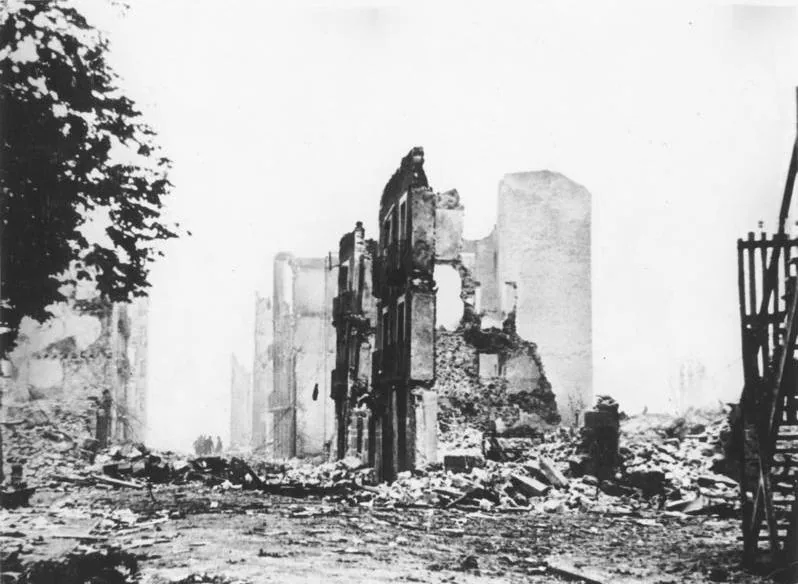
On April 26, 1937, German and Italian aircraft bombed Guernica, a market town in the Basque Country, for about three hours. Waves of bombers dropped high-explosive and incendiary bombs while fighters strafed people fleeing into the fields. The attack came on a market day. Estimates of the dead range from about 150 to over 1,600, and much of the town was destroyed.
Guernica was not a significant military target. The bombing was one of the first deliberate air attacks on a civilian town, and it drew worldwide attention. Pablo Picasso, commissioned by the Spanish Republic to create a mural for the 1937 World's Fair in Paris, responded with Guernica, a large black-and-white canvas that became the most famous anti-war painting of the twentieth century. It now hangs in the Museo Reina Sofía in Madrid.
Who won the Spanish Civil War?
Francisco Franco and the Nationalists won. Franco unified his side early, merging the Falangists, monarchists, and Carlists into a single movement under his command in April 1937. He moved deliberately, taking territory and removing rivals within his own ranks as he went.
The Republic fought itself. Communist forces, armed and directed by Moscow, wanted to run a conventional war and turned on their own allies. In May 1937, street fighting broke out in Barcelona between communists and anarchists. The anti-Stalinist party POUM was banned, and its leader, Andreu Nin, was kidnapped and murdered by Soviet agents in June. The English writer George Orwell, who had been serving in a POUM militia unit, was shot through the throat by a sniper on the front lines and barely survived. He escaped Spain during the crackdown, narrowly avoiding arrest. His time there shaped his books Animal Farm and 1984.
The Republic's last major offensive, on the Ebro River in the summer of 1938, failed. Barcelona fell to Franco in January 1939. Madrid surrendered in March.
Violence continued after the fighting ended. Tens of thousands of people were shot or died in detention over the following decade, and hundreds of thousands more fled abroad. Franco kept Spain officially neutral during the Second World War, though he sent volunteers to fight alongside Germany in Russia. He ruled Spain until he died in November 1975, nearly four decades after the war that brought him to power.