
U-boat
U-boats were German submarines that sank thousands of merchant ships in World War I, nearly starving Britain and bringing the United States into the war.
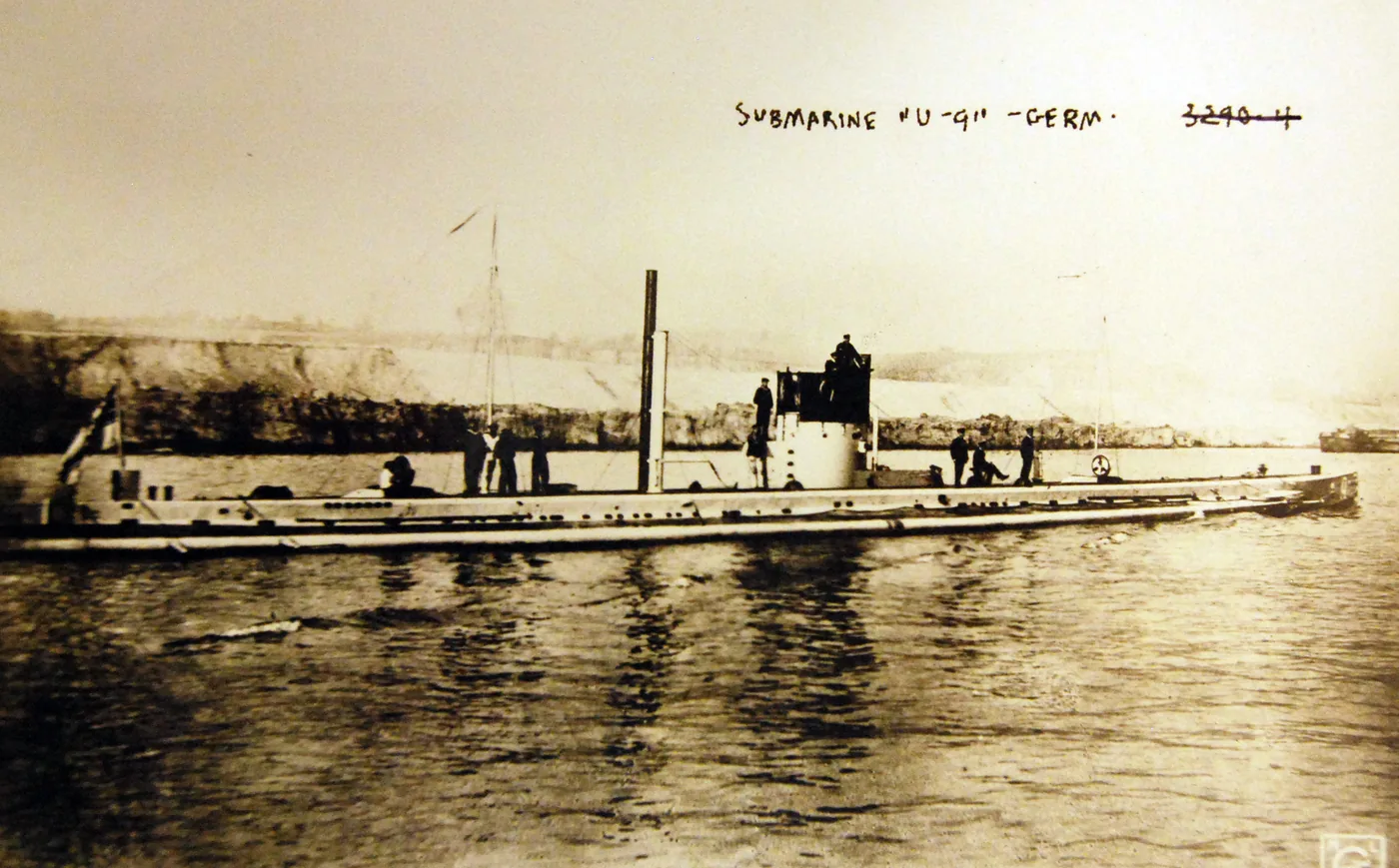
A U-boat is a German submarine. The word comes from Unterseeboot, which means "undersea boat" in German. Germans shortened it to U-Boot, which became U-boat in English. Germany built its first navy submarine, U-1, at Kiel in 1906, years after Britain and France had launched their own. When World War I began in August 1914, Germany had about 20 operational U-boats. They were cramped steel tubes, powered by diesel or kerosene engines on the surface and batteries underwater, able to stay submerged for only a few hours before surfacing to recharge. Those submarines and the hundreds built after them sank more than 5,000 merchant ships over the next four years. They threatened Britain more than Germany's entire surface navy, and they helped bring the United States into the war.
How Germany turned to submarine warfare
Britain depended on imports for most of its food and many of the raw materials for its war industry. Everything arrived by merchant ship. The Royal Navy blockaded Germany's ports, and Germany could not challenge British shipping with its surface fleet. Submarines offered a way around the blockade.
The weapon proved itself quickly. On September 22, 1914, a single U-boat, U-9, sank three British armored cruisers in the North Sea in just over an hour, killing 1,459 sailors. U-9's commander, Otto Weddigen, was 32 years old and led a crew of about 28. He received the Pour le Mérite, Germany's highest military honor. A small submarine had destroyed three warships in one morning. Weddigen was killed six months later when his next submarine, U-29, was rammed and sunk by the British battleship HMS Dreadnought.
A submarine's greatest advantage, its invisibility, also created a legal problem. International law required an attacking warship to stop a merchant vessel, board it, and put the crew in lifeboats before destroying it. Any submarine that surfaced to comply was exposed and easy to sink. Germany's answer was "unrestricted submarine warfare": destroying ships without warning, including ships from neutral countries.
On May 7, 1915, U-20 torpedoed the British passenger liner Lusitania off the coast of Ireland, killing 1,198 people, 128 of them American. The outcry in the United States forced Germany to pull back. Germany imposed restrictions, relaxed them, and pulled back again, each time making the weapon less effective and the political cost higher.
The 1917 U-boat crisis and the convoy
On February 1, 1917, Germany declared unrestricted submarine warfare for the last time. Germany's military leaders calculated that if U-boats could destroy 600,000 tons of shipping per month, Britain would be forced to make peace within five months, before the United States could train and transport an army.
The early results nearly proved them right. Between January and April 1917, U-boats destroyed over 2.2 million tons of shipping. April was the peak of the campaign: nearly 860,000 tons went to the bottom, an average of 13 ships a day. A quarter of the merchant ships that sailed from British ports were lost. Britain had only a few weeks of food remaining, and senior Royal Navy officers privately questioned whether the country could survive.
The solution was the convoy, an idea the Admiralty had long resisted. Starting in May 1917, merchant ships crossed the Atlantic in groups escorted by destroyers instead of sailing alone. A submarine now had to locate the group somewhere in the open Atlantic and fight past its escort to attack. The change was dramatic: of roughly 16,700 merchant ships escorted in convoys through the end of the war, 99 percent arrived safely.
Over the course of the war, U-boats sank about 13 million tons of Allied and neutral shipping. Germany lost more than 5,000 submariners. A generation later, in World War II, Germany tried the same strategy in the Atlantic with far more submarines. The convoy system, combined with radar and codebreaking, defeated it again.
Why did U-boats bring the United States into World War I?
Unrestricted submarine warfare meant destroying any ship without warning, including ships from neutral countries. Americans died on torpedoed vessels. The Lusitania's sinking in 1915 turned American public opinion sharply against Germany. President Woodrow Wilson, who had won re-election in 1916 on a promise to keep America out of the war, found his position harder to hold with each new attack.
When Germany resumed unrestricted warfare on February 1, 1917, Wilson broke off diplomatic relations days later. The Zimmermann Telegram, in which Germany proposed a military alliance with Mexico against the United States, became public weeks after that and sealed the decision. On April 6, 1917, the United States declared war.
Germany's naval commanders had calculated the shipping numbers correctly. They had not accounted for the political consequences. The campaign that came closest to cutting off Britain's supplies also brought American soldiers, factories, and money into the war on the other side.