
The Peloponnesian War: the first Thucydides trap
The Peloponnesian War ruined both Athens and Sparta. Thucydides blamed a rising power and a frightened rival, and the pattern now has a name.
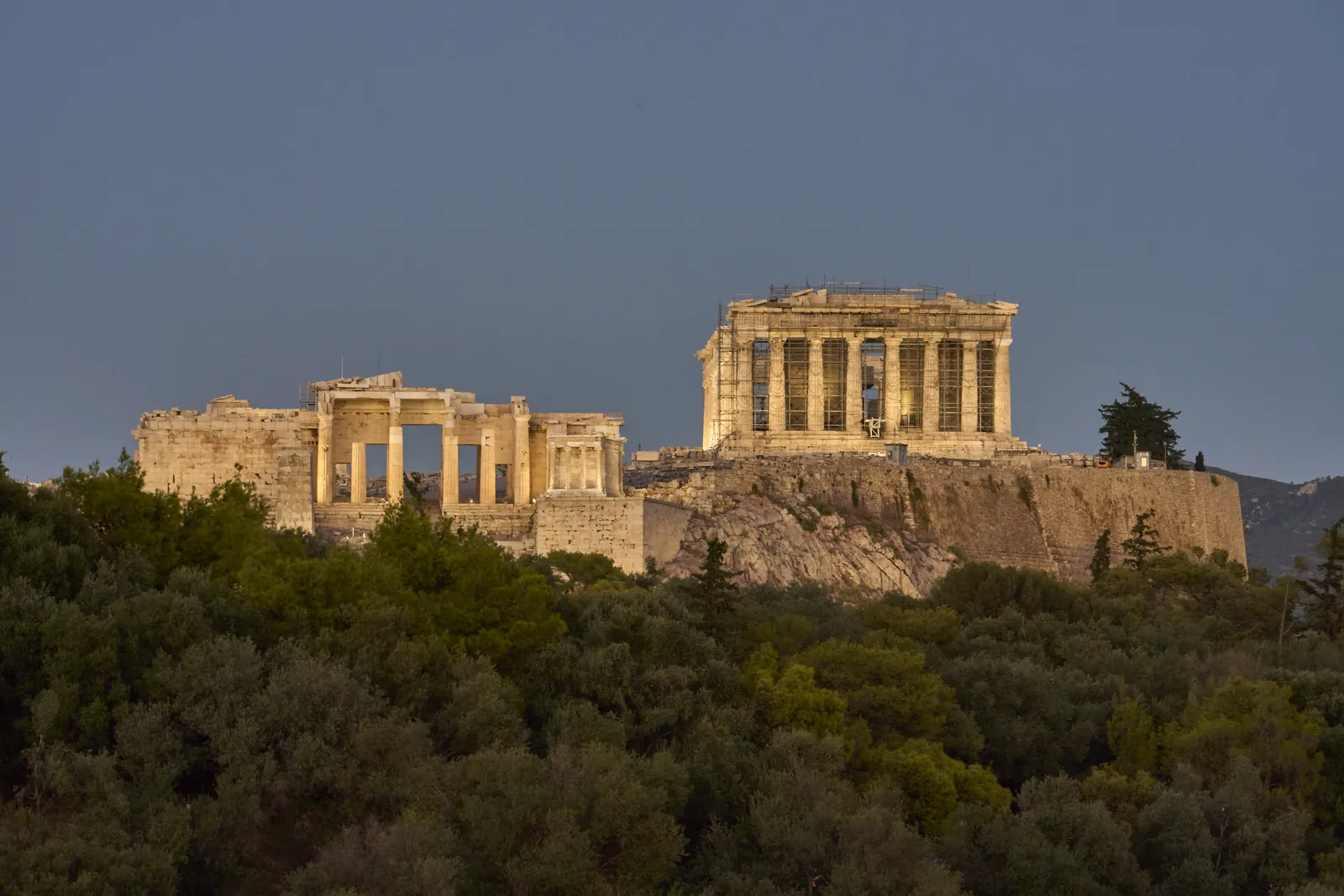
Fifty years after Athens and Sparta fought side by side to drive the Persian Empire out of Greece, they turned on each other. The war between them ran for 27 years, from 431 to 404 BCE, and pulled in nearly every Greek city. Athens lost its empire and its golden age. Sparta won and collapsed a generation later. An exiled Athenian general named Thucydides wrote the war's history as it happened, and his one-sentence explanation of why it started is still argued about in Washington and Beijing today.
How the alliance that beat Persia became an Athenian empire
In 478 BCE, the year after the Persian army went home, Athens organized the island and coastal cities of the Aegean into a league to guard against Persia's return. Members could contribute warships or pay cash into a shared treasury on the island of Delos. Most chose cash, which was easier, and within a generation only Athens had a real fleet while everyone else paid for it.
The league stopped being voluntary the first time a member tested it. In 465 BCE, the island of Thasos tried to leave. Athens besieged it for two years, tore down its walls, took its ships and its gold mines, and converted its membership into permanent tribute. In 454 BCE, the treasury itself moved from Delos to Athens. By the eve of the war, the empire was bringing in about 600 talents of silver a year, and a single talent paid a warship's crew of 200 men for a month. Athenians themselves debated whether allied money was paying for the Parthenon, which was going up on the Acropolis at exactly that time, and it probably was.
Athens had become something Greece had never seen: a democracy at home and an empire abroad, funding a golden age of theater and philosophy out of other cities' taxes. A hundred miles away, Sparta, the strongest land power in Greece, watched its rival grow richer every year.
What the war was really about
When war finally came in 431 BCE, everyone could name a cause. Athens and Sparta's ally Corinth had clashed over the island of Corcyra, and an Athenian trade ban was strangling Megara, a Spartan ally. Politicians on both sides argued about these disputes as if resolving them would keep the peace.
Thucydides did not believe them. He was an Athenian general who had lost the city of Amphipolis to a Spartan attack in 424 BCE and was exiled for it. He spent the next twenty years traveling the Greek world, interviewing soldiers and politicians on both sides. His conclusion was that the official grievances were not the real explanation. Beneath them sat the actual cause:
The real cause I consider to be the one which was formally most kept out of sight. The growth of the power of Athens, and the alarm which this inspired in Lacedaemon, made war inevitable.
Lacedaemon is Sparta. When one power is rising and the other is afraid of it, the dispute of the day is interchangeable: settle Corcyra and Megara, and the fear simply finds the next dispute.
Pericles had a plan, and the plague destroyed it
The war opened as a stalemate. Sparta had the best infantry in the world and almost no navy. Athens had the largest fleet in Greece, walls running down to its port, and grain arriving by sea.
Pericles, the politician who had led Athens for decades, built the Athenian strategy around that mismatch. When the Spartans marched in each summer, the entire rural population of Attica would withdraw inside the walls and let the farms burn. Athens would live off its empire and its grain ships, refuse the land battle it would lose, and wait for Sparta to give up. The plan asked Athenians to watch their own fields burn from the ramparts. They hated it, but it was working.
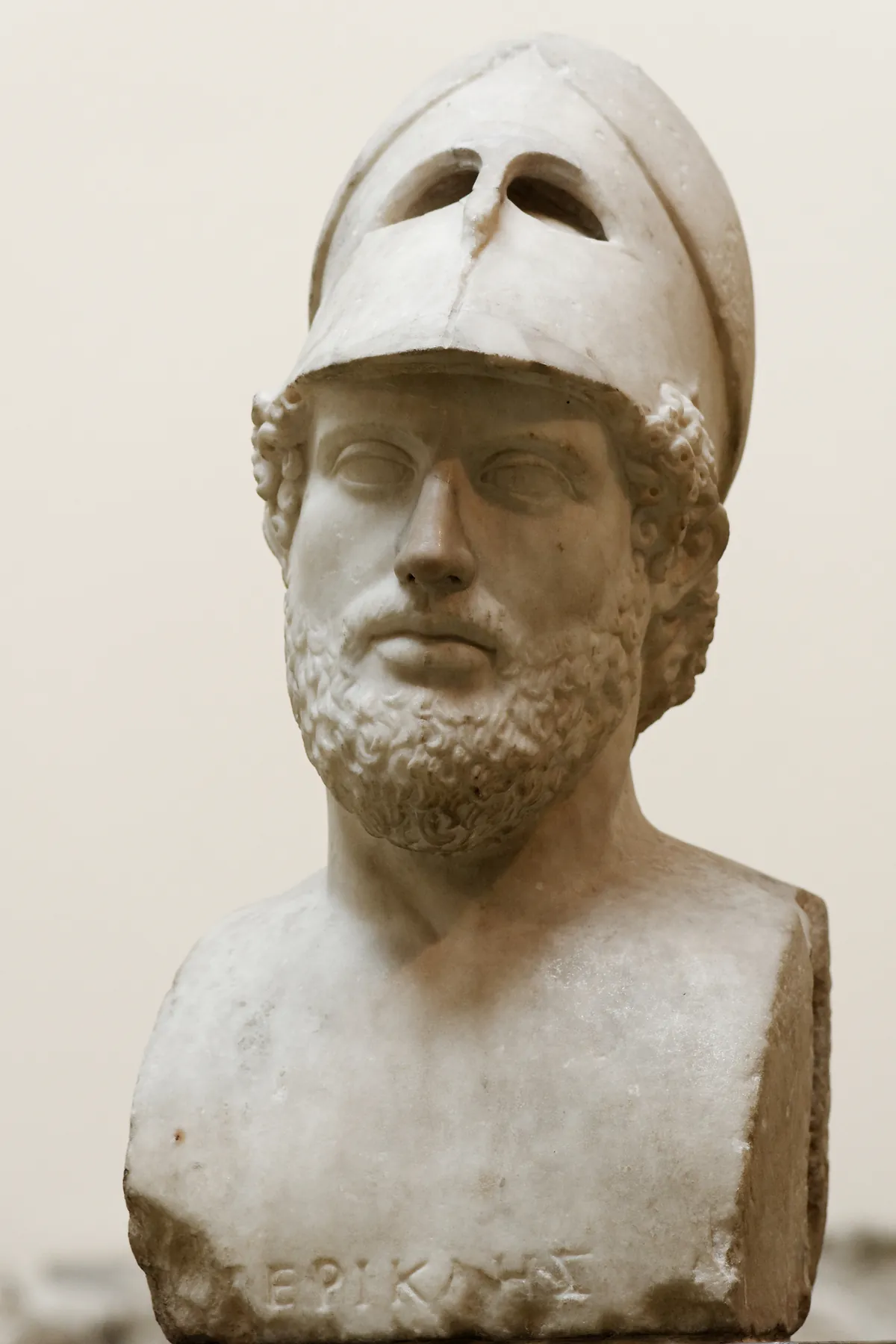
Then, in 430 BCE, a disease came through the port into a city packed with refugees. Over several waves it killed between a quarter and a third of the population, and no one has ever identified what it was. Thucydides caught it, survived, and recorded the symptoms in clinical detail: burning fever, a raw and bleeding throat, skin breaking out in sores, and a thirst nothing could relieve. Some survivors lost fingers, toes, or their memory. He also recorded what the plague did to the city: people who expected to die stopped obeying laws or honoring gods, since neither seemed to change who lived. In 429 BCE the plague killed Pericles himself. Athens kept his strategy but lost the one man who could hold a frightened, grieving assembly to it.
Sicily: how Athens defeated itself
The Athens that came out of the plague was harder and less patient. In 416 BCE, Athens demanded that Melos, a small neutral island, submit and pay tribute. When Melos refused, Athens killed every adult man on the island and sold the women and children into slavery. Thucydides reconstructed the Athenian envoys' argument in a line that is still quoted in international relations courses: "the strong do what they can and the weak suffer what they must."
The next year, the assembly voted for something far more reckless. Athens would invade Sicily and take Syracuse, a Greek city 800 miles away that posed no threat to Athens whatsoever. The war was even paused at the time under an uneasy truce. The invasion's loudest champion was Alcibiades, a rich young aristocrat who had studied under Socrates and had entered seven chariot teams at the previous Olympics, winning first, second, and fourth place. He promised Sicily would be easy, and the assembly believed him.
Athens then sabotaged its own expedition. Shortly before the fleet sailed, statues of the god Hermes were vandalized across the city, and Alcibiades was implicated in the scandal. Recalled to stand trial, he defected to Sparta instead and told the Spartans exactly how to win: send a real general to defend Syracuse, and build a year-round fort in Athenian territory. Sparta did both. The Sicilian campaign dragged on for two years and ended in total annihilation. Athens lost more than 200 ships and tens of thousands of men, and the survivors were penned in the stone quarries of Syracuse on half a pint of water a day until most of them died. Athens had destroyed its own fleet in a war it was not losing.
Sparta won with Persian gold and did not stay on top
Sparta's fort at Decelea, built on Alcibiades' advice, cut Athens off from its farmland and its silver mines, and more than 20,000 slaves escaped to the Spartan lines. But Sparta could not finish a naval power without a navy, and in 412 BCE it asked Persia to pay for one. The deal was blunt. Persia would pay for a Spartan fleet, and Sparta would let the Persian king take back the Greek cities of Asia Minor, the same cities the Persian Wars had been fought over. The old enemy of Greece financed the victory of one Greek power over another.
In 405 BCE, the Spartan commander Lysander caught the Athenian fleet beached at Aegospotami and destroyed it, cutting the grain route from the Black Sea. Athens starved through the winter and surrendered in 404 BCE. The victors tore down the city's walls to the music of flute players, and Xenophon wrote that men believed that day was the beginning of freedom for Greece. Instead, Sparta installed puppet governments in the cities it had promised to liberate. In Athens, the puppet regime became known as the Thirty Tyrants. It killed around 1,500 people in eight months before the Athenians overthrew it.
Sparta's own turn on top lasted one generation. In 371 BCE, the city of Thebes destroyed the Spartan army at Leuctra, killing 400 of the 700 full Spartan citizens on the field, then freed the enslaved population whose labor the whole Spartan system ran on. Sparta was never a great power again. In 338 BCE, Philip of Macedon defeated what remained of the exhausted Greek cities, and the age of independent Greece was over.
The first Thucydides trap, and the one everyone watches now
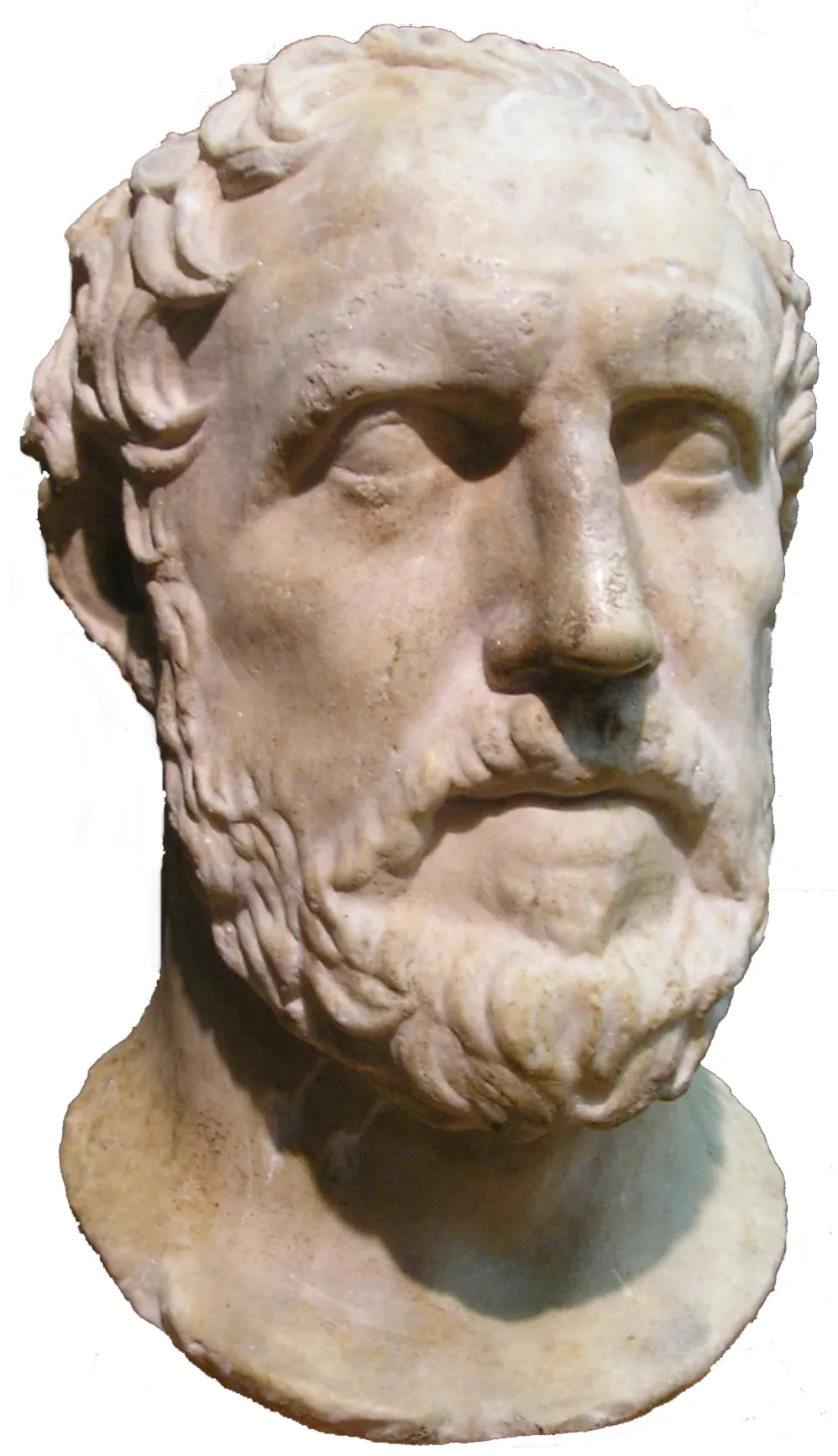
In 2012, the Harvard political scientist Graham Allison gave Thucydides' sentence a modern name. Writing in the Financial Times, he asked whether China and the United States could escape "Thucydides's trap": the danger that arises when a rising power threatens to displace a ruling one. His research team studied 16 such rivalries over the past 500 years and found that 12 ended in war. His 2017 book, Destined for War, put the phrase into every foreign ministry. Xi Jinping pushed back directly, telling an American audience in Seattle in 2015 that "there is no such thing as the so-called Thucydides trap in the world," while warning that strategic miscalculation could create one.
The parallel to the original is uncomfortably neat. China's economy has grown the way the Athenian empire once did, and the United States, like Sparta then, is the established power watching a rival close the gap. Trade, tariffs, semiconductors, Taiwan: like Corcyra and Megara in 431 BCE, these are real disputes riding on top of a deeper fear.
But the trap is looser than the famous quote makes it sound. Thucydides never actually wrote that the war was "inevitable"; an English translator added that word in 1874. What Thucydides described was not fate but a chain of bad decisions made by frightened people. Athens did not need to invade Sicily. Sparta did not need to hand the Greeks of Asia Minor to Persia. Both did, and the two powers wrecked each other so thoroughly that Macedon, which had barely fought in the war, ended up ruling Greece.
That is what the first Thucydides trap actually teaches. War between a rising power and a frightened one is likely, but it is never automatic. And when it does come, it can ruin both sides.
Test what you learned
6 questions on this article. About two minutes, no signup.