
Why Afghanistan has never been conquered
Afghanistan is called the graveyard of empires. From Alexander the Great to the United States, every invader took the cities. None held the country.
In August 2021, the Taliban captured every provincial capital in Afghanistan in ten days. The Afghan government that the United States had spent twenty years building collapsed before the last American soldiers had left the country. The war cost the United States roughly $2.3 trillion and the lives of more than 2,400 soldiers. After two decades of occupation, the country returned to almost exactly what it had been before the first American bombs fell in October 2001.
This was not new. The British Empire invaded Afghanistan three times in the 19th and early 20th centuries and never held it. The Soviet Union occupied it for ten years and withdrew in defeat. Before any of them, Alexander the Great spent longer fighting in Afghanistan than it took him to defeat the entire Persian Empire. The phrase "graveyard of empires" has become a cliché, but the pattern behind it is real. Afghanistan has been invaded more often than almost any country on earth, and no invader has held it for long. The reasons are geographic and structural, not heroic.
The mountains that break armies
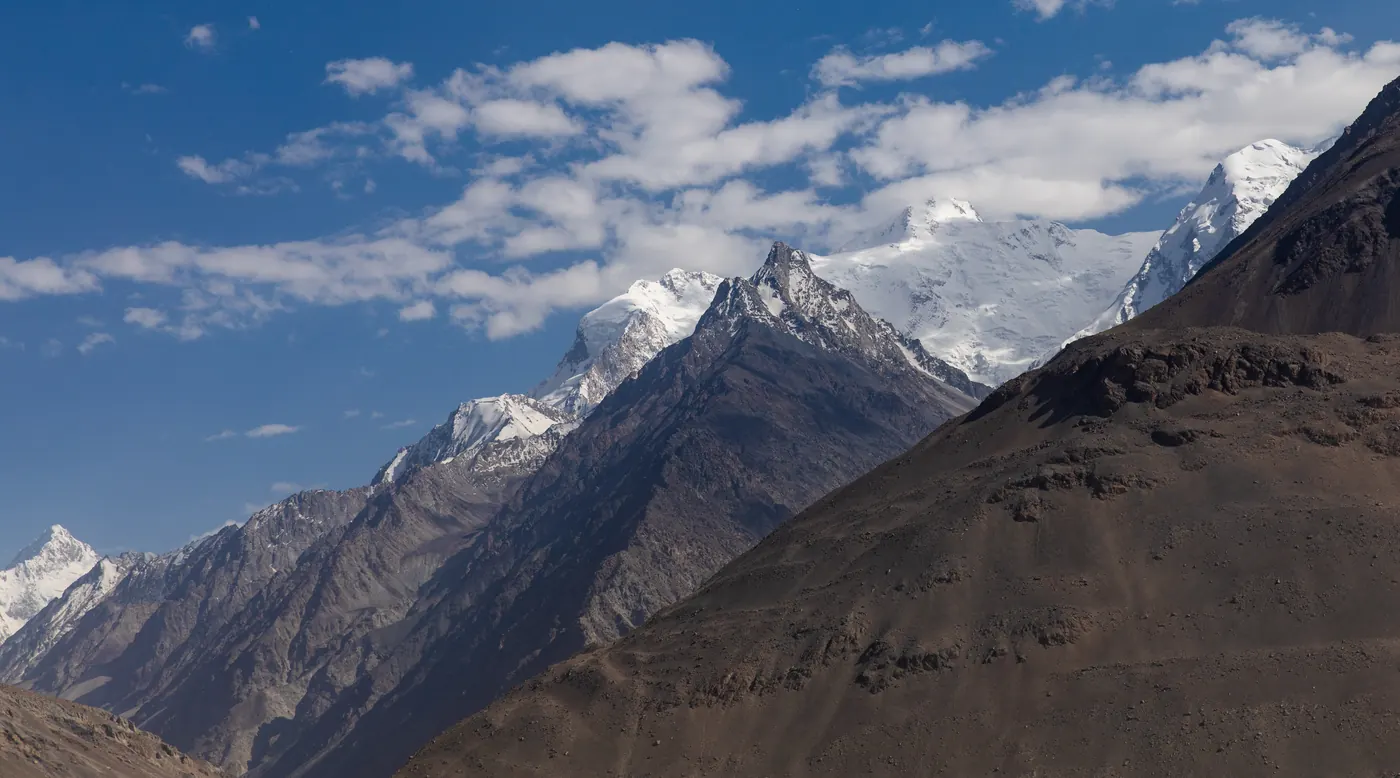
Afghanistan sits where Central Asia, South Asia, and the Middle East meet, surrounded on most sides by mountains. The Hindu Kush range runs through the center of the country, with peaks above 20,000 feet and passes that climb past 12,000. In winter, many of these passes close entirely.
The terrain breaks the country into isolated valleys that work as natural fortresses. A force that controls Kabul does not control the Panjshir Valley 90 miles to the north, or the mountains of Nuristan to the east, or the deserts of Helmand to the south. Each of these areas has its own population, its own tribal leaders, and its own capacity to fight. An invading army can march along the main roads. Controlling the territory on either side of those roads is a different problem entirely.
In a country like France or Poland, flat terrain means that capturing the capital usually ends the war. In Afghanistan, capturing Kabul is where the war begins.
Alexander defeated Persia in one battle. Afghanistan took three years.
Alexander the Great destroyed the Persian army at the Battle of Gaugamela in October 331 BC. The Persian king Darius III fled the field. Within months, Alexander held Persepolis and controlled an empire stretching from Greece to Central Asia. He then turned east into what is now Afghanistan and spent the next three years fighting some of the hardest campaigns of his career.
The Afghan tribes did not meet him in pitched battle. They retreated into the mountains, raided his supply lines, and attacked isolated garrisons. Alexander responded with a level of brutality unusual even for him, destroying towns and massacring populations to force submission. In 327 BC he married Roxana, the daughter of a Bactrian nobleman named Oxyartes, partly as a political move to pacify the region. His own generals opposed the marriage. When Alexander left Afghanistan to invade India, his hold over the territory was already weakening. Within a few years of his death in 323 BC, his successors lost it entirely.
Genghis Khan's armies did something similar thirteen centuries later. They destroyed the Afghan cities of Balkh, Herat, and Bamyan in the 1220s. At Bamyan in 1221, after a Mongol prince was killed during the siege, the entire population was reportedly put to death. The Mongols could devastate Afghanistan. They could not govern it. The territory passed between successor states and local rulers for centuries, never fully under any one power's control.
The retreat from Kabul, 1842
The British Empire invaded Afghanistan in 1839, installed a friendly ruler in Kabul, and stationed a garrison of roughly 4,500 soldiers and 12,000 camp followers in the city. By 1841, the occupation had provoked a revolt. The British envoy, Sir William Macnaghten, was murdered during negotiations. The garrison commander, Major General William Elphinstone, was 59 years old, in poor health, and so indecisive that he was known for giving contradictory orders within the same hour. He died as a prisoner in Afghan custody three months later.
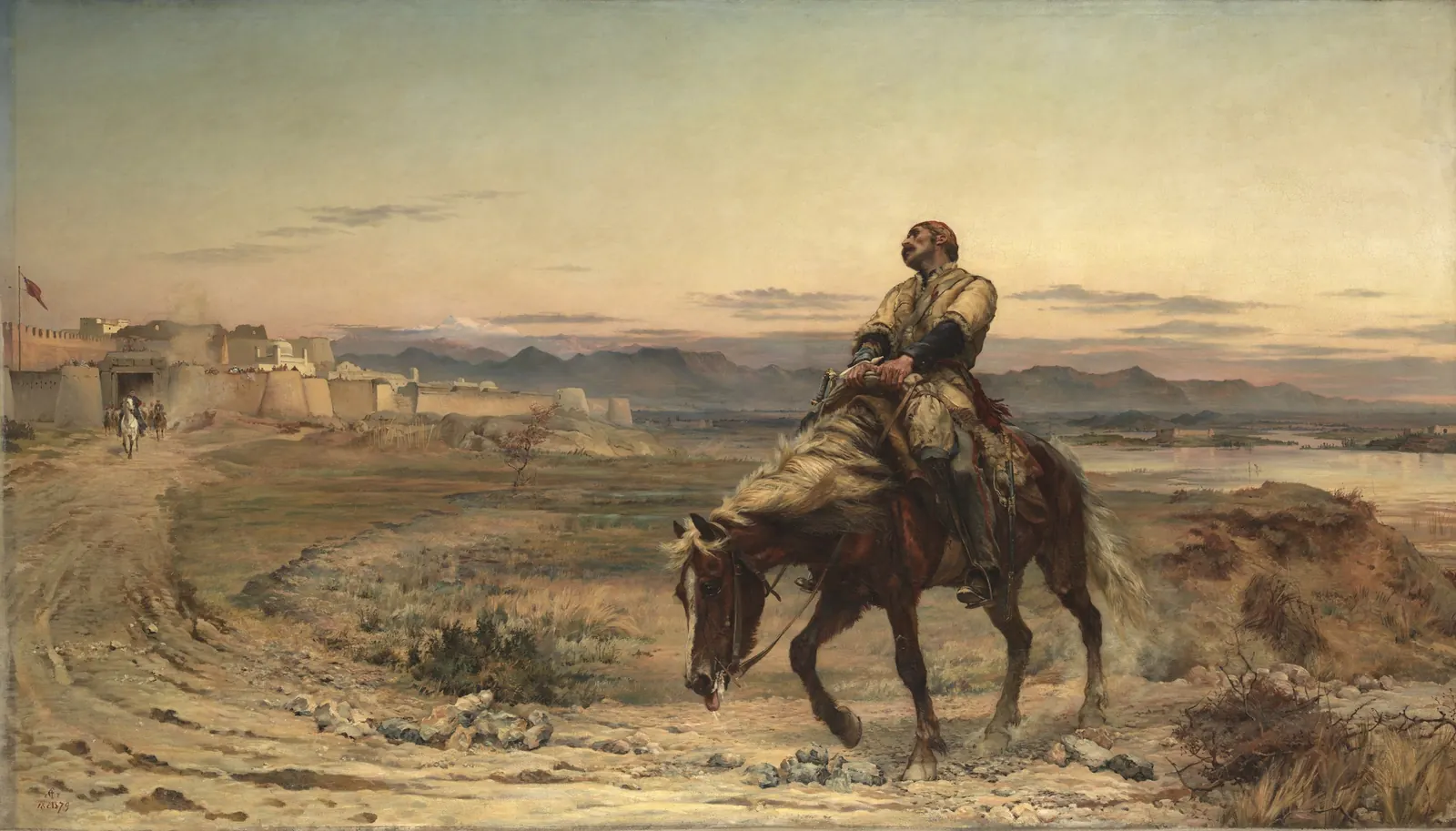
In January 1842, Elphinstone negotiated a withdrawal to the British garrison at Jalalabad, 90 miles to the east. The column of roughly 16,500 soldiers and civilians left Kabul on January 6. Afghan fighters attacked them continuously through the mountain passes. The winter was brutal. On January 13, a single rider on an exhausted horse appeared at the walls of Jalalabad. He was Dr. William Brydon, an assistant surgeon. He was the only member of the column to reach Jalalabad. Some survivors were later found as prisoners, but of the 16,500 who left Kabul a week earlier, almost all were dead.
The British invaded Afghanistan twice more, in 1878 and 1919. They won battles but never made Afghanistan part of the empire. After the Third Anglo-Afghan War in 1919, Britain recognized Afghanistan as fully independent and stopped trying.
The Soviets and the Americans repeated the pattern
The Soviet Union invaded Afghanistan on Christmas Day 1979 to prop up a failing communist government. Soviet forces took the cities and the main roads within weeks. The countryside was a different matter. Afghan mujahideen fighters, armed by the United States, Pakistan, Saudi Arabia, and China, fought a guerrilla war from the mountains for ten years. The Soviets lost roughly 14,000 soldiers. Estimates of Afghan dead range from 600,000 to 2 million. The Soviet army withdrew in February 1989, having controlled nothing beyond the major cities and the ring road connecting them.
The United States invaded in October 2001 after the September 11 attacks. American special forces and airpower toppled the Taliban in weeks, working with Afghan militias from the Northern Alliance. Then came the occupation. The United States spent twenty years and more than $2 trillion trying to build a functioning Afghan state with a national army, a police force, and a central government in Kabul. When the United States withdrew in August 2021, the Afghan army dissolved and the Taliban retook the country in days.
Why the pattern never breaks
The common explanation is that Afghans are unusually fierce fighters. But fighting spirit alone does not explain the pattern. The Chechens fought ferociously too, and Russia eventually crushed Chechnya by leveling Grozny and flooding the territory with troops. The difference is structural.
Afghanistan has no centralized state for an invader to capture and run. When the Mongols conquered China, they defeated the emperor and inherited a tax system that collected revenue from 100 million farmers. When the British conquered India, they took over the Mughal bureaucracy and administered the subcontinent through existing structures. Afghanistan has nothing like this. There is no single leader whose defeat ends resistance, no tax system to capture, no bureaucracy to take over. Power is distributed among Pashtuns in the south and east, Tajiks in the northeast, Hazaras in the central highlands, and Uzbeks in the north, each with their own leaders, their own militias, and their own territory.
An invader who takes Kabul has won a city. The country is somewhere else, in thousands of villages scattered across valleys that are easier to defend than to attack. Every empire that tried Afghanistan reached the same conclusion: holding it costs more than it is worth. The British learned this in 1842. The Soviets learned this in 1989. The Americans learned this in 2021. The terrain has not changed, and neither has the calculation.
Test what you learned
5 questions on this article. About two minutes, no signup.