Crimean War
The Crimean War (1853-1856) was fought by Britain, France, and the Ottoman Empire against Russia, mostly on the Crimean peninsula.
The Crimean War was fought from 1853 to 1856 between Britain, France, and the Ottoman Empire on one side and Russia on the other. Most of the fighting took place on the Crimean peninsula, on the northern shore of the Black Sea. It was the first war between major European powers since Napoleon's defeat in 1815. The underlying cause was a contest over the declining Ottoman Empire, known at the time as the "sick man of Europe," and whether Russia would take control of its territory. Russia lost. Somewhere between 500,000 and 750,000 people died, and most of them died of disease rather than combat. The war also produced several firsts: battlefield reporting sent by telegraph, the first systematic photographic coverage of a war, and Florence Nightingale's use of statistics to show that poor sanitation killed more soldiers than enemy fire.
How the Crimean War started
The immediate trigger was a dispute over which Christian denomination controlled the holy sites in Bethlehem and Jerusalem, then part of the Ottoman Empire. France backed the Catholics. Russia backed the Orthodox. But the real issue was larger. Tsar Nicholas I claimed the right to protect all Orthodox Christians living under Ottoman rule, a claim that would have given Russia a permanent voice in Ottoman politics. The sultan refused.
In July 1853 Russia occupied the Danubian principalities, roughly modern Romania, to pressure the Ottomans. The Ottoman Empire declared war in October. A month later a Russian naval squadron destroyed an Ottoman flotilla at the port of Sinop on the Black Sea coast. British newspapers called the attack a massacre, and public opinion turned sharply against Russia. In March 1854 Britain and France entered the war on the Ottoman side.
The siege of Sevastopol
In September 1854 a British and French force landed on the Crimean peninsula to capture Sevastopol, the main base of Russia's Black Sea Fleet. The commanders expected a quick campaign. Instead the siege lasted 349 days.
The allies fought several large battles around the besieged city. At the Battle of the Alma in September 1854 they pushed Russian defenders off the heights above the river. At Balaclava on October 25, a garbled order sent the British Light Brigade charging directly at Russian artillery. Of roughly 670 men who rode forward, about 110 were killed and 130 wounded in an attack that lasted only minutes. At Inkerman in November, Russian and British troops fought in thick fog, with units cut off from their commanders.
The armies were not prepared for a long siege. Supplies sat spoiling at the Balaclava docks while soldiers on the plateau above went without warm clothing. About 21,000 British soldiers died during the war. Roughly three out of four of them died of cholera, dysentery, and exposure, not wounds. The Russians were in worse shape: they had no railway south of Moscow, and reinforcements had to walk.
Florence Nightingale, a 34-year-old from a wealthy English family who had chosen nursing against her parents' wishes, arrived at the British barracks hospital at Scutari near Constantinople in November 1854 with 38 nurses. By February 1855, soldiers there were dying of infections at a rate of 42 percent. She and her team cleaned the wards and brought in supplies. After the war Nightingale used detailed statistics and charts to demonstrate before a royal commission that preventable disease, not combat, had caused most British deaths. Her statistical case changed military medicine more than her hospital work alone.
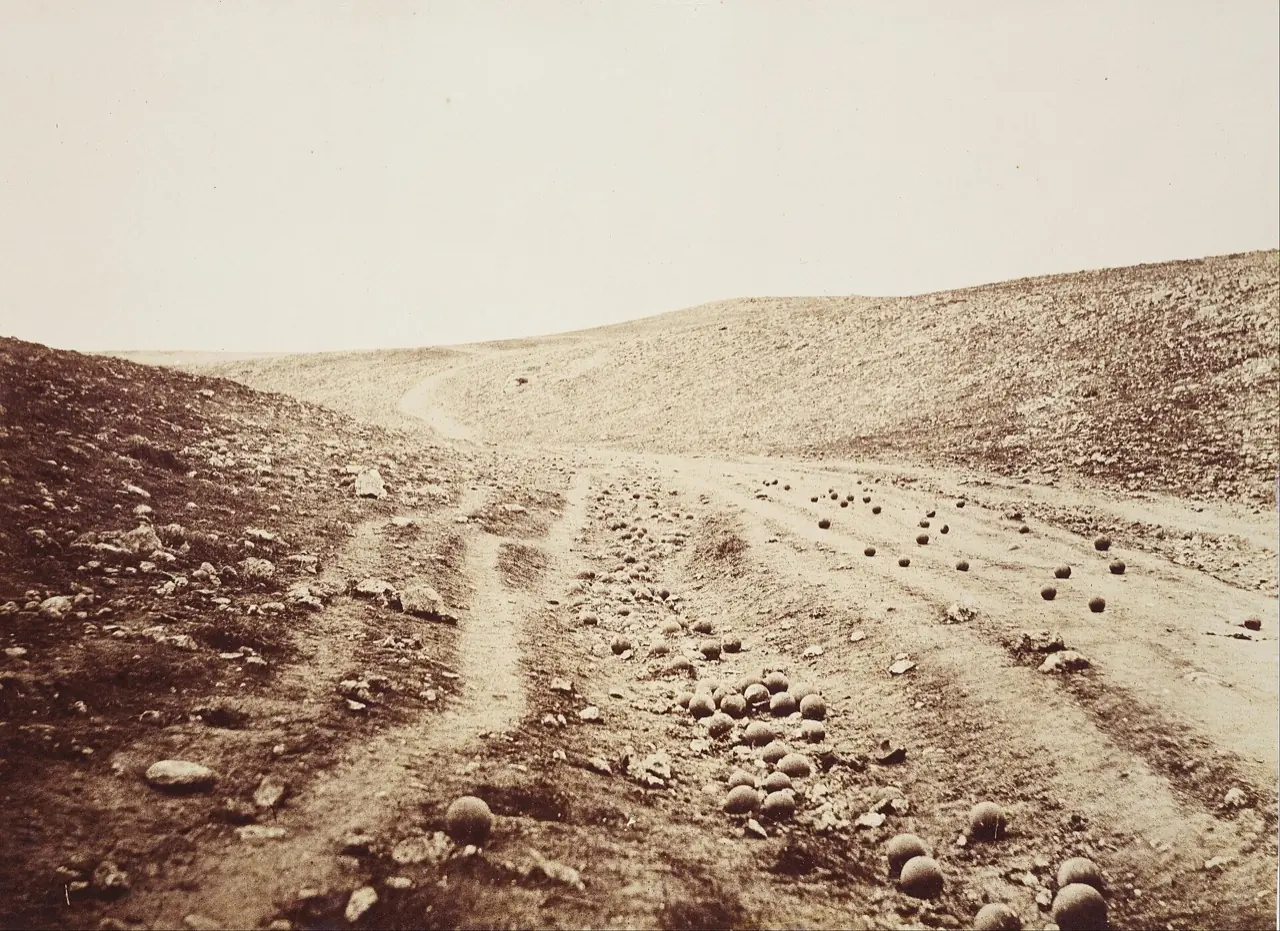
The war was also the first to be covered in something close to real time. William Howard Russell, a correspondent for The Times, sent dispatches about the army's dire conditions. His reports played a part in bringing down the Aberdeen government in January 1855. Roger Fenton documented the war through photography, avoiding images of the dead.
Who won the Crimean War?
Russia lost the war. Tsar Nicholas I died in March 1855. The new tsar, Alexander II, sought to end the fighting. The Treaty of Paris, signed in March 1856, neutralized the Black Sea by banning Russian warships and naval bases there. It removed Russia's claim to protect Orthodox Christians in the Ottoman Empire. Russia had lost a war fought on its own land, against expeditionary forces that sailed more than a thousand miles to reach the battlefield. Many allied soldiers carried rifled muskets that were accurate at several hundred yards, while most Russian infantry still used smoothbore weapons with a fraction of the range.
In 1870, while France was losing the Franco-Prussian War, Russia announced it would no longer follow the Black Sea clauses. No one was in a position to stop it.
How many people died in the Crimean War?
Estimates range from about 500,000 to about 750,000 dead across all sides. Russia suffered the most, with estimates running from 450,000 to over 500,000. France lost roughly 95,000 soldiers. The Ottoman Empire lost about 45,000. Britain lost about 21,000. The Kingdom of Sardinia, which joined the allies in 1855 to win French support for Italian unification, lost about 2,000. On every side, disease killed more soldiers than combat did.
How the Crimean War changed Europe
The war ended nearly four decades of great-power cooperation in Europe. Austria owed its survival to Russian troops that had helped crush the Hungarian revolution in 1849. But during the Crimean War, Austria stayed neutral and mobilized on the Ottoman side, pressuring Russia to withdraw from the Danube region. The relationship between the two empires never recovered. When Austria fought France in 1859 and Prussia in 1866 it had no great-power allies. By 1871, just fifteen years after the peace, both Italy and Germany had been unified by war. Austria's isolation, a direct result of the Crimean conflict, left no one to prevent either.
Russia's defeat exposed how far behind it had fallen. Its army was made up of serfs, its weapons were a generation old, and it had almost no railways to move troops across its own territory. Tsar Alexander II ended serfdom in 1861, a reform driven in large part by the humiliation of defeat. The question of who would inherit the Ottoman Empire's European territories remained at the center of European politics, from the Congress of Berlin in 1878 through the Balkan wars of 1912-1913 and the assassination at Sarajevo in 1914.