
Carthage
Carthage was a Phoenician trading city in North Africa that dominated the western Mediterranean for centuries before Rome destroyed it in 146 BCE.
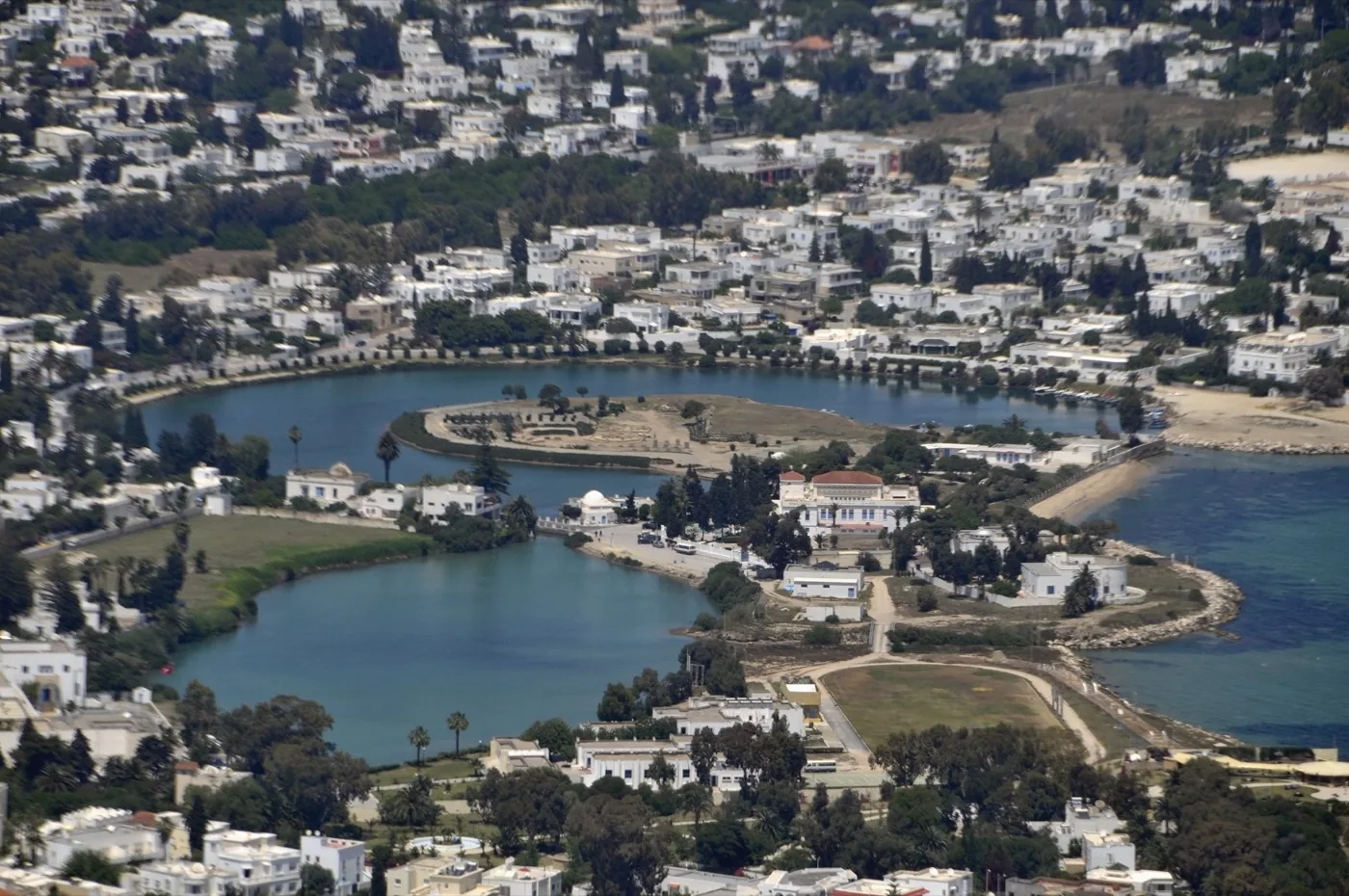
Carthage was a Phoenician city on the Tunisian coast, founded around 814 BCE. For roughly six centuries it was the richest and most powerful city in the western Mediterranean. Its merchants traded across the sea from North Africa to Spain, and its navy controlled the waters between them. Rome and Carthage fought three wars between 264 and 146 BCE over who would dominate the region. Rome won all three. In 146 BCE, Roman legions captured the city after a three-year siege, burned it for seventeen days, enslaved about 50,000 survivors, and tore down what was left.
How Carthage became the western Mediterranean's richest city
According to tradition, Phoenicians from the city of Tyre, on the Lebanese coast, founded Carthage. The founding legend says a Tyrian princess named Dido fled after her brother murdered her husband and built a new city on a peninsula in the Gulf of Tunis. The name Carthage comes from the Phoenician words for "new city." The word "Punic," which Romans used for Carthaginians, is Latin for "Phoenician."
Rome expanded by taking land and farming it. Carthage expanded by trade. Its ships carried goods across the entire western Mediterranean, and its commercial network ran from the North African coast through Sardinia and Sicily all the way to the silver mines of Spain's southern coast. Carthage was governed not by a king but by an oligarchy of wealthy merchant families. It hired its armies with the profits from trade rather than raising them from its own citizens. At its peak the city may have held around 400,000 people.
Its most famous feature was its harbor, a large man-made basin with a round military port behind it. That inner port, about 325 meters across, had an island in the middle and docking bays that could hold 220 warships at once. Two stone columns stood in front of each bay, so the whole port looked like a continuous colonnade from the water.
How Rome and Carthage went to war
The three Punic Wars lasted from 264 to 146 BCE. The First Punic War (264–241 BCE) was a long naval fight over Sicily. Rome, which had barely had a navy before the war, built one and narrowly won.
The Second Punic War (218–201 BCE) was Hannibal's war. Hannibal was 29 years old when he marched an army of roughly 40,000 soldiers and 37 elephants from Spain across the Alps into Italy in 218 BCE. He defeated Roman armies repeatedly, most devastatingly at the Battle of Cannae in 216 BCE, and fought in Italy for over a decade. But Carthage could not send him enough reinforcements, and Rome eventually carried the war to North Africa. The Roman general Scipio Africanus defeated Hannibal at the Battle of Zama in 202 BCE, and Carthage surrendered.
By the time of the Third Punic War (149–146 BCE), Carthage was no longer a military threat. It had lost its empire, its navy, and its right to wage war without Rome's permission. But the Roman senator Cato the Elder visited Carthage around 152 BCE and saw that the city was still prosperous. After that trip he began ending every speech in the Senate with the same line, no matter the topic: "Carthage must be destroyed."
Rome manufactured a pretext for war and besieged the city in 149 BCE. After nearly three years of fighting, the Roman commander Scipio Aemilianus broke through the walls in early 146 BCE. His soldiers fought through the city street by street over six days. The city burned for seventeen days. About 50,000 survivors were sold into slavery. The Roman Senate ordered the site ritually cursed and the territory annexed as a province.
The historian Polybius, who stood beside Scipio Aemilianus as Carthage burned, recorded that the general wept and quoted Homer's lines about the fall of Troy. When Polybius asked why, Scipio said he feared that one day the same fate would come to Rome.
Did the Romans really salt Carthage?
The popular story says that after burning Carthage, Roman soldiers plowed the ruins and sowed the ground with salt so nothing would ever grow there again. No ancient source mentions it. The Greek historians Polybius and Appian both wrote detailed accounts of the destruction, and neither describes any salting. The story first shows up in nineteenth-century books, probably drawn from a passage in the Bible's Book of Judges where a king salts a city called Shechem after conquering it. What actually happened was destructive enough: the Romans burned the city, enslaved its people, cursed the ground in a religious ceremony, and annexed the territory.
What is left of Carthage today?
About a century after the destruction, Julius Caesar planned a Roman colony on the same site. Augustus carried out the plan in 29 BCE, and the new city grew into one of the largest in the western Roman Empire.
Today the ancient ruins are scattered across a residential suburb of Tunis, among gardens and white-walled villas. The site has been a UNESCO World Heritage Site since 1979. The circular military harbor is still visible as a quiet lagoon. Most of the surviving structures are Roman rather than Carthaginian, because the Romans built their city directly on top of the one they had destroyed.
The word "Carthaginian" survives in the phrase "Carthaginian peace," which means a peace settlement so harsh that it destroys the losing side entirely. The economist John Maynard Keynes used the term in 1919 to describe the Treaty of Versailles.