
Grand Vizier
The grand vizier was the chief minister of the Ottoman Empire, holding the sultan's seal and running the government from the 1320s to 1922.
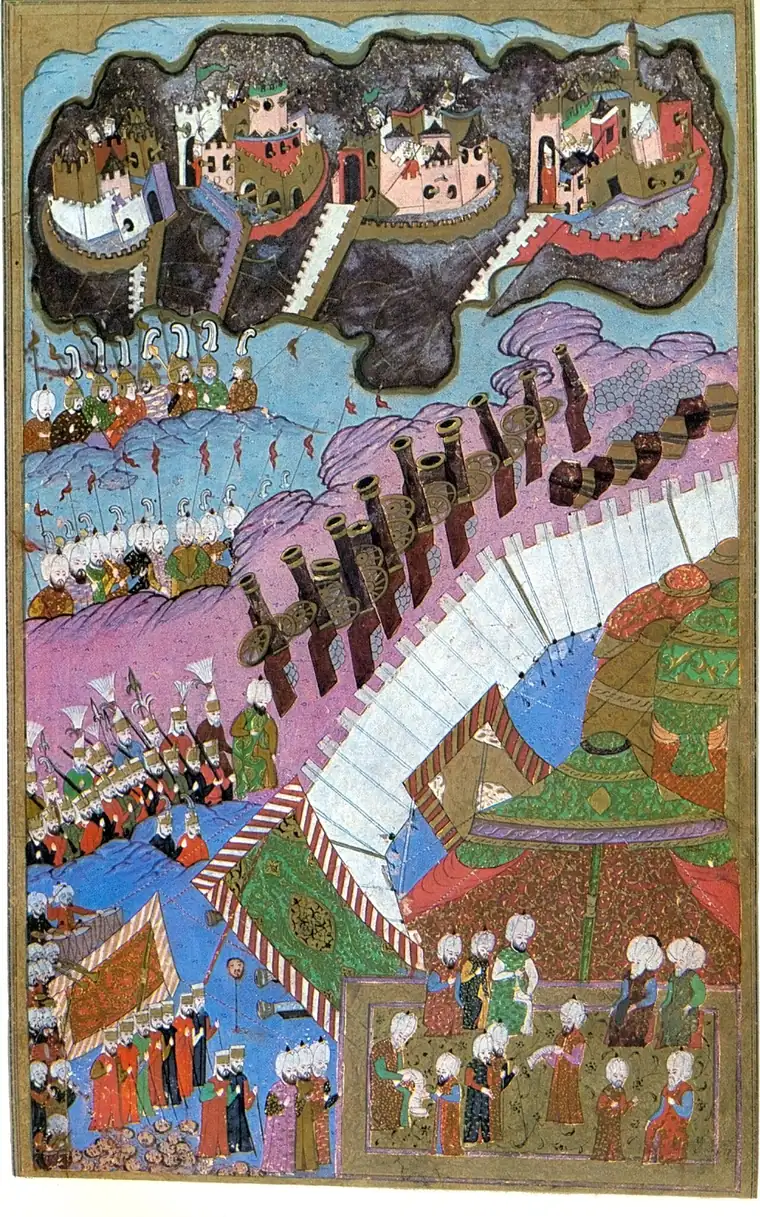
The grand vizier was the chief minister of the Ottoman Empire for six hundred years, from the 1320s until 1922. He carried the sultan's seal, ran the imperial council, led armies in the field, controlled appointments across the government, and negotiated with foreign states. At the empire's height, that meant governing a state that stretched from Hungary to Yemen and from Algeria to Iraq. When European diplomats spoke of dealing with the Sublime Porte, they were talking about the grand vizier's office, not the sultan's palace. All of the grand vizier's authority came from the sultan, and the sultan could take it back at any moment. The appointment ceremony was the handing over of the imperial seal. Dismissal meant having it taken back, and dismissed grand viziers were often strangled with a silk cord. At least 44 of the men who held the office were executed.
How Christian boys became grand viziers
Many grand viziers grew up outside the Muslim world entirely. The devshirme conscription gathered Christian boys from Balkan villages, the same conscription that supplied the Janissary soldiers. The boys were converted to Islam and trained in the palace school. The most talented rose into the empire's highest offices. An Albanian, Bosnian, or Greek boy taken from his family as a child could end up governing an empire that stretched from the Danube to the Nile.
This was by design. A grand vizier with no independent family and no local power base owed everything to the sultan and could be removed without triggering a revolt. Ibrahim Pasha, one of the most famous grand viziers, was a Greek boy from the town of Parga on the Ionian coast. He was captured and enslaved as a child, then as a young man entered the service of the future sultan Suleiman the Magnificent. The two became close friends. In 1523 Suleiman made Ibrahim his grand vizier. For thirteen years Ibrahim held enormous power, leading armies and conducting diplomacy on the sultan's behalf. In March 1536 Suleiman had him strangled in the palace. Ibrahim had grown too prominent, and rivals at court, including the sultan's wife Roxelana, had turned against him. There was no trial.
The Köprülü grand viziers
By the mid-1600s the system that made grand viziers easy to replace had become a problem of its own. After Suleiman, Ottoman princes were raised inside the palace rather than as provincial governors. Many later sultans inherited the throne without ever having governed anything, and showed little interest in starting. The empire needed grand viziers who could actually run the state, but the job's dangers made it hard to find competent men willing to take it. In 1656, five grand viziers came and went within a single year.
That year the empire was losing badly. The Venetians had destroyed the Ottoman fleet and seized two Aegean islands. The treasury was near collapse. Mehmed Köprülü, an Albanian-born official who was around eighty years old, agreed to take the job. He set conditions: sole authority over every appointment, complete independence in governing, and a guarantee that neither the sultan nor the palace harem would overrule him. Turhan Sultan, the mother and regent of the young sultan Mehmed IV, accepted.
Köprülü purged corrupt officials, reorganized the army, and stabilized the empire's finances. When he died in 1661, his son Fazıl Ahmed succeeded him as grand vizier. Over the next half century, Köprülü sons, a nephew, and in-laws served as grand vizier for most of that stretch. No sultan directed this recovery. The Köprülü era produced the most effective Ottoman government since Suleiman's reign, and the grand viziers ran all of it.
The recovery ended at Vienna. In 1683 the grand vizier Kara Mustafa Pasha, a Köprülü protégé, brought a massive Ottoman army to besiege the city. A relief force led by the Polish king Jan Sobieski broke the siege on September 12. Kara Mustafa retreated to Belgrade, where on Christmas Day the sultan's executioners strangled him with a silk cord and sent his head to the sultan in a velvet bag.
The grand vizierate in the empire's last century
By the nineteenth century the grand vizier's office had grown into something larger than one person. The Sublime Porte had its own foreign ministry, its own bureaucracy, and a tradition of reform. The Tanzimat reforms of the mid-1800s were not driven by sultans. They were driven by reforming statesmen working from the Porte, and for decades these men were the empire's real rulers.
When the Young Turks seized power starting in 1908, they fought over control of the Porte's administration, not the sultan's throne. The office survived every crisis until the empire itself ended. The last grand vizier, Ahmed Tevfik Pasha, left office on November 4, 1922, three days after the Turkish Grand National Assembly abolished the sultanate.
The grand vizierate explains how the Ottoman Empire kept functioning for centuries despite weak or absent sultans. Sovereignty belonged to the sultan, but administration belonged to the Porte, and that separation kept the state running when the person on the throne could not.