
Halford Mackinder
Halford Mackinder was a British geographer whose 1904 Heartland thesis argued that whoever controls the Eurasian interior controls the world.
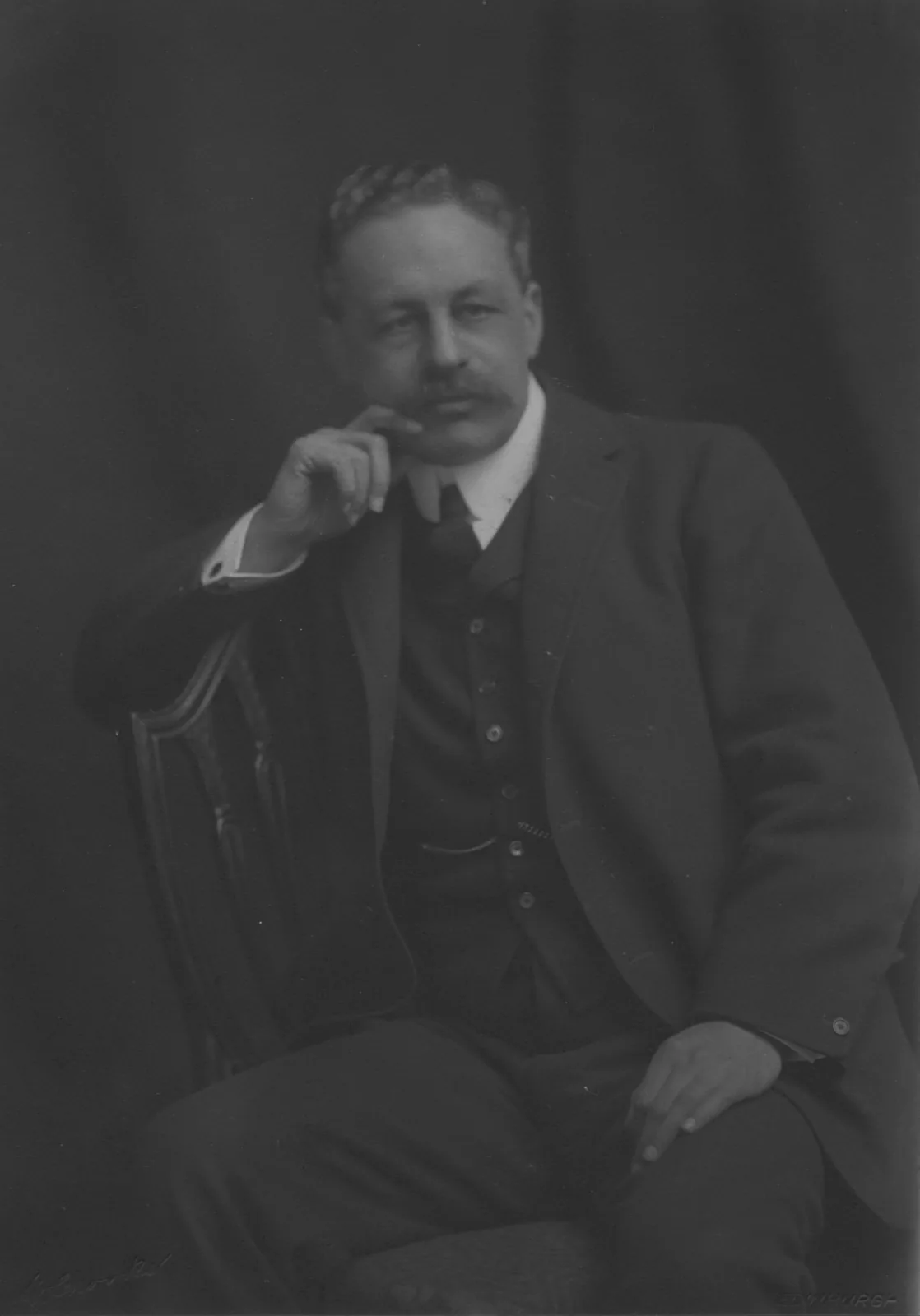
Halford Mackinder (1861–1947) was a British geographer who argued that the interior of Eurasia, the territory beyond the reach of any fleet, was the key to world power. He called this region the "pivot area" in 1904 and later renamed it the "Heartland." Any country that organized it, he argued, would have too much land, too many people, and too many resources to defeat. The idea became one of the founding arguments of geopolitics. Mackinder was not just an academic. He was one of the founders of the London School of Economics, made the first recorded climb of Mount Kenya's highest peak, and served twelve years in the British Parliament.
How Mackinder argued that the age of sea power was ending
Mackinder was born in 1861 in Gainsborough, Lincolnshire, the eldest son of a doctor. He studied natural science at Christ Church, Oxford. In 1887, Oxford appointed him its first Reader in Geography, and he used the position to establish geography as a formal academic discipline. In 1895 he was one of the founders of the London School of Economics, and he later directed it from 1903 to 1908.
In 1899, Mackinder led an expedition to Mount Kenya with about 170 people, including two Italian Alpine guides from Courmayeur, César Ollier and Joseph Brocherel. On September 13, the three of them reached the summit of Batian, the mountain's highest peak at 5,199 meters. It was the first recorded ascent.
On January 25, 1904, Mackinder read a paper called "The Geographical Pivot of History" to the Royal Geographical Society in London. His argument was about railways. For four hundred years, European sea powers had controlled a world they could reach by ship. Alfred Thayer Mahan had made the case for sea power in the 1890s, and it was the dominant view. Mackinder argued that the era was ending. Railways like the Trans-Siberian could move armies and goods through the Eurasian landmass more quickly than ships could travel around it. A continental power using them could never be blockaded.
He drew a map centered on Eurasia. On it, he labeled the landlocked belt from the Volga to the Yangtze as the pivot area. He titled the diagram "The Natural Seats of Power," and it went on to be one of the most widely reprinted maps in the history of strategy. Mackinder's claim was that whoever organized the pivot area would control enough land, people, and resources to overpower any alliance of sea-based states.
Mackinder's warning at Versailles
Mackinder published "Democratic Ideals and Reality" in 1919, while diplomats gathered in Paris after World War I to redraw the map of Europe. In the book, he renamed the pivot area the "Heartland." He grouped the continents of Europe, Asia, and Africa as one mass he called the "World-Island," which held the majority of the world's population and natural resources.
He put the argument in one famous chain of logic. "Who rules East Europe commands the Heartland," Mackinder wrote. Whoever holds the Heartland holds the World-Island, and whoever holds the World-Island holds the world. The line has been quoted by strategists ever since.
Mackinder also wrote the book as an appeal to the diplomats at Paris. He urged them to keep Germany and Russia apart by setting a belt of independent states between them. If one power brought the Heartland under a single government, it would have the territory and resources to dominate everything around it. The Treaty of Versailles redrew the map of Central Europe partly along these lines, recognizing new states like Poland and Czechoslovakia between the two powers.
How Mackinder's Heartland thesis shaped the twentieth century
In Germany during the 1920s, Karl Haushofer built a school of thought called "Geopolitik" that drew heavily on Mackinder's ideas. One of Haushofer's students was Rudolf Hess, who became Adolf Hitler's deputy. Haushofer used the Heartland thesis to support Nazi claims about "Lebensraum," the idea that Germany needed more territory in the east. Mackinder himself had warned against exactly this kind of expansion in 1919.
After World War II, American Cold War planners read Mackinder as a case for keeping the Soviet-controlled Heartland surrounded. The policy of containment, which shaped American strategy for four decades, owed something to his logic: if a Heartland power could not be allowed to expand outward, it had to be ringed by alliances.
Is Mackinder's Heartland theory still relevant?
Critics have argued since 1904 that Mackinder overstated the power of the land. Navies helped decide both World Wars. Mackinder also wrote before aircraft mattered in war, and planes could fly over the interior he considered unreachable.
The strongest counterargument came from history itself. The Soviet Union controlled the Heartland for most of the twentieth century, yet it still lost the Cold War. Nicholas Spykman, an American strategist who argued in the 1940s that the coastal "Rimland" around Eurasia mattered more than the interior, appeared in hindsight to have read the map more accurately.
Yet the Heartland thesis keeps returning to strategic debates. Russia's invasion of Ukraine in 2022, at the western edge of Mackinder's Heartland, is analyzed in terms he would have recognized. China's Belt and Road Initiative, launched in 2013, builds railways and pipelines across Central Asia to connect China to Europe, following the logic of organizing the Eurasian interior that Mackinder described. More than a century after his lecture at the Royal Geographical Society, the question of who controls the middle of Eurasia has not gone away.