
Containment
Containment was the US Cold War strategy of blocking Soviet expansion until the Soviet system collapsed from within.
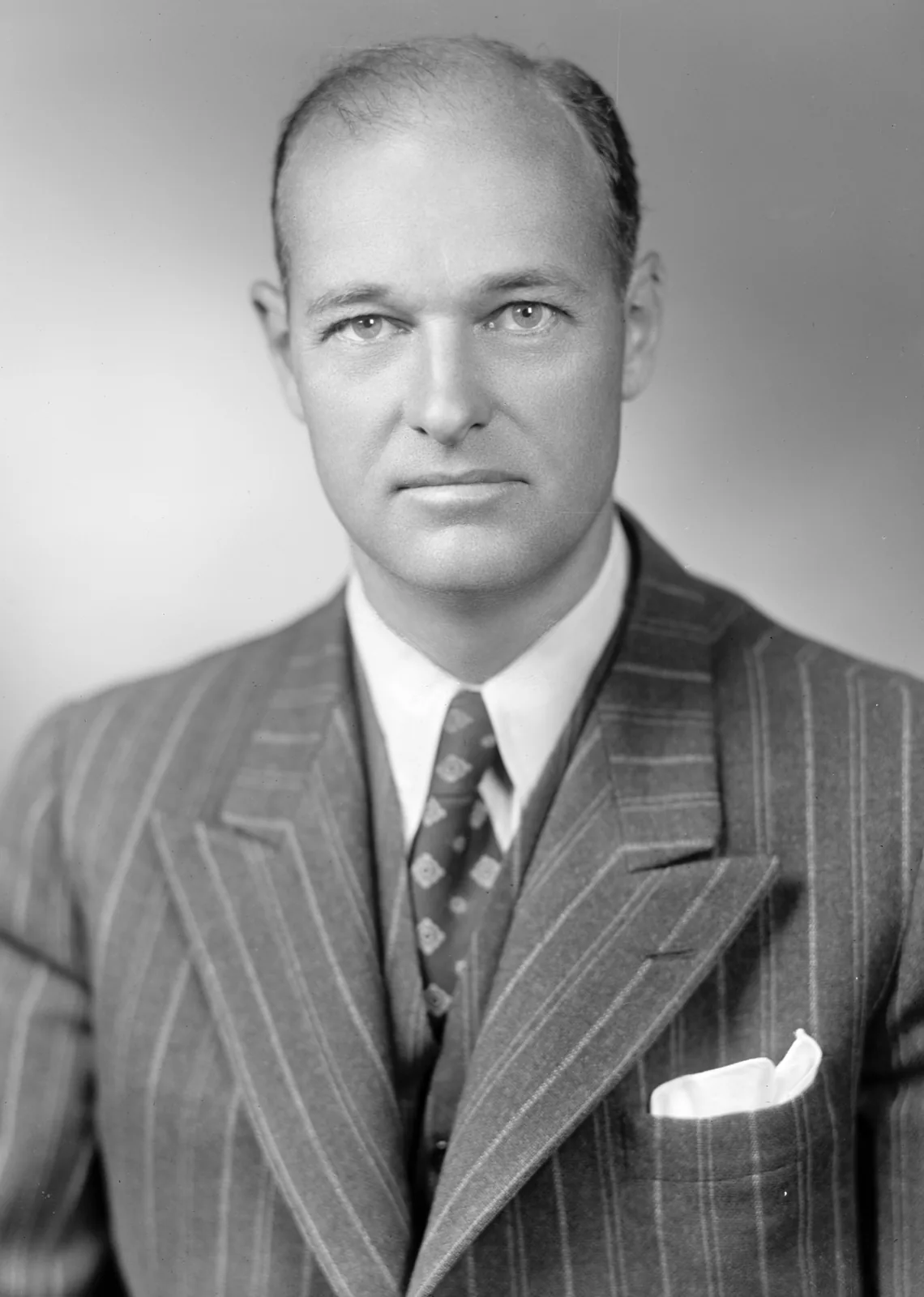
Containment was the United States' central strategy during the Cold War, from the late 1940s until the Soviet Union collapsed in 1991. The idea was that the US did not need to fight and win a war against the Soviet Union. It only needed to block Soviet expansion and wait for the Soviet system to wear itself out from within. George Kennan, an American diplomat stationed in Moscow, first made the argument in 1946 in a cable to Washington known as the Long Telegram. The United States followed his logic for more than four decades, and the Soviet Union eventually dissolved roughly as Kennan had predicted. Kennan himself spent his remaining decades insisting that Washington had taken his idea too far and turned it into something he never intended.
How George Kennan created the containment strategy
Kennan was born in Milwaukee, Wisconsin, in 1904. His mother died two months after his birth. He graduated from Princeton in 1925, later saying he felt out of place among wealthier classmates from the East Coast, and joined the foreign service in 1926. He studied Russian in Berlin starting in 1929, then spent years posted in the Baltic states and Moscow, watching Stalin's regime at close range.
By February 1946, Kennan was the chargé d'affaires at the US embassy in Moscow, the top American diplomat in the Soviet capital. Washington cabled him a routine question: why was the Soviet Union refusing to join the World Bank and the International Monetary Fund? On February 22, Kennan sent back a reply of about 5,000 words, far longer than any normal diplomatic cable.
The Long Telegram argued that Soviet hostility was not driven by anything Western nations had done. It came from the regime's own need for an external enemy to justify dictatorship at home. No concession would buy lasting cooperation. The only workable response was steady, firm pressure to keep Soviet influence from spreading while waiting for the system's internal weaknesses to take their toll.
The cable circulated widely in Washington. In July 1947, Kennan published a longer version in the journal Foreign Affairs under the title "The Sources of Soviet Conduct." He signed it as "X" to protect his identity, but the pseudonym did not hold. Within weeks, reporters had identified "Mr. X" as Kennan. The essay urged "firm and vigilant containment" of Soviet expansion through patience and strength rather than war. That word, containment, gave the strategy its name.
How containment shaped the Cold War
The strategy took institutional form fast. On March 12, 1947, President Harry Truman announced the Truman Doctrine, pledging $400 million in aid to Greece and Turkey to keep them out of the Soviet orbit. The Marshall Plan, announced later that year, sent about $13 billion to rebuild Western Europe. NATO, founded in 1949, committed the United States and its allies to collective defense. Geographically, the strategy drew on ideas that Halford Mackinder and Nicholas Spykman had mapped out earlier in the century. The goal was to hold the ring of coastal states around Eurasia, running from Scandinavia through the Mediterranean and the Persian Gulf to the Pacific, and keep the Soviet Union locked inside the continent.
Then containment became something its author never intended. In April 1950, a classified report called NSC-68, drafted by Paul Nitze, Kennan's successor at the State Department, recast the Cold War as a global military competition. NSC-68 called for massive increases in defense spending and committed the United States to resisting communism everywhere, not just at a few key points. The 1951 defense budget jumped to about $60 billion, roughly two-thirds of the entire federal budget.
The logic of NSC-68 pulled the United States into wars. When North Korea invaded South Korea in 1950, the US intervened under the argument that letting one country fall to communism would invite further Soviet expansion. The Korean War ended in a stalemate in 1953, and the two Koreas remain divided along the same line. The same reasoning drew the United States into Vietnam in the 1960s. That war ended in 1975 with a communist victory, two years after the American withdrawal.
Kennan opposed much of it. He fought against NSC-68, spoke out against the hydrogen bomb, and resisted the rearmament of Germany. He condemned the Vietnam War publicly as exactly the kind of overreach his strategy was never meant to justify. Kennan died in 2005 at age 101, still making the same argument he had made since 1950: that Washington had turned a selective political strategy into an open-ended military commitment.
The containment strategy today
Nobody defeated the Soviet Union militarily. It wore down across more than forty years of economic pressure and internal decay, then dissolved in 1991. In that sense, Kennan's bet paid off, even if the path included wars he never endorsed.
The word "containment" outlived the Cold War. Since the 2010s, policymakers in Washington have debated whether to contain China's rise the way the US once contained the Soviet Union. In practice, the American approach has included trade restrictions, limits on technology exports like advanced semiconductors, and military partnerships across the Indo-Pacific. Beijing calls these measures containment. Washington tends to avoid the word.
Whether containment fits a globally integrated rival like China as well as it fit a closed Soviet economy is the question policymakers have not answered. Kennan's core idea was that a country could outlast an adversary by staying strong and patient rather than going to war. That idea still shapes how the United States thinks about rivals it cannot afford to fight.