
Millet System
The millet system let each religious community in the Ottoman Empire govern its own courts, schools, and religious life in exchange for loyalty and taxes.
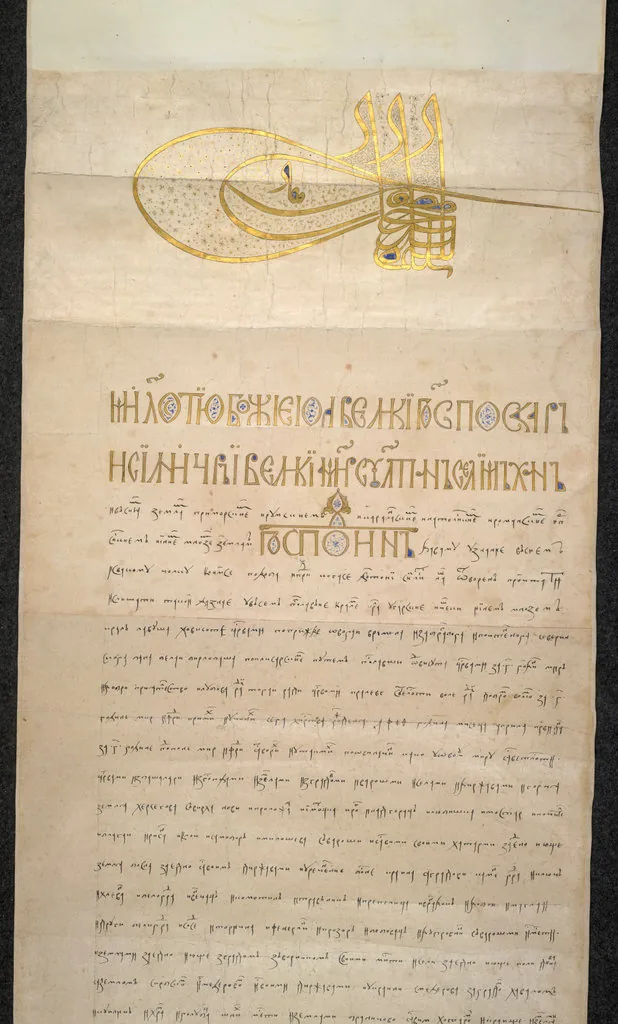
The millet system was the way the Ottoman Empire governed its non-Muslim subjects for roughly four centuries. Instead of forcing Christians and Jews to convert or follow Islamic law, the Ottomans organized them into self-governing communities called millets, each defined by religious faith rather than language or ethnicity. The word comes from the Arabic millah, meaning nation or religious community. A millet ran its own legal courts, schools, and religious institutions. In return, it owed the sultan loyalty and taxes. The arrangement gave millions of Christians and Jews a degree of self-rule that had few parallels in early modern Europe, where religious minorities were more often persecuted or expelled. It held the empire together across dozens of languages and faiths for hundreds of years, and it also determined how the empire would eventually break apart.
How Mehmed II built the millet system
When Mehmed II conquered Constantinople in 1453, he inherited a city whose population was overwhelmingly Christian. Rather than convert his new subjects by force, he formalized an arrangement that gave each major religious community its own leader and its own internal government.
In 1454, Mehmed appointed a Greek scholar and monk named Gennadius Scholarios as the patriarch of Constantinople. Gennadius had been taken prisoner during the fall of the city. Now Mehmed made him responsible for the empire's entire Orthodox Christian population, granting him both religious and civil authority. The patriarch collected taxes from his community, settled disputes between its members, and answered to the sultan for their behavior. Greeks, Serbs, Bulgarians, Romanians, and Arabs all belonged to one community, the Rum (Roman) millet, no matter what language they spoke. Mehmed established separate millets for the Armenians, under their own patriarch, and for the Jews, under a chief rabbi.
Within its sphere, each millet had broad authority. It handled marriages, divorces, and family disputes. It educated children and managed charitable institutions. The Ottoman state stayed out of a millet's internal affairs as long as taxes came in and public order held.
Life under the millet system
The millets gave their members real self-rule, but at a price. Non-Muslims were classified as dhimmi, meaning protected but subordinate. They paid the jizya, a special poll tax that fell only on non-Muslims, and faced restrictions on what they could wear, what they could build, and whether their testimony counted in an Ottoman court. Heavier taxes and periodic abuses were part of the deal. The arrangement was not equality. It was a bargain: self-rule and physical safety in exchange for a recognized second-class legal position.
By the standards of the age, the bargain compared well with what Europe offered. In 1492, Spain expelled its entire Jewish population. Sultan Bayezid II sent the Ottoman navy, under Admiral Kemal Reis, to carry the refugees to Ottoman lands. Bayezid ordered the governors of his European provinces to welcome them. He reportedly mocked the Spanish king: Ferdinand had "impoverished his own country and enriched mine." Between 15,000 and 20,000 Sephardi Jews settled in Thessaloniki alone. By 1519, Jews made up more than half the city's population, making it the only major city in Europe with a Jewish majority. For centuries Thessaloniki was known as the "Jerusalem of the Balkans." Large Sephardi communities also thrived in Istanbul.
While much of Europe was burning heretics and fighting religious wars through the 16th and 17th centuries, the Ottomans let the leaders of each millet govern their own communities in relative peace. A Jew or a Christian in 1550 choosing where to live would often have found the sultan's lands safer than anything western Europe had to offer.
How the millet system contributed to the empire's breakup
The millet system preserved each community's distinct identity across generations. For centuries, that was what held the empire together. But in the 19th century, those preserved identities became the basis for nationalist movements that broke the empire apart.
European nationalism reached the empire's Christian populations, and Greeks, Serbs, Bulgarians, and Armenians began to see themselves not just as religious communities but as distinct peoples entitled to their own states. Greece won its independence by 1830. Serbia, Romania, and Bulgaria followed over the next half-century. The empire split along the same communal lines the millet system had drawn.
Between 1839 and 1876, the Tanzimat reform movement tried to dismantle the millet arrangement and replace it with a single Ottoman citizenship that would treat all subjects equally regardless of religion. The idea was ahead of its time, but it came too late. Nationalist movements were already under way, and both Muslim elites and Christian community leaders resisted the change for different reasons. The empire that Europeans were already calling the sick man of Europe spent its last decades losing one province after another along the same communal boundaries the millet system had maintained. The system had preserved each community's separate identity for centuries. Once nationalism arrived, those identities became the foundation for separate nation-states.