
How Japan won the Russo-Japanese War
In 1905 Japan destroyed most of the Russian fleet in a single afternoon. No Asian country had ever beaten a European power in modern war.
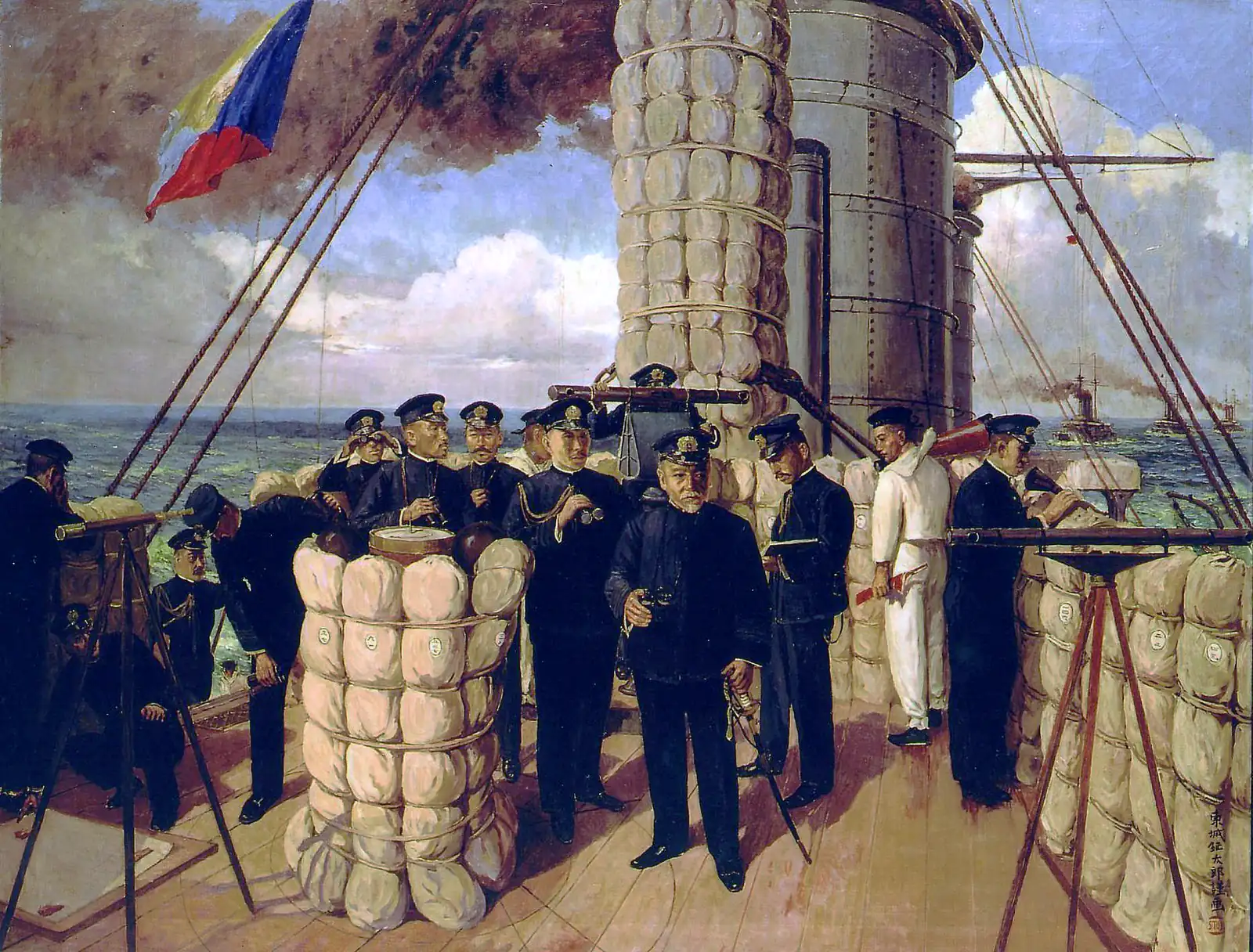
Tōgō Heihachirō was born in 1848 into a samurai family in Kagoshima, on the southern tip of Japan. At sixteen he fought his first battle, against the British, when the Royal Navy bombarded his hometown in retaliation for attacks on foreign merchants. The experience left an impression. In 1871 the Japanese government sent him to England to study naval warfare. He applied to the Royal Naval College at Dartmouth but was turned away because he was Japanese. He trained at the Thames Nautical Training College instead, graduating second in his class, and spent seven years in Britain learning gunnery, navigation, and shipbuilding. One of his exercises took place aboard HMS Victory, Nelson's flagship at Trafalgar.
Thirty-four years after that first battle against the British, Tōgō commanded the Japanese fleet in a war against the Russian Empire. Japan won every major engagement on land and sea, destroyed most of Russia's navy, and forced the largest country on earth to the negotiating table. No Asian country had ever beaten a European power in modern war. The victory reshaped the politics of the twentieth century, inspired independence movements from India to Egypt, and helped set off a revolution inside Russia itself.
Why Russia did not take Japan seriously
Russia had been pushing into East Asia for decades. The Trans-Siberian Railway, finished in 1904, extended Russian power to the Pacific. In 1898 Russia leased the port of Port Arthur from China, giving itself a warm-water naval base on the Liaodong Peninsula in Manchuria. After the Boxer Rebellion in 1900, Russia sent 100,000 troops into Manchuria and refused to withdraw them.
Japan had modernized its military from scratch since the 1860s, built a navy modeled on Britain's, and defeated China in 1895. It regarded Korea as essential to its security. In 1903 Japan offered Russia a deal: Russia could keep Manchuria if Japan could keep Korea. The Russian government did not take the proposal seriously. Tsar Nicholas II referred to the Japanese as "yellow monkeys" in private letters. His interior minister, Vyacheslav Plehve, reportedly told colleagues that "what this country needs is a short victorious war to stem the tide of revolution."
Japan's answer came on the night of February 8, 1904. Japanese torpedo boats attacked the Russian squadron anchored at Port Arthur without a declaration of war. The formal declaration followed two days later. The pattern of striking before declaring war was one Japan would repeat at Pearl Harbor thirty-seven years later.
From Port Arthur to Mukden
The war on land centered on the siege of Port Arthur, which lasted from August 1904 to January 1905. General Nogi Maresuke commanded the Japanese assault with roughly 90,000 troops. The fighting anticipated the Western Front a decade later: trenches, barbed wire, machine guns, and massive artillery bombardments for small gains. In a single week of August, one Japanese regiment went from 1,800 men to 200.
The key objective was a hilltop called 203 Meter Hill, which overlooked the harbor where the Russian fleet was trapped. On December 5, 1904, after weeks of attacks that cost roughly 8,000 Japanese soldiers, the hill fell. Once Japanese artillery could fire down on the harbor, the siege was decided. The garrison of 33,000 surrendered on January 2, 1905.
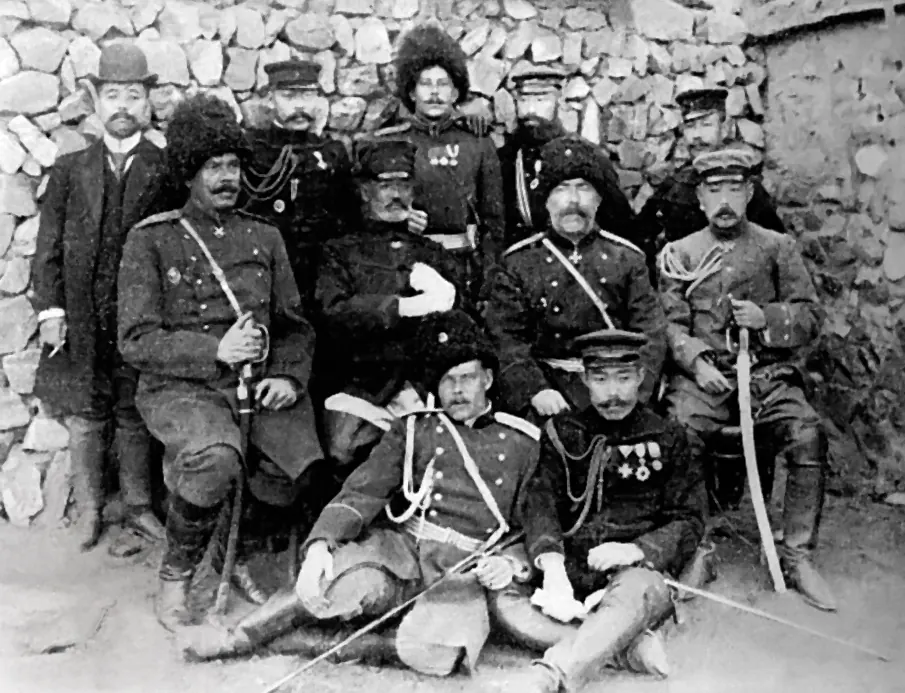
Nogi paid for the victory with more than his soldiers. Both of his sons, both army lieutenants, were killed during the war. His elder son died at Nanshan in May. His younger son was killed at 203 Meter Hill in November. Seven years later, on the day of Emperor Meiji's funeral in September 1912, Nogi and his wife committed ritual suicide in their home in Tokyo.
At Mukden, from late February to mid-March 1905, roughly 550,000 soldiers fought for three weeks in what was then the largest land battle in history. The Japanese won, but the cost was enormous: about 70,000 Japanese casualties and 90,000 Russian. The Russian army retreated but did not break. Russia still had one option left: the Baltic Fleet, already months into a voyage around the world.
The voyage to Tsushima
Russia's Baltic Fleet left the port of Kronstadt in October 1904 under Admiral Zinovy Rozhestvensky, a man his own officers called "Mad Dog" for his temper. The fleet had to sail 18,000 miles to reach the war because Russia had no naval base between the Baltic Sea and the Pacific. The Suez Canal was closed to them, so they went around Africa.
The voyage took seven months. The ships burned through 3,000 tons of coal a day. Engine rooms reached 140 degrees Fahrenheit in tropical waters, inside hulls designed for the Baltic. Many of the crew were raw recruits who had never been to sea. One week into the journey, in the North Sea off the Dogger Bank, lookouts mistook British fishing trawlers for Japanese torpedo boats and the fleet opened fire. Three British fishermen were killed. Russian ships also shot at each other in the confusion, killing one of their own sailors and a chaplain. The incident nearly brought Britain into the war against Russia and forced the fleet to sail the rest of the way without access to British ports for coal or repairs.
On May 27, 1905, the fleet entered the Tsushima Strait between Korea and Japan. Tōgō was waiting. He ordered a signal flag raised that read: "The fate of the Empire rests on the outcome of this battle. Let each man do his utmost." He had modeled the signal on Nelson's at Trafalgar a century earlier. Then he turned his column across the front of the Russian line, a maneuver called "crossing the T," which allowed every Japanese gun to bear on the lead Russian ships while only the forward guns of the approaching column could fire back. By sunset most of the battle was over. Japan sank or captured 21 of the 38 Russian ships. About 5,000 Russian sailors were killed and 6,000 captured. Japan lost three torpedo boats and 117 men. Western newspapers called Tōgō "the Nelson of the East."
What the war changed
U.S. President Theodore Roosevelt mediated the Treaty of Portsmouth, signed on September 5, 1905. Russia recognized Japan's control of Korea, gave up its lease on Port Arthur, and ceded the southern half of Sakhalin Island. But Russia paid no war indemnity. The Japanese public did not know how badly their country needed peace. By the summer of 1905 the treasury was nearly empty and the army was running out of trained replacements. Japan needed the treaty as much as Russia did. When the terms came out, crowds in Tokyo rioted for two days, burning churches and police stations. Roosevelt won the Nobel Peace Prize. Japan annexed Korea outright five years later.
In Russia, the defeats helped trigger the Revolution of 1905. Even before Tsushima, on January 22, soldiers in St. Petersburg shot into a crowd of workers marching to the Winter Palace to petition the Tsar. Strikes and mutinies spread across the country. Nicholas II was forced to issue the October Manifesto, promising a parliament. He spent the next decade undermining it. Blocked in East Asia, Russian ambitions shifted back toward the Balkans, where they collided with Austria-Hungary in 1914.
Across the colonized world, people under European rule read Japan's victory as proof that Western dominance was not permanent. Jawaharlal Nehru, fifteen years old and at school in England during the war, later wrote that "Japanese victories stirred up my enthusiasm. Nationalistic ideas filled my mind. I mused of Indian freedom." Sun Yat-sen, the Chinese revolutionary, was passing through the Suez Canal when Egyptians came aboard to congratulate him, mistaking him for Japanese. They had heard that an Eastern country had beaten a Western one for the first time. Japan's own military took a different lesson from the war: that surprise and fighting spirit could overcome a materially stronger enemy. They applied that belief at Pearl Harbor in 1941, against a country that could not be beaten by either.
Test what you learned
5 questions on this article. About two minutes, no signup.