
Divide and Rule
Divide and rule is the strategy of splitting a subject population into rival groups so they fight each other instead of the ruler.
Divide and rule is the practice of splitting a subject population into competing groups so their energy goes to fighting each other instead of uniting against the ruler. The idea comes from the Latin phrase "divide et impera," and tradition attributes it to Philip II of Macedon, who used it against the Greek city-states in the fourth century BCE. Julius Caesar practiced it in Gaul, and Machiavelli wrote about it in the sixteenth century. But the method is far older than any of the people credited with naming it, and it is still in use today. Empires adopted it because it cost little to maintain: a small military force that would lose to a united population could manage a divided one, particularly if the factions spent their energy watching each other.
How Rome practiced divide and rule
Rome turned divide and rule into a system of statecraft. After conquering a people, Rome offered an unequal treaty: the defeated state kept most of its territory but had to "have the same friends and enemies as Rome," which meant surrendering its foreign policy entirely. These allies, called socii, were forbidden from making agreements with each other, so no coalition could form against Rome. Rome rewarded loyal allies and crushed defiant ones, keeping each group focused on its own relationship with Rome rather than on what it shared with other subjects. Where a people proved especially dangerous, Rome confiscated land and planted a colony of settlers on it, creating a permanent watch post among the local population. The system let Rome control the Italian peninsula with relatively few legions, because the allies supplied soldiers for Rome's wars but rarely combined against it.
How Britain used divide and rule in India
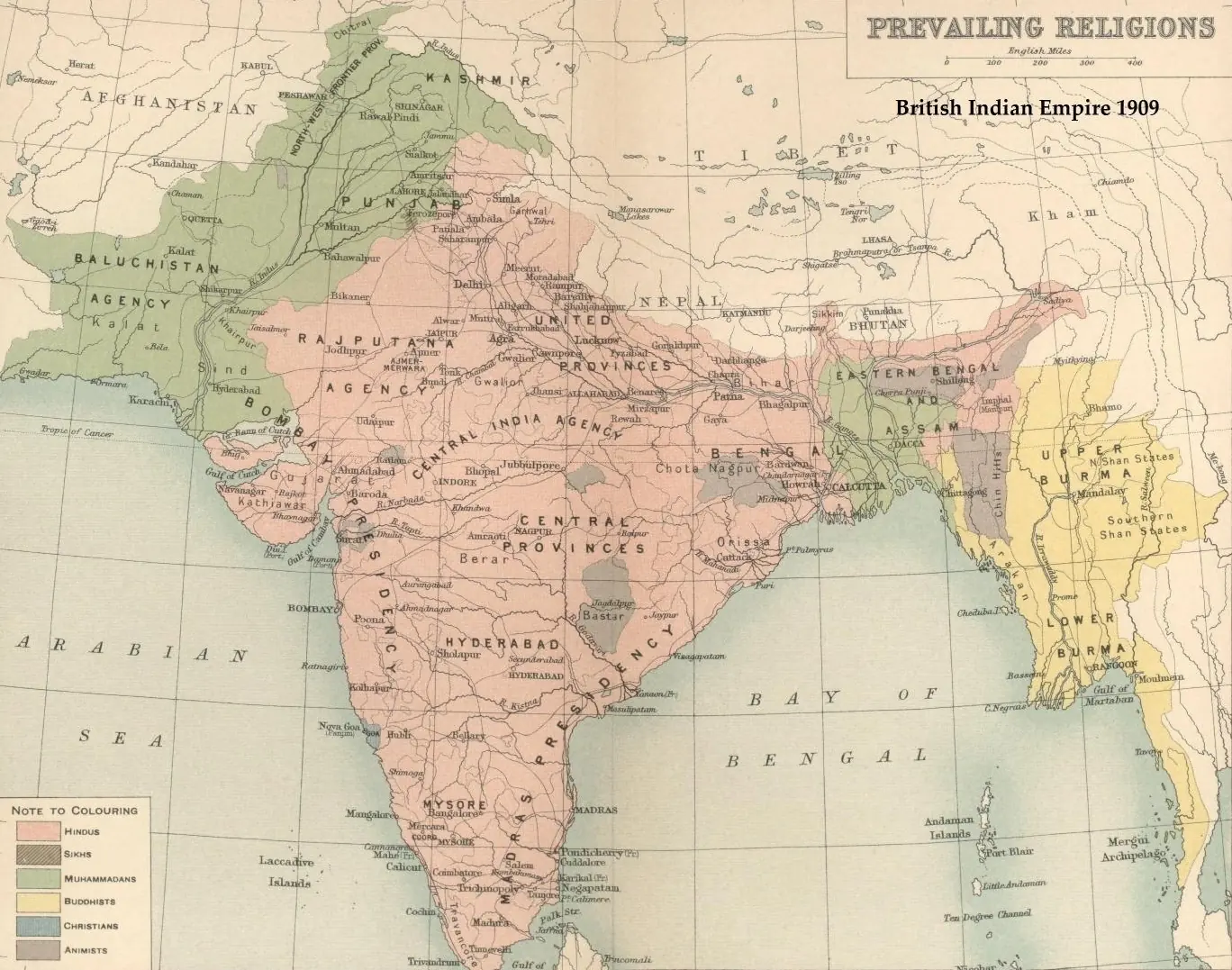
The British Raj ruled over 300 million people with a relatively small number of administrators and soldiers, and divide and rule was central to how they managed it. Starting with the first census of British India in 1872, the colonial administration imposed rigid categories of religion and caste on a society where those boundaries had been flexible. The census did not create religious or caste divisions from nothing, but it hardened them by turning flexible social distinctions into official, counted classifications. What had once been local and shifting became permanent and recorded.
The administration then built policy on those categories. It recruited soldiers disproportionately from groups it labeled "martial races," mostly Sikhs, Gurkhas, and Punjabi Muslims, and elevated favored communities as local intermediaries. The favored groups gained status and employment from the arrangement, giving them a stake in the colonial system. In 1909, the Morley-Minto reforms introduced separate electorates, meaning Hindus and Muslims voted in separate pools for separate representatives. Political life in India was organized along religious lines from that point forward.
Decades of this communal engineering helped set the conditions for the 1947 Partition. When Britain left in 1947, India and Pakistan were carved out of the subcontinent along religious lines, displacing roughly 15 million people and killing hundreds of thousands in a matter of months.
How Belgium divided Rwanda
Belgian colonial administrators applied the same method in Rwanda. Before colonial rule, the distinction between Hutu and Tutsi was partly about occupation and social standing, and people could move between groups. In 1933, Belgian administrators conducted a census that classified every Rwandan by ethnicity and stamped the result onto identity cards. The categories became rigid and hereditary. The Belgians also favored Tutsis for positions of authority, creating an enforced hierarchy where none had been fixed before.
By independence in 1962, political power had shifted to the Hutu majority, but the identity cards and the divisions they represented stayed. In 1994, those divisions helped make possible the Rwandan genocide. Over about a hundred days, roughly 800,000 Tutsis and moderate Hutus were killed. The identity cards the Belgians had introduced sixty years earlier were checked at roadblocks to identify Tutsis.
Why divide and rule outlasts the empires that use it
The most lasting damage from divide and rule is that it changes how a society organizes itself. When an empire sorts a population into official categories, distributes power along those lines, and rules through the divisions for decades or generations, the categories become the terms of political life. People organize around them, compete through them, and inherit grievances shaped by them. By the time the empire leaves, the divisions persist without it.
Throughout the Middle East and Africa, colonial powers drew borders that trapped rival groups inside one state or separated natural allies. The Sykes-Picot agreement split the Ottoman Arab provinces into British and French zones, and the states later carved out of them had borders that cut across ethnic and religious communities. Those borders still feed conflicts that the colonial powers once found useful. Rulers who inherited these states after independence often reached for the same method: ruling through division was easier than building shared institutions.
The empires that practiced divide and rule are gone. The divisions they created, and the practice of ruling through them, have not gone with them.