Chokepoint · Southeast Asia
Strait of Malacca
OpenUpdated September 29, 2026
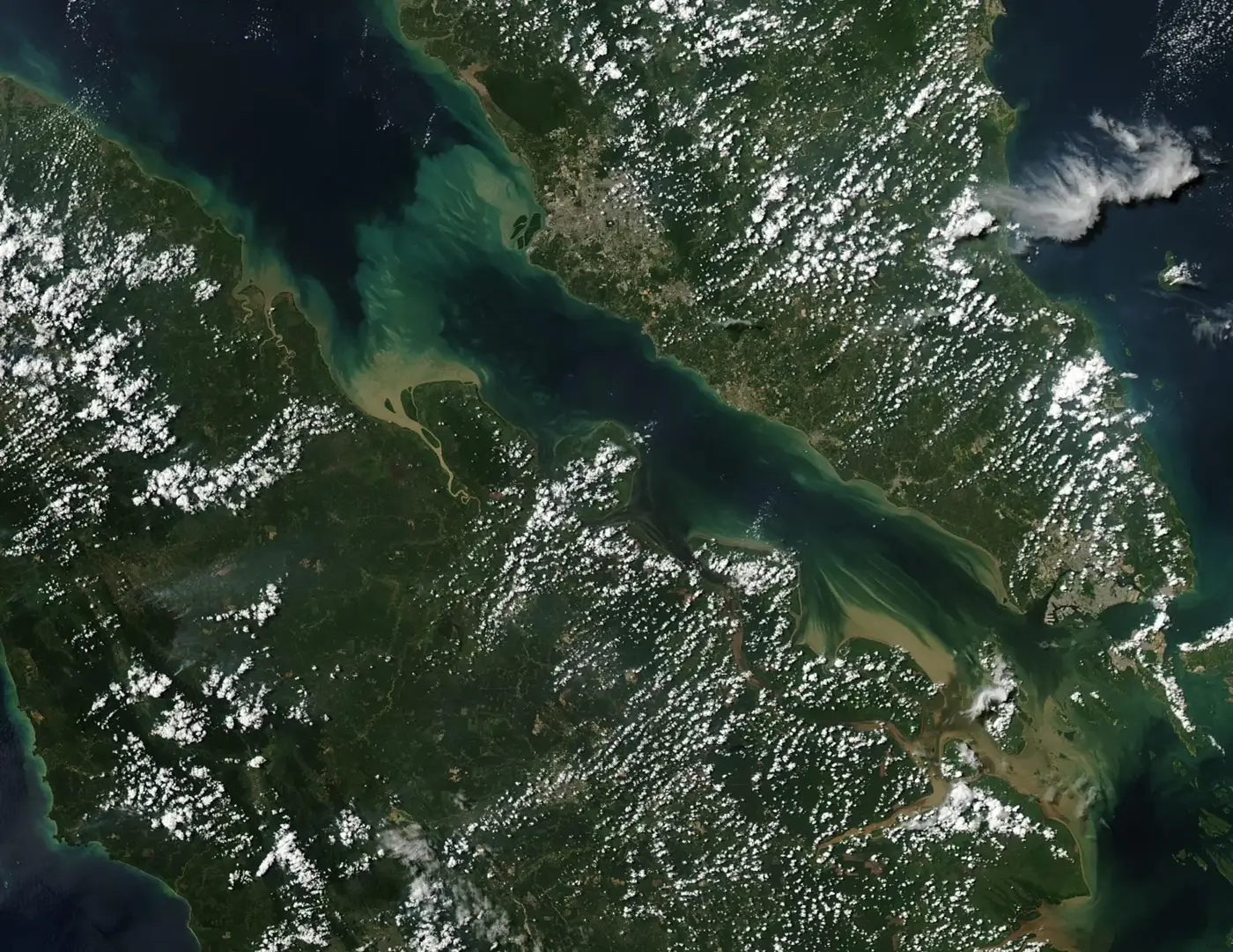
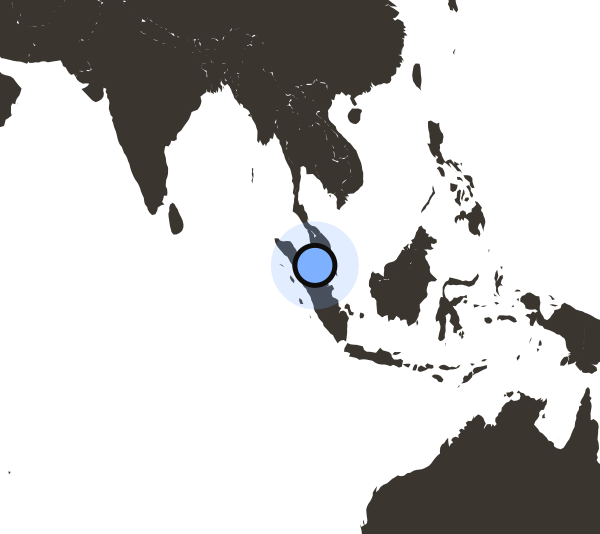
The Strait of Malacca is the sea passage between the Malay Peninsula and the Indonesian island of Sumatra that joins the Indian Ocean to the South China Sea. It is about 900 km long. At its southern end, near Singapore, the main channel is only 2.7 km wide. More oil passes through it than through any other chokepoint.
- Length
- About 900 km
- from the Andaman Sea to Singapore
- Narrowest channel
- 2.7 km
- the Phillip Channel, off Singapore
- Oil a day, early 2025
- 23.2 million
- barrels, the most of any chokepoint
- Ships a day
- 216
- 220 a day in 2023
- Shores
 Malaysia
 Indonesia
 Singapore
Where is the Strait of Malacca?
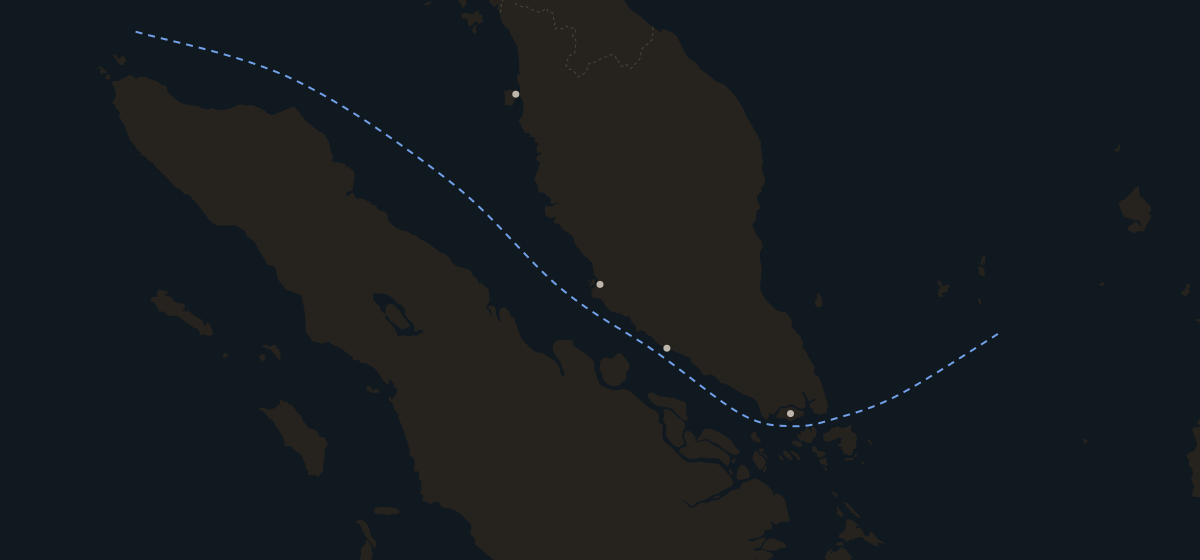
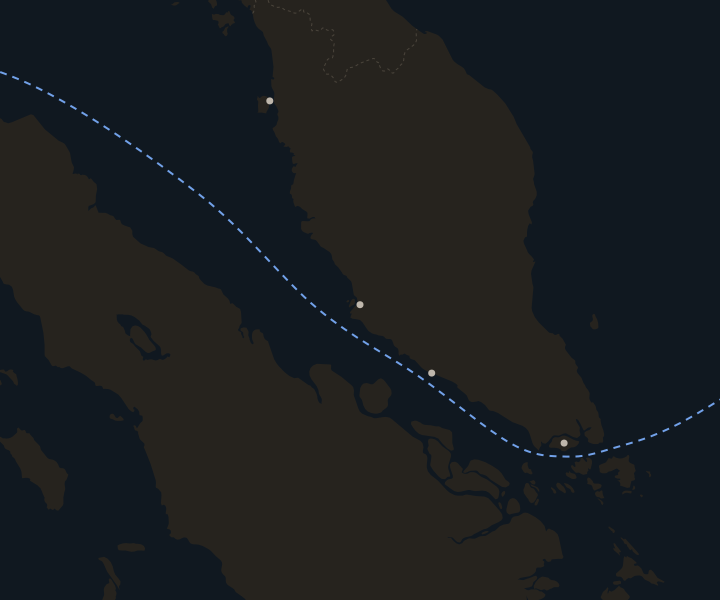
The Strait of Malacca runs about 900 km between the Malay Peninsula, most of which is Malaysia, and the Indonesian island of Sumatra. The strait joins the Indian Ocean in the northwest to the South China Sea in the southeast. It is about 250 km wide at its northern end and narrows toward Singapore, where the Phillip Channel is about 2.7 km wide. The shallowest parts are about 25 meters deep, which limits the size of ships.
 MALAYSIA
SUMATRA
MALAYSIA
SUMATRA(INDONESIA) THAILAND Singapore George Town Port Klang Malacca Andaman Sea South China Sea Indian Ocean
 MALAYSIA
SUMATRA
MALAYSIA
SUMATRA(INDONESIA) Singapore George Town Port Klang Malacca Andaman Sea
How busy is the Strait of Malacca?
More than 102,500 ships passed through the Strait of Malacca in 2025, a record, up from about 94,300 in 2024. In the four weeks to September 20, about 216 ships a day passed through, against 220 in 2023. About $2.4 trillion worth of goods passed through the strait in 2024, 21% of the world's maritime trade.
Ships through the strait each day
Weekly average, January 2023 to September 2026
How much oil goes through the Strait of Malacca?
About 23.2 million barrels a day passed through the Strait of Malacca in the first half of 2025, the most of any chokepoint and 29% of all oil carried by sea. China took 48% of it. Much of this oil comes from the Persian Gulf through the Strait of Hormuz.
Oil through each chokepoint
What is China's Malacca dilemma?
China's Malacca dilemma is its dependence on the Strait of Malacca for imported oil. About three quarters of China's seaborne crude oil imports pass through the strait. In a war, a navy could block the strait and cut off most of that supply. China has built overland pipelines, but they carry about 1.5 million barrels a day, against about 7.9 million through the strait.
China's oil imports, by route
Can ships avoid the Strait of Malacca?
Yes, at a cost. Ships can sail through Indonesia's Sunda Strait or Lombok Strait instead, which adds roughly 1,000 to 1,500 nautical miles and three to five days. The largest tankers, too deep for the Strait of Malacca, already use Lombok.
Indonesia, Malaysia and Singapore share the strait's waters. Ships have the right of transit passage under the UN Convention on the Law of the Sea, which forbids charging tolls for passing.
The strait over the years
- 1511Portuguese forces under Afonso de Albuquerque capture the port of Malacca.
- 1824The Anglo-Dutch Treaty gives Malacca to Britain, five years after Britain founds Singapore.
- 1914The German cruiser Emden enters Penang harbor with a fake fourth funnel and sinks a Russian cruiser and a French destroyer.
- 1942Singapore surrenders to Japan on February 15.
- 2003China's President Hu Jintao warns that 'certain major powers' want to control the strait.
- 2025A record 102,500 ships pass through the strait, and piracy incidents reach a 19-year high of 108.