Chokepoint · Istanbul
Bosphorus
Disrupted since July 2026Updated September 29, 2026
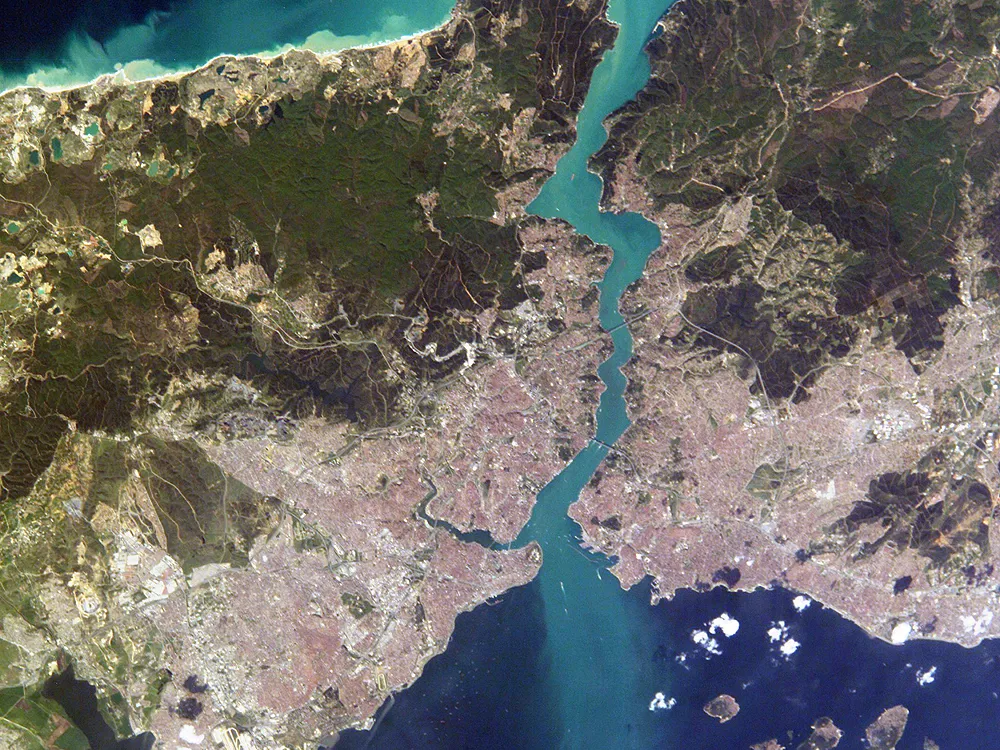
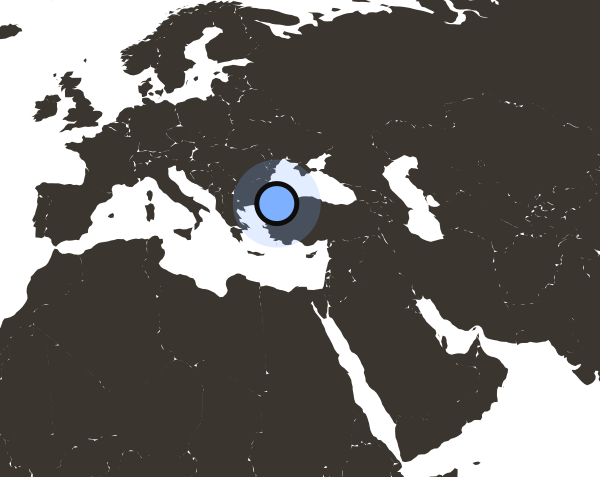
The Bosphorus is the strait that runs through the middle of Istanbul, Turkey, between Europe and Asia. It joins the Black Sea to the Sea of Marmara and, through the Dardanelles, the Mediterranean. It is 31 km long and about 700 meters wide at its narrowest. It is the only sea route out of the Black Sea.
- Width at the narrowest
- 700 m
- near Rumelihisarı
- Length
- 31 km
- through the middle of Istanbul
- Ships in 2025
- 40,172
- Turkey's count
- Ships a day
- 55
- 97 a day in 2023
- Country
 Turkey
Where is the Bosphorus?
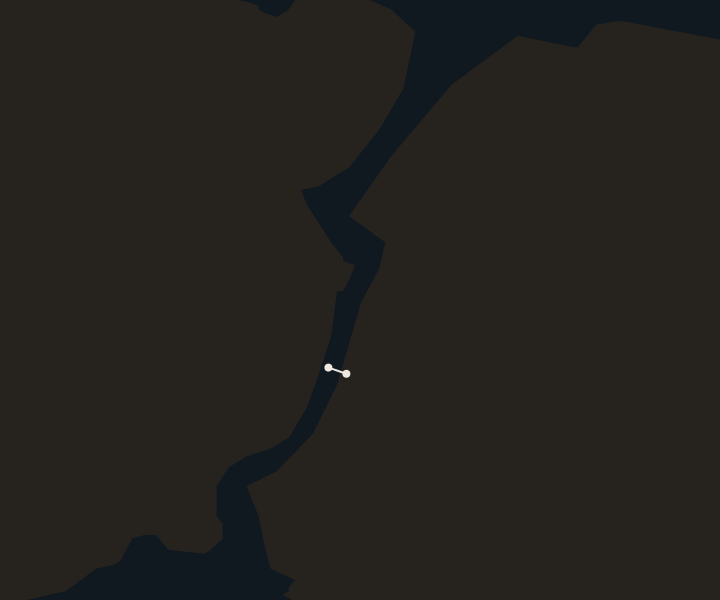
The Bosphorus runs 31 km through Istanbul, with Europe on its western bank and Asia on its eastern bank. It joins the Black Sea in the north to the Sea of Marmara in the south. From the Sea of Marmara, ships reach the Mediterranean through a second strait, the Dardanelles. The narrowest point is about 700 meters, near the fortress of Rumelihisarı.
 EUROPE
ASIA
Black Sea
Sea of Marmara
Rumelihisarı
700 m
EUROPE
ASIA
Black Sea
Sea of Marmara
Rumelihisarı
700 m
 EUROPE
ASIA
Black Sea
Sea of Marmara
Rumelihisarı
700 m
EUROPE
ASIA
Black Sea
Sea of Marmara
Rumelihisarı
700 m
Is the Bosphorus open?
Yes, to merchant ships, but traffic has fallen. Ukraine began drone attacks on tankers and Russian ports in the Black Sea in July 2026. On August 3, drones hit two Turkish-owned ships near Novorossiysk. Turkey held up transit permits for ships bound for Russian and Ukrainian ports from August 6 to 9, then let them pass again.
In the four weeks to September 20, about 55 ships a day passed through, against 97 in 2023.
Ships through the strait each day
Weekly average, January 2023 to September 2026
Who can sail through the Bosphorus?
Turkey controls the Bosphorus under the Montreux Convention of 1936. In peacetime, merchant ships of every country may pass freely. Warships of countries outside the Black Sea may usually have no more than 30,000 tons in the Black Sea at one time, and each may stay no more than 21 days. On February 28, 2022, four days after Russia invaded Ukraine, Turkey closed the straits to Russian and Ukrainian warships, except those returning to their home ports. It also asked other countries not to send warships.
Who may pass
- Merchant shipsFree passage in peacetime
- Warships from outside the Black SeaUsually at most 30,000 tons in the Black Sea at once, and 21 days each
- Since February 28, 2022Closed to Russian and Ukrainian warships, except those returning to their home ports
How much oil goes through the Bosphorus?
About 3.7 million barrels a day passed through the Turkish Straits in the first half of 2025. About 60% was crude oil. Kazakhstan was the largest exporter, shipping crude through the Caspian Pipeline Consortium's terminal near Novorossiysk. There is no sea route around the Bosphorus, so every tanker leaving a Black Sea port must pass Istanbul.
Oil through each chokepoint
The strait over the years
- 1453Sultan Mehmed II takes Constantinople, a year after building the Rumelihisarı fortress at the narrows.
- 1915On March 18, mines sink Allied battleships trying to force the Dardanelles. The Gallipoli campaign costs about 250,000 Allied casualties.
- 1936The Montreux Convention, signed July 20, gives Turkey control of the straits.
- 1946The Soviet Union demands joint control of the straits, one of the pressures behind the Truman Doctrine.
- 2022Turkey closes the straits to Russian and Ukrainian warships on February 28, after Russia invades Ukraine.
- Aug 2026Drones hit Turkish-owned ships near Novorossiysk. Turkey briefly holds up ships bound for Russian and Ukrainian ports.