Chokepoint · Persian Gulf
Strait of Hormuz
Closed since February 28, 2026Updated September 29, 2026
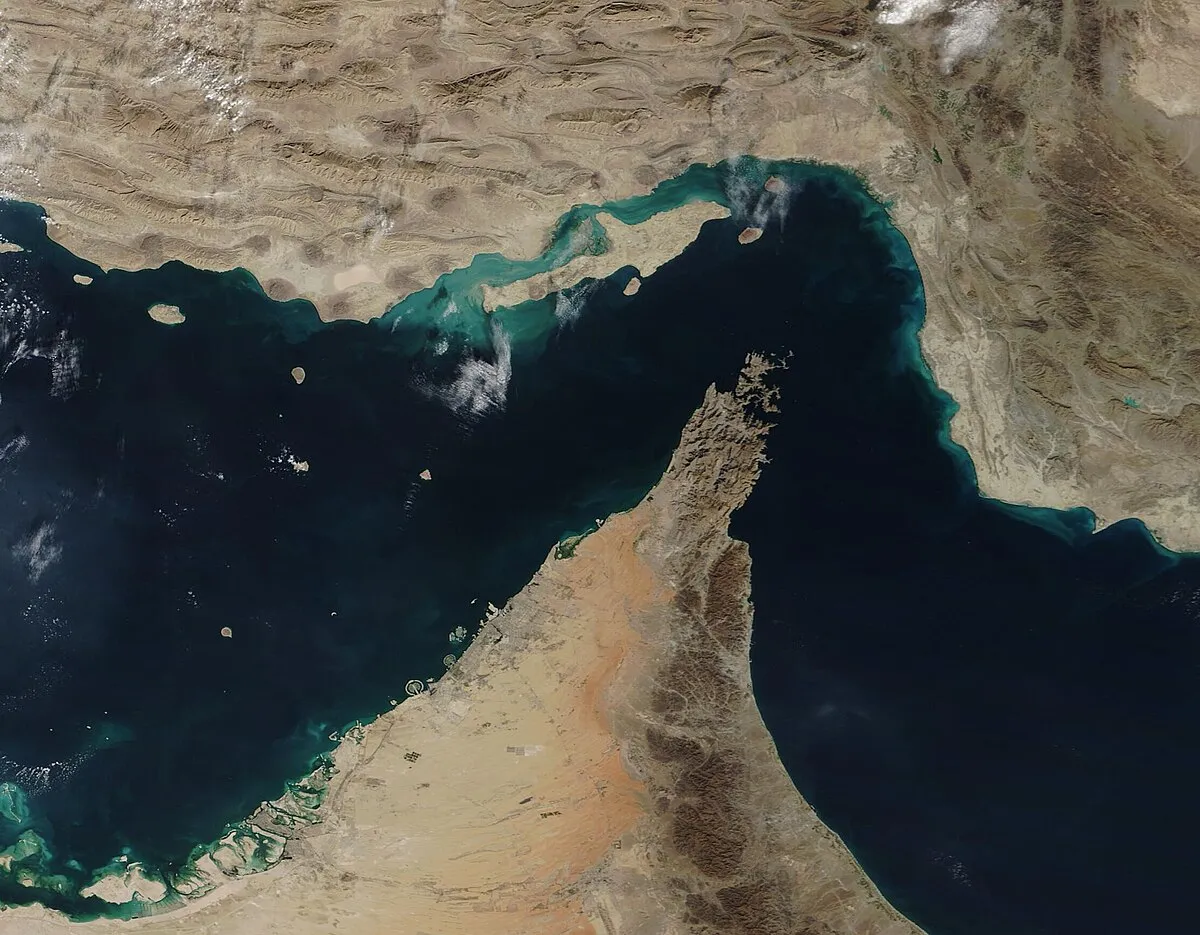
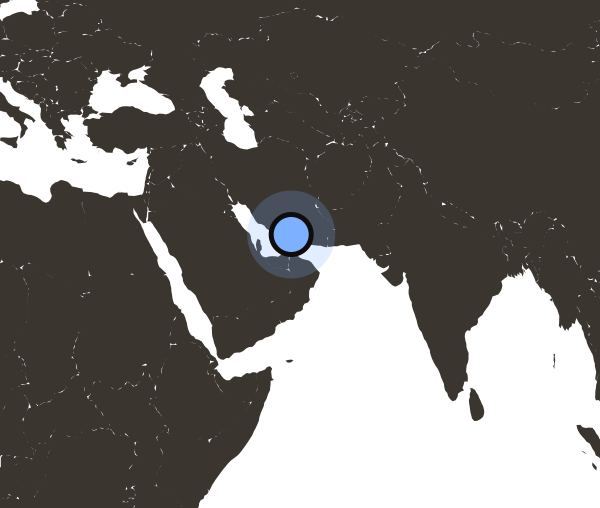
The Strait of Hormuz is the sea passage between Iran and Oman that connects the Persian Gulf to the open ocean. It is 39 km wide at its narrowest. Before Iran closed it in 2026, about 21 million barrels of oil a day passed through it, a fifth of all the oil the world uses.
- Width at the narrowest
- 39 km
- 21 nautical miles
- Shipping lanes
- 2 × 3 km
- One each way, in Omani waters
- Oil a day, early 2025
- 20.9 million
- barrels, 20% of world use
- Ships a day
- 4
- 92 a day in 2023
- Shores
 Iran
Iran Oman
Oman
Where is the Strait of Hormuz?
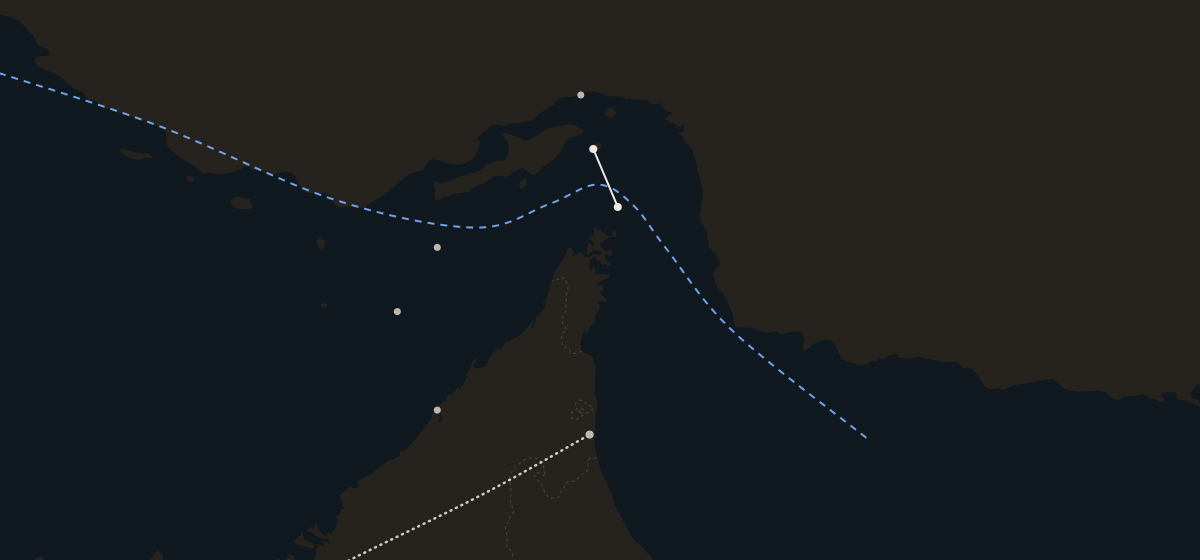
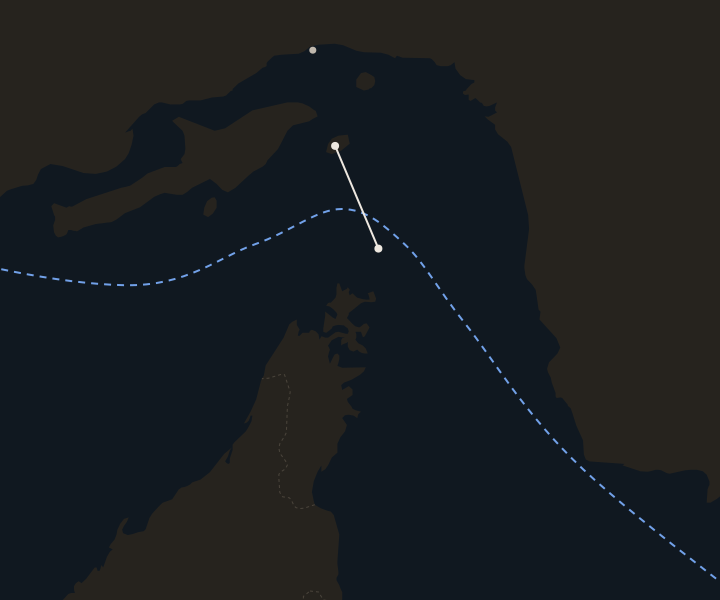
Between Iran to the north and the Musandam peninsula to the south, which belongs to Oman. The strait links the Persian Gulf with the Gulf of Oman and the Arabian Sea. Every tanker that loads oil in Iraq, Kuwait, Qatar or Bahrain has to pass through it.
 IRAN
MUSANDAM
IRAN
MUSANDAM(OMAN) OMAN UNITED ARAB EMIRATES Persian Gulf Gulf of Oman Bandar Abbas Dubai Fujairah Abu Musa Tunb islands Shipping lanes 39 km
 IRAN
MUSANDAM
IRAN
MUSANDAM(OMAN) Persian Gulf Gulf of Oman Bandar Abbas 39 km
Is the Strait of Hormuz closed?
Yes. Iran's Revolutionary Guards closed the strait on February 28, 2026, hours after US and Israeli airstrikes on Iran. In the four weeks to September 20, about 4 ships a day passed through. In 2023 the average was 92. A deal signed on June 17 let some ships through until it collapsed on July 8. On September 25 Iran's foreign minister publicly offered to reopen the strait within a week. President Trump rejected the offer the next day.
Ships through the strait each day
Weekly average, January 2023 to September 2026
How much oil goes through the Strait of Hormuz?
About 20.9 million barrels a day in the first half of 2025, according to the US Energy Information Administration. That was one barrel in every five the world used. More than a fifth of the world's liquefied natural gas also went through, most of it from Qatar. Nine tenths of the crude oil went to Asia.
One in five barrels
Where the strait's crude oil went, early 2025


 74%
15%
11%
74%
15%
11%
- China, India, Japan and South KoreaThe four largest buyers
- The rest of AsiaTaiwan, Thailand, Singapore and others
- Europe, the Americas and AfricaAbout one barrel in nine
Can oil get around the Strait of Hormuz?
Only a small part of it. Saudi Arabia can pump crude west to the Red Sea through its East-West pipeline. The United Arab Emirates can send crude from Habshan to Fujairah, a port outside the strait. The EIA estimated in 2025 that about 2.6 million barrels a day of pipeline capacity was unused and could avoid the strait.
No pipeline around the strait
 Iraq
Iraq Kuwait
 Qatar
Qatar Bahrain
- Iran
Who controls the Strait of Hormuz?
Iran and Oman. Each country's territorial waters reach 12 nautical miles from its coast. The strait is only 21 nautical miles wide, so the two zones meet in the middle and no international waters are left. The shipping lanes run through Omani waters.
The UN Convention on the Law of the Sea gives ships the right to pass through straits like this one. Iran signed the convention in 1982 but has never ratified it.
Across the strait at its narrowest
21 nautical miles, 39 km
The strait since 1980
- 1984–88The Tanker War. Iran and Iraq attack each other's oil tankers. The US Navy escorts Kuwaiti tankers.
- 1988The USS Vincennes shoots down Iran Air Flight 655 over the strait. All 290 people on board are killed.
- 2019Limpet mines damage tankers near the strait. Iran seizes the British-flagged tanker Stena Impero.
- Feb 2026Iran closes the strait after US and Israeli airstrikes. On April 30 Brent crude briefly reaches $126 a barrel.
- Jun 2026The Islamabad Memorandum lifts the closure and the US blockade of Iran's ports.
- Jul 2026The deal collapses after Iranian strikes on three tankers. The US reimposes its blockade.