
Chokepoint · Red Sea
Bab el-Mandeb
Disrupted since November 2023Updated October 1, 2026
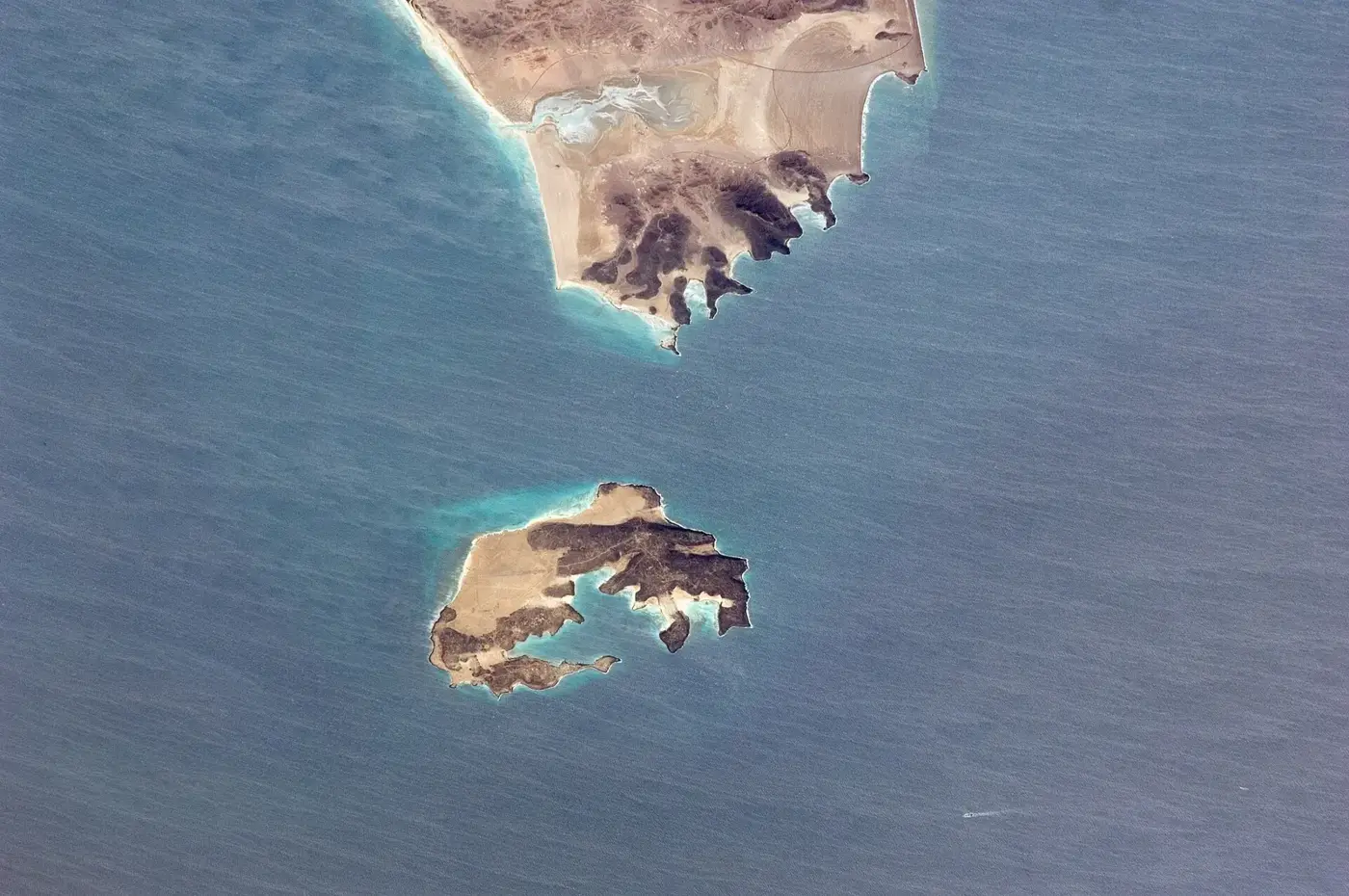
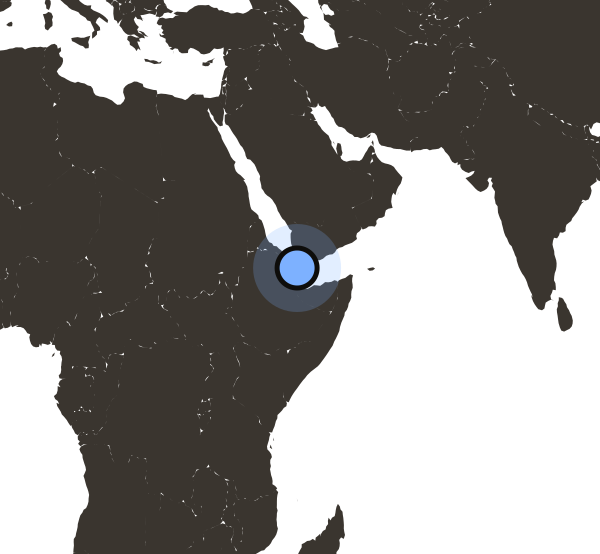
Bab el-Mandeb is the strait between Yemen on one side and Djibouti and Eritrea on the other. It joins the Red Sea to the Gulf of Aden and the Indian Ocean. It is 26 km wide at its narrowest. Ships sailing between the Suez Canal and Asia pass through it. The name is usually translated as "Gate of Grief".
- Width at the narrowest
- 26 km
- 14 nautical miles
- Main channel
- 20 km
- west of Perim island
- Oil a day, Apr–Jun 2026
- 8.1 million
- barrels, 4.2 million in early 2025
- Cargo ships a day
- 26
- Last four weeks; 74 a day in 2023
- Shores
 Yemen
 Djibouti
 Eritrea
Where is Bab el-Mandeb?
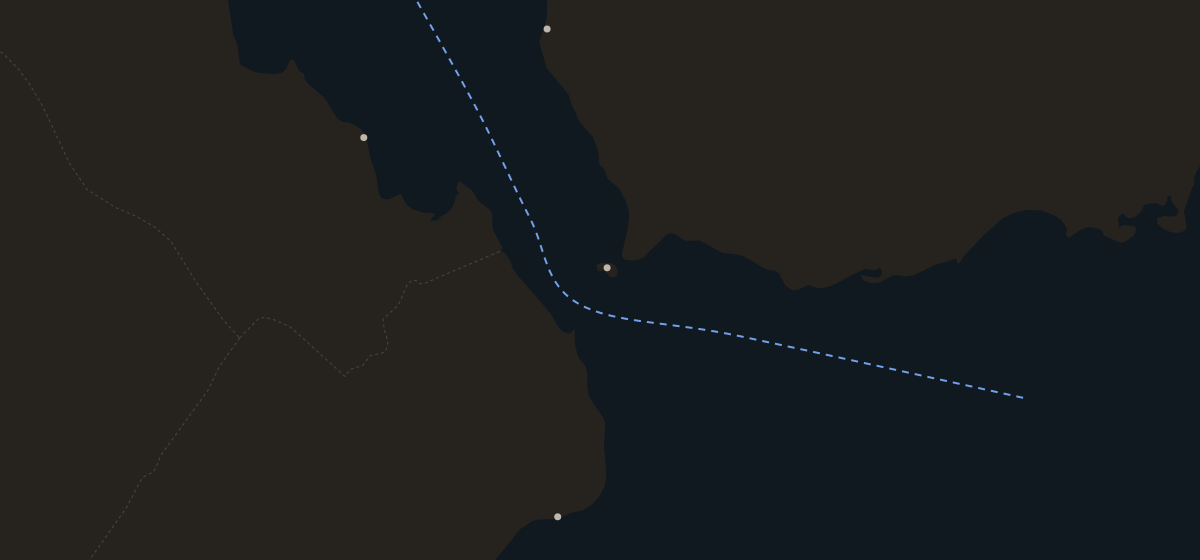
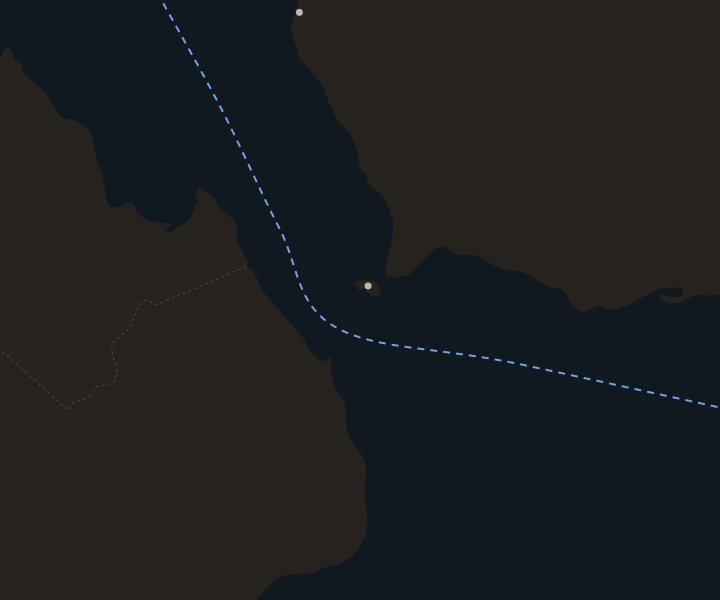
Bab el-Mandeb is at the southern end of the Red Sea, between Yemen on the Arabian Peninsula and Djibouti and Eritrea in Africa. It is 26 km wide between Ras Menheli in Yemen and Ras Siyyan in Djibouti. Perim, a small Yemeni island, splits the strait into two channels. Ships use the wider western channel, about 20 km wide.
 YEMEN
DJIBOUTI
ERITREA
Perim
Mokha
Obock
Assab
Red Sea
Gulf of Aden
 YEMEN
DJIBOUTI
Perim
Mokha
Red Sea
Gulf of Aden
Is Bab el-Mandeb safe for ships?
Not fully. The Houthis, an Iran-backed group that holds northern and western Yemen, began attacking ships in November 2023. They attacked more than a hundred ships, damaged about 30, sank four and killed at least nine sailors. The attacks paused after the Gaza ceasefire of October 2025. In the four weeks to September 27, IMF PortWatch counted about 26 cargo ships and tankers a day, against 74 in 2023. Ship-tracking counts miss some tankers that cross with their transponders off.
On July 20, 2026, the Houthis declared a blockade of Saudi shipping, including any ship that loads or unloads at a Saudi port. By September 22 they had made 12 attacks or attempted attacks. On August 11 the Houthis hit the Tihamah, an Egyptian-owned ship carrying food, killing six people. On August 24 a Houthi missile set fire to the Saudi supertanker Amzan west of Yanbu. On September 10 and 11 the Houthis took Mokha and Perim island, and now hold Yemen's whole Red Sea coast. The Houthis say the strait is safe for every ship except Saudi and Israeli ones. Only one Saudi-linked tanker has crossed since July 20.
Ships through the strait each day
Weekly average, January 2023 to September 2026
Why do the Houthis attack ships?
The Houthis first said they were attacking ships to support Gaza. The Houthis, who call themselves Ansar Allah, are a movement from northern Yemen. They took Yemen's capital, Sanaa, in September 2014. A Saudi-led coalition began bombing them in March 2015. Iran is their main backer and gives them weapons, training and intelligence.
In November 2023 the Houthis began their attacks on ships linked to Israel. After US and British airstrikes in January 2024, they also targeted US and British ships. The Houthis paused after the Gaza ceasefire of October 2025. In 2026 the Houthis resumed attacks during the war on Iran. On July 13 an airstrike hit Sanaa airport, which the Houthis blamed on Saudi Arabia. A week later the Houthis declared a blockade of Saudi shipping. Analysts say the attacks win the Houthis support at home and leverage over Saudi Arabia. At talks in Muscat on September 12 and 13, the Houthis told US officials they would not attack American ships.
Whose ships the Houthis have targeted
- November 2023Ships linked to Israel
- January 2024Also US and British ships, after US and British airstrikes
- May to October 2025A truce with the US, then a pause after the Gaza ceasefire
- June 2026Israeli ships, during the war on Iran
- July 2026Saudi ships, and any ship calling at a Saudi port
How much oil goes through Bab el-Mandeb?
The US Energy Information Administration estimates that 9.3 million barrels a day passed through the strait in 2023. That fell to 4.2 million in the first half of 2025, as tankers avoided Houthi attacks by sailing around Africa. After Iran closed the Strait of Hormuz in 2026, Saudi Arabia piped more crude to its Red Sea port of Yanbu. The flow rose to 8.1 million barrels a day in April to June 2026. Then the Houthis blockaded Saudi shipping in July, and drones hit Saudi Arabia's East-West pipeline in September. Kpler, a ship-tracking firm, estimates the flow fell from 5.45 million barrels a day in August to 2.56 million in September, as Saudi Arabia sent more oil through Hormuz again.
Oil through each chokepoint
Early 2025Apr–Jun 2026Who has military bases near Bab el-Mandeb?
Djibouti, on the African shore of the strait, hosts bases from several countries. The United States has Camp Lemonnier, with about 4,000 people. China opened its first overseas military base in Djibouti in 2017. France has kept troops there since Djibouti's independence in 1977 and has about 1,500 today. Japan opened a base in 2011 and Italy in 2013.
Foreign bases in Djibouti
 United StatesCamp Lemonnier, about 4,000 people
 ChinaIts first overseas military base, opened in 2017
 FranceAbout 1,500 troops
 JapanBase opened in 2011
 ItalyBase opened in 2013
Who controls Bab el-Mandeb?
Yemen, Djibouti and Eritrea share its coasts. The strait is narrow enough that their territorial waters meet, so there are no international waters in it. Under the UN Convention on the Law of the Sea, ships have the right of transit passage. Yemen ratified the convention in 1987 and Djibouti in 1991; Eritrea has not. Since September 2026 the Houthis, whom most countries do not recognize as Yemen's government, hold the Yemeni shore.
Across the strait at its narrowest
26 km, 14 nautical miles
The strait over the years
- 1799The British East India Company occupies Perim island.
- 1869The Suez Canal opens, making Bab el-Mandeb part of the shortest sea route between Europe and Asia.
- 1973During the Yom Kippur War in October, Egypt's navy blockades the strait to ships bound for Israel's port of Eilat.
- 2023The Houthis land a helicopter on the car carrier Galaxy Leader and seize it. Its 25 crew are held for 430 days.
- 2024The Rubymar, a cargo ship hit by a Houthi missile in February, sinks on March 2. It is the first ship lost to the attacks.
- Sep 2026The Houthis take Mokha and Perim and hold the whole Yemeni shore of the strait.
Other chokepoints
All 10 chokepoints →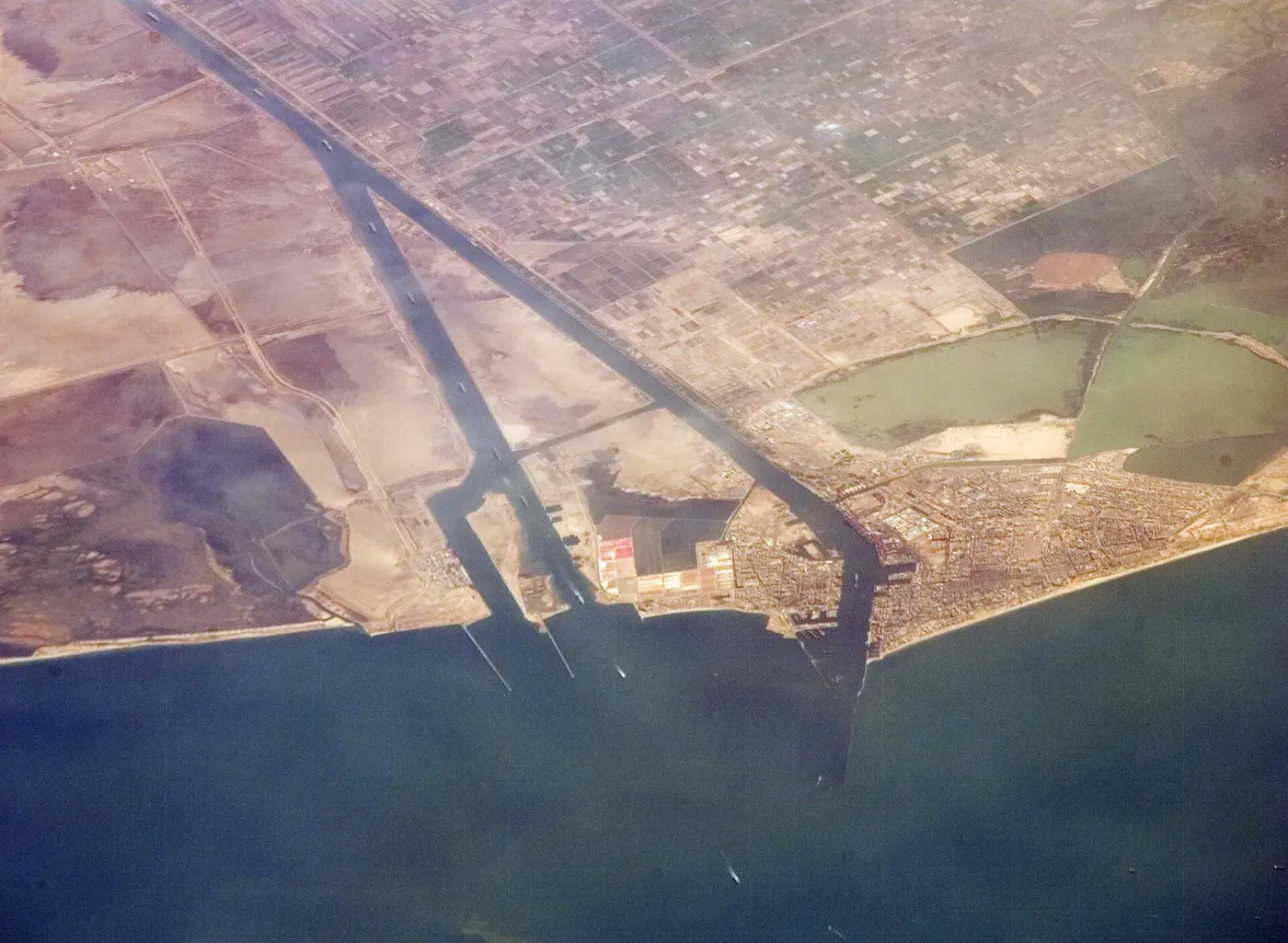 Disrupted
Suez Canal
Traffic is recovering but still well below 2023. 40 ships a day, against 74 in 2023.
 Disrupted
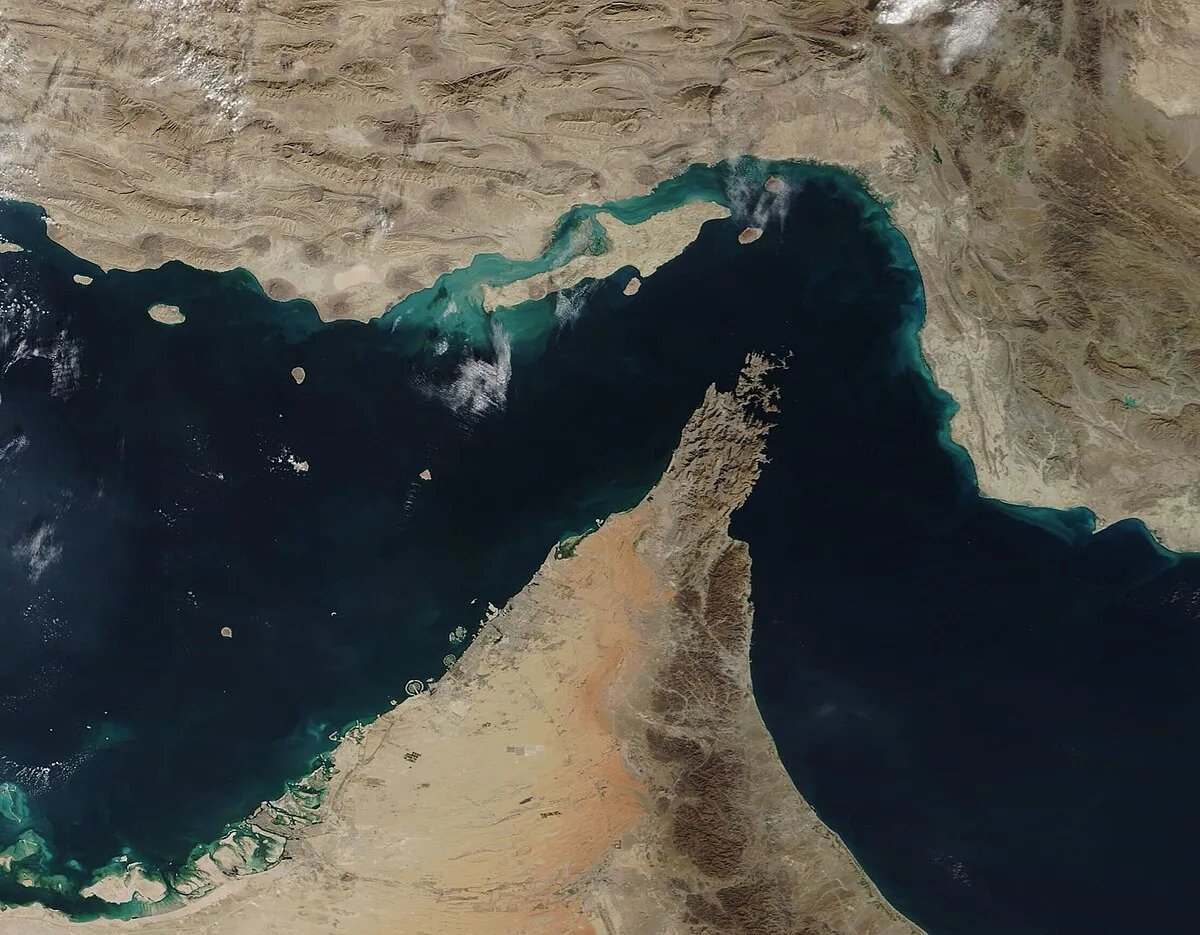
Strait of Hormuz
Tankers cross under US protection; Iran still attacks ships. 4 ships a day, against 92 in 2023.
 Open
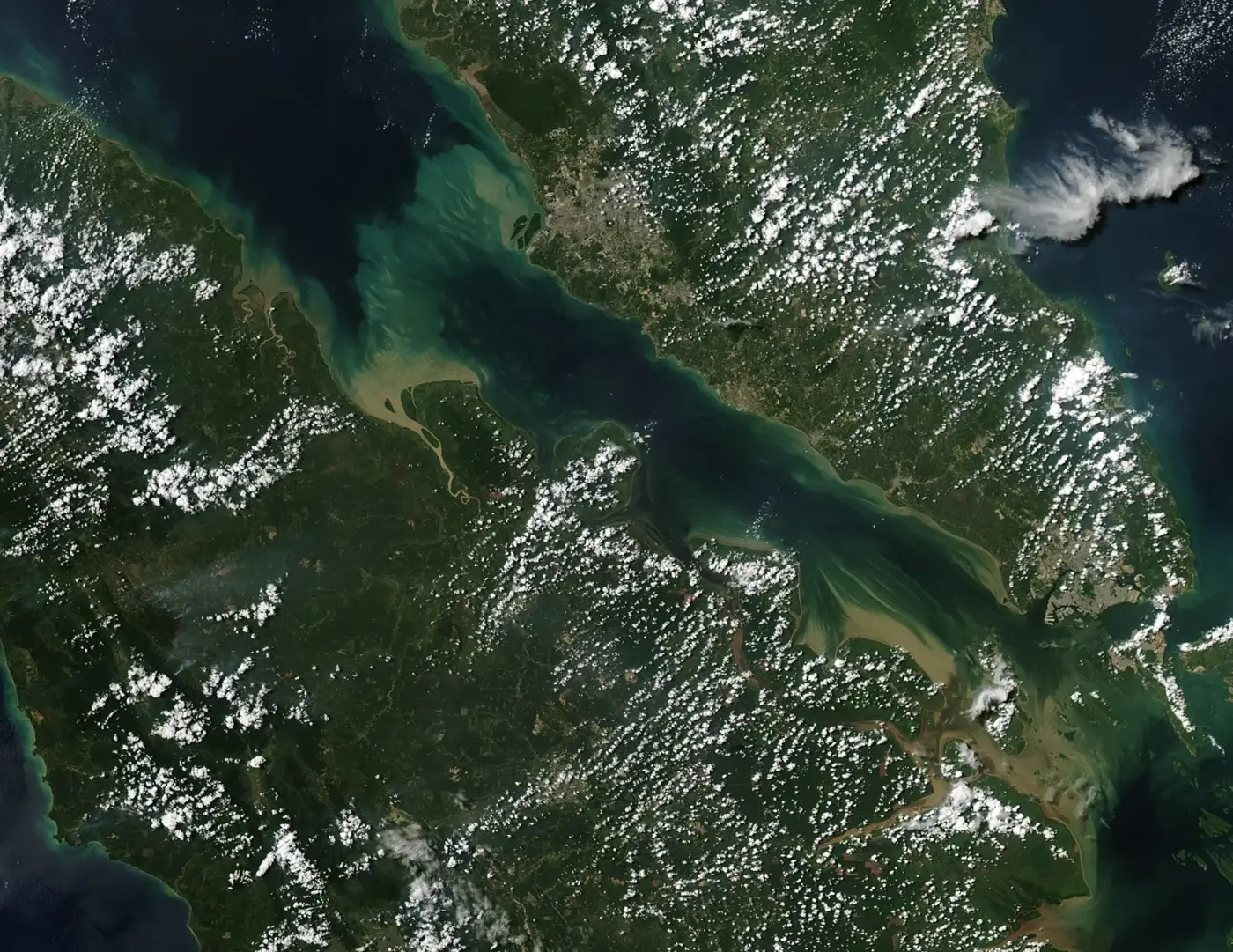
Strait of Malacca
Fewer tankers since Hormuz closed. 220 ships a day, against 220 in 2023.