Chokepoint · Egypt
Suez Canal
Disrupted since December 2023Updated September 29, 2026
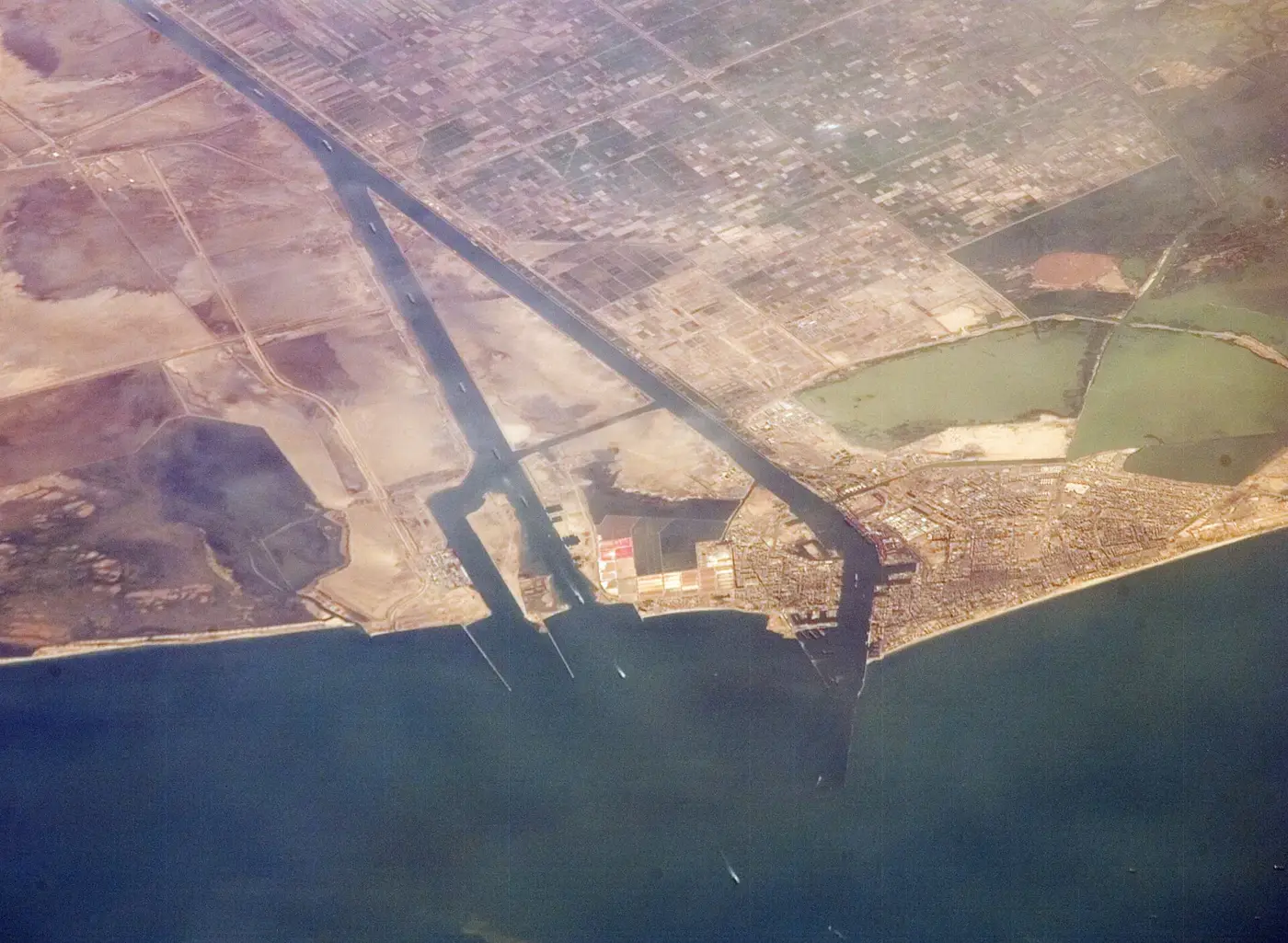
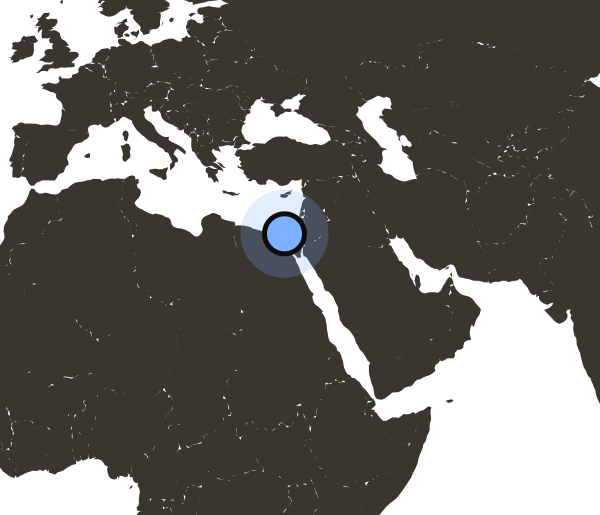
The Suez Canal is an artificial waterway in Egypt, 193 km long, from Port Said on the Mediterranean to Suez on the Red Sea. It has no locks and sits at sea level. It links Europe and Asia by sea without sailing around Africa. About 15% of the world's seaborne trade normally passes through it.
- Length
- 193 km
- From Port Said to Suez, with no locks
- Ships in 2023
- 26,434
- a record; 13,213 in 2024
- Share of sea trade
- About 15%
- in a normal year (IMF)
- Ships a day
- 41
- 74 a day in 2023
- Country
 Egypt
Egypt
Where is the Suez Canal?
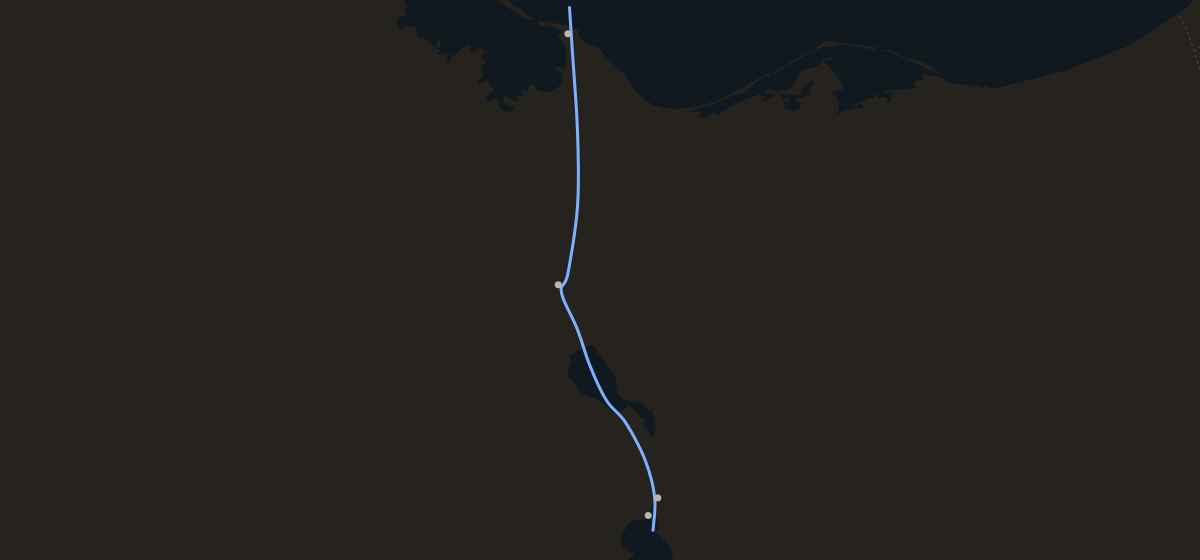
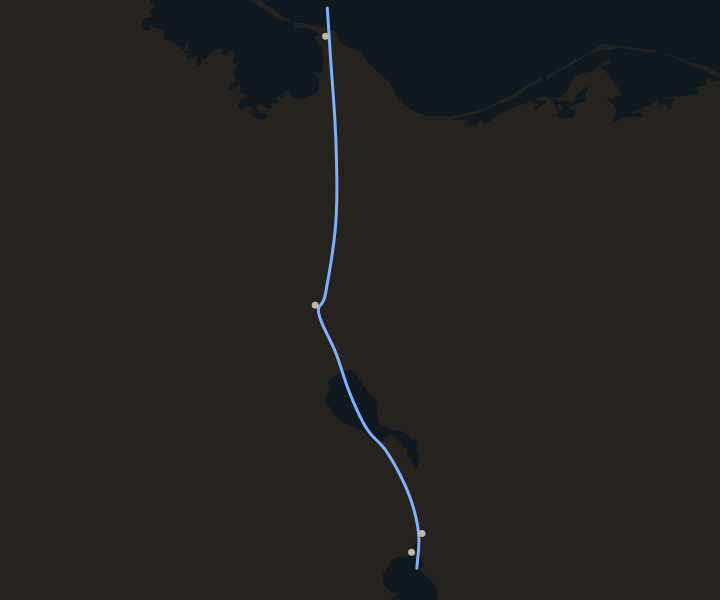
The Suez Canal crosses Egypt from Port Said on the Mediterranean to Suez at the top of the Red Sea, a distance of 193 km. The west bank is Africa and the east bank is the Sinai peninsula, in Asia. Near its middle the canal passes through the Great Bitter Lake. In March 2021 the container ship Ever Given ran aground near Suez and blocked the canal for six days.
 Port Said
Ismailia
Suez
Great Bitter Lake
Mediterranean Sea
Gulf of Suez
EGYPT
SINAI
Ever Given ran
Port Said
Ismailia
Suez
Great Bitter Lake
Mediterranean Sea
Gulf of Suez
EGYPT
SINAI
Ever Given ranaground here, 2021
 Port Said
Ismailia
Suez
Great Bitter Lake
Mediterranean Sea
Gulf of Suez
SINAI
Ever Given ran
Port Said
Ismailia
Suez
Great Bitter Lake
Mediterranean Sea
Gulf of Suez
SINAI
Ever Given ranaground here, 2021
Is the Suez Canal open?
Yes. Egypt's canal authority said in September 2026 that traffic was flowing normally. But many shipping lines still avoid the Red Sea because of Houthi attacks on ships, which began in November 2023. In the four weeks to September 20, about 41 ships a day used the canal, against 74 in 2023.
The closure of the Strait of Hormuz in 2026 sent more tankers through the Suez Canal. In July 2026 the canal earned $505 million, its best month since December 2023. On July 20, 2026, the Houthis declared a blockade of Saudi shipping.
Ships through the canal each day
Weekly average, January 2023 to September 2026
How much does Egypt earn from the Suez Canal?
The Suez Canal earned Egypt a record $10.25 billion in 2023 from a record 26,434 ships. In 2024 it earned $3.99 billion from 13,213 ships. In 2025 it earned $4.1 billion. The canal is one of Egypt's main sources of foreign currency. Egypt's President Sisi said in January 2026 that the Red Sea crisis had cost the canal about $9 billion over two years.
Canal revenue
What happens when ships avoid the Suez Canal?
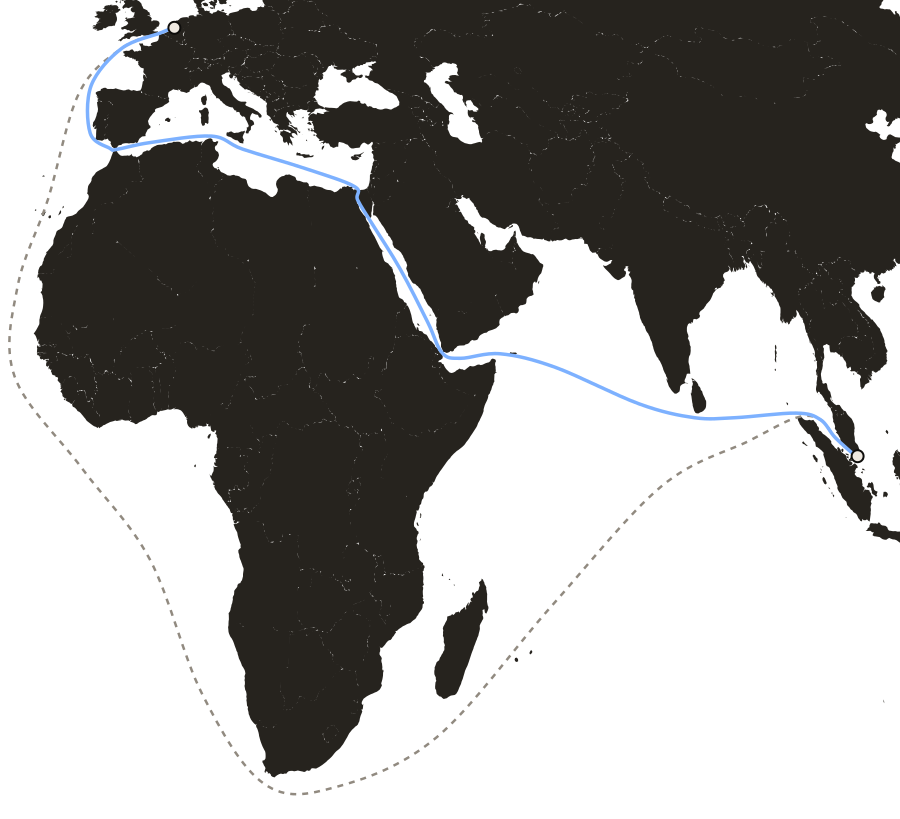
Ships sail around Africa, past the Cape of Good Hope. From Rotterdam to Singapore, the route through the Suez Canal is about 15,600 km. Around the Cape it is about 22,100 km. The IMF said the detour added 10 days or more to delivery times on average. Oil through the Suez Canal and its SUMED pipeline fell from 8.8 million barrels a day in 2023 to 4.9 million in the first half of 2025.
 Rotterdam
Singapore
Rotterdam
Singapore
Who controls the Suez Canal?
Egypt, through the state-owned Suez Canal Authority. A company led by the Frenchman Ferdinand de Lesseps built the canal, which opened in 1869. Egypt's President Nasser nationalized the canal on July 26, 1956. Britain, France and Israel then invaded, and the canal stayed closed until April 1957. The Constantinople Convention of 1888 says the canal is open to ships of every country, in war and in peace.
Who has run the canal
Egypt
The canal over the years
- 1869The canal opens on November 17 after ten years of work.
- 1956Nasser nationalizes the canal on July 26. Britain, France and Israel invade, and the canal stays closed until April 1957.
- 1967The Six-Day War closes the canal for eight years and traps 15 ships. Their crews hold their own Olympic Games in 1968.
- 2015Egypt opens a new 35 km channel beside the canal so ships can pass in both directions.
- 2021The 400-meter container ship Ever Given runs aground on March 23 and blocks the canal for six days.
- 2024Houthi attacks near Bab el-Mandeb halve canal traffic, and revenue falls from $10.25 billion to $3.99 billion.