Chokepoint · Central America
Panama Canal
Restricted since July 2026Updated October 1, 2026
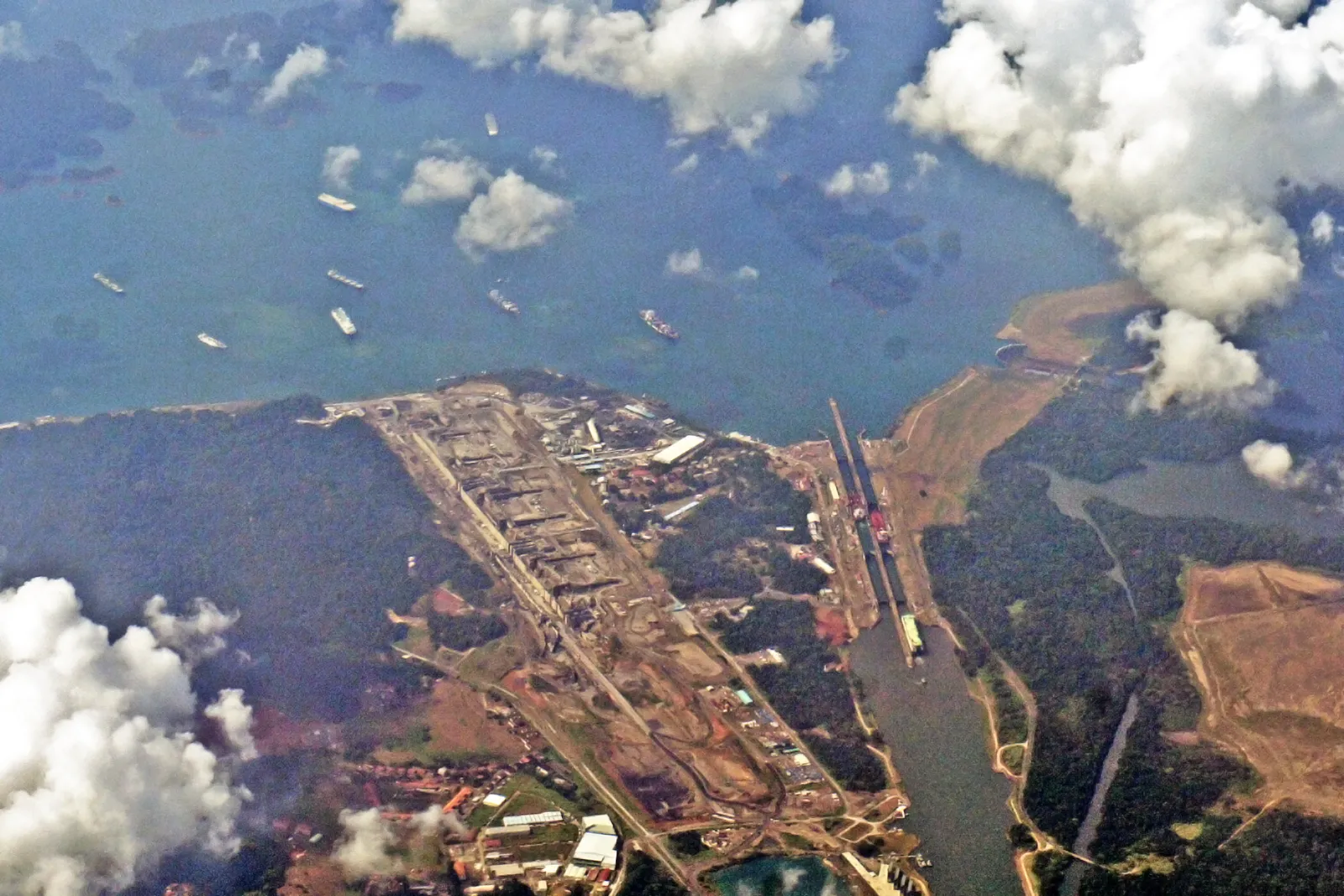
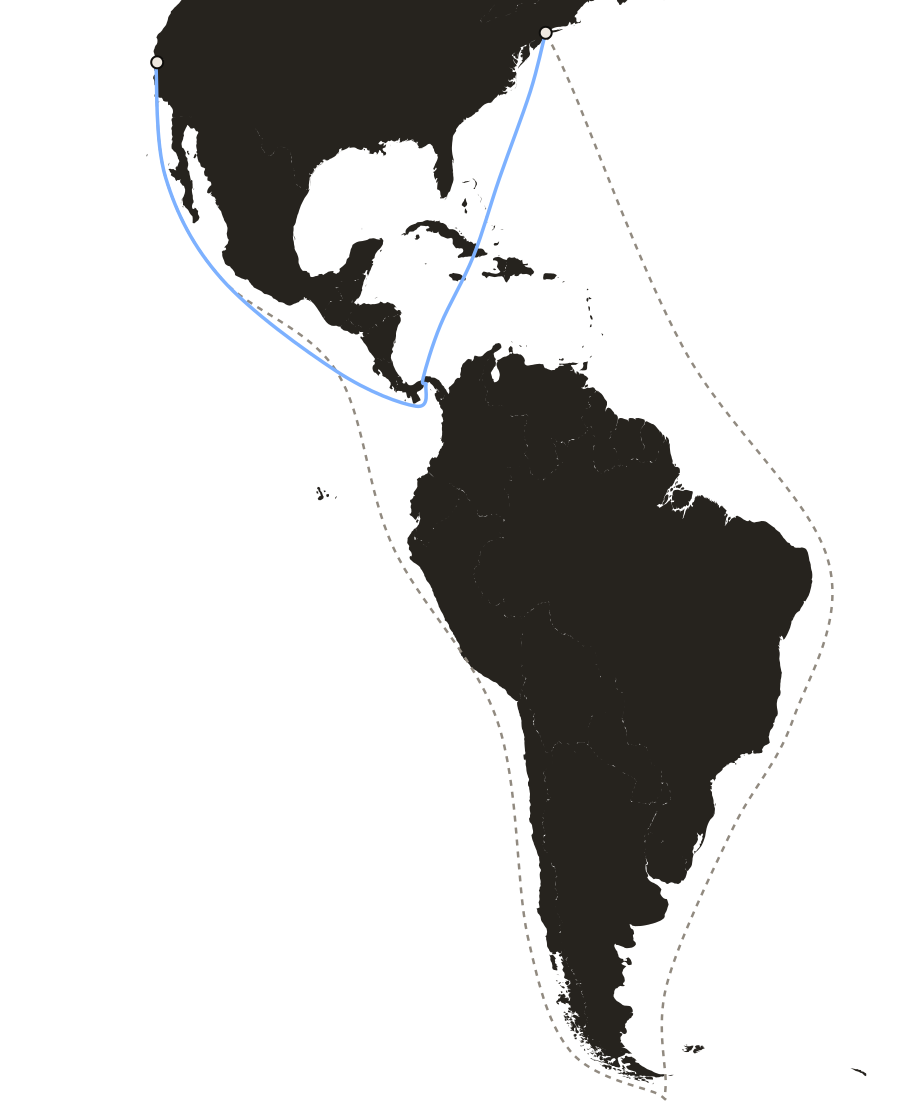
The Panama Canal is an 80 km waterway across Panama that joins the Atlantic and Pacific oceans. Locks lift ships 26 meters up to a lake and back down again. Sailing from New York to San Francisco through the canal is less than half as far as going around South America.
- Length
- 80 km
- From the Caribbean to the Pacific
- Height of the lake
- 26 m
- above the sea
- Transits, fiscal 2025
- 13,404
- $5.7 billion in revenue
- Cargo ships a day
- 28
- Last four weeks; 30 a day in 2023
- Country
 Panama
Where is the Panama Canal?
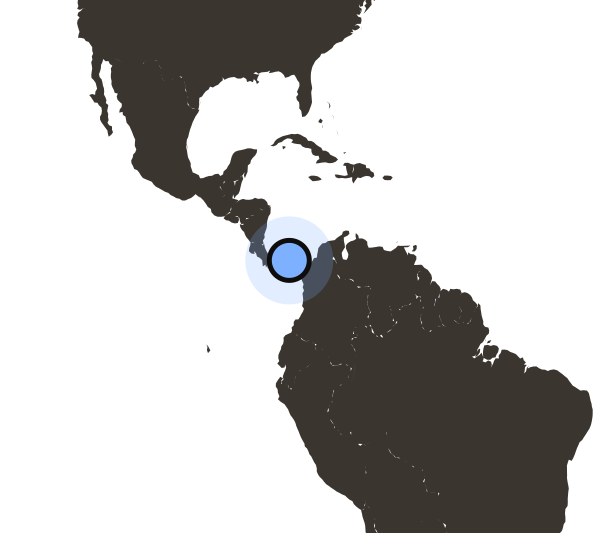
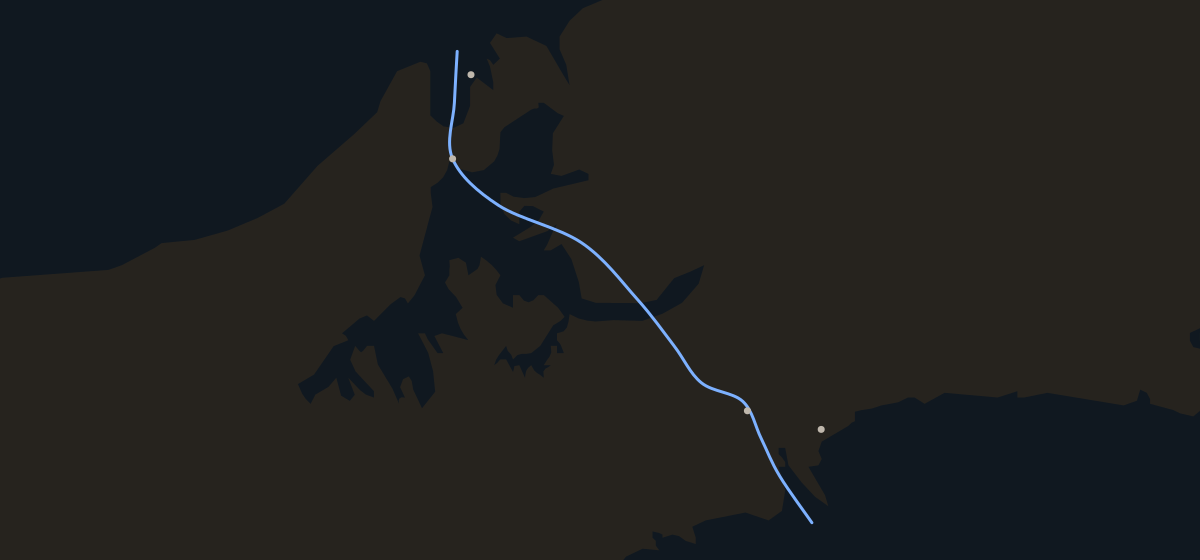
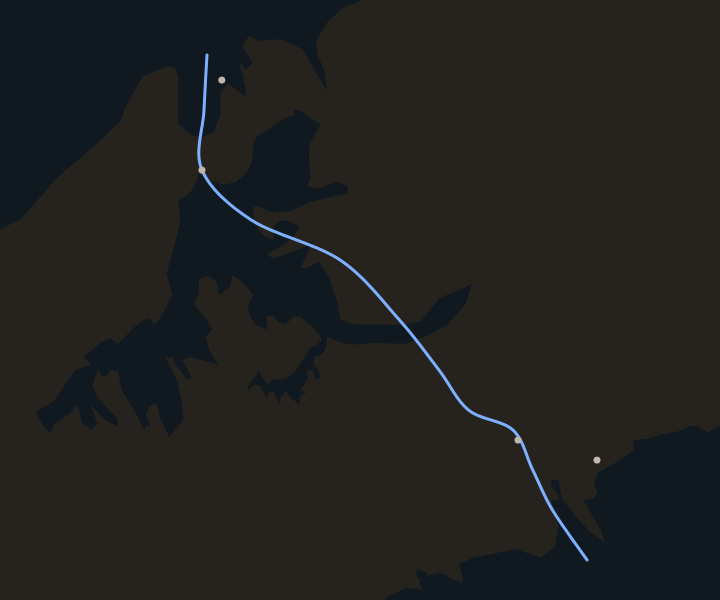
The canal crosses the Isthmus of Panama, the narrow strip of land that joins North and South America. It runs from Colón on the Caribbean Sea to Panama City on the Pacific. Much of the route crosses Gatun Lake, a reservoir made by damming the Chagres River.
 Caribbean Sea
Gulf of Panama
Gatun Lake
PANAMA
Gatun locks
Pedro Miguel and
Miraflores locks Colón Panama City
 Caribbean Sea
Pacific
Gatun Lake
Gatun locks
Pedro Miguel and
Miraflores locks Colón Panama City
How do ships cross the Panama Canal?
Ships climb 26 meters through three locks at Gatun, cross Gatun Lake, and step back down to the Pacific through the locks at Pedro Miguel and Miraflores. The crossing takes about ten hours. The water that fills the locks comes from the lake, so a dry year means fewer ships.
The canal from the side
Is the Panama Canal back to normal?
Not quite. A drought in 2023 lowered Gatun Lake, and the Panama Canal Authority cut the number of ships it let through. It lifted the limits in 2024, and transits rose 19% in the year to September 2025. In 2026 the Iran war pushed more US gas and fuel to Asia through the canal. Then the rainy season was dry. Rain from May to August was 34% below average. From early July the canal lowered the maximum draft, how deep a ship may sit in the water. It cut daily slots from 36 to 32 by September 15.
September brought near-average rain, and Gatun Lake rose from 84.0 feet on September 1 to 85.0 feet on October 1. On September 28 the canal raised the maximum draft to 49 feet and said it will offer 33 slots a day from October 15. In the four weeks to September 27, IMF PortWatch counted about 28 cargo ships and tankers a day, against 30 in 2023. The long-term fix is a $1.6 billion reservoir on the Río Indio, joined to Gatun Lake by a 9 km tunnel. Construction has not started, and the main contract is planned for 2027.
Ships through the canal each day
Weekly average, January 2023 to September 2026
How much shorter is the route through the canal?
From New York to San Francisco, a ship sails about 9,500 km through the canal. Around Cape Horn, at the southern tip of South America, the same trip is about 22,500 km.
 New York
San Francisco
Who uses the Panama Canal most?
The United States, by far. In the year to September 2025, 262.3 million long tons of cargo passed through the canal. About 183 million long tons, around 70%, came from or went to the United States. China was second with about 53 million, then Japan with 35 million and Chile with 23 million. Each ton counts for both the sending and receiving country, so the shares add up to more than 100%. The busiest route runs between the US East Coast and Asia. Container ships and carriers of liquefied petroleum gas from the US drove the growth in 2025 and 2026. The canal paid Panama's government $2.97 billion in the year to September 2025, about $500 million more than a year earlier.
Cargo to or from each country, 2025
Who controls the Panama Canal?
Panama runs the Panama Canal. The United States built the canal, ran it until 1999, and handed it to Panama under the Torrijos–Carter treaties. In 2025 President Trump said the United States should take it back. On January 29, 2026, Panama's Supreme Court ruled that CK Hutchison's contract to run the ports at both ends was unconstitutional. Panama's government took over the two ports on February 23. APM Terminals, part of Maersk, now runs Balboa on the Pacific side. TIL, part of MSC, runs Cristóbal on the Caribbean side. They will run them for up to 18 months, until a new tender. CK Hutchison, a Hong Kong firm, started an arbitration claim for more than $1.5 billion on August 20.
Who has run the canal
 United States
Panama
The canal over the years
- 1889A French company led by Ferdinand de Lesseps, the builder of the Suez Canal, goes bankrupt digging a canal at sea level.
- 1914The United States opens the canal, with locks, on August 15.
- 2016Wider locks open for ships carrying up to about 14,000 twenty-foot containers, almost three times the old limit.
- 2023A drought lowers Gatun Lake, and the canal cuts the number of ships it lets through.
- Jan 2026Panama's Supreme Court cancels CK Hutchison's contract to run the ports at both ends.
- Jul 2026A dry rainy season brings back shipping limits, which start easing in late September.