
Country profile · Central America
 El Salvador
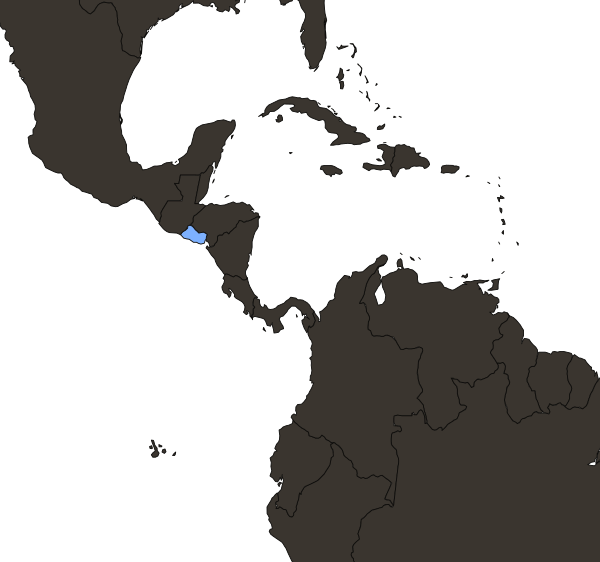
El Salvador is the smallest country in Central America, with about 6.0 million people. Since March 2022 President Nayib Bukele's government has arrested more than 93,000 people in a war on gangs, and murders have fallen to record lows. El Salvador has the highest share of its people in prison of any country. Bukele is running for a third term in February 2027.
Where El Salvador ranks
All rankings →Who runs El Salvador?
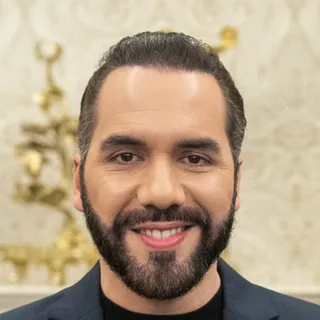
President Nayib Bukele was born in San Salvador on July 24, 1981, to a family of Palestinian descent. He was mayor of San Salvador for the left-wing FMLN until the party expelled him in 2017. He then founded Nuevas Ideas and won the 2019 election with 53.1% of the vote. The constitution barred a president from serving two terms in a row. In May 2021 the new Nuevas Ideas majority in the Legislative Assembly replaced the top judges, and in September 2021 those judges ruled that Bukele could run again. He won in February 2024 with 84.65%. Nuevas Ideas holds 54 of the 60 seats (chart). On July 31, 2025 the Assembly allowed indefinite re-election, lengthened the term to six years, scrapped runoffs and moved the next election to February 28, 2027. Bukele is running again. CID Gallup polls put his approval above 90% in 2026. Freedom House cut El Salvador's score to 42 out of 100 in 2026. A 2025 law taxes foreign funding of groups at 30%, and the lawyer Ruth López has been jailed without trial since May 2025.
- Nuevas Ideas 54
- Allies (PCN and PDC) 3
- Opposition (ARENA and Vamos) 3
Photo (April 2025): The White House, Wikimedia Commons, public domain (cropped)
Who are El Salvador's allies and rivals?
President Nayib Bukele is one of President Trump's closest partners in Latin America. In March 2025 the United States flew 238 Venezuelans to his CECOT mega-prison. In July 2025 they were sent home in a prisoner swap with Venezuela. Trump hosted Bukele at the White House in April 2025, and in January 2026 the two countries signed a trade agreement. The United States bought 32.4% of El Salvador's exports in 2025, and almost all money sent home by Salvadorans abroad comes from there. In 2018, before Bukele, El Salvador switched recognition from Taiwan to China. China has since paid for a national library, a pier and a stadium that is still being built, and it sold El Salvador a record $3.6 billion of goods in 2025. In October 2026 Secretary of State Rubio pressed Bukele to keep China out of ports. Bukele expelled Venezuela's diplomats in 2019. Honduras holds Conejo Island, a rock in the Gulf of Fonseca that El Salvador claims.
Allies and partners
 United StatesLargest trade partner; held deportees in CECOT
 GuatemalaSecond-largest export market; free movement since 2006
 HondurasThird export market; disputes Conejo Island
 ChinaRecognized in 2018; funds library, pier, stadium
Rivals and tensions
 VenezuelaBukele expelled its diplomats in 2019
- MS-13 and Barrio 18Street gangs; US calls both terrorist groups
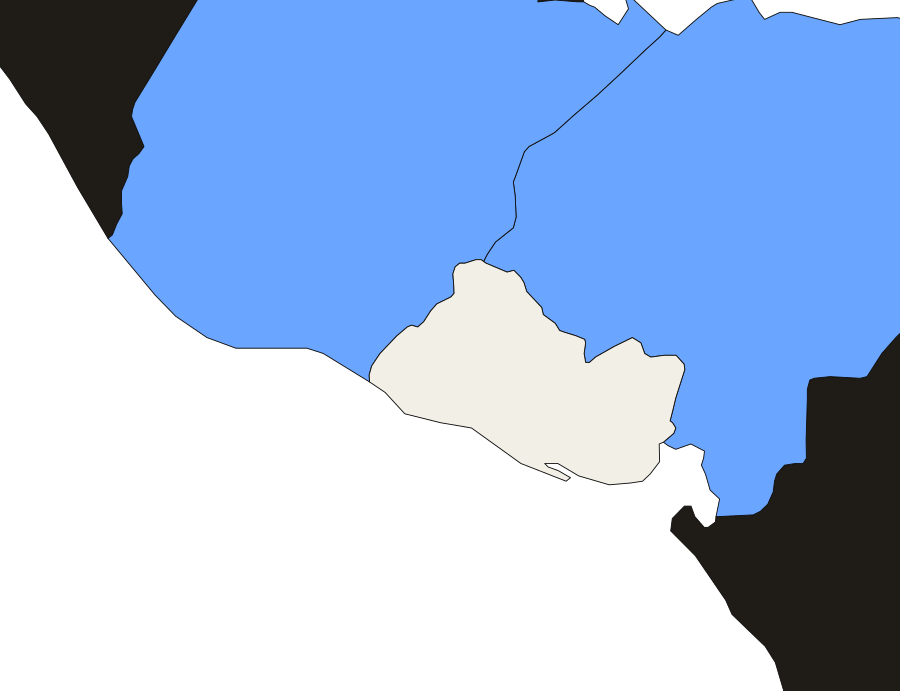
- CECOT Mega-prison opened in 2023, built for 40,000. The US sent 238 Venezuelans here in March 2025.
- La Libertad Surf town where a Chinese-funded tourist pier opened in November 2024.
- Conejo Island Rock in the Gulf of Fonseca held by Honduras and claimed by El Salvador. Honduras's president raised the flag there in July 2026.
- El Salvador
- Partner
Who does El Salvador trade with?
El Salvador exported goods worth $6.43 billion in 2025 and imported $17.85 billion (UN Comtrade). The United States bought 32.8% of exports, and neighbors Guatemala, Honduras and Nicaragua took most of the rest (chart). Knit T-shirts and sweaters lead the exports, followed by plastic packaging and cable. Coffee was about 90% of exports in the 1920s and 1930s but only 2.6% in 2025. The United States supplied 26.3% of imports and China 20.0%. El Salvador sold China only about $50 million. The gap is paid for by money sent home by Salvadorans abroad: a record of about $10 billion in 2025, and 92.4% of it from the United States. Since January 2026 the United States taxes cash transfers at 1%, and growth in remittances slowed to 3.8% in January to August. El Salvador has used the US dollar since January 1, 2001. The IMF expects the economy to grow 4.5% in 2026.
Sells to
Share of El Salvador's exports
- United States32.8%
- Guatemala19.6%
- Honduras16.7%
 Nicaragua9.1%
 Costa Rica4.5%
Buys from
Share of El Salvador's imports
- United States26.3%
- China20.0%
- Guatemala9.3%
 Mexico8.1%
- Honduras4.1%
Goods, 2025, as reported by El Salvador. UN Comtrade.
How did Bukele end El Salvador's gang violence?
Gangs killed 87 people on March 25 to 27, 2022. The Legislative Assembly declared a state of exception on March 27. It lets police hold suspects for 15 days instead of 72 hours before a judge, and it has been renewed every month since, 55 times by September 2026. The government says 93,162 people had been arrested by then. President Nayib Bukele says about 8,000 innocent people were released. El Salvador has the highest share of its people in prison of any country: 1,659 per 100,000 in March 2024. Official figures show murders falling from 106 per 100,000 people in 2015 to 1.3 in 2025, the lowest in Latin America (InSight Crime). They leave out bodies in hidden graves and deaths in prisons. Rights groups count at least 575 deaths in custody. In 2021 the US Treasury said Bukele's officials had negotiated a secret truce with gang leaders, which he denies. In October 2026 he proposed an early release for about 5,000 people jailed as gang helpers.
What happened to El Salvador's bitcoin experiment?
On September 7, 2021 El Salvador became the first country to make bitcoin legal tender. Shops had to accept it, and everyone who downloaded the government's Chivo wallet got $30 in bitcoin. Few people kept using it: in a 2024 survey only 8.1% had paid for anything with bitcoin. It was also meant to make sending money home cheaper. Money sent home by Salvadorans abroad is worth about 27% of GDP (chart), but through July 2026 crypto carried only 0.69% of it. To get a $1.4 billion loan from the IMF, approved in February 2025, El Salvador agreed to change the law. Since January 2025 accepting bitcoin has been voluntary and taxes can no longer be paid in it. The government still adds about one bitcoin a day and held about 7,800 in October 2026. The IMF says the coins added since June 2025 were private donations, not public money. In May 2026 the government handed control of the Chivo wallet to a private US company.
Money sent home by migrants, share of GDP, 2025
Full ranking →- Honduras30.1%
- El Salvador27.5%
- Guatemala20.8%
 Dominican Republic9.7%
- Mexico3.6%
- Costa Rica0.8%
 Panama0.7%
World Bank World Development Indicators, from KNOMAD and IMF balance of payments data, October 2026