
Ranking · Economy
Remittances by country
India received $150.7 billion in remittances in 2025, about 16% of the world total of $925.6 billion. Mexico was second at $65.1 billion, followed by France ($44.5 billion), the Philippines ($41.6 billion) and Egypt ($41.5 billion). India first passed $100 billion in 2022. No other country has ever reached that level.
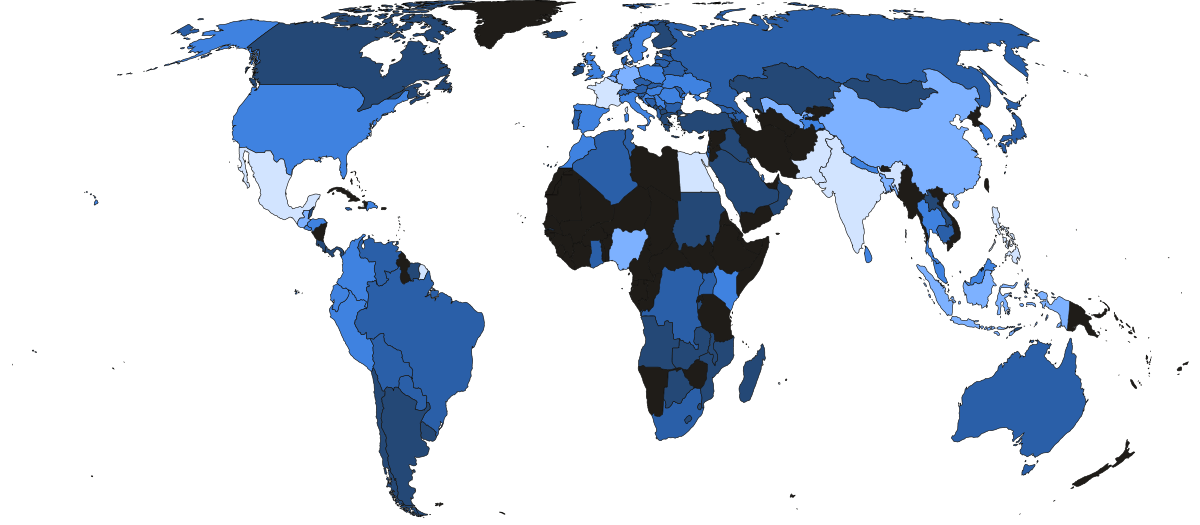
- Under $1bn
- $1bn–$5bn
- $5bn–$15bn
- $15bn–$40bn
- Over $40bn
- Not in this ranking
- Under 2%
- 2%–5%
- 5%–10%
- 10%–20%
- Over 20%
- Not in this ranking
- Under $1bn
- $1bn–$5bn
- $5bn–$15bn
- $15bn–$40bn
- Over $40bn
- Not in this ranking
| # | Country | Received | Share of GDP | Sent |
|---|---|---|---|---|
| 1 |  India India |
$151bn | 3.8% | $12.1bn |
| 2 |  Mexico Mexico |
$65.1bn | 3.6% | $1.2bn |
| 3 |  France France |
$44.5bn | 1.3% | $22.7bn |
| 4 |  Philippines Philippines |
$41.6bn | 8.5% | $293m |
| 5 |  Egypt Egypt |
$41.5bn | 11.4% | $755m |
| 6 |  Pakistan Pakistan |
$40.5bn | 9.9% | $318m |
| 7 |  Bangladesh Bangladesh |
$33.9bn | 7.4% | $165m |
| 8 |  China China |
$30.0bn | 0.2% | $14.0bn |
| 9 |  Guatemala Guatemala |
$25.7bn | 20.8% | $29m |
| 10 |  Germany Germany |
$23.9bn | 0.5% | $26.7bn |
| 11 |  Nigeria Nigeria |
$22.8bn | 7.8% | $113m |
| 12 |  Uzbekistan Uzbekistan |
$21.1bn | 14.4% | $1.2bn |
| 13 |  Indonesia Indonesia |
$17.6bn | 1.2% | $11.7bn |
| 14 |  Belgium Belgium |
$16.4bn | 2.3% | $11.2bn |
| 15 |  Nepal Nepal |
$14.7bn | 32.3% | $105m |
| 16 |  Morocco Morocco |
$13.7bn | 7.5% | $220m |
| 17 |  Colombia Colombia |
$13.1bn | 2.9% | $429m |
| 18 |  Italy Italy |
$12.8bn | 0.5% | $13.9bn |
| 19 |  Dominican Republic Dominican Republic |
$12.4bn | 9.7% | $1.2bn |
| 20 |  Honduras Honduras |
$11.9bn | 30.1% | $329m |
| 21 |  Thailand Thailand |
$11.9bn | 2.1% | $10.0bn |
| 22 |  Romania Romania |
$10.7bn | 2.5% | $2.7bn |
| 23 |  Tajikistan Tajikistan |
$10.2bn | 57.7% | $671m |
| 24 |  El Salvador El Salvador |
$10.1bn | 27.5% | $198m |
| 25 |  Ukraine Ukraine |
$9.9bn | 4.6% | $256m |
| 26 |  Poland Poland |
$9.5bn | 0.9% | $5.6bn |
| 27 |  United States United States |
$9.3bn | 0.0% | $107bn |
| 28 |  Malaysia Malaysia |
$8.9bn | 1.9% | $13.8bn |
| 29 |  Sri Lanka Sri Lanka |
$8.3bn | 7.6% | $159m |
| 30 |  Ecuador Ecuador |
$7.7bn | 5.9% | $447m |
| 31 |  Spain Spain |
$7.3bn | 0.4% | $794m |
| 32 |  Croatia Croatia |
$7.2bn | 6.9% | $2.4bn |
| 33 |  South Korea South Korea |
$7.1bn | 0.4% | $14.3bn |
| 34 |  Serbia Serbia |
$6.6bn | 6.6% | $1.5bn |
| 35 |  Hungary Hungary |
$5.7bn | 2.3% | $1.3bn |
| 36 |  Sweden Sweden |
$5.4bn | 0.8% | $4.2bn |
| 37 |  United Kingdom United Kingdom |
$5.4bn | 0.1% | $13.2bn |
| 38 |  Peru Peru |
$5.3bn | 1.6% | $341m |
| 39 |  Netherlands Netherlands |
$5.2bn | 0.4% | $20.2bn |
| 40 |  Kenya Kenya |
$5.1bn | 3.8% | $2m |
| 41 |  Czechia Czechia |
$4.9bn | 1.3% | $6.0bn |
| 42 |  Brazil Brazil |
$4.8bn | 0.2% | $1.9bn |
| 43 |  Japan Japan |
$4.7bn | 0.1% | $7.2bn |
| 44 |  Venezuela Venezuela |
$4.3bn | 4.3% | $485m |
| 45 |  Georgia Georgia |
$4.3bn | 11.2% | $336m |
| 46 |  Tunisia Tunisia |
$3.9bn | 6.7% | $77m |
| 47 |  Switzerland Switzerland |
$3.9bn | 0.4% | $42.7bn |
| 48 |  Austria Austria |
$3.8bn | 0.7% | $10.8bn |
| 49 |  Jamaica Jamaica |
$3.7bn | 16.3% | $336m |
| 50 |  Bosnia and Herzegovina Bosnia and Herzegovina |
$3.5bn | 10.7% | $190m |
| 51 |  DR Congo DR Congo |
$3.3bn | 3.6% | $1.5bn |
| 52 |  Slovakia Slovakia |
$3.2bn | 2.1% | $654m |
| 53 |  Uganda Uganda |
$2.8bn | 4.5% | $491m |
| 54 |  Bulgaria Bulgaria |
$2.8bn | 2.1% | $559m |
| 55 |  Portugal Portugal |
$2.7bn | 0.8% | $525m |
| 56 |  Luxembourg Luxembourg |
$2.7bn | 2.7% | $20.0bn |
| 57 |  Albania Albania |
$2.6bn | 8.4% | $227m |
| 58 |  Ghana Ghana |
$2.4bn | 2.1% | $1.3bn |
| 59 |  Belarus Belarus |
$2.4bn | 2.5% | $477m |
| 60 |  Cambodia Cambodia |
$2.2bn | 4.3% | $346m |
| 61 |  Kosovo Kosovo |
$2.2bn | 17.3% | $62m |
| 62 |  Australia Australia |
$2.0bn | 0.1% | $16.0bn |
| 63 |  Moldova Moldova |
$1.9bn | 9.4% | $504m |
| 64 |  Algeria Algeria |
$1.7bn | 0.6% | $124m |
| 65 |  Denmark Denmark |
$1.7bn | 0.4% | $5.5bn |
| 66 |  Russia Russia |
$1.6bn | 0.1% | $8.9bn |
| 67 |  Armenia Armenia |
$1.6bn | 5.4% | $631m |
| 68 |  Paraguay Paraguay |
$1.5bn | 3.1% | $93m |
| 69 |  Azerbaijan Azerbaijan |
$1.5bn | 2.0% | $643m |
| 70 |  Latvia Latvia |
$1.4bn | 3.0% | $672m |
| 71 |  Lithuania Lithuania |
$1.4bn | 1.4% | $1.1bn |
| 72 |  Qatar Qatar |
$1.3bn | 0.6% | $12.1bn |
| 73 |  Bolivia Bolivia |
$1.2bn | 1.9% | $141m |
| 74 |  Israel Israel |
$1.2bn | 0.2% | $1.8bn |
| 75 |  Slovenia Slovenia |
$1.1bn | 1.4% | $594m |
| 76 |  Norway Norway |
$1.0bn | 0.2% | $6.3bn |
| 77 |  South Africa South Africa |
$1.0bn | 0.2% | $1.1bn |
| 78 |  Argentina Argentina |
$923m | 0.1% | $843m |
| 79 |  Montenegro Montenegro |
$897m | 9.7% | $242m |
| 80 |  Finland Finland |
$876m | 0.3% | $1.8bn |
| 81 |  Costa Rica Costa Rica |
$846m | 0.8% | $661m |
| 82 |  Cyprus Cyprus |
$844m | 2.0% | $1.5bn |
| 83 |  Canada Canada |
$834m | 0.0% | $15.1bn |
| 84 |  Turkey Turkey |
$761m | 0.0% | $2.0bn |
| 85 |  Iraq Iraq |
$757m | 0.3% | $596m |
| 86 |  Ireland Ireland |
$726m | 0.1% | $3.8bn |
| 87 |  Palestine Palestine |
$693m | 4.0% | · |
| 88 |  Panama Panama |
$635m | 0.7% | $611m |
| 89 |  Gambia Gambia |
$617m | 23.8% | $83m |
| 90 |  Madagascar Madagascar |
$616m | 3.1% | $79m |
| 91 |  Greece Greece |
$583m | 0.2% | $3.4bn |
| 92 |  Mongolia Mongolia |
$558m | 2.2% | $292m |
| 93 |  Estonia Estonia |
$536m | 1.1% | $291m |
| 94 |  Lesotho Lesotho |
$535m | 20.8% | $3m |
| 95 |  Laos Laos |
$473m | 2.6% | $160m |
| 96 |  North Macedonia North Macedonia |
$468m | 2.4% | $28m |
| 97 |  Zambia Zambia |
$404m | 1.4% | $141m |
| 98 |  Cape Verde Cape Verde |
$357m | 11.7% | $37m |
| 99 |  Saudi Arabia Saudi Arabia |
$351m | 0.0% | $58.7bn |
| 100 |  Malawi Malawi |
$306m | 2.0% | $28m |
| 101 |  Samoa Samoa |
$288m | 22.4% | $45m |
| 102 |  Burundi Burundi |
$273m | 8.1% | $22m |
| 103 |  Tonga Tonga |
$267m | 39.3% | $30m |
| 104 |  Mozambique Mozambique |
$265m | 1.2% | $262m |
| 105 |  Iceland Iceland |
$265m | 0.7% | $750m |
| 106 |  Kazakhstan Kazakhstan |
$237m | 0.1% | $2.7bn |
| 107 |  Trinidad and Tobago Trinidad and Tobago |
$200m | 0.8% | $151m |
| 108 |  Timor-Leste Timor-Leste |
$190m | 10.0% | $124m |
| 109 |  Suriname Suriname |
$176m | 3.9% | $106m |
| 110 |  Botswana Botswana |
$165m | 0.8% | $236m |
| 111 |  Uruguay Uruguay |
$150m | 0.2% | $133m |
| 112 |  Belize Belize |
$124m | 3.7% | $46m |
| 113 |  Chile Chile |
$100m | 0.0% | $691m |
| 114 |  Saint Vincent and the Grenadines Saint Vincent and the Grenadines |
$88m | 7.0% | $15m |
| 115 |  Saint Lucia Saint Lucia |
$62m | 2.4% | $16m |
| 116 |  Angola Angola |
$52m | 0.0% | $420m |
| 117 |  Grenada Grenada |
$48m | 3.3% | $53m |
| 118 |  Andorra Andorra |
$40m | 0.9% | $156m |
| 119 |  Saint Kitts and Nevis Saint Kitts and Nevis |
$40m | 3.4% | $27m |
| 120 |  Dominica Dominica |
$40m | 5.5% | $9m |
| 121 |  Oman Oman |
$39m | 0.0% | $9.5bn |
| 122 |  Eswatini Eswatini |
$39m | 0.7% | $43m |
| 123 |  São Tomé and Príncipe São Tomé and Príncipe |
$36m | 3.7% | $5m |
| 124 |  Kuwait Kuwait |
$24m | 0.0% | $16.7bn |
| 125 |  Kiribati Kiribati |
$23m | 6.5% | $1m |
| 126 |  Antigua and Barbuda Antigua and Barbuda |
$22m | 0.9% | $36m |
| 127 |  Seychelles Seychelles |
$13m | 0.5% | $68m |
| 128 |  Sudan Sudan |
$12m | 0.0% | $21m |
| 129 |  Maldives Maldives |
$6m | 0.1% | $662m |
| # | Country | Share of GDP | Received | Sent |
|---|---|---|---|---|
| 1 | Tajikistan |
57.7% | $10.2bn | $671m |
| 2 | Tonga |
39.3% | $267m | $30m |
| 3 | Nepal |
32.3% | $14.7bn | $105m |
| 4 | Honduras |
30.1% | $11.9bn | $329m |
| 5 | El Salvador |
27.5% | $10.1bn | $198m |
| 6 | Gambia |
23.8% | $617m | $83m |
| 7 | Samoa |
22.4% | $288m | $45m |
| 8 | Guatemala |
20.8% | $25.7bn | $29m |
| 9 | Lesotho |
20.8% | $535m | $3m |
| 10 | Kosovo |
17.3% | $2.2bn | $62m |
| 11 | Jamaica |
16.3% | $3.7bn | $336m |
| 12 | Uzbekistan |
14.4% | $21.1bn | $1.2bn |
| 13 | Cape Verde |
11.7% | $357m | $37m |
| 14 | Egypt |
11.4% | $41.5bn | $755m |
| 15 | Georgia |
11.2% | $4.3bn | $336m |
| 16 | Bosnia and Herzegovina |
10.7% | $3.5bn | $190m |
| 17 | Timor-Leste |
10.0% | $190m | $124m |
| 18 | Pakistan |
9.9% | $40.5bn | $318m |
| 19 | Dominican Republic |
9.7% | $12.4bn | $1.2bn |
| 20 | Montenegro |
9.7% | $897m | $242m |
| 21 | Moldova |
9.4% | $1.9bn | $504m |
| 22 | Philippines |
8.5% | $41.6bn | $293m |
| 23 | Albania |
8.4% | $2.6bn | $227m |
| 24 | Burundi |
8.1% | $273m | $22m |
| 25 | Nigeria |
7.8% | $22.8bn | $113m |
| 26 | Sri Lanka |
7.6% | $8.3bn | $159m |
| 27 | Morocco |
7.5% | $13.7bn | $220m |
| 28 | Bangladesh |
7.4% | $33.9bn | $165m |
| 29 | Saint Vincent and the Grenadines |
7.0% | $88m | $15m |
| 30 | Croatia |
6.9% | $7.2bn | $2.4bn |
| 31 | Tunisia |
6.7% | $3.9bn | $77m |
| 32 | Serbia |
6.6% | $6.6bn | $1.5bn |
| 33 | Kiribati |
6.5% | $23m | $1m |
| 34 | Ecuador |
5.9% | $7.7bn | $447m |
| 35 | Dominica |
5.5% | $40m | $9m |
| 36 | Armenia |
5.4% | $1.6bn | $631m |
| 37 | Ukraine |
4.6% | $9.9bn | $256m |
| 38 | Uganda |
4.5% | $2.8bn | $491m |
| 39 | Venezuela |
4.3% | $4.3bn | $485m |
| 40 | Cambodia |
4.3% | $2.2bn | $346m |
| 41 | Palestine |
4.0% | $693m | · |
| 42 | Suriname |
3.9% | $176m | $106m |
| 43 | India |
3.8% | $151bn | $12.1bn |
| 44 | Kenya |
3.8% | $5.1bn | $2m |
| 45 | Belize |
3.7% | $124m | $46m |
| 46 | São Tomé and Príncipe |
3.7% | $36m | $5m |
| 47 | Mexico |
3.6% | $65.1bn | $1.2bn |
| 48 | DR Congo |
3.6% | $3.3bn | $1.5bn |
| 49 | Saint Kitts and Nevis |
3.4% | $40m | $27m |
| 50 | Grenada |
3.3% | $48m | $53m |
| 51 | Paraguay |
3.1% | $1.5bn | $93m |
| 52 | Madagascar |
3.1% | $616m | $79m |
| 53 | Latvia |
3.0% | $1.4bn | $672m |
| 54 | Colombia |
2.9% | $13.1bn | $429m |
| 55 | Luxembourg |
2.7% | $2.7bn | $20.0bn |
| 56 | Laos |
2.6% | $473m | $160m |
| 57 | Romania |
2.5% | $10.7bn | $2.7bn |
| 58 | Belarus |
2.5% | $2.4bn | $477m |
| 59 | North Macedonia |
2.4% | $468m | $28m |
| 60 | Saint Lucia |
2.4% | $62m | $16m |
| 61 | Belgium |
2.3% | $16.4bn | $11.2bn |
| 62 | Hungary |
2.3% | $5.7bn | $1.3bn |
| 63 | Mongolia |
2.2% | $558m | $292m |
| 64 | Thailand |
2.1% | $11.9bn | $10.0bn |
| 65 | Slovakia |
2.1% | $3.2bn | $654m |
| 66 | Bulgaria |
2.1% | $2.8bn | $559m |
| 67 | Ghana |
2.1% | $2.4bn | $1.3bn |
| 68 | Azerbaijan |
2.0% | $1.5bn | $643m |
| 69 | Cyprus |
2.0% | $844m | $1.5bn |
| 70 | Malawi |
2.0% | $306m | $28m |
| 71 | Malaysia |
1.9% | $8.9bn | $13.8bn |
| 72 | Bolivia |
1.9% | $1.2bn | $141m |
| 73 | Peru |
1.6% | $5.3bn | $341m |
| 74 | Lithuania |
1.4% | $1.4bn | $1.1bn |
| 75 | Slovenia |
1.4% | $1.1bn | $594m |
| 76 | Zambia |
1.4% | $404m | $141m |
| 77 | France |
1.3% | $44.5bn | $22.7bn |
| 78 | Czechia |
1.3% | $4.9bn | $6.0bn |
| 79 | Indonesia |
1.2% | $17.6bn | $11.7bn |
| 80 | Mozambique |
1.2% | $265m | $262m |
| 81 | Estonia |
1.1% | $536m | $291m |
| 82 | Poland |
0.9% | $9.5bn | $5.6bn |
| 83 | Andorra |
0.9% | $40m | $156m |
| 84 | Antigua and Barbuda |
0.9% | $22m | $36m |
| 85 | Sweden |
0.8% | $5.4bn | $4.2bn |
| 86 | Portugal |
0.8% | $2.7bn | $525m |
| 87 | Costa Rica |
0.8% | $846m | $661m |
| 88 | Trinidad and Tobago |
0.8% | $200m | $151m |
| 89 | Botswana |
0.8% | $165m | $236m |
| 90 | Austria |
0.7% | $3.8bn | $10.8bn |
| 91 | Panama |
0.7% | $635m | $611m |
| 92 | Iceland |
0.7% | $265m | $750m |
| 93 | Eswatini |
0.7% | $39m | $43m |
| 94 | Algeria |
0.6% | $1.7bn | $124m |
| 95 | Qatar |
0.6% | $1.3bn | $12.1bn |
| 96 | Germany |
0.5% | $23.9bn | $26.7bn |
| 97 | Italy |
0.5% | $12.8bn | $13.9bn |
| 98 | Seychelles |
0.5% | $13m | $68m |
| 99 | Spain |
0.4% | $7.3bn | $794m |
| 100 | South Korea |
0.4% | $7.1bn | $14.3bn |
| 101 | Netherlands |
0.4% | $5.2bn | $20.2bn |
| 102 | Switzerland |
0.4% | $3.9bn | $42.7bn |
| 103 | Denmark |
0.4% | $1.7bn | $5.5bn |
| 104 | Finland |
0.3% | $876m | $1.8bn |
| 105 | Iraq |
0.3% | $757m | $596m |
| 106 | China |
0.2% | $30.0bn | $14.0bn |
| 107 | Brazil |
0.2% | $4.8bn | $1.9bn |
| 108 | Israel |
0.2% | $1.2bn | $1.8bn |
| 109 | Norway |
0.2% | $1.0bn | $6.3bn |
| 110 | South Africa |
0.2% | $1.0bn | $1.1bn |
| 111 | Greece |
0.2% | $583m | $3.4bn |
| 112 | Uruguay |
0.2% | $150m | $133m |
| 113 | United Kingdom |
0.1% | $5.4bn | $13.2bn |
| 114 | Japan |
0.1% | $4.7bn | $7.2bn |
| 115 | Australia |
0.1% | $2.0bn | $16.0bn |
| 116 | Russia |
0.1% | $1.6bn | $8.9bn |
| 117 | Argentina |
0.1% | $923m | $843m |
| 118 | Ireland |
0.1% | $726m | $3.8bn |
| 119 | Kazakhstan |
0.1% | $237m | $2.7bn |
| 120 | Maldives |
0.1% | $6m | $662m |
| 121 | United States |
0.0% | $9.3bn | $107bn |
| 122 | Canada |
0.0% | $834m | $15.1bn |
| 123 | Turkey |
0.0% | $761m | $2.0bn |
| 124 | Saudi Arabia |
0.0% | $351m | $58.7bn |
| 125 | Chile |
0.0% | $100m | $691m |
| 126 | Angola |
0.0% | $52m | $420m |
| 127 | Oman |
0.0% | $39m | $9.5bn |
| 128 | Kuwait |
0.0% | $24m | $16.7bn |
| 129 | Sudan |
0.0% | $12m | $21m |
| # | Country | Sent | Received | Share of GDP |
|---|---|---|---|---|
| 1 | United States |
$107bn | $9.3bn | 0.0% |
| 2 |  United Arab Emirates United Arab Emirates |
$62.1bn | · | · |
| 3 | Saudi Arabia |
$58.7bn | $351m | 0.0% |
| 4 | Switzerland |
$42.7bn | $3.9bn | 0.4% |
| 5 | Germany |
$26.7bn | $23.9bn | 0.5% |
| 6 | France |
$22.7bn | $44.5bn | 1.3% |
| 7 | Netherlands |
$20.2bn | $5.2bn | 0.4% |
| 8 | Luxembourg |
$20.0bn | $2.7bn | 2.7% |
| 9 | Kuwait |
$16.7bn | $24m | 0.0% |
| 10 | Australia |
$16.0bn | $2.0bn | 0.1% |
| 11 | Canada |
$15.1bn | $834m | 0.0% |
| 12 | South Korea |
$14.3bn | $7.1bn | 0.4% |
| 13 | China |
$14.0bn | $30.0bn | 0.2% |
| 14 | Italy |
$13.9bn | $12.8bn | 0.5% |
| 15 | Malaysia |
$13.8bn | $8.9bn | 1.9% |
| 16 | United Kingdom |
$13.2bn | $5.4bn | 0.1% |
| 17 | India |
$12.1bn | $151bn | 3.8% |
| 18 | Qatar |
$12.1bn | $1.3bn | 0.6% |
| 19 | Indonesia |
$11.7bn | $17.6bn | 1.2% |
| 20 | Belgium |
$11.2bn | $16.4bn | 2.3% |
| 21 | Austria |
$10.8bn | $3.8bn | 0.7% |
| 22 | Thailand |
$10.0bn | $11.9bn | 2.1% |
| 23 | Oman |
$9.5bn | $39m | 0.0% |
| 24 | Russia |
$8.9bn | $1.6bn | 0.1% |
| 25 | Japan |
$7.2bn | $4.7bn | 0.1% |
| 26 | Norway |
$6.3bn | $1.0bn | 0.2% |
| 27 | Czechia |
$6.0bn | $4.9bn | 1.3% |
| 28 | Poland |
$5.6bn | $9.5bn | 0.9% |
| 29 | Denmark |
$5.5bn | $1.7bn | 0.4% |
| 30 | Sweden |
$4.2bn | $5.4bn | 0.8% |
| 31 | Ireland |
$3.8bn | $726m | 0.1% |
| 32 | Greece |
$3.4bn | $583m | 0.2% |
| 33 | Kazakhstan |
$2.7bn | $237m | 0.1% |
| 34 | Romania |
$2.7bn | $10.7bn | 2.5% |
| 35 |  Bahrain Bahrain |
$2.5bn | · | · |
| 36 | Croatia |
$2.4bn | $7.2bn | 6.9% |
| 37 | Turkey |
$2.0bn | $761m | 0.0% |
| 38 | Brazil |
$1.9bn | $4.8bn | 0.2% |
| 39 | Finland |
$1.8bn | $876m | 0.3% |
| 40 | Israel |
$1.8bn | $1.2bn | 0.2% |
| 41 | Cyprus |
$1.5bn | $844m | 2.0% |
| 42 | Serbia |
$1.5bn | $6.6bn | 6.6% |
| 43 | DR Congo |
$1.5bn | $3.3bn | 3.6% |
| 44 | Hungary |
$1.3bn | $5.7bn | 2.3% |
| 45 | Ghana |
$1.3bn | $2.4bn | 2.1% |
| 46 | Mexico |
$1.2bn | $65.1bn | 3.6% |
| 47 | Dominican Republic |
$1.2bn | $12.4bn | 9.7% |
| 48 | Uzbekistan |
$1.2bn | $21.1bn | 14.4% |
| 49 |  New Zealand New Zealand |
$1.1bn | · | · |
| 50 | South Africa |
$1.1bn | $1.0bn | 0.2% |
| 51 | Lithuania |
$1.1bn | $1.4bn | 1.4% |
| 52 | Argentina |
$843m | $923m | 0.1% |
| 53 | Spain |
$794m | $7.3bn | 0.4% |
| 54 | Egypt |
$755m | $41.5bn | 11.4% |
| 55 | Iceland |
$750m | $265m | 0.7% |
| 56 | Chile |
$691m | $100m | 0.0% |
| 57 | Latvia |
$672m | $1.4bn | 3.0% |
| 58 | Tajikistan |
$671m | $10.2bn | 57.7% |
| 59 | Maldives |
$662m | $6m | 0.1% |
| 60 | Costa Rica |
$661m | $846m | 0.8% |
| 61 | Slovakia |
$654m | $3.2bn | 2.1% |
| 62 | Azerbaijan |
$643m | $1.5bn | 2.0% |
| 63 | Armenia |
$631m | $1.6bn | 5.4% |
| 64 | Panama |
$611m | $635m | 0.7% |
| 65 | Iraq |
$596m | $757m | 0.3% |
| 66 | Slovenia |
$594m | $1.1bn | 1.4% |
| 67 | Bulgaria |
$559m | $2.8bn | 2.1% |
| 68 | Portugal |
$525m | $2.7bn | 0.8% |
| 69 | Moldova |
$504m | $1.9bn | 9.4% |
| 70 | Uganda |
$491m | $2.8bn | 4.5% |
| 71 | Venezuela |
$485m | $4.3bn | 4.3% |
| 72 | Belarus |
$477m | $2.4bn | 2.5% |
| 73 | Ecuador |
$447m | $7.7bn | 5.9% |
| 74 | Colombia |
$429m | $13.1bn | 2.9% |
| 75 | Angola |
$420m | $52m | 0.0% |
| 76 | Cambodia |
$346m | $2.2bn | 4.3% |
| 77 | Peru |
$341m | $5.3bn | 1.6% |
| 78 | Georgia |
$336m | $4.3bn | 11.2% |
| 79 | Jamaica |
$336m | $3.7bn | 16.3% |
| 80 | Honduras |
$329m | $11.9bn | 30.1% |
| 81 | Pakistan |
$318m | $40.5bn | 9.9% |
| 82 | Philippines |
$293m | $41.6bn | 8.5% |
| 83 | Mongolia |
$292m | $558m | 2.2% |
| 84 | Estonia |
$291m | $536m | 1.1% |
| 85 | Mozambique |
$262m | $265m | 1.2% |
| 86 | Ukraine |
$256m | $9.9bn | 4.6% |
| 87 | Montenegro |
$242m | $897m | 9.7% |
| 88 | Botswana |
$236m | $165m | 0.8% |
| 89 | Albania |
$227m | $2.6bn | 8.4% |
| 90 | Morocco |
$220m | $13.7bn | 7.5% |
| 91 | El Salvador |
$198m | $10.1bn | 27.5% |
| 92 | Bosnia and Herzegovina |
$190m | $3.5bn | 10.7% |
| 93 | Bangladesh |
$165m | $33.9bn | 7.4% |
| 94 | Laos |
$160m | $473m | 2.6% |
| 95 | Sri Lanka |
$159m | $8.3bn | 7.6% |
| 96 | Andorra |
$156m | $40m | 0.9% |
| 97 | Trinidad and Tobago |
$151m | $200m | 0.8% |
| 98 | Zambia |
$141m | $404m | 1.4% |
| 99 | Bolivia |
$141m | $1.2bn | 1.9% |
| 100 | Uruguay |
$133m | $150m | 0.2% |
| 101 | Timor-Leste |
$124m | $190m | 10.0% |
| 102 | Algeria |
$124m | $1.7bn | 0.6% |
| 103 | Nigeria |
$113m | $22.8bn | 7.8% |
| 104 | Suriname |
$106m | $176m | 3.9% |
| 105 | Nepal |
$105m | $14.7bn | 32.3% |
| 106 | Paraguay |
$93m | $1.5bn | 3.1% |
| 107 | Gambia |
$83m | $617m | 23.8% |
| 108 | Madagascar |
$79m | $616m | 3.1% |
| 109 | Tunisia |
$77m | $3.9bn | 6.7% |
| 110 | Seychelles |
$68m | $13m | 0.5% |
| 111 | Kosovo |
$62m | $2.2bn | 17.3% |
| 112 | Grenada |
$53m | $48m | 3.3% |
| 113 | Belize |
$46m | $124m | 3.7% |
| 114 | Samoa |
$45m | $288m | 22.4% |
| 115 | Eswatini |
$43m | $39m | 0.7% |
| 116 | Cape Verde |
$37m | $357m | 11.7% |
| 117 | Antigua and Barbuda |
$36m | $22m | 0.9% |
| 118 | Tonga |
$30m | $267m | 39.3% |
| 119 | Guatemala |
$29m | $25.7bn | 20.8% |
| 120 | North Macedonia |
$28m | $468m | 2.4% |
| 121 | Malawi |
$28m | $306m | 2.0% |
| 122 | Saint Kitts and Nevis |
$27m | $40m | 3.4% |
| 123 | Burundi |
$22m | $273m | 8.1% |
| 124 | Sudan |
$21m | $12m | 0.0% |
| 125 | Saint Lucia |
$16m | $62m | 2.4% |
| 126 | Saint Vincent and the Grenadines |
$15m | $88m | 7.0% |
| 127 | Dominica |
$9m | $40m | 5.5% |
| 128 | São Tomé and Príncipe |
$5m | $36m | 3.7% |
| 129 | Lesotho |
$3m | $535m | 20.8% |
| 130 | Kenya |
$2m | $5.1bn | 3.8% |
| 131 | Kiribati |
$1m | $23m | 6.5% |
Why they rank where they do
-
India
In the Reserve Bank of India's 2023-24 survey, the United States sent 27.7% of India's remittances, ahead of the UAE at 19.2%. The Gulf states sent about 38%, and advanced economies more than half.
-
Mexico
Mexico was the only top-10 receiver whose remittances fell in 2025, down 4.2% from $67.9 billion in 2024. Analysts linked the drop to changes in US immigration policy.
-
France
Most of France's $44.5 billion is wages of French residents who work across the border. In 2025, about 236,000 of them commuted to Switzerland and 124,900 to Luxembourg.
-
Philippines
The United States sent 39.7% of the Philippines' cash remittances in 2025, followed by Singapore at 7.3% and Saudi Arabia at 6.6%, according to the central bank.
-
Egypt
Egypt's remittances more than doubled in two years, from $19.5 billion in 2023 to $41.5 billion in 2025. Bankers linked the jump to a March 2024 devaluation that drew money away from the black market.
-
Pakistan
Pakistan's remittances rose 15.9% in 2025. In fiscal year 2024-25 (July-June), Saudi Arabia, the UAE and the UK were the largest sources, according to the State Bank of Pakistan.
-
Guatemala
Banco de Guatemala reported a record $25.5 billion in 2025, up 18.7%. A Banco de Guatemala official linked the rise to migrants reacting to US immigration policy.
-
Uzbekistan
Uzbekistan's central bank reported $18.9 billion in 2025, more than three times the 2020 level. Nearly 78% of inflows in January-October 2025 came from Russia.
-
Nepal
Remittances equaled 32.3% of Nepal's GDP in 2025, up from 26.0% in 2024. In dollars they rose 30.6%, from $11.3 billion to $14.7 billion.
-
Honduras
Honduras's central bank reported a record $12.2 billion in 2025, 98.5% of it from the United States. BBVA Research linked the jump to migrants sending savings home over deportation fears.
-
Tajikistan
The World Bank says that for every four people employed in Tajikistan, about one works seasonally abroad, mainly in Russia. Remittances rose from $6.8 billion in 2024 to $10.2 billion in 2025.
-
United States
US outflows rose only 1.2% in 2025. A 1% US tax on transfers paid with cash, money orders or cashier's checks has applied since January 1, 2026. Transfers paid from US bank accounts or US-issued cards are exempt.
-
Saudi Arabia
Saudi Arabia's outflows rose 26% in 2025, the biggest jump among the top four senders. Reports link the rise to strong demand for foreign workers on Vision 2030 megaprojects.
Which country receives the most remittances?
India, with $150.7 billion in 2025, about 16% of the world's $925.6 billion. India first crossed $100 billion in 2022 ($111.2 billion, up from $89.4 billion in 2021). No other country has ever reached $100 billion. Mexico was a distant second at $65.1 billion. Low- and middle-income countries together received $703.6 billion, or 76% of the world total. Sending $200 cost an average of 6.36% of the amount in the third quarter of 2025, according to the World Bank. The UN target is less than 3% by 2030.
- India$151bn
- Mexico$65.1bn
- France$44.5bn
- Philippines$41.6bn
- Egypt$41.5bn
- Pakistan$40.5bn
- Bangladesh$33.9bn
- China$30.0bn
- Guatemala$25.7bn
- Germany$23.9bn
Which country depends most on remittances?
Tajikistan, where remittances equaled 57.7% of GDP in 2025, according to the World Bank's World Development Indicators. The World Bank's Tajikistan page gives a lower estimate of about 46%. Russia is the main destination for Tajik migrant workers. The World Bank expects Tajikistan's growth to slow from 8.4% in 2025 to 7.5% in 2026, partly because of lower remittances. Tonga was second at 39.3% of GDP, Nepal third at 32.3% and Honduras fourth at 30.1%. In Honduras, El Salvador and Guatemala, officials and analysts linked the 2025 jump to migrants in the United States sending savings home for fear of deportation.
- Tajikistan57.7%
- Tonga39.3%
- Nepal32.3%
- Honduras30.1%
- El Salvador27.5%
- Gambia23.8%
- Samoa22.4%
- Guatemala20.8%
Why do France and Germany rank so high as receivers?
The World Bank's remittance measure counts not just money sent by emigrants but also the wages of residents who work across the border. In September 2025, about 236,000 residents of France held Swiss cross-border permits. In 2025, 124,900 French residents worked in Luxembourg. Germany sent 53,400 workers to Luxembourg and about 16.5% of Switzerland's cross-border commuters. These wages largely explain why France received $44.5 billion and Germany $23.9 billion in 2025. They also explain why Switzerland ($42.7 billion) and Luxembourg ($20.0 billion) ranked 4th and 8th as senders.
- India$151bn
- Mexico$65.1bn
- France$44.5bn
- Philippines$41.6bn
- Egypt$41.5bn
- Pakistan$40.5bn
- Bangladesh$33.9bn
- China$30.0bn
- Guatemala$25.7bn
- Germany$23.9bn
- United States$107bn
- United Arab Emirates$62.1bn
- Saudi Arabia$58.7bn
- Switzerland$42.7bn
- Germany$26.7bn
- France$22.7bn
- Netherlands$20.2bn
- Luxembourg$20.0bn
- Kuwait$16.7bn
- Australia$16.0bn
Moves up the ranking
Which countries send the most remittances?
The United States sent $106.5 billion in 2025, far ahead of the UAE ($62.1 billion) and Saudi Arabia ($58.7 billion). Saudi Arabia's outflows jumped 26%, the largest increase among the top four senders. Reports linked the rise to hiring for Vision 2030 megaprojects. A 1% US federal excise tax has applied to remittance transfers made since January 1, 2026, under the One Big Beautiful Bill Act. The tax applies to transfers paid with cash, money orders or cashier's checks. Transfers paid from a US bank account or with a US-issued debit or credit card are exempt.
- United States$107bn
- United Arab Emirates$62.1bn
- Saudi Arabia$58.7bn
- Switzerland$42.7bn
- Germany$26.7bn
- France$22.7bn
- Netherlands$20.2bn
- Luxembourg$20.0bn
