
Country profile · West Africa
 Niger
Niger
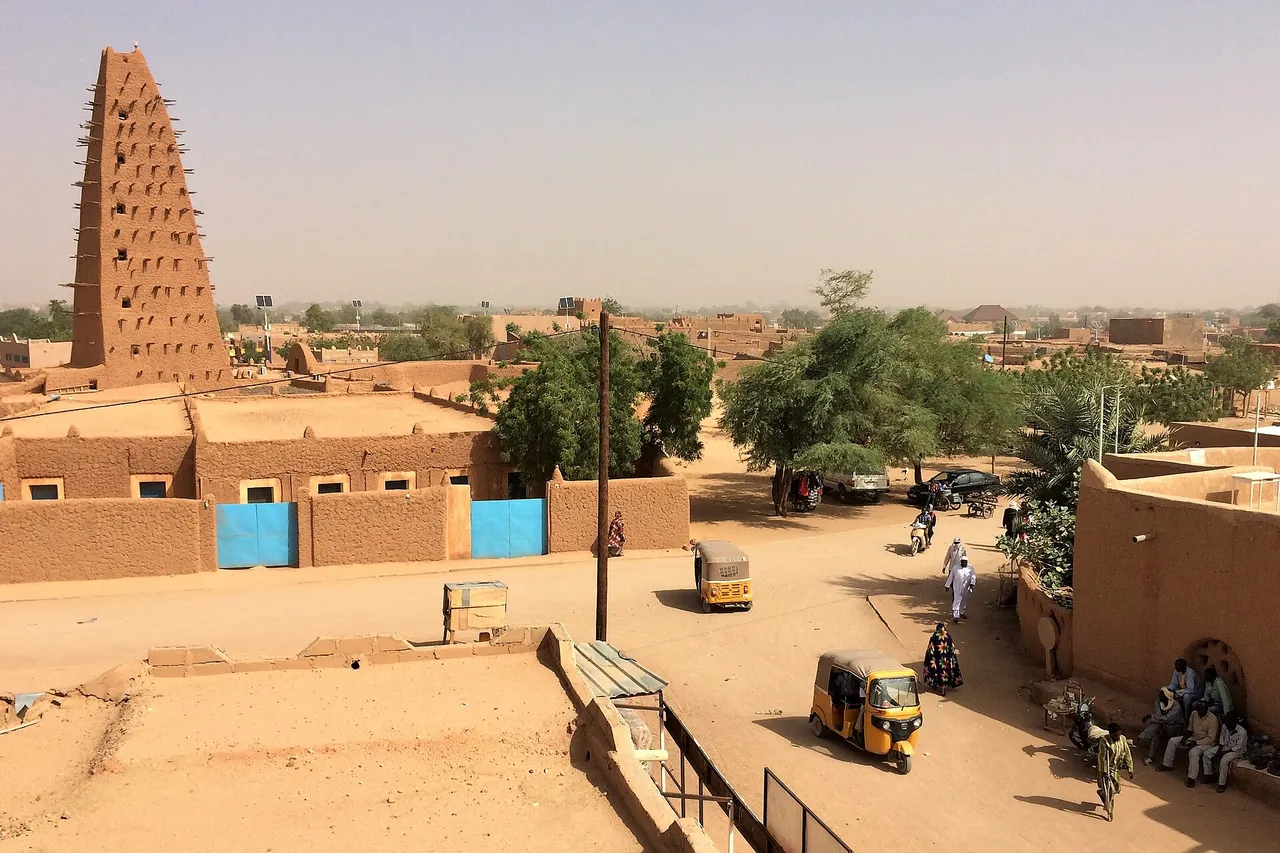
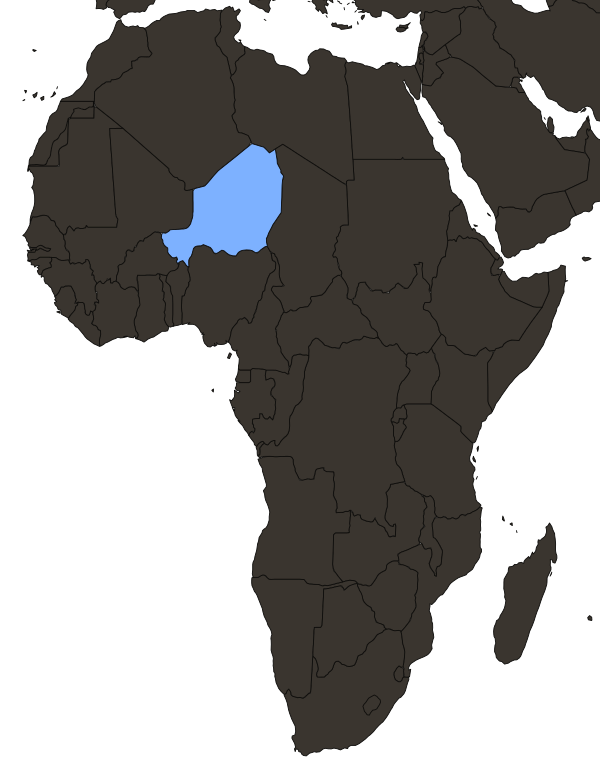
Niger is the largest country in West Africa, and more than four-fifths of it is Sahara. Its 27.9 million people have a median age of 15.6. General Abdourahamane Tiani overthrew the elected president in July 2023. Since then the junta has expelled French and US troops, turned to Russia and nationalized the uranium mine that France ran for more than 50 years.
Where Niger ranks
All rankings →Which alliances is Niger in?
All alliances →Who runs Niger?
General Abdourahamane Tiani was born in the Filingué region around 1960 to 1964. He commanded the presidential guard from 2011. On July 26, 2023 the guard detained President Mohamed Bazoum, who had won election in 2021 in Niger's first handover between two elected presidents. Tiani became head of state two days later. It was Niger's fifth successful coup since independence from France in 1960. On March 26, 2025 Tiani was sworn in as president under a new charter. The charter sets a five-year transition that can be extended for security reasons. All political parties were dissolved the same day. Bazoum and his wife are still held at the presidential palace. He has never been tried. On August 28 and 29, 2026 soldiers mutinied in Niamey. They attacked the presidential palace and the state broadcaster. The presidential guard and Russian troops put down the mutiny within about a day. Tiani replaced the head of the armed forces. The government blamed France, Benin, Chad and Côte d'Ivoire. France and Benin rejected the claim.
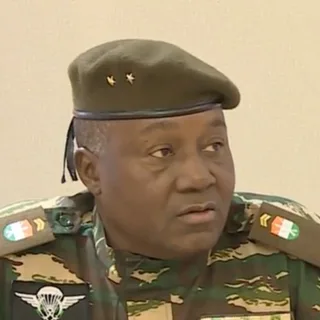
Photo (September 2024): Voice of America, Wikimedia Commons, public domain (cropped)
Who are Niger's allies and rivals?
After the coup the junta turned against France. It ended military agreements, and the last of about 1,500 French troops left on December 22, 2023. It ordered US forces out in March 2024. They left the $110 million drone base at Agadez that August. Russian military instructors arrived in April 2024. About 200 to 300 Russians are now based in Niamey, and they helped crush the August 2026 mutiny. Niger, Mali and Burkina Faso formed the Alliance of Sahel States in 2023 and left the West African bloc ECOWAS in January 2025. The three launched a joint force of about 5,000 troops in December 2025 and held their first talks with ECOWAS on October 17, 2026. Niger has kept its border with Benin closed since 2023, though its oil still flows through Benin by pipeline. Ties with Algeria broke down in 2025 over a drone row but recovered, and Algeria sent fighter jets to Niamey after the mutiny. The United States barred Niger's citizens from entering from January 2026.
Allies and partners


Rivals and tensions
 FranceTroops expelled 2023; uranium mine nationalized
 BeninBorder closed since 2023; carries Niger's oil
- Islamic State Sahel ProvinceKills the most civilians in Niger (ACLED)
- JNIMAl-Qaeda's Sahel branch, spreading south and east
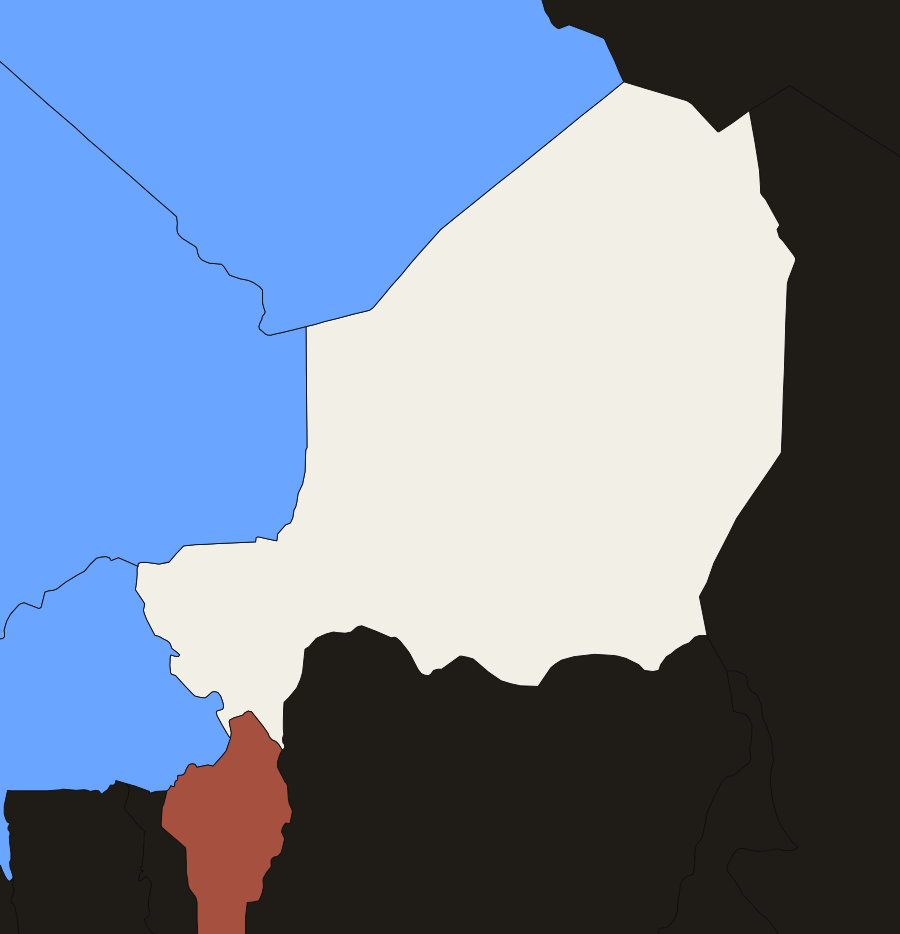
- Niamey The capital. Russian troops are based at the air base, where about 1,000 tonnes of seized uranium concentrate sit.
- Tillabéri Region near Mali and Burkina Faso with the most deaths. Gunmen killed 44 worshippers at a mosque in Fambita in March 2025.
- Arlit Uranium mine run by France's Orano since 1971. Nationalized on June 19, 2025.
- Agadem Oil fields run by China's CNPC. A pipeline of about 1,950 km carries the crude to Benin's coast.
- Niger
- Partner
- Tensions
Who does Niger trade with?
Niger's exports doubled to $2.13 billion in 2025, and its imports were $2.12 billion (UN Comtrade). Oil made up about 93% of exports. Crude output rose from about 14,000 barrels a day in 2015 to about 101,000 in 2025, after a pipeline to Benin opened in 2024. Italy and the Netherlands bought 70% of all exports (chart). India, China and Nigeria supplied most imports. China's CNPC runs the oil fields. In 2024 it advanced Niger $400 million against future oil sales, and in May 2026 the two sides settled a year of disputes. In October 2026 the government gave the Chinese companies 45 days to fix unmet promises, as fuel ran short in Niamey. Oil paid for about 36% of government revenue in 2025. The economy grew about 7% in 2025. Niger is still one of the poorest countries in the world. In 2025, 52% of people lived in extreme poverty (World Bank). The UN ranks it 188th of 193 countries for human development.
Sells to
Share of Niger's exports
 Italy40.4%
 Netherlands29.6%
 China7.7%
 Singapore4.2%
 United Kingdom4.0%


Goods, 2025, as reported by Niger. UN Comtrade.
Who is fighting in Niger?
Two jihadist groups fight the army in the southwest, near Mali and Burkina Faso. Islamic State Sahel Province is strongest in Tillabéri. JNIM, al-Qaeda's Sahel branch, has spread from there into Dosso and southern Tahoua. Boko Haram and the Islamic State's West Africa branch attack in Diffa, near Lake Chad. The fighting has grown deadlier since the coup. ACLED counted 5,836 deaths in the three years after July 2023, against 3,199 in the three years before. UCDP counted about 1,100 deaths in 2025 (chart). Authorities blamed the Islamic State for killing 44 worshippers at a mosque in Fambita in March 2025. Islamic State fighters attacked Niamey's airport in January 2026, and JNIM struck it again in June. The army has also killed civilians. A drone strike at Kokoloko in January 2026 killed at least 17. Niger hosted 385,986 refugees at the end of 2025, mostly from Nigeria and Mali, and 548,386 people were displaced inside the country in September 2026.
Deaths in conflict in the Sahel, 2025
Full ranking → Chad
ChadUppsala Conflict Data Program (UCDP), Georeferenced Event Dataset, version 26.1
What happened to Niger's uranium?
France's Orano, formerly Areva, mined uranium near Arlit from 1971. Niger's uranium helped fuel French reactors. It supplied about 19% of France's uranium from 2005 to 2020 and a quarter of the EU's in 2022. Niger mined 2,020 tonnes in 2022, 4.1% of the world total, but output fell to 1.6% in 2024 after the coup. The junta withdrew Orano's permit for the Imouraren deposit in June 2024, took control of the Somaïr mine in December 2024 and nationalized it on June 19, 2025. In September 2025 a World Bank arbitration panel ordered Niger not to sell Somaïr's uranium. In November about 1,000 tonnes of concentrate left Arlit by truck for the port of Lomé, but the convoy stopped at Niamey's air base, where it still sits. Russia's Rosatom denied reports that it had bought it. In September 2026 Niger said it would sell its uranium to any buyer. The same month the US development bank approved up to $414 million for a new uranium mine, Dasa, due to produce from 2028.