
Country profile · North Africa
 Algeria
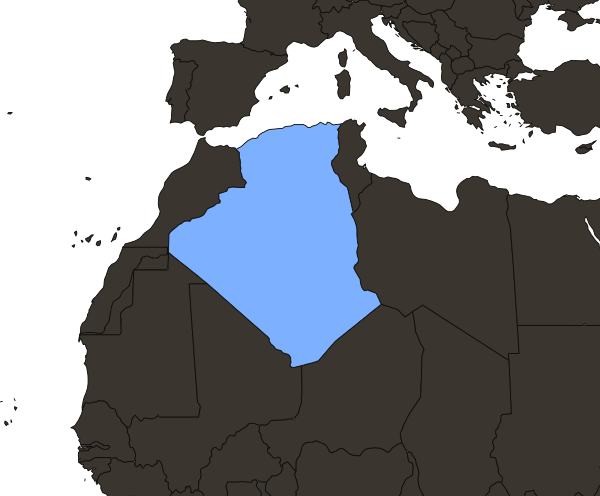
Algeria is the largest country in Africa, with about 47.4 million people (UN, 2025). President Abdelmadjid Tebboune has led it since December 2019, backed by the army. Oil and gas make up 83% of its exports. Algeria is the third-largest gas supplier to the EU, and it spends a larger share of its economy on the military than any country except Ukraine.
Where Algeria ranks
All rankings →Which alliances is Algeria in?
All alliances →Who runs Algeria?
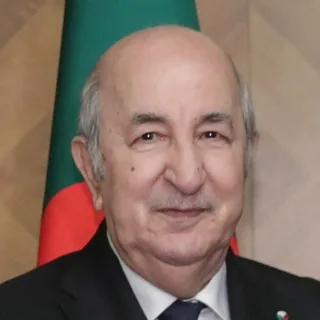
President Abdelmadjid Tebboune was born on November 17, 1945, in Mécheria, in western Algeria. In 2017 he was prime minister for less than three months before President Abdelaziz Bouteflika fired him. Mass protests, known as the Hirak, began in February 2019, and Bouteflika resigned on April 2 after the army chief told him to go. Tebboune won the election that December. In 2024 the election authority first said he had won 94.65% of the vote. The Constitutional Court later gave 84.30%, after all three campaigns, his own included, said the first figures did not add up. This is his last term, and the next election is due in 2029. Many Algerians call the real power "le pouvoir", meaning the army command and the security services. General Saïd Chengriha has led the army since December 2019. Only 21% of voters took part in the parliamentary election of July 2, 2026. Parties that back the president won a majority (chart).
- FLN (91), RND (74) and El Moustakbal (56), which back the president 221
- MSP, the largest opposition party 43
- El Bina (40), independents (33) and smaller parties (70) 143
Photo (June 2023): State Duma of Russia, Wikimedia Commons, CC BY 4.0 (cropped)
Who are Algeria's allies and rivals?
Morocco is Algeria's main rival. The land border has been closed since 1994, and Algeria cut diplomatic ties in August 2021. The dispute is over Western Sahara. Morocco holds most of it, and Algeria backs the Polisario Front, which wants independence and is based in camps around Tindouf in Algeria. In October 2025 the UN Security Council made Morocco's autonomy plan the basis for talks, and Algeria refused to vote. Algeria cut ties with the United Arab Emirates on September 10, 2026 and gave its ambassador 48 hours to leave. Relations with France broke down after France backed Morocco's plan in July 2024, and ministers only began visiting again in 2026. Russia supplied 39% of Algeria's arms imports in 2021 to 2025 and China 27% (SIPRI). Italy buys the most Algerian gas. Algeria restored ties with Niger in February 2026, and with Mali in July 2026 after shooting down a Malian drone in 2025.
Allies and partners
 ItalyBiggest buyer; 36% of Italy's gas in 2025
 ChinaBiggest goods supplier; 27% of arms imports
 RussiaBiggest arms supplier, 39% in 2021 to 2025
 SpainMedgaz pipeline; trade freeze lifted November 2024
 TunisiaGas pipeline to Italy crosses it; military pact 2025
 NigerTies restored 2026; trans-Saharan pipeline planned
Rivals and tensions
 MoroccoNo ties since 2021; Western Sahara dispute
 United Arab EmiratesTies cut September 10, 2026
 FranceFormer ruler; crisis since 2024, partial thaw
 IsraelNo ties; Algeria opposes normalization
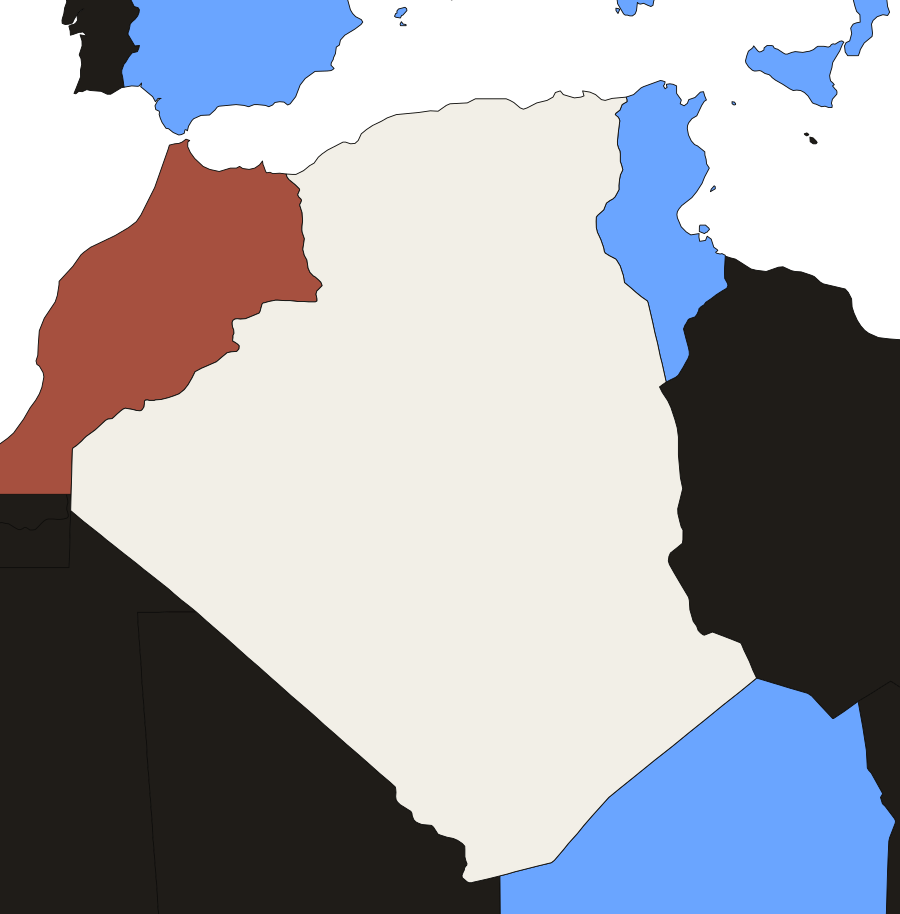
- Tindouf camps Sahrawi refugee camps since 1975 and the base of the Polisario Front. UNHCR plans for 90,000 people.
- Medgaz Gas pipeline from Beni Saf to Almería in Spain. It carries about 10.5 billion cubic meters a year and is nearly full.
- TransMed Gas pipeline through Tunisia to Sicily, 33.5 billion cubic meters a year. Algeria's main route to Italy.
- Algeria
- Partner
- Rival
Who does Algeria trade with?
Europe buys Algeria's oil and gas, and China sells it the most goods. In 2024 Algeria exported $51.9 billion of goods and imported $47.4 billion. Italy, France and Spain bought half of its exports (chart). China supplied 22% of imports in 2024 and 28.5% in 2025. Oil and gas made up 83% of exports and 47% of state revenue in 2019 to 2023 (World Bank). Lower prices turned the trade surplus into a $4.5 billion deficit in 2025. Algeria imported 10.6 million tonnes of wheat in 2024, mostly from Russia. France sold it none in the 2024/25 season, after the two countries fell out. The 2026 budget is the biggest ever, about $135 billion, and a third of it pays public wages. The IMF expects foreign reserves to fall from $68.9 billion in 2024 to $46.5 billion in 2026. The dinar trades at about 134 to the dollar officially and about 240 on the street.


How much gas does Algeria sell to Europe?
Algeria sold 38.6 billion cubic meters of gas to the EU in 2025 (Bruegel). That was about 12% of the EU's gas imports, the third-largest share after Norway and the United States. Only six countries exported more gas than Algeria in 2024 (chart). Two pipelines under the Mediterranean carry it to Europe: TransMed runs through Tunisia to Sicily, and Medgaz runs to Spain. Italy got 36% of its gas from Algeria in 2025. Algeria also ships liquefied gas, and the first cargo to Germany arrived on July 2, 2026. The Iran war closed the Strait of Hormuz in March 2026 and pushed up gas prices. Algeria could not sell much more: its exports rose only 2.4% in the first half of 2026. Algerians use more than half of the gas the country produces. Because prices are higher, the government now expects 54% more oil and gas tax than its 2026 budget planned.
Net gas exports, 2024
Full ranking →


US Energy Information Administration, International Energy Statistics
Why are Algeria and Morocco rivals?
Algeria won its independence from France in 1962 after an eight-year war. In 1963 Algeria and Morocco fought a short border war, the Sand War. In 1975 Morocco took most of Western Sahara as Spain left, and Algeria has backed the Polisario Front ever since. Algeria closed the land border in 1994. In 2020 the United States recognized Moroccan rule over Western Sahara, and Morocco set up ties with Israel. Algeria cut ties with Morocco in August 2021. Each country arms itself against the other. Algeria spent $25.4 billion on its military in 2025, the most in Africa. That was 8.8% of its economy, while Morocco spent 3.5% of its own (chart). Algeria has six Russian-built submarines. In early 2026 the United States and the UN held three rounds of talks with Morocco, Algeria, Mauritania and the Polisario Front, with no deal. The UN Security Council votes on its mission in Western Sahara by October 31, 2026.
Military spending, share of GDP, 2025
Full ranking → Ukraine39.6%
- Algeria8.8%
- Israel7.8%
- Russia est.7.5%
 Saudi Arabia est.6.5%
- Morocco3.5%
 United States3.1%
- France2.0%
SIPRI Military Expenditure Database, 2026 edition