
Ranking · Energy and resources
Nuclear power by country
The United States has the most nuclear reactors in operation with 94, followed by China with 60 and France with 57. These three countries account for half of the world's 417 operating reactors. China is building 37 of the 78 reactors under construction worldwide, nearly half the global total.
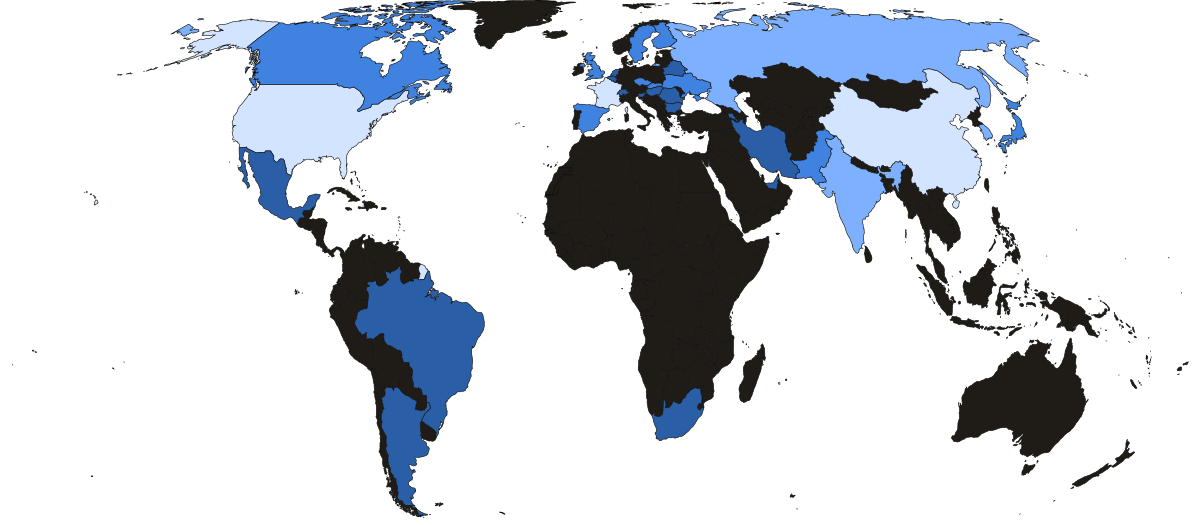
- Under 1
- 1–5
- 5–20
- 20–50
- Over 50
- Not in this ranking
- Under 1
- 1–2
- 2–4
- 4–10
- Over 10
- Not in this ranking
- Under 5%
- 5%–15%
- 15%–30%
- 30%–50%
- Over 50%
- Not in this ranking
- Under 5
- 5–20
- 20–50
- 50–200
- Over 200
- Not in this ranking
| # | Country | Reactors | Being built | Share | TWh |
|---|---|---|---|---|---|
| 1 |  United States United States |
94 | · | 17.4% | 784.8 |
| 2 |  China China |
60 | 37 | 4.6% | 487.1 |
| 3 |  France France |
57 | · | 68.8% | 392.1 |
| 4 |  Russia Russia |
34 | 5 | 18.3% | 218.7 |
| 5 |  South Korea South Korea |
26 | 4 | 29.6% | 184.7 |
| 6 |  India India |
23 | 8 | 2.6% | 53.8 |
| 7 |  Canada Canada |
17 | 1 | 13.1% | 85.3 |
| 8 |  Ukraine Ukraine |
15 | 2 | · | · |
| 9 |  Japan Japan |
14 | 2 | 9.1% | 94.1 |
| 10 |  United Kingdom United Kingdom |
9 | 2 | 12.4% | 36.4 |
| 11 |  Spain Spain |
7 | · | 18.8% | 54.1 |
| 12 |  Czechia Czechia |
6 | · | 42.3% | 31.9 |
| 13 |  Pakistan Pakistan |
6 | 1 | 14.4% | 25.4 |
| 14 |  Sweden Sweden |
6 | · | 27.4% | 46.7 |
| 15 |  Finland Finland |
5 | · | 39.9% | 32.8 |
| 16 |  Slovakia Slovakia |
5 | 1 | 66.4% | 19.3 |
| 17 |  Hungary Hungary |
4 | 1 | 40.0% | 16.1 |
| 18 |  Switzerland Switzerland |
4 | · | 29.9% | 19.4 |
| 19 |  United Arab Emirates United Arab Emirates |
4 | · | · | · |
| 20 |  Argentina Argentina |
3 | 1 | 7.0% | 10.8 |
| 21 |  Belarus Belarus |
2 | · | 37.0% | 17.0 |
| 22 |  Belgium Belgium |
2 | · | 36.0% | 24.1 |
| 23 |  Brazil Brazil |
2 | 1 | 2.1% | 15.9 |
| 24 |  Bulgaria Bulgaria |
2 | · | 39.1% | 14.8 |
| 25 |  Mexico Mexico |
2 | · | 2.9% | 10.2 |
| 26 |  Romania Romania |
2 | · | 20.5% | 10.2 |
| 27 |  South Africa South Africa |
2 | · | 4.2% | 10.2 |
| 28 |  Armenia Armenia |
1 | · | 31.1% | 2.7 |
| 29 |  Iran Iran |
1 | 2 | 1.9% | 7.3 |
| 30 |  Netherlands Netherlands |
1 | · | 3.0% | 4.0 |
| 31 |  Slovenia Slovenia |
1 | · | 39.2% | 5.8 |
| # | Country | Being built | Reactors | Share | TWh |
|---|---|---|---|---|---|
| 1 | China |
37 | 60 | 4.6% | 487.1 |
| 2 | India |
8 | 23 | 2.6% | 53.8 |
| 3 | Russia |
5 | 34 | 18.3% | 218.7 |
| 4 | South Korea |
4 | 26 | 29.6% | 184.7 |
| 5 |  Egypt Egypt |
4 | · | · | · |
| 6 |  Turkey Turkey |
4 | · | · | · |
| 7 | Ukraine |
2 | 15 | · | · |
| 8 | Japan |
2 | 14 | 9.1% | 94.1 |
| 9 | United Kingdom |
2 | 9 | 12.4% | 36.4 |
| 10 | Iran |
2 | 1 | 1.9% | 7.3 |
| 11 |  Bangladesh Bangladesh |
2 | · | · | · |
| 12 | Canada |
1 | 17 | 13.1% | 85.3 |
| 13 | Pakistan |
1 | 6 | 14.4% | 25.4 |
| 14 | Slovakia |
1 | 5 | 66.4% | 19.3 |
| 15 | Hungary |
1 | 4 | 40.0% | 16.1 |
| 16 | Argentina |
1 | 3 | 7.0% | 10.8 |
| 17 | Brazil |
1 | 2 | 2.1% | 15.9 |
| # | Country | Share | Reactors | Being built | TWh |
|---|---|---|---|---|---|
| 1 | France |
68.8% | 57 | · | 392.1 |
| 2 | Slovakia |
66.4% | 5 | 1 | 19.3 |
| 3 | Czechia |
42.3% | 6 | · | 31.9 |
| 4 | Hungary |
40.0% | 4 | 1 | 16.1 |
| 5 | Finland |
39.9% | 5 | · | 32.8 |
| 6 | Slovenia |
39.2% | 1 | · | 5.8 |
| 7 | Bulgaria |
39.1% | 2 | · | 14.8 |
| 8 | Belarus |
37.0% | 2 | · | 17.0 |
| 9 | Belgium |
36.0% | 2 | · | 24.1 |
| 10 | Armenia |
31.1% | 1 | · | 2.7 |
| 11 | Switzerland |
29.9% | 4 | · | 19.4 |
| 12 | South Korea |
29.6% | 26 | 4 | 184.7 |
| 13 | Sweden |
27.4% | 6 | · | 46.7 |
| 14 | Romania |
20.5% | 2 | · | 10.2 |
| 15 | Spain |
18.8% | 7 | · | 54.1 |
| 16 | Russia |
18.3% | 34 | 5 | 218.7 |
| 17 | United States |
17.4% | 94 | · | 784.8 |
| 18 | Pakistan |
14.4% | 6 | 1 | 25.4 |
| 19 | Canada |
13.1% | 17 | 1 | 85.3 |
| 20 | United Kingdom |
12.4% | 9 | 2 | 36.4 |
| 21 | Japan |
9.1% | 14 | 2 | 94.1 |
| 22 | Argentina |
7.0% | 3 | 1 | 10.8 |
| 23 | China |
4.6% | 60 | 37 | 487.1 |
| 24 | South Africa |
4.2% | 2 | · | 10.2 |
| 25 | Netherlands |
3.0% | 1 | · | 4.0 |
| 26 | Mexico |
2.9% | 2 | · | 10.2 |
| 27 | India |
2.6% | 23 | 8 | 53.8 |
| 28 | Brazil |
2.1% | 2 | 1 | 15.9 |
| 29 | Iran |
1.9% | 1 | 2 | 7.3 |
| 30 |  Taiwan Taiwan |
1.1% | · | · | 3.2 |
| # | Country | TWh | Reactors | Being built | Share |
|---|---|---|---|---|---|
| 1 | United States |
784.8 | 94 | · | 17.4% |
| 2 | China |
487.1 | 60 | 37 | 4.6% |
| 3 | France |
392.1 | 57 | · | 68.8% |
| 4 | Russia |
218.7 | 34 | 5 | 18.3% |
| 5 | South Korea |
184.7 | 26 | 4 | 29.6% |
| 6 | Japan |
94.1 | 14 | 2 | 9.1% |
| 7 | Canada |
85.3 | 17 | 1 | 13.1% |
| 8 | Spain |
54.1 | 7 | · | 18.8% |
| 9 | India |
53.8 | 23 | 8 | 2.6% |
| 10 | Sweden |
46.7 | 6 | · | 27.4% |
| 11 | United Kingdom |
36.4 | 9 | 2 | 12.4% |
| 12 | Finland |
32.8 | 5 | · | 39.9% |
| 13 | Czechia |
31.9 | 6 | · | 42.3% |
| 14 | Pakistan |
25.4 | 6 | 1 | 14.4% |
| 15 | Belgium |
24.1 | 2 | · | 36.0% |
| 16 | Switzerland |
19.4 | 4 | · | 29.9% |
| 17 | Slovakia |
19.3 | 5 | 1 | 66.4% |
| 18 | Belarus |
17.0 | 2 | · | 37.0% |
| 19 | Hungary |
16.1 | 4 | 1 | 40.0% |
| 20 | Brazil |
15.9 | 2 | 1 | 2.1% |
| 21 | Bulgaria |
14.8 | 2 | · | 39.1% |
| 22 | Argentina |
10.8 | 3 | 1 | 7.0% |
| 23 | Mexico |
10.2 | 2 | · | 2.9% |
| 24 | Romania |
10.2 | 2 | · | 20.5% |
| 25 | South Africa |
10.2 | 2 | · | 4.2% |
| 26 | Iran |
7.3 | 1 | 2 | 1.9% |
| 27 | Slovenia |
5.8 | 1 | · | 39.2% |
| 28 | Netherlands |
4.0 | 1 | · | 3.0% |
| 29 | Taiwan |
3.2 | · | · | 1.1% |
| 30 | Armenia |
2.7 | 1 | · | 31.1% |
Why they rank where they do
-
United States
Vogtle 3 and 4 in Georgia, the newest American reactors, entered commercial operation in July 2023 and April 2024. In May 2025 President Trump signed executive orders that aim for 400 GW of nuclear capacity by 2050, up from about 100 GW.
-
China
China's State Council approved 11 new reactors in 2024, 10 in April 2025 and 8 in July 2026. The IEA expects China to pass the United States in installed nuclear capacity by 2030.
-
France
Prime Minister Pierre Messmer launched France's nuclear program on March 6, 1974, after the 1973 oil shock. Between 1979 and 1988 France's fleet grew from 16 reactors to 55. The newest, Flamanville 3, was connected to the grid on December 21, 2024.
-
Russia
Rosatom, Russia's state nuclear company, also builds reactors abroad. It is building the first nuclear plants of Turkey, Egypt and Bangladesh.
-
South Korea
A South Korean group led by KEPCO built the four reactors of the Barakah plant in the United Arab Emirates.
-
India
India gets only a small share of its electricity from nuclear power because its demand is so large and most of its power comes from coal.
-
Ukraine
Six of Ukraine's 15 reactors are at the Zaporizhzhia plant, which Russian forces have held since March 2022. The plant has produced no electricity since September 2022, so only nine Ukrainian reactors actually generate power.
-
Japan
Japan shut down all of its reactors after the Fukushima disaster in March 2011 and has restarted them one by one since 2015. The latest, Kashiwazaki-Kariwa 6, began commercial operation on April 16, 2026. It was the first restart for TEPCO, the company that ran the Fukushima plant.
-
United Kingdom
Both British reactors under construction are at Hinkley Point C in Somerset. Most of the older British fleet is gas-cooled reactors near the end of their lives.
-
United Arab Emirates
The United Arab Emirates connected the first of the four Barakah reactors to the grid in 2020 and the fourth in 2024. It was the first Arab country to generate nuclear power. Ember has no 2025 electricity data for the UAE.
Which countries get the most electricity from nuclear power?
France gets the largest share of its electricity from nuclear power: 68.8% in 2025. Slovakia was second at 66.4%. Czechia, Hungary and Finland each got about 40%. The world average was 8.9%. The United States has the most reactors but got only 17.4% of its electricity from nuclear power, because its total demand is so large. China got 4.6%.
- France68.8%
- Slovakia66.4%
- Czechia42.3%
- Hungary40.0%
- Finland39.9%
- Slovenia39.2%
- Bulgaria39.1%
- Belarus37.0%
- Belgium36.0%
- Armenia31.1%
Which countries are building nuclear reactors?
China is building 37 of the world's 78 reactors under construction, nearly half. India is building 8 and Russia 5. South Korea, Egypt and Turkey each have 4. Three countries are building their first nuclear plants, all with Rosatom: Turkey at Akkuyu, Egypt at El Dabaa and Bangladesh at Rooppur. Bangladesh's first unit at Rooppur started its chain reaction on October 11, 2026, and is due to connect to the grid by the end of November. Akkuyu 1 had not yet loaded fuel in September 2026.
- China37
- India8
- Russia5
- South Korea4
- Egypt4
- Turkey4
- Ukraine2
- Japan2
What happened to Japan's nuclear reactors after Fukushima?
Japan shut down all of its reactors after an earthquake and tsunami wrecked the Fukushima Daiichi plant in March 2011. Reactors can only restart after passing new safety checks and winning local approval. The first restarts came in 2015, at Sendai in Kyushu. The latest, Kashiwazaki-Kariwa 6, began commercial operation on April 16, 2026. It is the first reactor restarted by TEPCO, the company that ran the Fukushima plant. Many others are still idle. On September 14, 2026, Chubu Electric withdrew its restart application for two reactors at Hamaoka, after the regulator found that seismic data had been covered up.
Why did Germany shut down its nuclear power plants?
Germany shut down its last three reactors, Isar 2, Emsland and Neckarwestheim 2, on April 15, 2023. Chancellor Angela Merkel's government decided to close all German reactors after the Fukushima disaster in 2011. The last three ran a few months longer than planned because of the energy crisis that followed Russia's invasion of Ukraine. In March 2026 Chancellor Friedrich Merz called the phase-out a "serious strategic mistake" but "irreversible". Taiwan shut its last reactor, Maanshan 2, on May 17, 2025, when its 40-year license expired. Taipower applied to restart it in March 2026, but it is not expected back before about 2028.