
How does Iran fund its military?
Iran's defense budget is a fraction of Saudi Arabia's, yet it closed the Strait of Hormuz and runs proxy forces in four countries. The money comes from oil China keeps buying, an economy the Revolutionary Guard controls, and weapons cheap enough to beat sanctions.
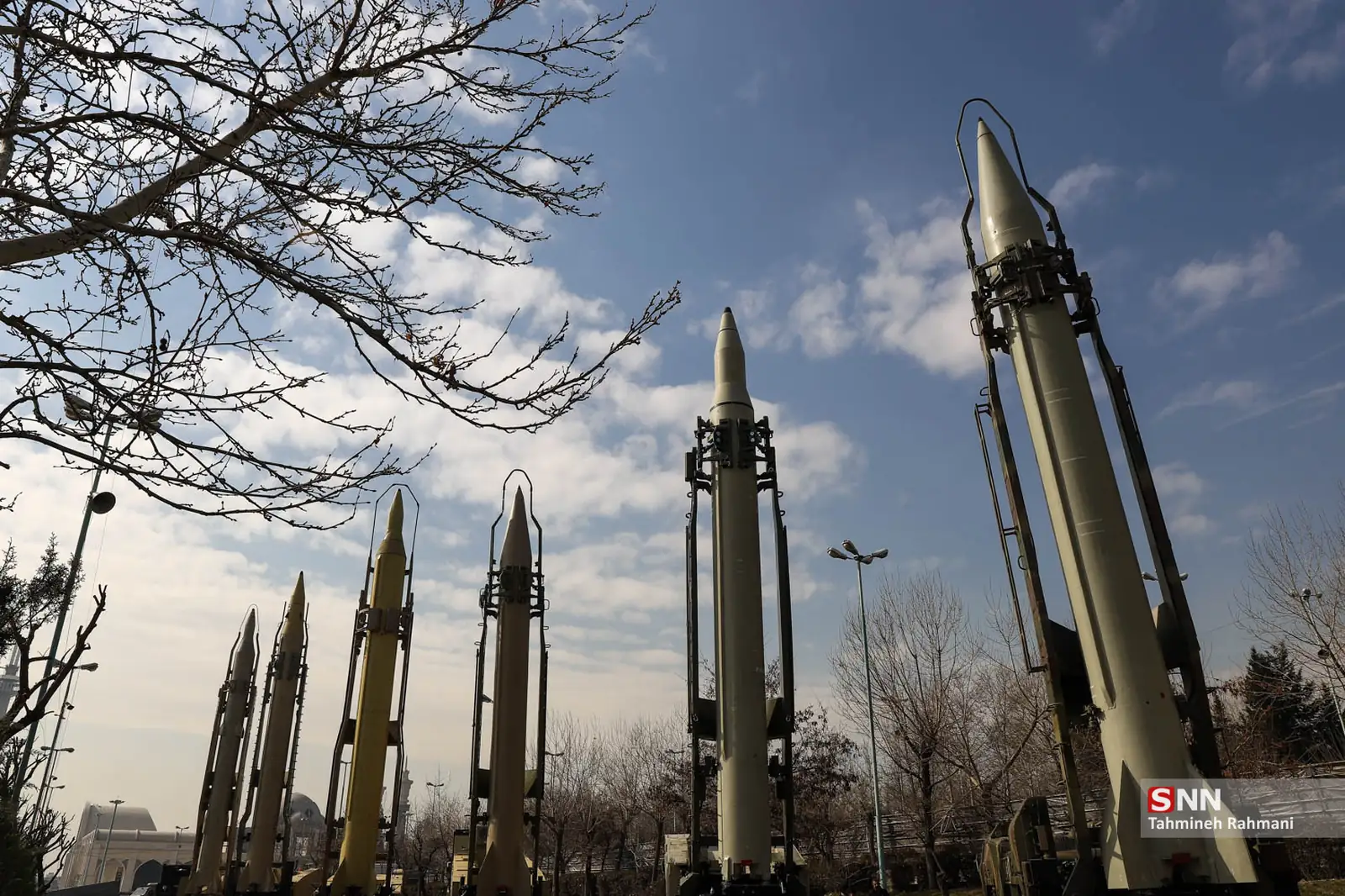
In March 2026, Iran closed the Strait of Hormuz with about $50 million worth of mines, speedboats, and missiles. The strait carries a fifth of the world's oil. Five months later, the strongest navy on earth still has not fully reopened it. Iran also funds Hezbollah in Lebanon, the Houthis in Yemen, militias in Iraq, and, until recently, Hamas in Gaza. It has built a ballistic missile arsenal large enough to strike Israel and every American base in the Middle East.
Iran's official defense budget in 2025 was about $23 billion, roughly a third of what Saudi Arabia spends and half of what Israel spends. Under American sanctions since 1979 and escalating UN sanctions since 2006, Iran is largely cut off from the dollar-based financial system, banned from selling oil to most of the world, and barred from importing advanced weapons. The country does all of this anyway. The explanation is four things working together: oil that sanctions cannot stop, a military that runs its own economy, proxy forces that cost almost nothing by American standards, and weapons designed to be cheap.
Oil that China keeps buying
Iran's most important source of revenue is the one sanctions are supposed to prevent.
Before sanctions, Iran exported about 2.5 million barrels of oil a day. In 2012, the United States and the European Union disconnected Iran from SWIFT, the messaging system that handles nearly all international bank transfers. Exports fell to 1.1 million barrels in a year. The rial lost 80 percent of its value. Inflation hit 40 percent. The shock brought Iran to the table for the 2015 nuclear deal. Exports recovered. Then the Trump administration reimposed sanctions in 2018, and European companies that had returned pulled out again.
China did not. Iran now exports roughly 1.5 to 1.8 million barrels a day, and more than 90 percent goes to Chinese buyers. In the fiscal year ending March 2025, oil and gas brought in an estimated $43 billion. Iranian oil leaves port on a fleet of roughly 600 aging tankers with opaque ownership, registered under flags of convenience. Crews switch off their tracking transponders in the open ocean, transfer cargo between ships, and relabel Iranian crude as "Malaysian Blend" or "Omani Crude." Chinese customs data shows almost no imports from Iran since 2022. Satellite tracking of tanker movements tells a different story. The main buyers are small, independent refineries in Shandong province, known as "teapot" refiners, which process the oil at a steep discount to the world price. Payment runs through small Chinese banks in yuan, bypassing the dollar system entirely.
Washington knows all of this. American satellites can identify every ship in the fleet. The reason the trade continues is that shutting it down would mean sanctioning Chinese banks and refineries, which would mean a direct economic confrontation with Beijing. Every American administration since 2018 has made the same calculation: the cost of that confrontation is higher than the cost of letting Iranian oil reach China.
The Revolutionary Guard runs the economy
Iran's military is not a single institution that draws a budget from the treasury. The Islamic Revolutionary Guard Corps, the IRGC, is both a military force and an economic conglomerate. Ayatollah Khomeini founded it in 1979 as a counterweight to the regular army, which he distrusted because of its loyalty to the deposed Shah. The IRGC fought the Iran-Iraq War, built the nuclear program, and has since become the most powerful organization in the country.
The IRGC's construction arm, Khatam al-Anbiya, is one of the largest engineering firms in Iran. It has more than 800 subsidiaries and over 1,700 government contracts. It built the country's largest gas field, the South Pars field in the Persian Gulf. It builds dams, highways, oil refineries, and metro systems. When international companies pulled out of Iran under sanctions, the IRGC filled the gap. Its business empire now stretches across construction, oil and gas, telecommunications, and banking.
Alongside the IRGC sit the bonyads, charitable foundations controlled by the Supreme Leader's office. The largest, Bonyad Mostazafan, runs between 160 and 350 companies across energy, finance, construction, and mining. It pays no taxes and answers to no elected official. Together, the IRGC and the bonyads control more than half of Iran's economy by most estimates. Iran's 2025 budget allocated 51 percent of oil and gas export revenue to the IRGC and security forces.
The result is a military that does not depend on civilian politicians to fund it. The IRGC earns its own revenue, controls its own supply chains, and, because sanctions drove out foreign competitors, has only grown stronger under pressure.
Proxies that cost less than one aircraft carrier
The most unusual line in Iran's military budget is the cheapest. Iran's total spending on proxy forces across the Middle East is estimated at $2 to $4 billion a year. Hezbollah, the largest and most capable, received roughly $700 million to $1 billion a year before the 2024 war. The Houthis received Iranian drones, missiles, and cash worth several hundred million. Hamas received an estimated $350 million a year. Iraqi Shia militias, grouped under the Popular Mobilization Forces, received tens of millions.
For comparison, the United States spends roughly $7 billion a year to operate a single carrier strike group. Iran's entire proxy network, which gives it influence in Lebanon, Yemen, Iraq, and Gaza, costs less than half of that. The proxies recruit locally, pay local wages, and fight on their own soil. Iran provides weapons, training, and money. It does not provide soldiers. When Hezbollah lost its leader, Hassan Nasrallah, to an Israeli strike in September 2024, and the Houthis lost half their cabinet to another Israeli strike a year later, the organizations replaced their leaders and kept operating. Iran's investment survived because it was distributed across thousands of local fighters, not concentrated in expensive hardware that a single strike could destroy.
Weapons designed to be cheap
Iran cannot build modern fighter jets or aircraft carriers. It does not try. Instead, it builds the weapons that give the biggest return for the lowest cost.
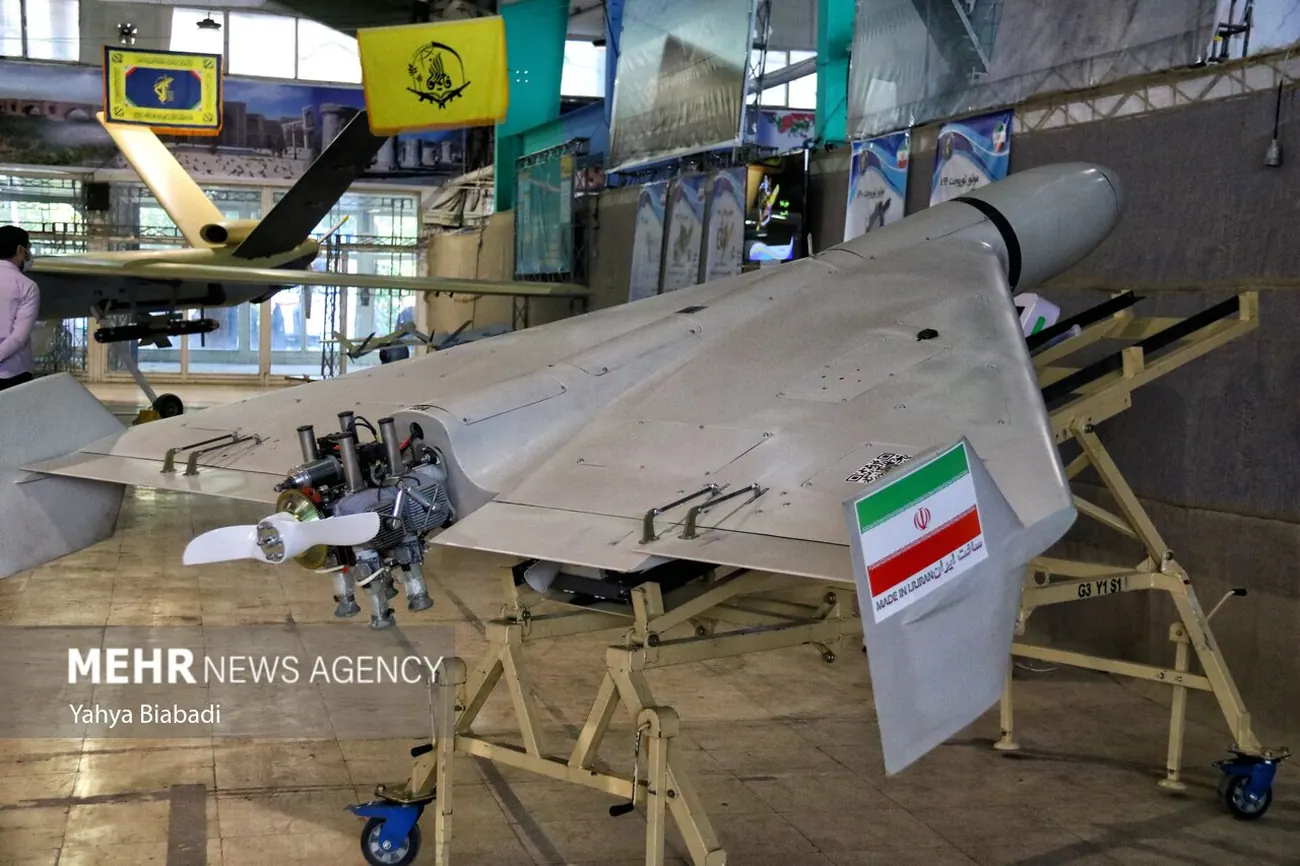
A Shahed-136 attack drone costs between $20,000 and $50,000 to produce. The Patriot missile that shoots it down costs $4 to $6 million. Iran produces 150 to 250 of these drones a month in state-owned factories with no corporate profit margins, using designs it reverse-engineered and improved over decades. Its Emad ballistic missiles cost roughly $250,000 each. A THAAD interceptor designed to stop one costs $12 to $15 million.
That cost ratio is what closed the Strait of Hormuz. The mines, small boats, and missiles that shut down a waterway carrying $3 billion worth of oil a day cost Iran less than the US Navy spent responding in the first week. The same math applied when the Houthis, armed with Iranian drones, shut down Red Sea shipping in 2023. American warships won every engagement and still lost the cost exchange, firing $4 million interceptors at $20,000 drones.
Why sanctions have not stopped any of it
Iran's military spending, including proxies and weapons programs, is estimated at $25 to $30 billion a year. That is a fraction of what Saudi Arabia ($75 billion) or Israel ($46.5 billion) spends. But Iran does not need to match them. Its strategy is built around weapons and forces that cost a tenth or a hundredth of their Western equivalents, funded by oil revenue that sanctions have reduced but never stopped.
The IRGC, the organization at the center of all of it, has actually benefited from sanctions. When foreign companies left Iran, the IRGC took their contracts. When legal trade routes closed, the IRGC ran the smuggling networks. The officers who control Iran's economy have a financial interest in the system that sanctions created.
The 2026 war has tested this model harder than anything before it. American and Israeli strikes killed Supreme Leader Ali Khamenei in February, and his son Mojtaba Khamenei took the title under IRGC pressure. Oil exports, which were running at about 2.1 million barrels a day in February, collapsed to nearly zero by May as the Hormuz closure blocked Iran's own tankers alongside everyone else's. The rial lost most of its remaining value. Consumer prices rose 88 percent in a year.
But the model was what made the war possible in the first place. Iran fought the United States and Israel to a standstill using weapons that cost less than the interceptors fired to stop them, funded by decades of oil revenue that sanctions reduced but never cut off, and organized by a military that ran its own economy and did not need permission from anyone in parliament. Whether the model survives the current crisis depends on whether China resumes buying and whether the IRGC can hold its grip on a country whose economy has contracted by more than 6 percent. Four decades of sanctions did not break it. A war and a dead supreme leader may be a different matter.
Test what you learned
6 questions on this article. About two minutes, no signup.