
How the collapse of the Ottoman Empire created the modern Middle East
The Ottoman Empire held the Middle East together for four centuries. When it collapsed, Britain and France drew new borders. Most are still contested.
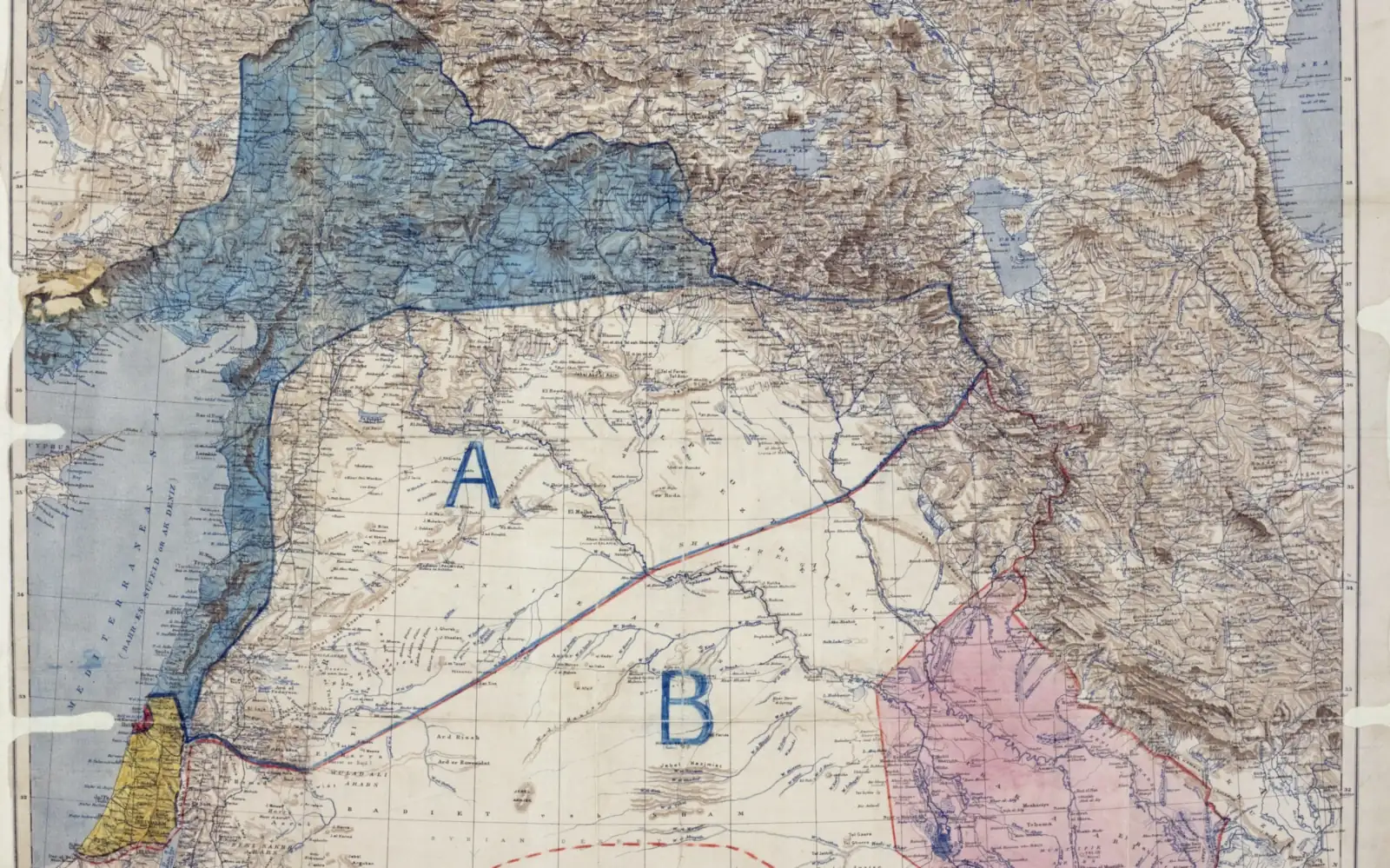
On December 8, 2024, Bashar al-Assad boarded a plane out of Damascus as rebel forces entered the city. His family had ruled Syria for more than fifty years. The country they lost was not an ancient nation. France created it in 1920 by carving several Ottoman provinces into a single state and drawing borders that grouped together communities with little in common. Syria is not the only country in the region with that origin story. Iraq, Jordan, Lebanon, and the borders of Israel and Palestine were all drawn in the same few years, by the same two powers, after the same event: the collapse of the Ottoman Empire at the end of World War I.
For more than four hundred years, the Ottoman Empire governed most of the Middle East as a single state. Understanding why it collapsed and what replaced it explains more about the modern Middle East than almost any other single event.
How the empire held together for four centuries
The Ottoman Empire began as a small state in northwestern Anatolia in the late 1200s. By the mid-1500s, under Suleiman the Magnificent, it controlled southeastern Europe, most of the Middle East, and North Africa. At its peak it governed roughly 30 million people who spoke dozens of languages and practiced several religions.
The system that held this together was called the millet system. The empire classified its subjects by religious community, not by ethnicity or language. Each community kept its own courts, schools, and religious leaders. Greek Orthodox Christians, Armenian Christians, and Jews each ran their own legal systems for family law, education, and internal disputes. Muslims lived under Islamic law administered by the sultan's courts. The communities were not equal: non-Muslims paid a special tax called the jizya and could not serve in the military. But they were largely left alone.
This was not tolerance in any modern sense. It was a practical solution to governing a vast, diverse territory with limited bureaucracy. And it worked. The empire's subject peoples did not share a nationality, but they shared a governing structure that kept order across an enormous region for centuries. When that structure disappeared, nothing replaced it.
The decline and the reforms that came too late
By the early 1800s, the Ottoman Empire was losing ground on every front. Greece won its independence in 1829. France took Algeria in 1830. Egypt broke away under Muhammad Ali. Russia pressed south and fought the Ottomans in the Crimean War of 1853 to 1856. European diplomats called the empire "the Sick Man of Europe," and the question of what would happen to its territory became known as the Eastern Question.
Ottoman leaders tried to modernize. The Tanzimat reforms, launched in 1839, were ambitious: legal equality for all subjects regardless of religion, European-style law codes, railways, telegraph lines, and a modern postal service. But none of it was fast enough. Nationalism was pulling the empire apart from the inside. Greeks, Serbs, Bulgarians, and Romanians had already left. By 1913, after two devastating Balkan Wars, the empire had lost almost all of its European territory. A state that had besieged Vienna in 1683 now barely held Istanbul.
How one man's gamble destroyed an empire
In 1913, three young officers from the Committee of Union and Progress, commonly called the Young Turks, seized power in a coup. The most powerful of the three was Enver Pasha, who became Minister of War at thirty-one. Enver was ambitious and reckless, and he was convinced that an alliance with Germany would restore the empire's strength.
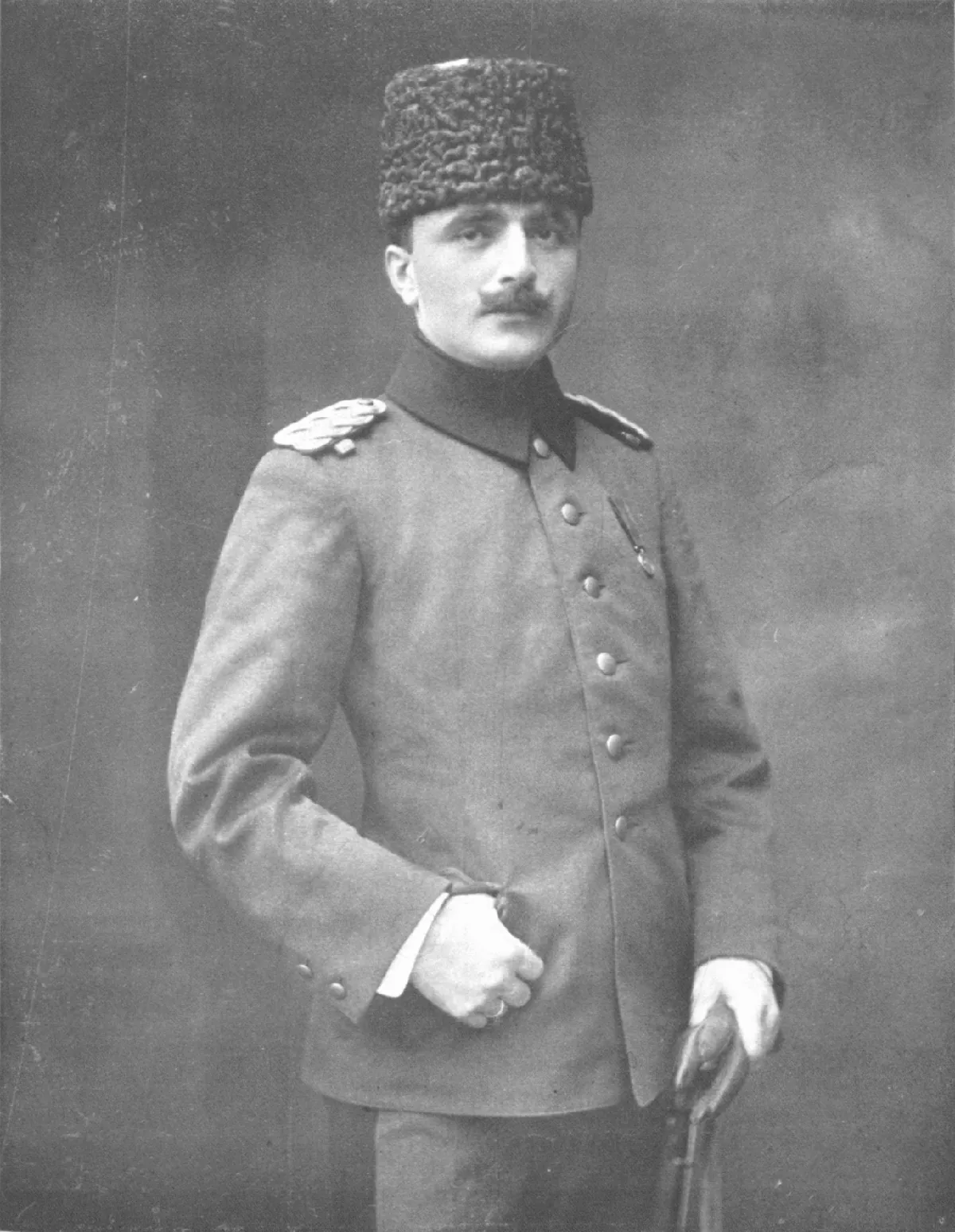
Most of the Ottoman cabinet opposed entering World War I. Enver forced the issue. In October 1914, he arranged for two German warships flying Ottoman flags to sail into the Black Sea and shell Russian ports. Russia declared war on November 2. The empire was at war whether the rest of the government wanted it or not.
Enver personally commanded an offensive against Russia in the Caucasus Mountains in the winter of 1914 to 1915. Roughly 90,000 Ottoman soldiers marched into the mountains in December. By January, about 60,000 were dead, most from cold and disease rather than combat. After the disaster, the wartime government blamed the empire's Armenian population for supposedly aiding Russia. Beginning in April 1915, Ottoman authorities carried out mass deportations and killings of Armenians across Anatolia. An estimated 1 to 1.5 million Armenians died. More than thirty countries have recognized the events as genocide. Turkey disputes the term.
One front went differently. At Gallipoli in 1915, a young colonel named Mustafa Kemal held off a British and ANZAC invasion force that was supposed to knock the Ottomans out of the war. A piece of shrapnel hit him above the heart during the fighting, but a pocket watch in his breast pocket stopped it. Gallipoli was the empire's greatest military victory of the war. It was also where Atatürk, as Mustafa Kemal later became known, built the reputation that would let him create a new country from the wreckage.
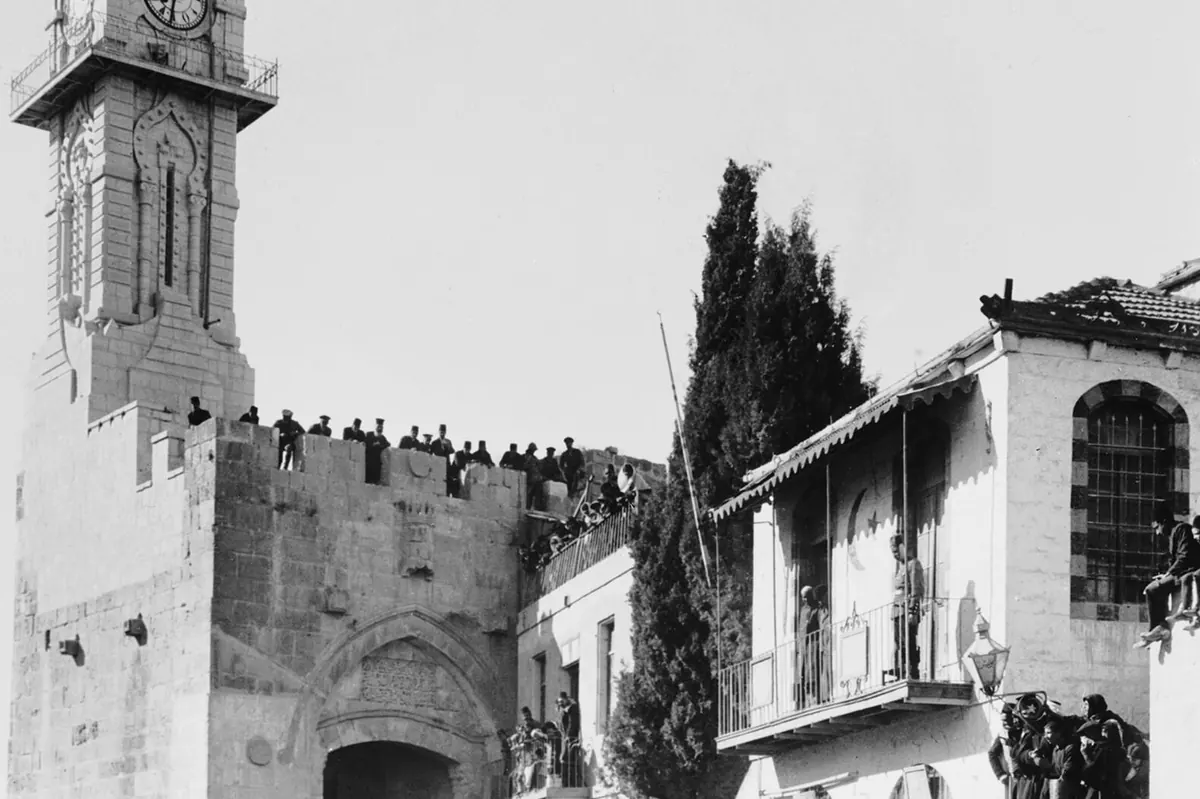
By 1918, British forces, supported by an Arab revolt organized with the help of T.E. Lawrence, had taken Palestine, Syria, and Mesopotamia. On October 30, 1918, the Ottoman government signed the Armistice of Mudros. An empire that had lasted more than six hundred years was finished.
How two diplomats drew the map
The borders that replaced the Ottoman Empire were not drawn by the people who lived there. They were drawn by Britain and France in the Sykes-Picot agreement of May 1916, two years before the war even ended.
Mark Sykes, a British diplomat, and François Georges-Picot, his French counterpart, divided the Ottoman Arab provinces into zones of influence. France got what became Syria and Lebanon. Britain got what became Iraq, Jordan, and Palestine. The boundaries followed neither ethnic lines, nor religious lines, nor the borders of the old Ottoman provinces. They followed the strategic interests of two European empires.
Britain had also made promises it could not keep. In 1915, Sir Henry McMahon, the British High Commissioner in Egypt, wrote to Sharif Hussein of Mecca and promised British support for an independent Arab state after the war in exchange for an Arab revolt against the Ottomans. Hussein launched the revolt in June 1916. The independent Arab state never materialized. Instead, Britain and France carved the region into League of Nations mandates, which in practice meant European colonial rule with international approval.
Iraq was assembled from three Ottoman provinces: Mosul in the Kurdish north, Baghdad in the Sunni center, and Basra in the Shia south. These three groups had never been a single administrative unit under Ottoman rule. Britain made them one country and installed a Hashemite king from the Hejaz, in what is now Saudi Arabia, who had never set foot in Iraq. Syria was handed to France, which immediately carved Lebanon out of it to create a Christian-majority state. Palestine was promised simultaneously to the Arabs through the McMahon letters and to a Jewish homeland through the Balfour Declaration of 1917, a contradiction that Britain never resolved and that produced a conflict still running more than a century later.
Why those borders still define the region
Mustafa Kemal rejected the peace terms the Allies imposed on Turkey in the Treaty of Sèvres in 1920. He fought a three-year war of independence, expelled Greek forces from Anatolia, and in 1923 signed the Treaty of Lausanne, which recognized the borders of a new, secular Turkish republic. Turkey was the only successor state to emerge from the Ottoman collapse on its own terms.
The rest of the region was not so fortunate. The borders that Sykes and Picot drew, and that the mandate system enforced, cut through communities, grouped rival populations together, and created states with no historical precedent. Iraq's sectarian violence after the 2003 American invasion followed the same Sunni-Shia-Kurdish fault lines that the British had put under one flag in 1920. Syria's civil war, which began in 2011 and killed roughly 500,000 people, tore along sectarian and ethnic lines that the French mandate had papered over. The Kurdish question, unresolved since the Treaty of Sèvres promised and then withdrew autonomy, still destabilizes Turkey, Iraq, Syria, and Iran.
The Ottoman Empire was not a golden age. It was authoritarian, unequal, and often brutal. But it was a functioning order that governed the Middle East for four centuries. What replaced it was not self-determination. It was a set of borders drawn by two European powers to serve their own interests, imposed on populations that had no say in the matter, and maintained after independence by strongmen who kept those borders because changing them would mean war. That calculation has held for a century. The borders remain, and so do the conflicts they created.
Test what you learned
5 questions on this article. About two minutes, no signup.