
Is the American empire in decline?
The debt keeps growing, China is catching up, and allies are hedging. But American decline looks nothing like previous empires.
In 1987, a British historian at Yale named Paul Kennedy published The Rise and Fall of the Great Powers. Kennedy had spent years studying how empires from Habsburg Spain to Victorian Britain had collapsed under the weight of their own military commitments, and he argued that the United States was heading down the same path. He called the pattern "imperial overstretch": a great power spends so much on its military that it starves its own economy, and a rising competitor eventually overtakes it. The book sold over a million copies. A year later, the Berlin Wall fell, the Soviet Union began to collapse, and the United States was left as the sole superpower on earth. Kennedy spent the next decade defending a thesis that looked spectacularly wrong.
Nearly forty years later, the argument is back. China's economy is roughly two-thirds the size of America's in nominal terms, and by some purchasing-power measures already larger. The dollar's share of global reserves has dropped from 71 percent to 58 percent since 2000, and central banks are buying gold at the fastest pace since the 1950s. The BRICS bloc keeps adding members. American allies are rearming because they are no longer certain Washington will protect them. The word "decline" is everywhere again because, this time, some of the evidence behind it is real.
What has changed
The broadest measure of American power is the country's share of the global economy. In 1945, the United States produced roughly half of the world's manufactured goods. Every major industrial competitor had been bombed, invaded, or both. That dominance was never going to last, and it didn't. As Europe and Japan rebuilt, and as China and India industrialized, the American share fell. Today the United States accounts for about 26 percent of global GDP, still the largest single share of any country, but a long way from half.
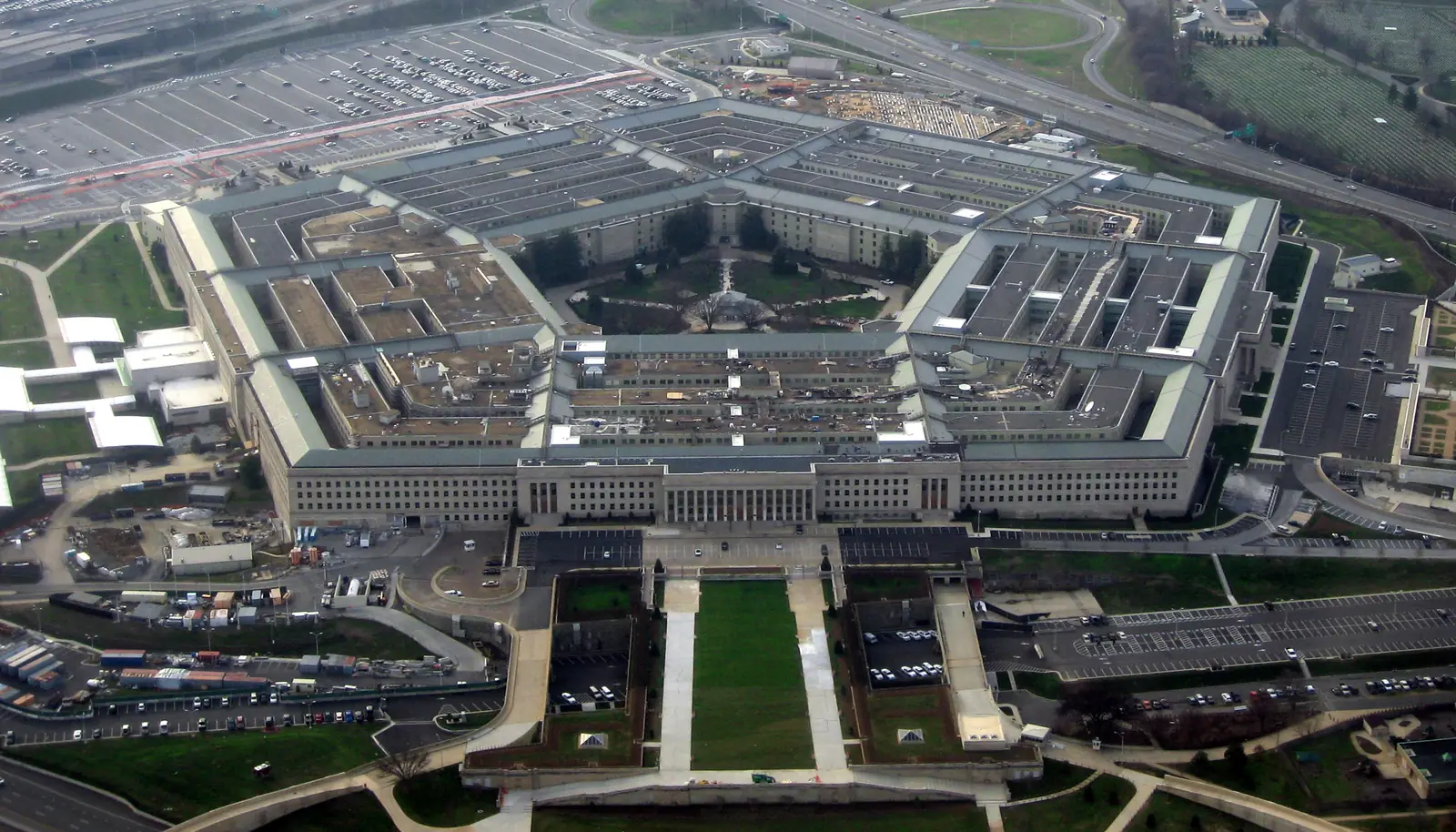
The financial picture is shifting too. The federal debt was about $2.7 trillion in 1989, when Kennedy's book was still on the bestseller lists. Today it is $40 trillion, roughly 130 percent of GDP, and growing by about $7 billion a day. The United States operates roughly 750 military bases in 80 countries, commitments that were designed for a country producing half the world's output, not a quarter of it.
America's alliance network, the backbone of the postwar order, is under visible strain. NATO allies in Europe are rearming not because Washington asked them to, but because they are no longer sure Washington will show up. Germany's defense budget is set to reach $127 billion in 2026, more than double what it was a decade ago. That rearmament is driven as much by doubt about American reliability as by fear of Russia.
What hasn't declined
Against all of that, the inventory of American power in 2026 is unlike anything else on earth.
The United States produced 13.6 million barrels of oil per day in 2025, a world record, about 40 percent more than either Russia or Saudi Arabia. As recently as 2005, the US was the world's largest oil importer. The fracking boom reversed that in about a decade. The country is now a net energy exporter for the first time since the 1950s.
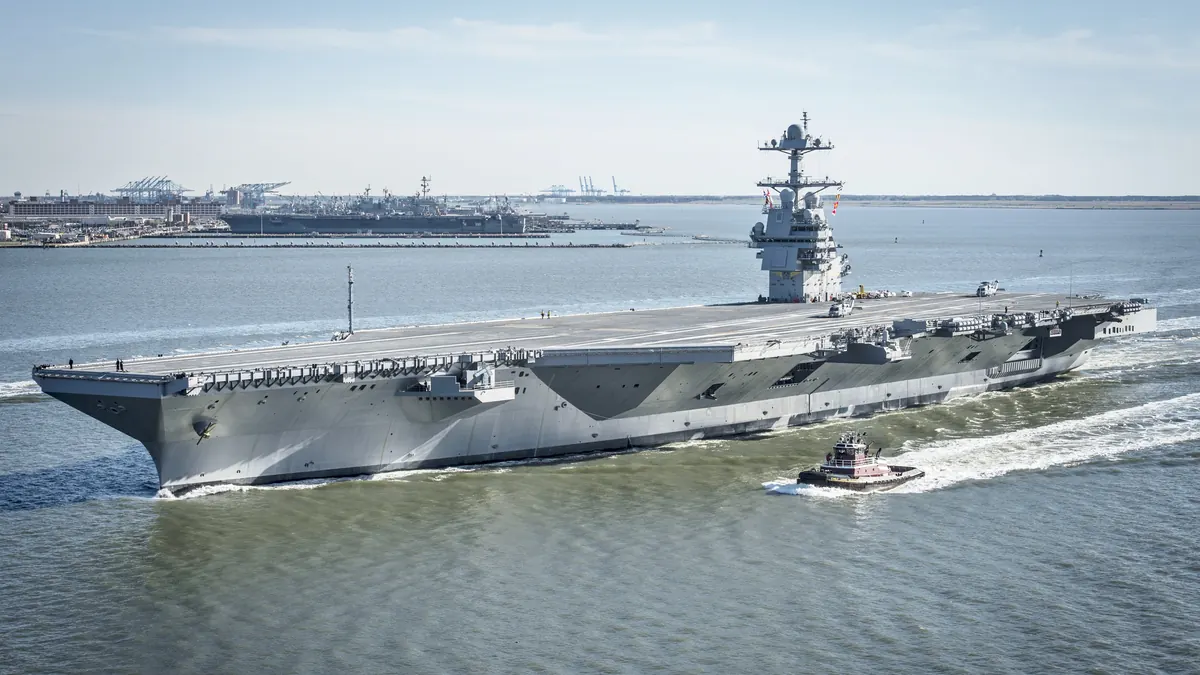
Military spending in 2025 was $954 billion, nearly as much as the next fourteen countries combined. The dollar still sits on one side of 89 percent of all foreign-exchange trades. Most of the world's most valuable companies are American, and most of them are building the artificial-intelligence systems that will shape the next decade of the global economy.
No previous empire in decline held anything close to this lead. When Britain was losing its position in the early twentieth century, both the United States and Germany had already overtaken it in industrial output. When Spain declined, France and the Dutch Republic were already richer per capita. The historical pattern is that the declining power falls behind economically first, and everything else follows. The United States has not fallen behind.
The rival that isn't ready
If the American empire is in decline, someone has to be rising to replace it. The only serious candidate is China.
China's economy grew at roughly 10 percent a year from 1980 to 2010, the fastest sustained expansion any large country has ever achieved. That growth is slowing. Beijing set its 2026 growth target below 5 percent for the first time, and the IMF projects 4.5 percent. The reasons are structural, not cyclical. China's population peaked in 2022 and is now shrinking. Its working-age population has fallen by more than 40 million since 2019. The property sector, which once drove roughly a quarter of GDP, is in a deep crisis with no clear resolution.
None of this means China is weak. It is the world's largest manufacturer, its largest trader, and it leads in electric vehicles, batteries, and solar panels. But China in 2026 looks less like a power about to overtake the United States and more like a country entering its own era of constraints. The United States still gains population through immigration. China does not have that option.
The other candidates are further behind. India has about a seventh of America's economic output. Europe has the weight but not the political unity to act as a single power. Russia's economy is smaller than Italy's. The multipolar world that analysts describe is real, but it is a world of regional powers, not one with a new superpower waiting in the wings.
Where decline actually starts
The pattern Kennedy identified was real, even if his timing was wrong. Great powers do not usually get conquered from outside. They lose the ability to manage themselves from within.
Spain in the seventeenth century still had the largest empire on earth, but its government was bankrupt and its political class was more interested in court rivalries than economic reform. Britain after 1945 still governed a quarter of the globe, but it could no longer afford to, and the domestic will to maintain the empire had evaporated. In both cases the military hardware was still impressive long after the capacity to use it effectively had eroded.
The United States in 2026 has a version of this problem. It spends more on its military than any other country but struggled for years to sustain political support for Ukraine. It spends nearly twice as much per person on healthcare as any comparable country but ranks below all of them in life expectancy. It has the best universities on the planet but a public education system that varies enormously by zip code. The American Society of Civil Engineers gives the country's infrastructure a C and estimates it needs $3.7 trillion more than currently planned just to bring roads, bridges, and water systems into good condition, a gap that has grown by over a trillion dollars in four years. Congress has not passed a budget on time in over two decades. Neither party has a serious plan to slow the debt.
This is not the decline of a country being overtaken by a rival. It is something else: a country that can no longer translate its strengths into outcomes at home. Kennedy's term, imperial overstretch, looked premature in 1987. It is harder to dismiss in 2026, not because the United States faces a new Soviet Union, but because the distance between what it can do abroad and what it manages domestically has never been wider.
The American empire is not collapsing. By most measures, the United States is still the most powerful country on earth, and no replacement is close. But empires do not end the way most people imagine, with a stronger rival kicking in the door. They end when the people inside stop maintaining the foundations. Whether the United States is in that kind of decline is not a question about China or the dollar or BRICS. It is a question about whether a government $40 trillion in debt, in a country that cannot agree on a budget, can hold together the most expensive set of global commitments any nation has ever taken on.
Test what you learned
5 questions on this article. About two minutes, no signup.