
Why does the United States have 750 military bases around the world?
The US operates roughly 750 military sites in 80 countries, more than every other nation combined. Here is where they are, what they cost, and why they keep growing.
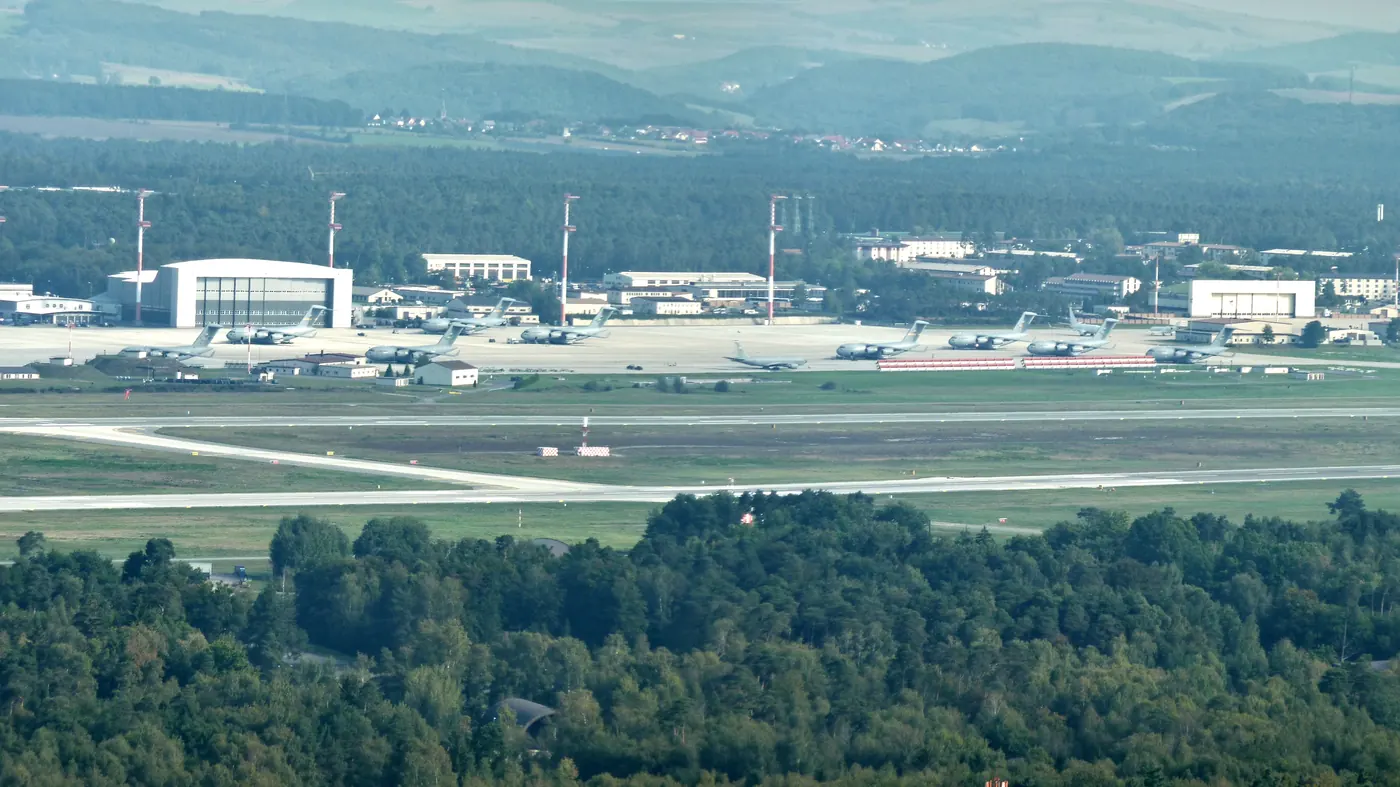
The United States has roughly 750 military sites in about 80 countries. Japan alone hosts 120 bases and about 54,000 American troops. Germany has 119 bases and 34,000 troops. South Korea has 73 bases and 26,000 troops. There are facilities in Qatar, Djibouti, Bahrain, Italy, the United Kingdom, Turkey, Australia, and dozens of other countries most Americans would not guess. Britain, the next-largest overseas operator, has a handful. France has a shrinking network in Africa. China has one overseas base, in Djibouti. Russia has perhaps a dozen. No country in history has put this much military force this far from home, and the network keeps running because every few years something happens that makes closing it feel too risky.
How the network got built
The global basing network is a product of the Second World War, and it never went away. When the war ended in 1945, the United States had troops stationed on every continent. In Germany and Japan, they stayed as occupiers, then as protectors. The Truman Doctrine in 1947 and the creation of NATO in 1949 turned what could have been a temporary occupation into a permanent presence. Containment, the strategy of ringing the Soviet Union with allied states and military bases, required exactly the kind of network the war had already built.
At the peak of the Cold War, the United States operated over 1,600 overseas military installations. That number roughly halved after the Soviet Union collapsed in 1991, but the footprint did not shrink the way many expected. Instead of closing bases, the Pentagon reorganized them. Large garrisons in Germany shrank, but new facilities opened across the Middle East after the 1991 Gulf War, across Central Asia after the 2001 invasion of Afghanistan, and across Eastern Europe after Russia's 2014 annexation of Crimea. The total number of sites fell. The number of countries hosting them doubled, from about 40 to 80.
The logic behind the network is what the Pentagon calls forward deployment. Instead of waiting for a war to start and then shipping troops across an ocean, the United States keeps forces close to where it thinks the next crisis will happen. A fighter wing in Japan can be over the Taiwan Strait in minutes. A carrier group in Bahrain is already inside the Strait of Hormuz. Troops in Germany can reach Poland or the Baltic states in hours by road. Forward deployment is expensive, but it is fast, and in a crisis, fast matters more than cheap.
What a base actually looks like
The biggest American overseas installation is Camp Humphreys in South Korea, about 40 miles south of Seoul. It covers 3,500 acres, cost $11 billion to build, and houses roughly 45,000 people: soldiers, civilian employees, contractors, and families. It has its own schools, hospital, shopping mall, movie theater, bowling alley, and golf course. From the inside, it looks less like a military installation and more like a mid-sized American suburb that happens to be 60 miles from the demilitarized zone with North Korea.
Most overseas bases are nothing like Camp Humphreys. The Pentagon sorts its facilities into three tiers. The largest are "main operating bases" with permanent infrastructure, runways, hospitals, and housing for families. The middle tier, "forward operating sites," are smaller facilities kept ready for rapid use but not permanently staffed at full strength. The smallest are "cooperative security locations," often just a warehouse, a fuel depot, or an agreement to use a runway on short notice. Many of the 750 sites are in this last category: a few acres of concrete and a handshake with the host government.
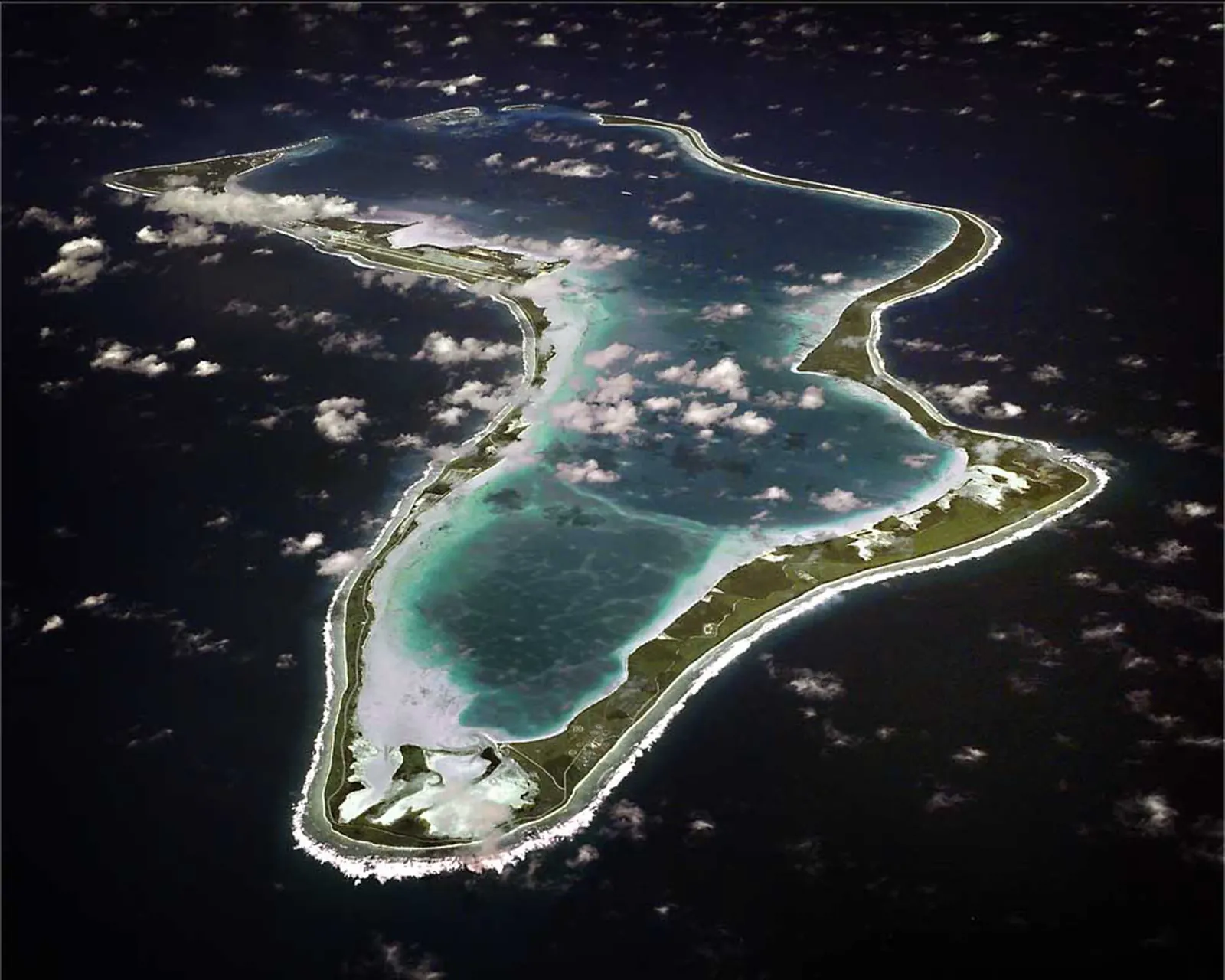
Then there are the remote outposts. Diego Garcia, a coral atoll in the middle of the Indian Ocean, has no permanent civilian population at all. Britain separated it from Mauritius before independence in 1968 and leased it to the United States. Between 1968 and 1973, the British government forcibly removed the roughly 2,000 Chagossians who lived there, shipping them to Mauritius and the Seychelles so the atoll could become a military base. The displaced families have been fighting to return ever since. In 2024, Britain agreed to transfer sovereignty of the Chagos Islands to Mauritius, but the deal includes a 99-year lease that keeps Diego Garcia as a US and British military facility. The base itself has a runway long enough for B-52 bombers and has been a staging point for every major American military operation in the Middle East since the 1991 Gulf War.
What it all costs
The price of the network depends on what you count. The Pentagon's own figure for overseas basing is about $22 billion a year, but that number covers only direct operations. Add personnel costs, healthcare, construction, and related expenses, and outside estimates range from $55 billion (from the Quincy Institute, a Washington think tank) to over $80 billion. By comparison, Russia's entire annual military budget before its invasion of Ukraine was roughly $65 billion.
Host countries offset some of the cost. Japan pays about $1.9 billion a year to support American bases on its territory, a contribution known as "host nation support." South Korea pays roughly $1.1 billion. Germany covers less, and the gap has been a source of friction with Washington for years. In the Gulf states, the host governments often built the facilities themselves: Qatar constructed Al Udeid Air Base, the largest American installation in the Middle East, and gave the United States access to it in 2001.
Why it is hard to close them
Every few years, someone in Washington argues that the basing network is too expensive, too sprawling, and built for a world that no longer exists. The argument is not new. After the Cold War, the Pentagon ran several rounds of Base Realignment and Closure, known as BRAC, to shrink domestic bases. The last round was in 2005. Congress has not authorized another since, partly because closing a base means cutting jobs in someone's district.
Overseas bases are even harder to close for a different reason: every time the United States considers pulling back, something happens that makes the bases look necessary again. After the Cold War, the plan was to draw down in Europe. Then the wars in the Balkans, Iraq, and Afghanistan made European bases essential as transit hubs. When the Obama administration talked about a "pivot to Asia," it reinforced the case for bases in Japan and Australia rather than closing ones in Germany. Russia's invasion of Ukraine in 2022 reversed a generation of drawdowns in Eastern Europe.
The bases also create their own political gravity. Host countries build economies around them. In Okinawa, where American bases occupy about 15 percent of the island, the bases are a source of constant protest but also a source of employment and rent payments. The relationship is uncomfortable on both sides. Okinawans have protested the American military presence for decades, pointing to noise, pollution, land seizures, and crimes committed by US personnel. Japan's government in Tokyo supports the alliance but has repeatedly failed to resolve the tension. The bases stay because both governments have decided the strategic value outweighs the political cost, even when the people living next to them disagree.
What the network is for now
The original purpose of the basing network, containing the Soviet Union, ended in 1991. The current purpose is harder to state in a single sentence, because it is doing several things at once. The bases in Japan and South Korea are positioned against China and North Korea. The bases in the Gulf are about Iran and oil. The bases in Europe, reinforced since 2022, are about Russia. Djibouti, the only country in the world that hosts both an American and a Chinese military base, is about counterterrorism and access to the Red Sea, where Houthi attacks on shipping have rerouted global trade.
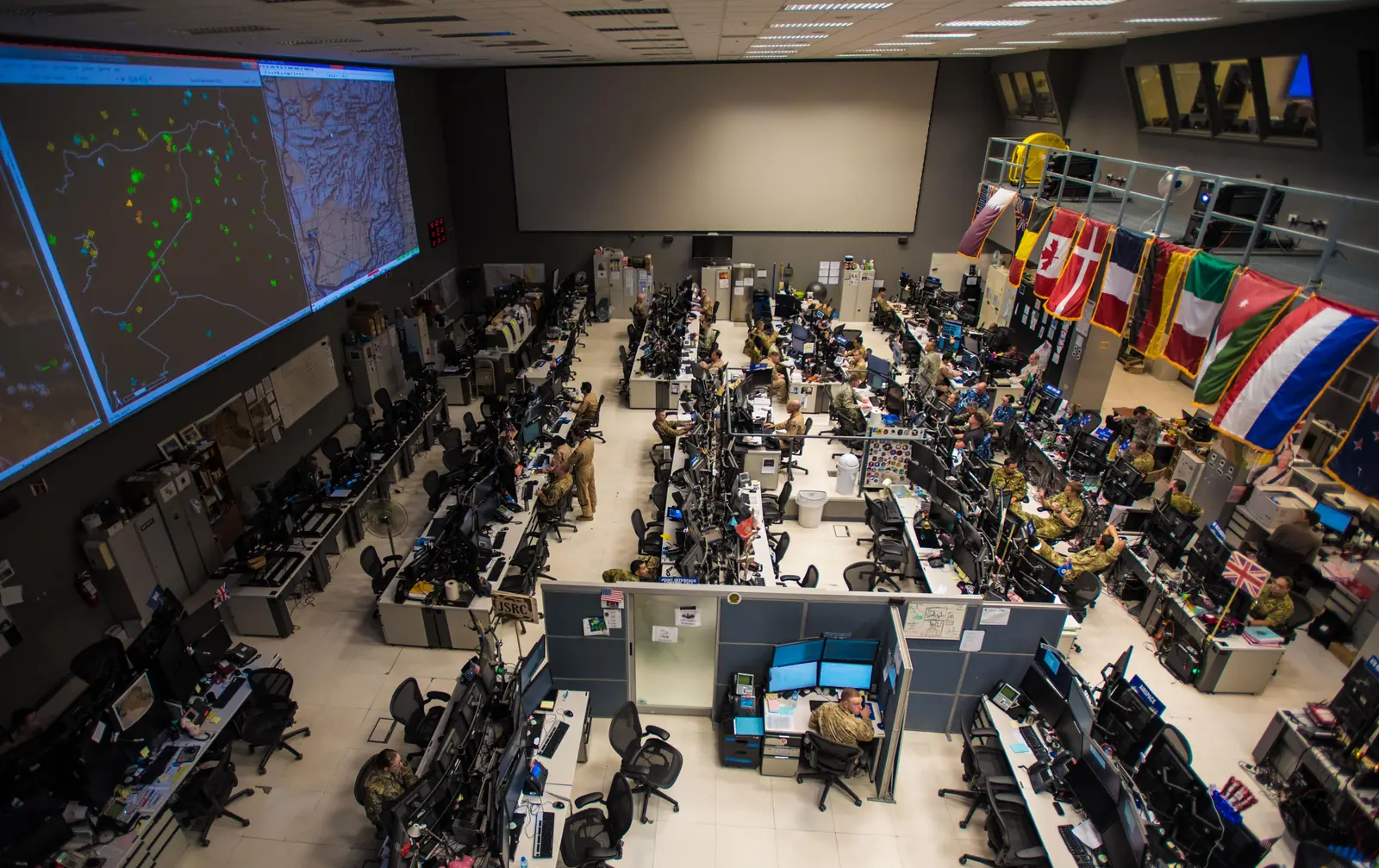
The deeper function is less about any single threat and more about the system itself. American alliances work because the bases make the security guarantee physical. A promise to defend South Korea is more credible when 26,000 American soldiers are already there and would be in the fight from the first hour. Pull the troops out, and the promise becomes a piece of paper.
That logic has held for eighty years, through presidents who wanted to spend more and presidents who wanted to spend less. Whether it holds for the next twenty depends on a question the United States has never had to answer before: whether it can afford to be everywhere at once when the threats it faces are no longer in one place.
Test what you learned
5 questions on this article. About two minutes, no signup.