
The Sykes-Picot agreement: the secret deal that still defines the Middle East
In 1916, a British and a French diplomat secretly divided the Ottoman Empire between them. The borders they drew became Syria, Iraq, Jordan, and Lebanon. More than a century later, those borders have not moved.
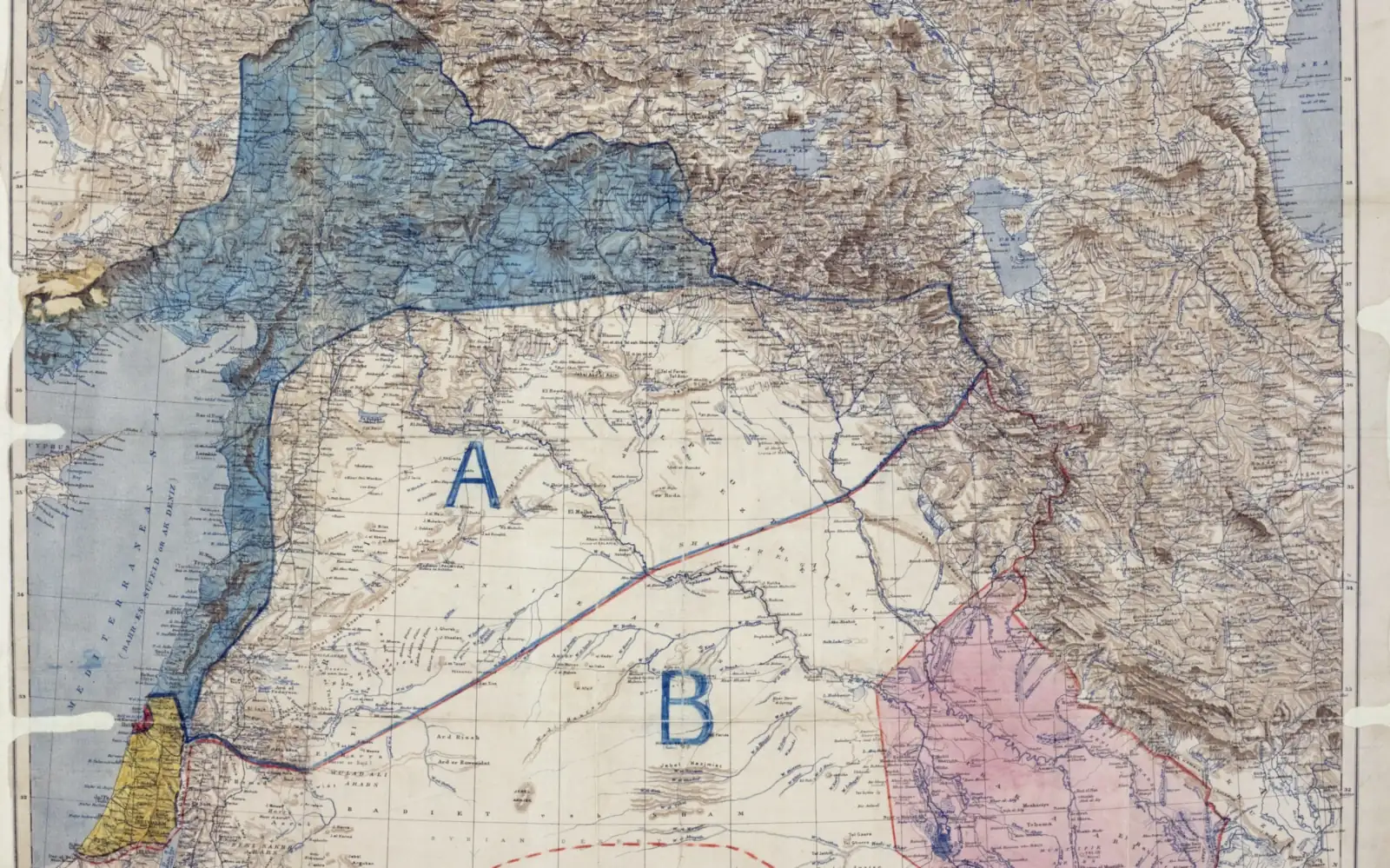
In May 1916, while the Ottoman Empire was fighting for its life in World War I, a British diplomat and a French diplomat met in London and divided the empire's Arab provinces between their two countries. The British diplomat was Mark Sykes. The French diplomat was François Georges-Picot. Together they drew lines on a map with a pencil and a ruler. The lines did not follow rivers, mountains, or the borders of the old Ottoman provinces. They followed what Britain and France wanted.
Those lines became the borders of Syria, Iraq, Jordan, and Lebanon. The agreement was supposed to stay secret. Within two years, the new Bolshevik government in Russia found it in the Tsar's archives and published it, proving to the Arab world that Britain and France had been lying about supporting Arab independence. More than a century later, the borders Sykes and Picot drew are still the ones on the map.
Who Sykes and Picot were
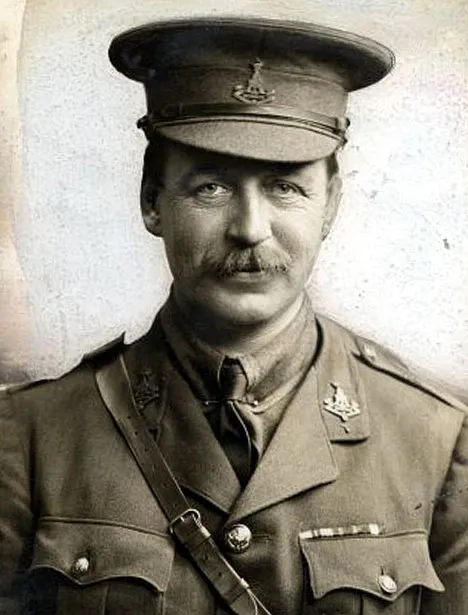
Mark Sykes was 37 years old when the agreement was signed. He was a Conservative member of parliament and a traveler who had toured the Ottoman Empire several times, riding through Syria and Mesopotamia on horseback and writing books about what he saw. He spoke some Arabic and Turkish, and he considered himself an expert on the region. He had a habit of drawing maps that rearranged other people's countries. Sykes did not live to see his borders become real. He died of the Spanish flu in February 1919, at the age of 39, while attending the Paris Peace Conference that was supposed to finalize the postwar order. His coffin was exhumed in 2008 by researchers studying the 1918 pandemic.
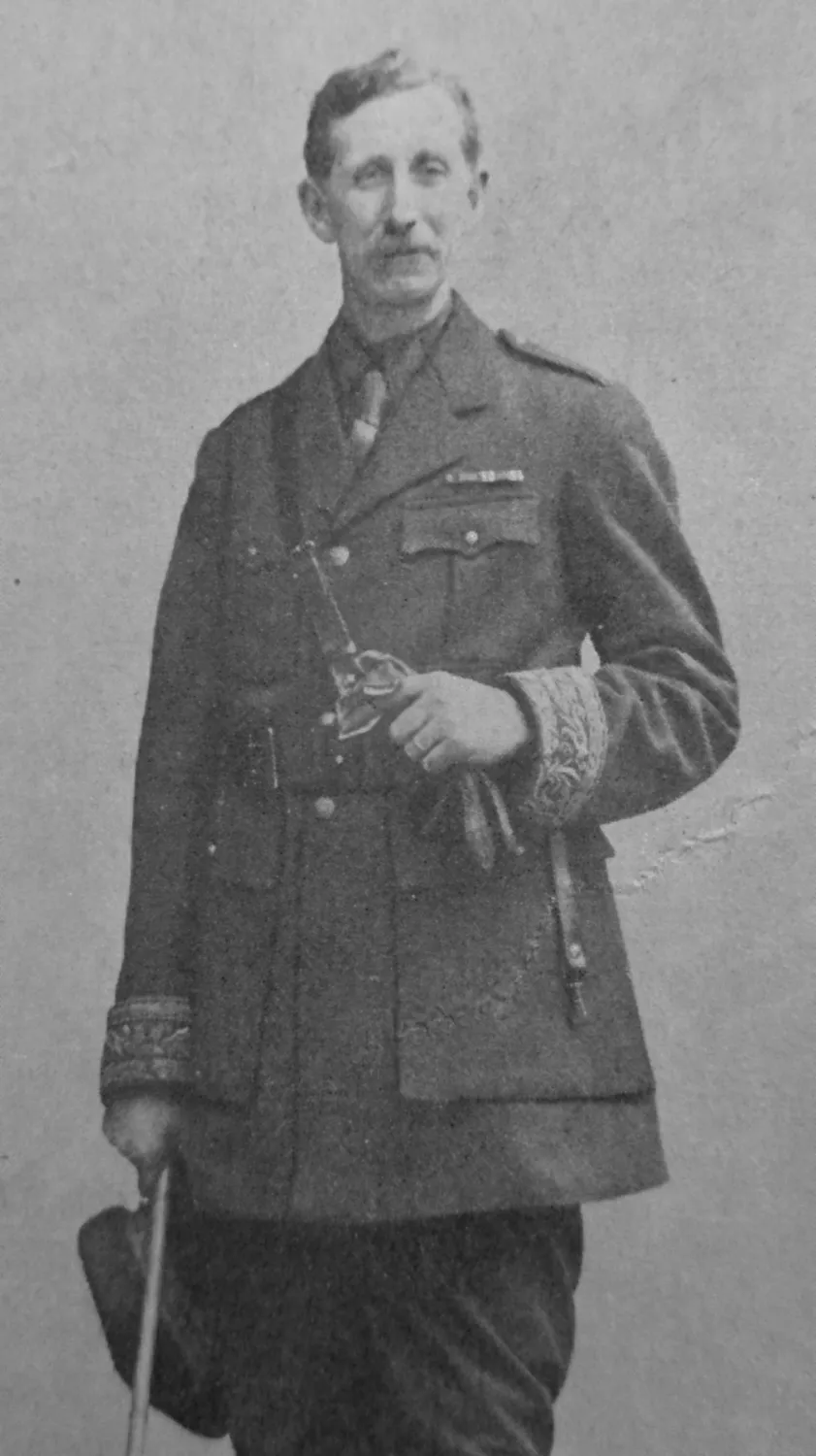
François Georges-Picot came from a powerful French colonial family. His father had co-founded the Comité de l'Afrique française, a lobbying group that pushed for French expansion in Africa. Georges-Picot was a career diplomat with one fixed objective: France must control Syria. The French claim went back to the Crusades, and French diplomats in 1916 still talked about Syria as though it naturally belonged to France. Georges-Picot's instructions from Paris were straightforward: whatever else happened, Syria had to be French.
What the agreement actually said
Sykes and Picot divided the Ottoman Arab provinces into five zones. France got direct control over the coast of what is now Lebanon and a strip of southeastern Turkey. Britain got direct control over southern Mesopotamia and the ports of Haifa and Acre. Between these zones lay two larger areas of indirect influence: one French, covering the interior of Syria and the Mosul region, and one British, covering Transjordan and the rest of Iraq. Palestine would be placed under international administration.
The Allies also promised Russia control over Istanbul and the Dardanelles, but that promise disappeared when the Bolsheviks seized power in 1917 and pulled Russia out of the war.
The agreement said nothing about Arab self-governance, Kurdish autonomy, or the rights of any community that lived there. It was a deal between two European empires about territory, and the people on that territory were not asked.
Three promises that could not all be true
Britain had made three commitments about the same land, and they contradicted each other.
The first was the McMahon-Hussein correspondence of 1915 and 1916. Sir Henry McMahon, the British High Commissioner in Egypt, exchanged a series of letters with Sharif Hussein of Mecca, the guardian of Islam's holiest city. McMahon promised British support for an independent Arab kingdom after the war in exchange for an Arab revolt against the Ottoman Empire. Sharif Hussein launched the revolt in June 1916. The Sykes-Picot agreement had been finalized the month before. Sharif Hussein did not know it existed.
The second commitment was Sykes-Picot itself, which divided the territory McMahon had promised to the Arabs between Britain and France.
The third was the Balfour Declaration of November 1917, a letter from British Foreign Secretary Arthur Balfour to Lord Rothschild stating that Britain viewed "with favour the establishment in Palestine of a national home for the Jewish people." The declaration did not promise a state, but it could not be squared with McMahon's promise of an Arab kingdom or with Sykes-Picot's plan for Palestine.
T. E. Lawrence, the British officer who fought alongside the Arab revolt in the desert, knew about the Sykes-Picot agreement while he was helping the Arabs fight. He continued to lead Arab forces into battle knowing that the independence they were fighting for had already been given away. Lawrence later called himself a fraud. After the war, he turned down a knighthood from King George V.
How the secret came out
In November 1917, the Bolsheviks overthrew the Russian government and found the Sykes-Picot agreement in the Tsar's diplomatic archives. Leon Trotsky published the full text in the newspaper Izvestia on November 23, 1917. It was reprinted around the world within days.
Sharif Hussein demanded an explanation from Britain. The British told him the agreement was only a preliminary understanding, not a binding treaty, and that Arab interests would be protected. Sharif Hussein accepted the explanation, or chose to act as though he did, because by then his revolt depended entirely on British money and weapons. He had no other option.
The publication embarrassed Britain and France but changed nothing. At the Paris Peace Conference in 1919, the victorious powers divided the Ottoman territories much as Sykes and Picot had proposed three years earlier. President Woodrow Wilson sent the King-Crane Commission to survey what the region's people wanted. The commission found that the populations of Syria and Palestine overwhelmingly opposed European control. Britain and France ignored the report.
How the lines became countries
At the San Remo conference in April 1920, Britain and France turned the Sykes-Picot zones into League of Nations mandates. France received the mandate for Syria and immediately carved Lebanon out of it to create a separate state with a Christian majority. Britain received mandates for Iraq and Palestine.
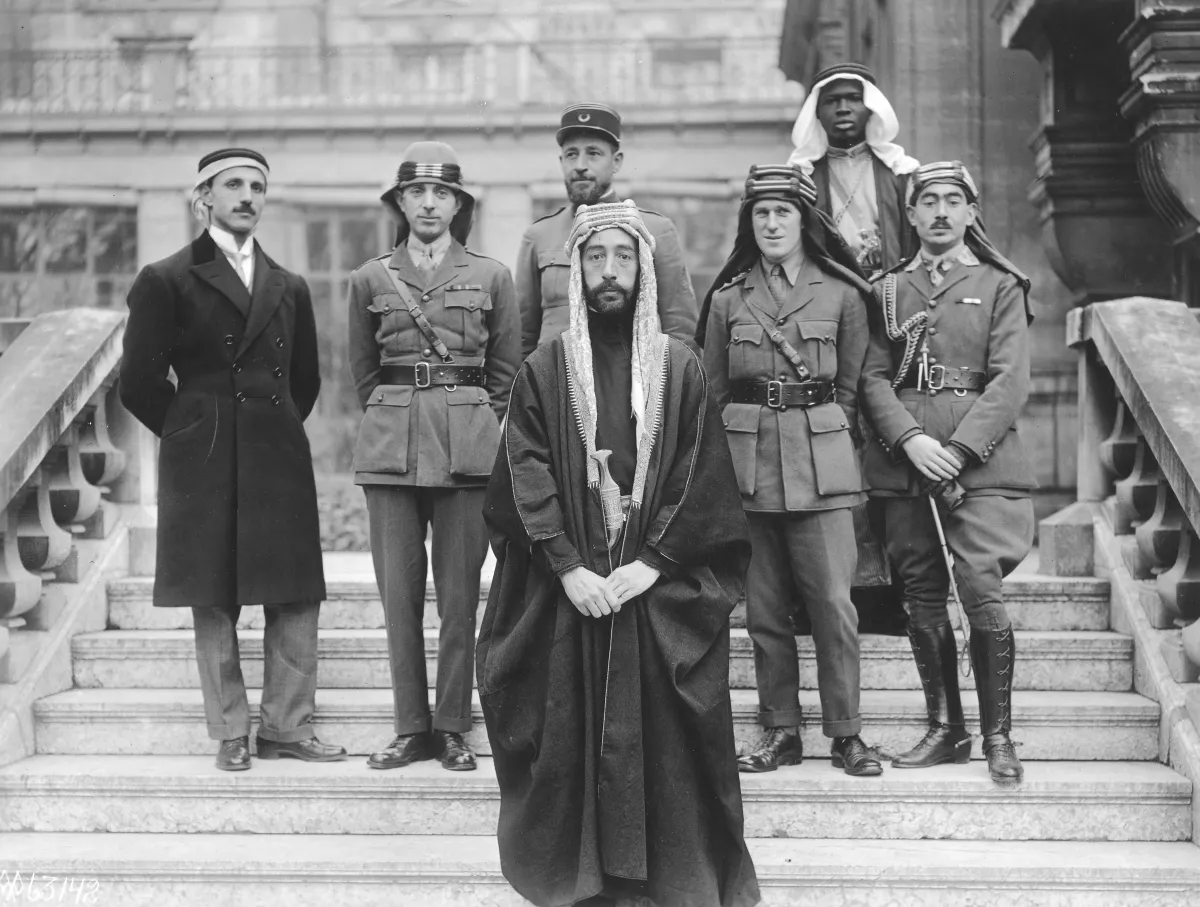
Iraq was assembled from three former Ottoman provinces: Mosul in the Kurdish north, Baghdad in the Sunni Arab center, and Basra in the Shia Arab south. These had never been governed as a single unit. Britain installed Faisal, one of Sharif Hussein's sons, as king. Faisal had been briefly declared king of Syria, but the French expelled him after four months. Britain offered him Iraq instead. He arrived in Baghdad, a city he had never visited, and was confirmed by a referendum that officials recorded at 96 percent approval.
Transjordan was created almost by accident. In 1921, Winston Churchill, then the Colonial Secretary, met Faisal's brother Abdullah in Jerusalem and gave him a territory east of the Jordan River. It was what was left over after Palestine and Iraq had been defined.
Palestine was the most dangerous of these new territories. Britain now had to administer a land it had promised to both the Arabs and the Zionist movement. Jewish immigration increased through the 1920s and 1930s. Arab opposition grew. Britain never resolved the contradiction. In 1947, Britain gave up and handed the problem to the United Nations. The state of Israel was declared in May 1948, and the conflict that followed is still running.
Why those borders survived a century
When the Arab states gained independence in the 1940s and 1950s, they kept the borders that Britain and France had drawn. The new governments had inherited roads, railways, and armies built around those borders, and changing them would have meant war. Pan-Arab nationalists, particularly Egypt's Gamal Abdel Nasser, talked about erasing colonial boundaries. Egypt and Syria merged in 1958. The union collapsed after three years.
The borders survived because strongmen enforced them. In Iraq, the Sunni-dominated Baath Party held the Kurdish north and the Shia south together by force. In Syria, the Assad family governed a multi-ethnic state by relying on the Alawite minority and a large security apparatus. When those strongmen fell or were removed, the borders came under pressure.
In 2014, the Islamic State captured territory across Iraq and Syria and declared that the Sykes-Picot border no longer existed. ISIS propaganda named the 1916 agreement directly, calling it a symbol of Western interference. The group controlled an area roughly the size of the United Kingdom for several years. By 2019, ISIS had lost all of its territory, and the old borders were back.
The borders Sykes and Picot drew in 1916 have now outlasted the Ottoman Empire, two world wars, decades of dictatorship, a civil war in Syria that killed roughly 500,000 people, and the rise and fall of a terrorist state. They were drawn by two men who never asked anyone living in the region what they wanted. More than a hundred years later, those borders have not moved, and the 40 million Kurds who were left without a state, the Iraqis who were grouped into a country that never cohered, and the Palestinians who were promised a land that was given to someone else are still living with the consequences.
Test what you learned
5 questions on this article. About two minutes, no signup.