
Why everyone keeps comparing America to Rome
The parallel is everywhere. Some of it holds up. Most does not, and the part that does is not the one people expect.
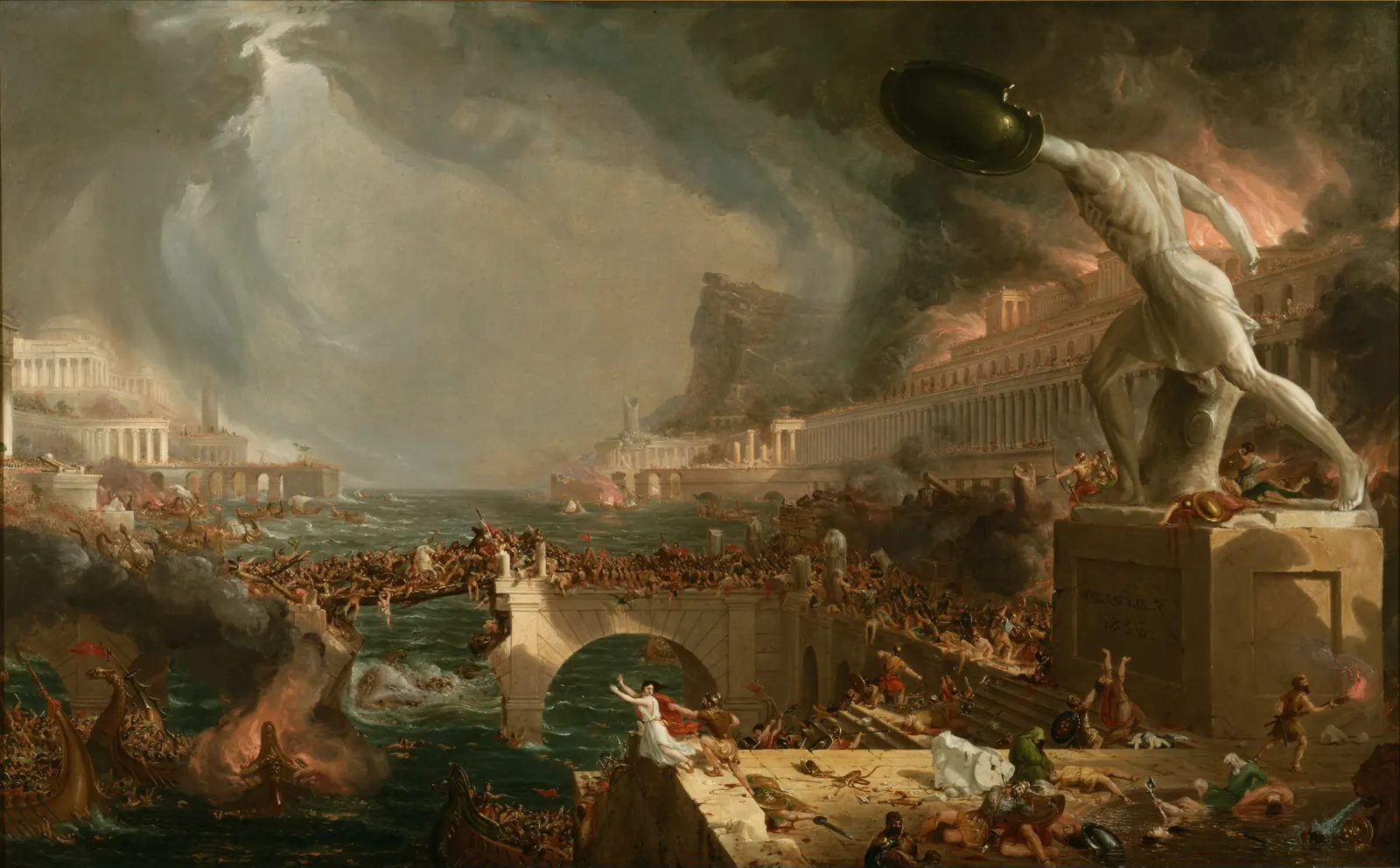
The comparison comes up every few months. A bridge collapses, or Congress misses another budget deadline, or the national debt crosses a new trillion-dollar mark, and someone on television says it: this is how Rome fell. The parallel is popular because Rome is the only empire most Americans can picture, and its fall is the one historical disaster everyone has heard of. But most versions of the comparison are vague. They gesture at decadence and decline without being specific about what actually happened to Rome, which makes it impossible to judge whether the parallel means anything.
Here is what actually happened, and which parts of it look like the United States.
What killed the Roman Empire
Rome did not fall in a day, and it did not fall from a single cause. The standard date is 476 CE, when a Germanic officer named Odoacer deposed the last western emperor, a teenager called Romulus Augustulus. But by then the western empire had been a shell for decades. The eastern half survived for another thousand years. The real decline ran roughly three centuries, from the death of Marcus Aurelius in 180 CE to that last deposition.
At its peak in the 160s, the empire held roughly 70 million people, governed territory from Britain to the Euphrates, and ran on a silver currency, the denarius, that had held its value for generations. The Pax Romana, the long imperial peace, had lasted since Augustus. Within a century of Marcus Aurelius's death, the system was breaking down in three directions at once.
The money went first. Under Augustus the denarius was about 98 percent silver. Emperors discovered that they could stretch the treasury by mixing in cheaper metals, and each generation cut a little more. By the time of Caracalla around 215 CE the coin was roughly 50 percent silver. By the late third century it contained about 2 percent. Prices rose by a factor of roughly fifty in a few decades. Emperor Diocletian tried to fix the inflation with an edict in 301 CE that posted maximum prices for over a thousand goods across every marketplace in the empire. It failed. Merchants hid their stock or stopped selling. When a government cannot hold the value of its own money, it cannot collect meaningful taxes, and when it cannot collect taxes, it cannot pay its army.
The borders buckled next. Rome's frontier ran roughly 5,000 kilometers, from Hadrian's Wall in northern Britain along the Rhine, down the Danube, and east to the Euphrates. Defending that line consumed an estimated 60 to 80 percent of the imperial budget. The legions that held it were professional soldiers on long-term contracts, and as the currency collapsed, their pay bought less. The empire began hiring the same Germanic and Gothic peoples it was supposed to keep out: a reasonable short-term solution that became a permanent dependency. By the fifth century the Roman army in the west was Roman in name only.
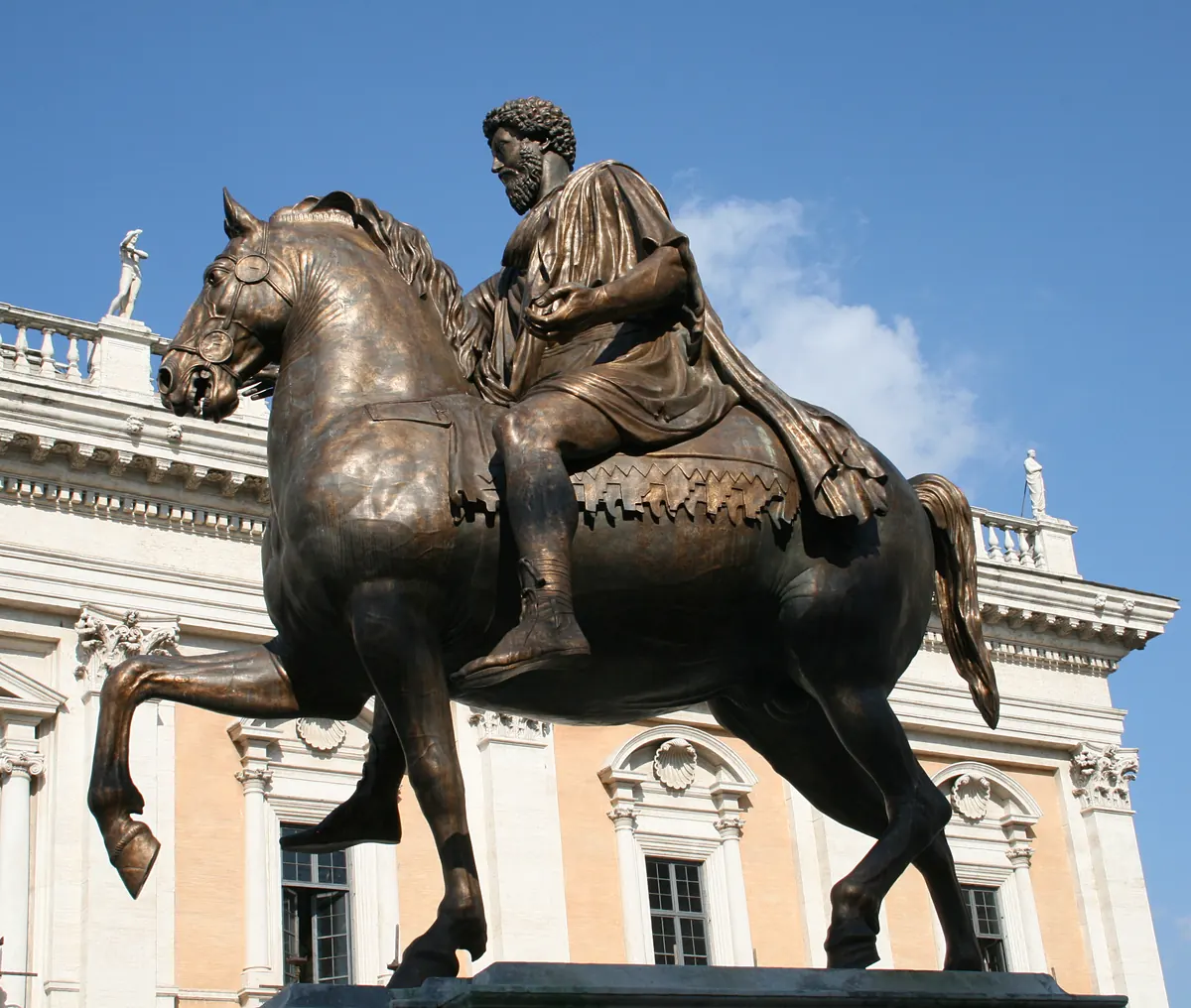
The politics broke last, and worst. In the half-century between 235 and 284 CE, a stretch historians call the Crisis of the Third Century, the empire cycled through more than twenty emperors. Most were murdered by their own soldiers or rivals. The Roman Senate had become a rubber stamp centuries earlier, and the only real question was which army would march on Rome next. Civil wars between rival generals were so common that they became the empire's primary military activity, fought while the actual frontier was short of troops.
The parallels that hold up
Political dysfunction. This is the strongest parallel, and the one people spend the least time on. Rome's problem was not that it lacked talented leaders. Diocletian and Constantine both pulled the empire back from the brink, reorganizing the army, rebuilding the currency, and splitting the administration. The problem was that the system could not reliably produce or sustain good governance. It lurched between crises and recoveries, and over time the crises deepened while the recoveries grew shorter. The United States is not at that stage, but the pattern is recognizable. Congress has not passed a budget on time in over two decades. Federal debt stands at roughly $40 trillion, about 124 percent of GDP, with no serious plan from either party to slow it. The American Society of Civil Engineers gives the country's infrastructure a C grade. The world's richest country increasingly struggles to translate its wealth into basic public outcomes: its life expectancy trails every comparable nation, and the interstate highway system built in the 1950s is aging faster than it is being repaired.
Military overextension. The United States maintains roughly 750 military bases in 80 countries, commitments designed for an economy that produced half the world's output, not the quarter it produces today. Rome faced the same structural problem: a frontier network that made sense when the treasury was full became a trap as revenues thinned. In 2025, US defense spending hit $954 billion, nearly as much as the next fourteen countries combined. The scale is extraordinary by any modern standard, but so was Rome's military around 250 CE, a generation before it became unaffordable.
Currency erosion. The mechanism is different. Rome diluted its coins with base metal. The United States borrows and lets inflation do the work: the dollar has lost roughly 87 percent of its purchasing power since 1970, and the debt that was $1 trillion in 1982 has grown forty-fold. But the result is structurally similar: a government spending more than it collects and closing the gap by making its obligations worth less over time.
The parallels that don't hold up
Rome had no rival superpower. This is the most important difference, and it is the one that makes the comparison misleading if taken too literally. Rome did not fall because a stronger power conquered it. It weakened from within while frontier peoples, none of them a peer competitor, pressed against the borders. The United States faces China, an adversary with an economy two-thirds the size of its own and a military modernizing on a timeline measured in years, not decades. Rome had the luxury of a slow decline because no one was positioned to replace it. The United States does not have that luxury.
Rome had no democracy. When governance failed in Rome, the only corrective was civil war or assassination. There was no mechanism for peaceful succession. The United States has elections, courts, a free press, and a constitution that has transferred power without violence for over two centuries. These institutions are under strain, but they exist. The ability to change leadership without killing anyone is not a small advantage over Rome.
Rome was not energy independent. Late Rome depended on grain from Egypt and North Africa to feed its cities. When the Vandals took Carthage in 439 CE, they cut the western empire's food supply, and the end was less than forty years away. The United States produced 13.6 million barrels of oil per day in 2025, a world record, and is a net energy exporter for the first time since the 1950s. America feeds itself and fuels itself. Late Rome could do neither.
The immigration parallel runs backwards. Critics who compare modern immigration to Rome's "barbarian invasions" have the history reversed. Rome did not fall because too many outsiders came in. It fell partly because it could no longer attract or integrate them on useful terms. The Germanic peoples who ended the western empire were not invaders in the usual sense: many had served in the Roman army for decades and wanted to be part of Rome, not to destroy it. The system's inability to absorb them was a symptom of decline, not its cause. The United States, whatever its immigration debates, still attracts more skilled immigrants than any other country on earth.
What the comparison actually teaches
The Rome parallel is popular because it flatters every side of the American political debate. Hawks use it to argue for military strength. Populists use it to argue against elite corruption. Fiscal conservatives point to the debt. Each version picks the history that supports the conclusion it already holds.
The actual lesson is narrower and harder to use as a talking point. What killed the western empire was not any single factor: not the Germanic peoples on the border, not the spending, not the debasement. It was the failure of a political system to reform itself when the problems were visible to everyone inside it. Diocletian could see the crisis. Constantine could see it. Julian could see it. The system produced leaders who understood what was wrong and made it nearly impossible for them to fix it, because every serious reform threatened someone powerful enough to start a civil war over it.
That is the one parallel worth taking seriously: not that the United States might be conquered, but that it might become unable to fix what it can already see is broken.
Test what you learned
5 questions on this article. About two minutes, no signup.