
Russo-Japanese War
The Russo-Japanese War was a 1904-1905 conflict in which Japan defeated Russia, the first modern victory of an Asian country over a European power.
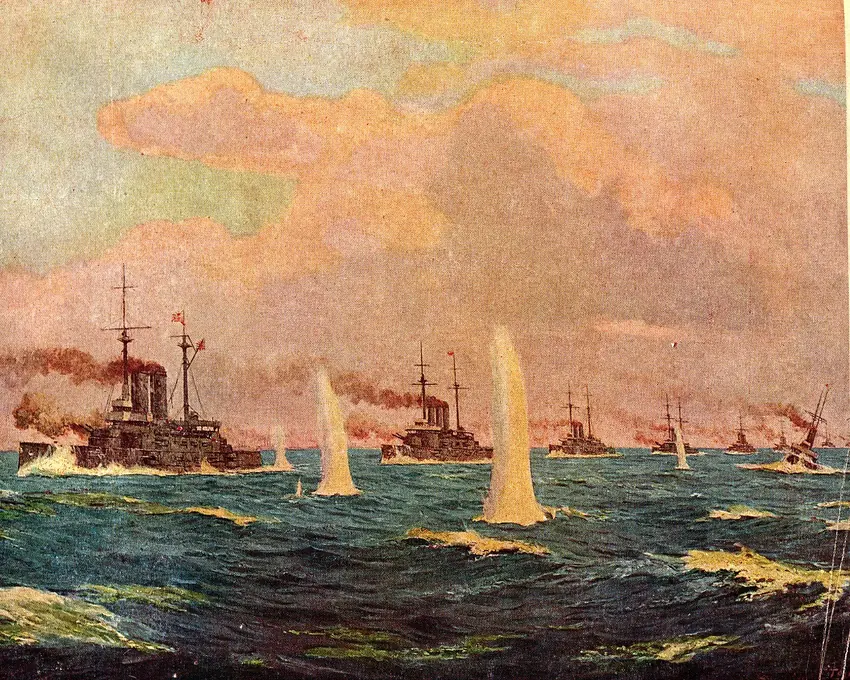
The Russo-Japanese War was fought between Japan and Russia from February 1904 to September 1905, mostly in Manchuria and the waters around Korea. Japan started the war to stop Russia from expanding into territory Japan considered essential to its own security. Over eighteen months, Japan took Port Arthur, fought the biggest land battle the world had seen, and sank most of the Russian fleet. No Asian country had ever beaten a European great power in a modern war. Japan did it decisively. The result inspired nationalists from Delhi to Istanbul and set off a revolution inside Russia itself.
How the Russo-Japanese War started
Russia had been pushing eastward for decades. The Trans-Siberian Railway was extending Russian power toward the Pacific, and in 1898 Russia leased the port of Port Arthur from China for use as a warm-water naval base. After the Boxer Rebellion in 1900, Russia kept troops in Manchuria despite promising to withdraw them.
Japan had industrialized rapidly since the 1860s and regarded Korea as essential to its own defense. In 1903 Japan offered Russia a deal: Russia could keep Manchuria if Japan could have Korea. The Russian government did not take the proposal seriously. Tsar Nicholas II called the Japanese "monkeys" in private letters and even in official documents. Russian officials simply did not believe an Asian country could fight them.
Japan answered on the night of February 8, 1904. Japanese torpedo boats attacked the Russian squadron anchored at Port Arthur. Japan declared war two days later. The pattern of attacking before declaring war was one Japan's navy would repeat at Pearl Harbor thirty-seven years later.
From Port Arthur to Tsushima
The ground war had features that would define the First World War a decade later. Japanese forces besieging Port Arthur dug trenches and attacked through barbed wire into machine-gun fire, suffering enormous casualties for small gains. In December 1904, Japanese troops stormed the hilltop position known as 203 Meter Hill, losing roughly 8,000 men in the assault. Once they held the hill, Japanese artillery could fire down on the Russian ships trapped in the harbor below. The garrison surrendered on January 2, 1905.
At Mukden, from late February to mid-March 1905, about 600,000 soldiers fought for three weeks. The Japanese suffered around 71,000 casualties and the Russians about 89,000. The Russian army retreated in one piece but did not fight another major battle.
Russia had one option left: the Baltic Fleet, sent on an 18,000-mile voyage around Africa. The journey took seven months. In the North Sea, Russian sailors mistook British fishing trawlers off the Dogger Bank for Japanese warships and opened fire on them. Three British fishermen died, and the incident nearly brought Britain into the war against Russia.
On May 27, 1905, the Russian fleet entered the Tsushima Strait between Korea and Japan. Admiral Togo Heihachiro was waiting. Togo was a former samurai who had spent seven years studying naval science in England. He turned his column across the front of the Russian line so that all his guns could bear on the approaching ships while only the leading Russian vessels could shoot back. In an afternoon and a night, the Japanese fleet sank or captured most of the 38 Russian ships. About 5,000 Russian sailors were killed. Japan lost three torpedo boats and 117 men. Western journalists called Togo "the Nelson of the East."
How did Japan beat Russia?
Japan fought close to home while Russia fought at the end of the longest railroad on earth. Russia's reinforcements, ammunition, and supplies traveled thousands of miles on a single-track railway before reaching the front. Japan's commanders were better prepared and more decisive. Russia's senior field commander, General Aleksei Kuropatkin, avoided battle whenever he could and retreated when he did not have to.
The Anglo-Japanese Alliance of 1902 also mattered. It kept other European powers from intervening and gave Japan access to British-built warships and the London money market, which financed much of the war. But Japan was not as strong as its victories suggested. By the summer of 1905 the Japanese treasury was nearly empty and the army was running out of trained soldiers. Both sides needed peace.
What the Russo-Japanese War changed
U.S. President Theodore Roosevelt mediated the Treaty of Portsmouth, signed on September 5, 1905, near Portsmouth, New Hampshire. The treaty gave Japan control of Korea, the lease on Port Arthur, and the southern half of Sakhalin Island. Russia paid no war indemnity. Roosevelt won the Nobel Peace Prize for his role.
The Japanese public had never been told how close the country was to bankruptcy. When the treaty terms came out, crowds in Tokyo rioted, destroying or damaging more than 350 buildings. Seventeen people were killed. Japan annexed Korea outright in 1910 and ruled it until 1945.
In Russia, the defeat helped trigger the 1905 Revolution. Soldiers and sailors mutinied, a general strike shut down the country, and Tsar Nicholas II issued the October Manifesto, which promised a parliament. He spent the next decade undermining it. Blocked in East Asia, Russian ambitions shifted back toward the Balkans, where they collided with Austria-Hungary in 1914.
Across the colonized world, people under European rule read Japan's victory as evidence that European dominance was not permanent. Sun Yat-sen, the Chinese revolutionary, was sailing through the Suez Canal when Arabs came to see him. They had heard that an Eastern country had beaten a Western one, and they wanted to congratulate him for being Japanese. Nationalists in India, Vietnam, Turkey, and Egypt pointed to Japan as proof that modernization did not require submission to Europe.
Japan's military drew its own conclusions from the war. For the next four decades, Japan's generals and admirals believed that surprise and fighting spirit could overcome a materially stronger enemy. They applied that belief at Pearl Harbor in 1941. The Russo-Japanese War was the first clear demonstration that European military power could be matched by an Asian nation, and independence movements across Asia cited Japan's example for decades afterward.