
Sphere of Influence
A sphere of influence is an area where a major power controls other countries' alliances and trade without formally governing them.
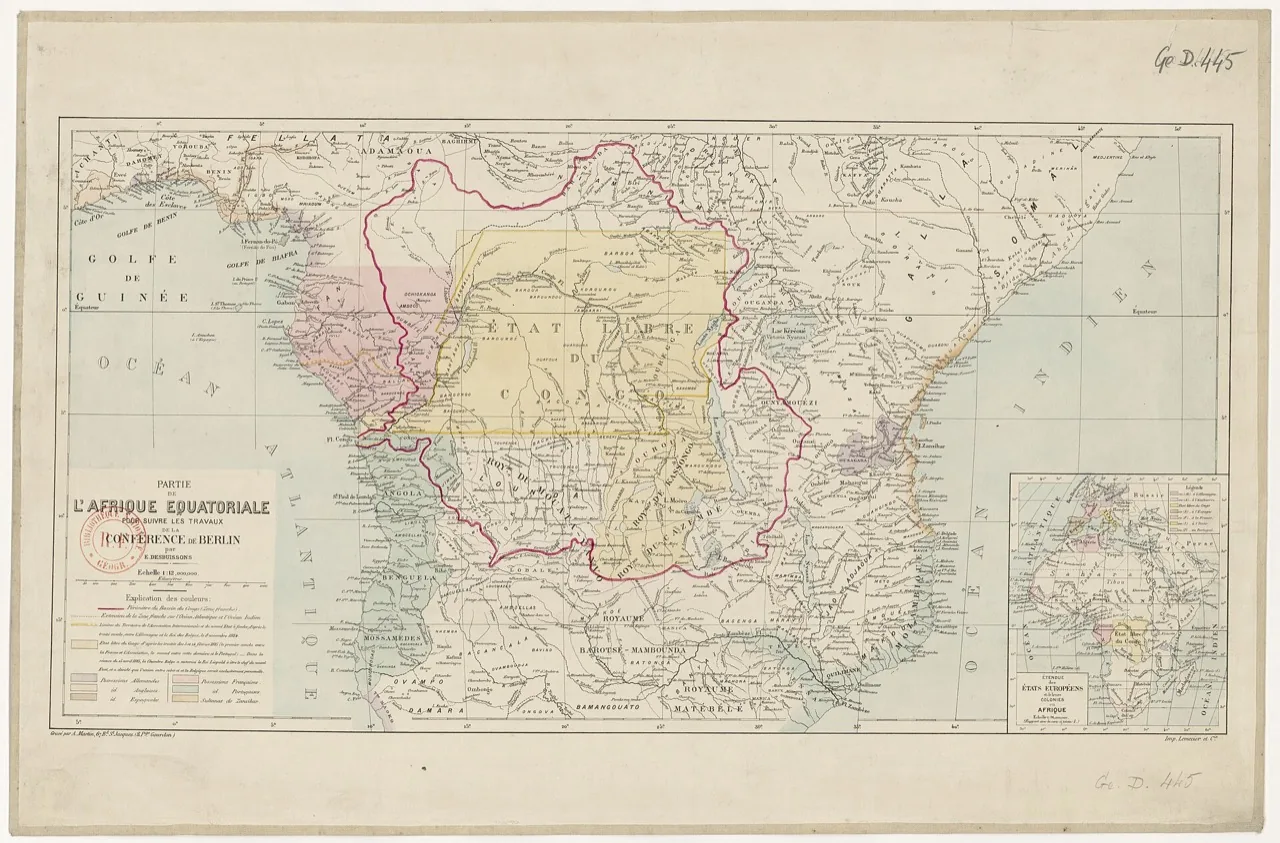
A sphere of influence is an area where a major power expects to have the final say, without formally governing the territory. Countries inside that area keep their own governments, flags, and the right to represent themselves internationally. In practice, though, they lose the freedom to pick their own alliances, allow foreign military bases, or sometimes even set their own trade terms. The concept is older than the phrase. The phrase itself entered international law in 1885, just after the Berlin Conference of 1884-1885, where European governments laid down rules for taking territory in Africa. From that point forward, disputes about where one country's sphere stops and another's starts have sat at the center of the world's most serious conflicts, from the partition of Africa to the Cold War to the war in Ukraine.
How European powers used spheres of influence
At the Berlin Conference, fourteen governments, nearly all of them European, agreed that any of them could claim new territory on the African coast by sending notice to the others and demonstrating effective control on the ground. The conference's General Act was signed in February 1885, and an Anglo-German agreement later that year was the first international document to use the phrase in treaty language. The borders drawn for Africa were negotiated entirely among Europeans. African peoples learned what had been decided only later, if they learned at all.
The same pattern appeared in Asia. In 1907, the British and Russian empires ended decades of rivalry known as the Great Game by signing the Anglo-Russian Convention. Under the convention, Russia claimed the northern provinces of Persia, Britain claimed the southeast around Kerman and Baluchistan, and a neutral area separated the two. No one asked the Persian government. It found out about the arrangement after the two powers had already signed.
The most striking example came during the Second World War. In October 1944, British Prime Minister Winston Churchill met Soviet leader Joseph Stalin in Moscow to discuss postwar Europe. Churchill jotted a split on a scrap of paper: Romania, 90 percent to the Soviet Union; Greece, 90 percent to Britain; Yugoslavia and Hungary, 50-50. Stalin ticked the paper to signal his agreement. Churchill proposed they destroy it. Stalin insisted they save it. Churchill later called it a "naughty document." The exchange became known as the percentages agreement. When Europe divided into two blocs after the war, the borders fell roughly along the lines Churchill and Stalin had drawn that evening. The Soviet Union held Eastern Europe through the Warsaw Pact, while Western Europe aligned with the United States through NATO.
In 1968, the Soviet Union made its sphere explicit. After Czechoslovakia's leader Alexander Dubček began liberalizing the country, the Soviet Union led an invasion by half a million troops and later removed him. Soviet leader Leonid Brezhnev then declared what became known as the Brezhnev Doctrine: the Soviet Union reserved the right to send troops into any country in the communist bloc that attempted to break away. The doctrine held until 1989, when the Soviet Union dropped it and Eastern Europe broke free.
The Monroe Doctrine and the American sphere of influence
The United States built its own sphere of influence starting in 1823, when President James Monroe issued the Monroe Doctrine, telling European powers to stay away from the Western Hemisphere. For decades the doctrine carried little practical weight, because the United States lacked the military to back it up.
That changed in 1904, when President Theodore Roosevelt added the Roosevelt Corollary. It asserted the right of the United States to step into the politics of countries in the Caribbean and Central America when it decided that conditions required American action. In 1905, the Dominican Republic could not pay its European creditors. Roosevelt placed the country's customs houses under American control, the first direct application of the corollary. Over the following decades, the United States sent troops to Cuba, Nicaragua, Haiti, and the Dominican Republic. The Caribbean became, in practice, an American sphere of influence, and it has stayed that way for more than a century.
Do spheres of influence still exist?
Russia still treats the former Soviet republics as its sphere of influence. Russian officials use the term "near abroad" to describe them, a phrase that came into wide use in the early 1990s. The fourteen countries it covers do not use the term themselves. In December 2021, Moscow released two draft treaties. They demanded that NATO stop accepting new members and remove its forces from the alliance's newer eastern European members. NATO refused. In February 2022, Russia invaded Ukraine. The war is a fight about whether Russia has the right to dictate its neighbors' alliances.
China makes a parallel claim in the western Pacific. Its position on the South China Sea and Taiwan treats the waters inside the first island chain, from Japan through Taiwan to the Philippines, as Chinese space where American warships and alliances are unwelcome. As of 2026, China deploys dozens of warships and coast guard vessels in the South China Sea to enforce that claim.
The United States has maintained its own sphere of influence in the Caribbean for more than a century. It rejects the same idea when China applies it in its region.
The countries inside these claimed spheres see things differently. Ukraine, Poland, the Philippines, and Vietnam have all been the subject of plans drawn up on their behalf, and every one of them has objected. A sphere of influence is often an agreement between large countries about the fate of smaller ones, and the smaller ones are rarely consulted.