
Chokepoint · Denmark and Sweden
Danish straits
OpenUpdated October 1, 2026
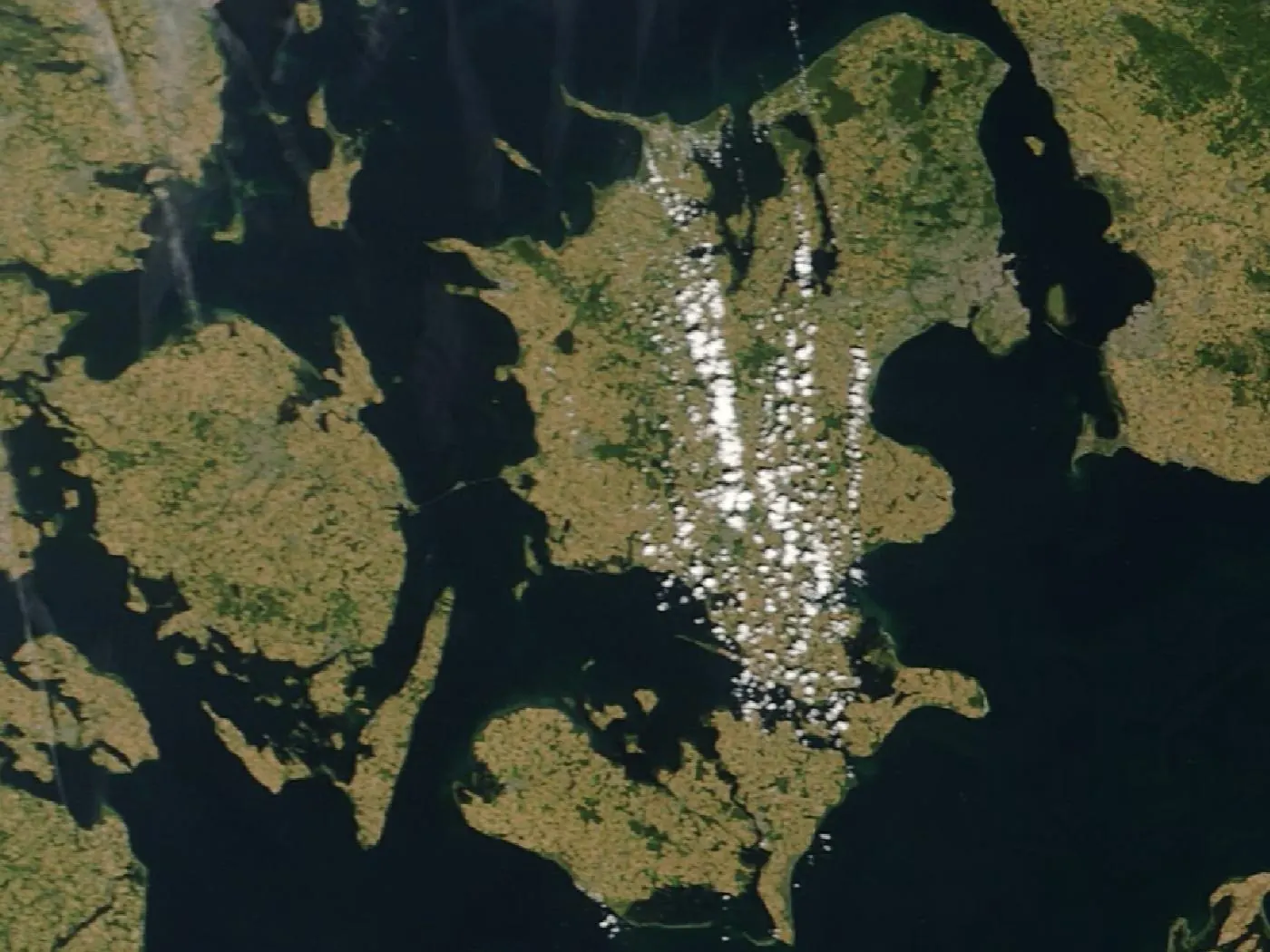
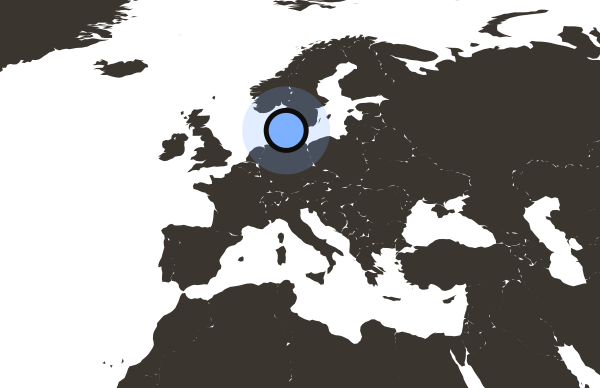
The Danish straits are three channels between Denmark's islands and Sweden that connect the Baltic Sea to the Kattegat and the North Sea. The Øresund, the Great Belt and the Little Belt are the Baltic's only route to the open ocean. The largest tankers use the Great Belt, where the deepest passage is about 17 meters deep.
- Main channels
- 3
- the Øresund, the Great Belt and the Little Belt
- Ships a year, Great Belt
- About 25,000
- under the Great Belt Bridge
- Oil a day, Apr–Jun 2026
- 4.7 million
- barrels, 5.0 million in 2023
- Sanctioned tanker voyages
- 292
- through Danish waters in 2025
- Shores
 Denmark
 Sweden
Where are the Danish straits?
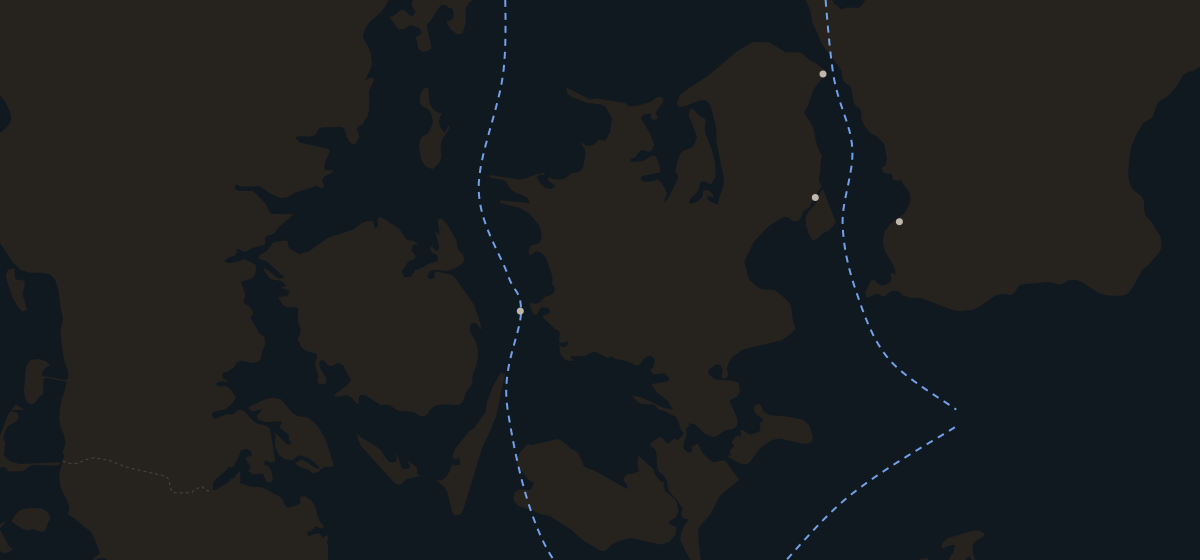
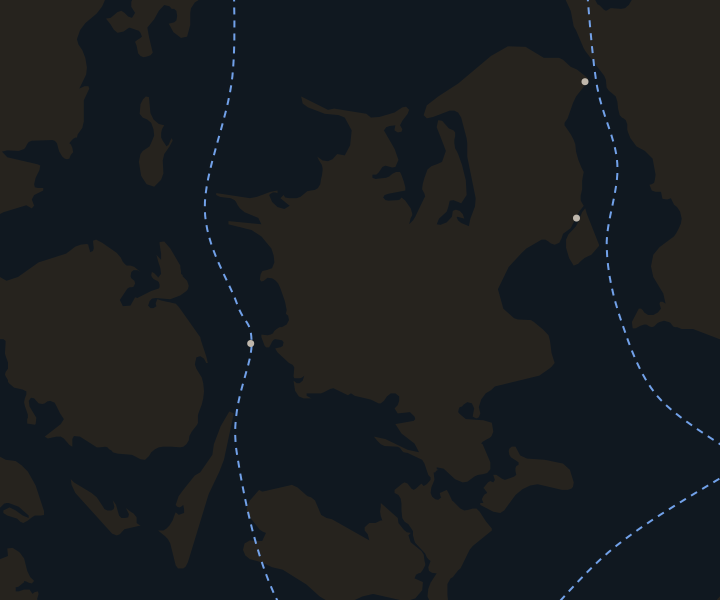
The Great Belt runs between the islands of Funen and Zealand. It is 16 to 32 km wide. The deepest route through the straits, called Route T, passes through the Great Belt at about 17 meters deep. The largest tankers use it. Ships pass under the East Bridge, which has 65 meters of clearance.
The Øresund, also called the Sound, runs between Zealand and Sweden. It is only about 4 km wide between Helsingør and Helsingborg in Sweden. Helsingør is home to Kronborg Castle. A shallow stretch called the Drogden channel is only 8 meters deep, so deep-draft tankers cannot use the Øresund.
The Little Belt runs between Funen and the Jutland peninsula. It narrows to about 1 km, and few ships pass through it.
 ZEALAND
FUNEN
JUTLAND
SWEDEN
GERMANY
Kattegat
Baltic Sea
Great Belt
Øresund
Little Belt
Copenhagen
Helsingør
Malmö
Great Belt Bridge
ZEALAND
FUNEN
JUTLAND
SWEDEN
GERMANY
Kattegat
Baltic Sea
Great Belt
Øresund
Little Belt
Copenhagen
Helsingør
Malmö
Great Belt Bridge
 ZEALAND
FUNEN
SWEDEN
Kattegat
Baltic Sea
Great Belt
Øresund
Copenhagen
Helsingør
Great Belt Bridge
ZEALAND
FUNEN
SWEDEN
Kattegat
Baltic Sea
Great Belt
Øresund
Copenhagen
Helsingør
Great Belt Bridge
How much oil goes through the Danish straits?
The US Energy Information Administration estimates that 5.0 million barrels a day of crude oil and oil products passed through the Danish straits in 2023. In the first half of 2025 it was 4.9 million, about 6% of all oil carried by sea. In April to June 2026 it was 4.7 million.
Russia is the largest exporter through the straits. Russia's Baltic ports of Primorsk and Ust-Luga shipped about 263 million barrels of crude in the first half of 2025. That was more than 30% of Russia's crude exports. Before 2022 much of this oil went to Europe. After the EU banned Russian crude in December 2022 and Russian fuels in February 2023, the tankers turned to China, India and Turkey.
Oil through each chokepoint
Early 2025Apr–Jun 2026What is Russia's shadow fleet doing in the straits?
Russia's "shadow fleet" is old tankers with unclear owners and often weak or missing insurance. Russia uses these ships to sell oil through the straits despite Western sanctions. According to the Brookings Institution, more than 60% of Russia's Baltic crude exports moved on shadow-fleet tankers in 2025. The Danish Maritime Authority counted 292 voyages by EU-sanctioned tankers through Danish waters in 2025, almost one a day.
Russian warships have escorted some of these tankers. In June 2025 the Russian corvette Boikiy escorted two sanctioned tankers into the Kattegat. On September 14, 2026, the Russian corvette Soobrazitelny fired two flares in the straits. One passed 10 to 15 meters from a Danish military helicopter. Denmark summoned Russia's ambassador, and Denmark's foreign minister, Lars Løkke Rasmussen, called the incident unacceptable.
What Denmark and Sweden have done
- February 2025Denmark starts inspecting tankers anchored off Skagen. It checked 79 and detained 4 in 2025.
- October 2025Denmark puts sensors on the Great Belt Bridge to measure the sulphur in ships' exhaust.
- February 2026Denmark detains a container ship that had flown false flags.
- March to May 2026Sweden's coast guard boards five ships, several flying false flags.
Can Denmark close the Danish straits?
No. Under the Copenhagen Convention of 1857, Denmark ended the tolls it had charged ships for centuries. Denmark agreed that no ship passing through the Sound and the Belts may be seized or stopped. The UN Convention on the Law of the Sea keeps such long-standing treaties in force. Denmark confirmed this when it joined the convention in 2004.
Denmark cannot stop a properly flagged ship just for carrying Russian oil. Denmark can act when there are clear signs of pollution or when a tanker has no valid oil-pollution insurance. Denmark can also stop a ship with no valid flag or one that is transferring cargo instead of passing through. That is why Denmark's checks happen at an anchorage off Skagen, not on ships under way.
When Denmark can act against a ship
- A ship that is only passing throughCannot be stopped, under the 1857 treaty
- Clear signs of pollutionCan act
- No valid oil-pollution insuranceCan act
- Anchored, or moving cargo to another shipCan act, as at Skagen
- No valid flagCan act
The straits over the years
- 1429King Eric of Pomerania starts charging ships a toll, the Sound Dues, at a fortress in Helsingør armed with cannons. Kronborg Castle, Hamlet's Elsinore, later stood on the site.
- 1801Britain attacks the Danish fleet at the Battle of Copenhagen on April 2. By tradition, Nelson put his telescope to his blind eye to ignore an order to retreat.
- 1857Denmark ends the Sound Dues for a one-off payment of about 30 million rigsdaler from the European powers. The United States paid $393,011 separately.
- 1940Germany invades Denmark on April 9, and Denmark surrenders within about two hours.
- 1998–2000The Great Belt Bridge (1998) and the Øresund Bridge to Sweden (2000) open over the straits.
- Sep 2026A Russian warship in the straits fires flares that pass close to a Danish military helicopter.
Other chokepoints
All 10 chokepoints →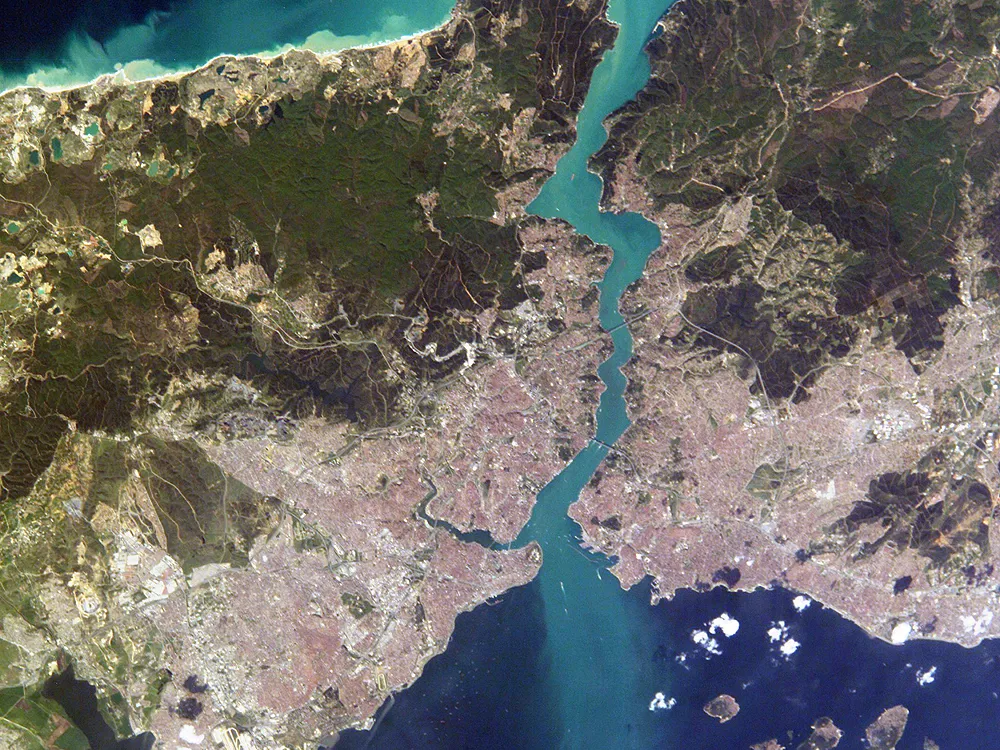 Disrupted
Bosphorus
Russian and Ukrainian strikes on Black Sea shipping. 49 ships a day, against 97 in 2023.
Disrupted
Bosphorus
Russian and Ukrainian strikes on Black Sea shipping. 49 ships a day, against 97 in 2023.
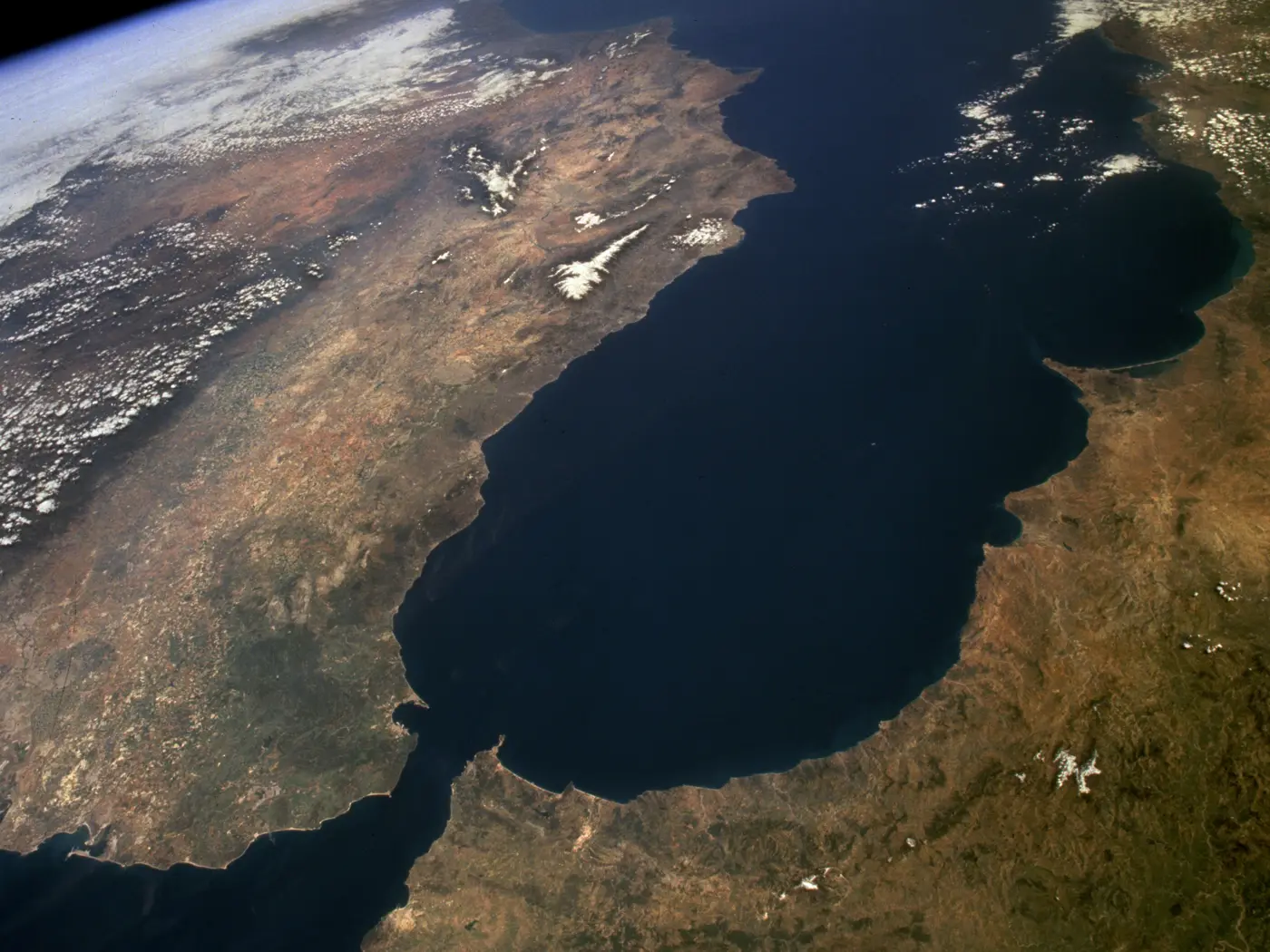 Open
Strait of Gibraltar
Traffic close to normal. 132 ships a day, against 146 in 2023.
Open
Strait of Gibraltar
Traffic close to normal. 132 ships a day, against 146 in 2023.
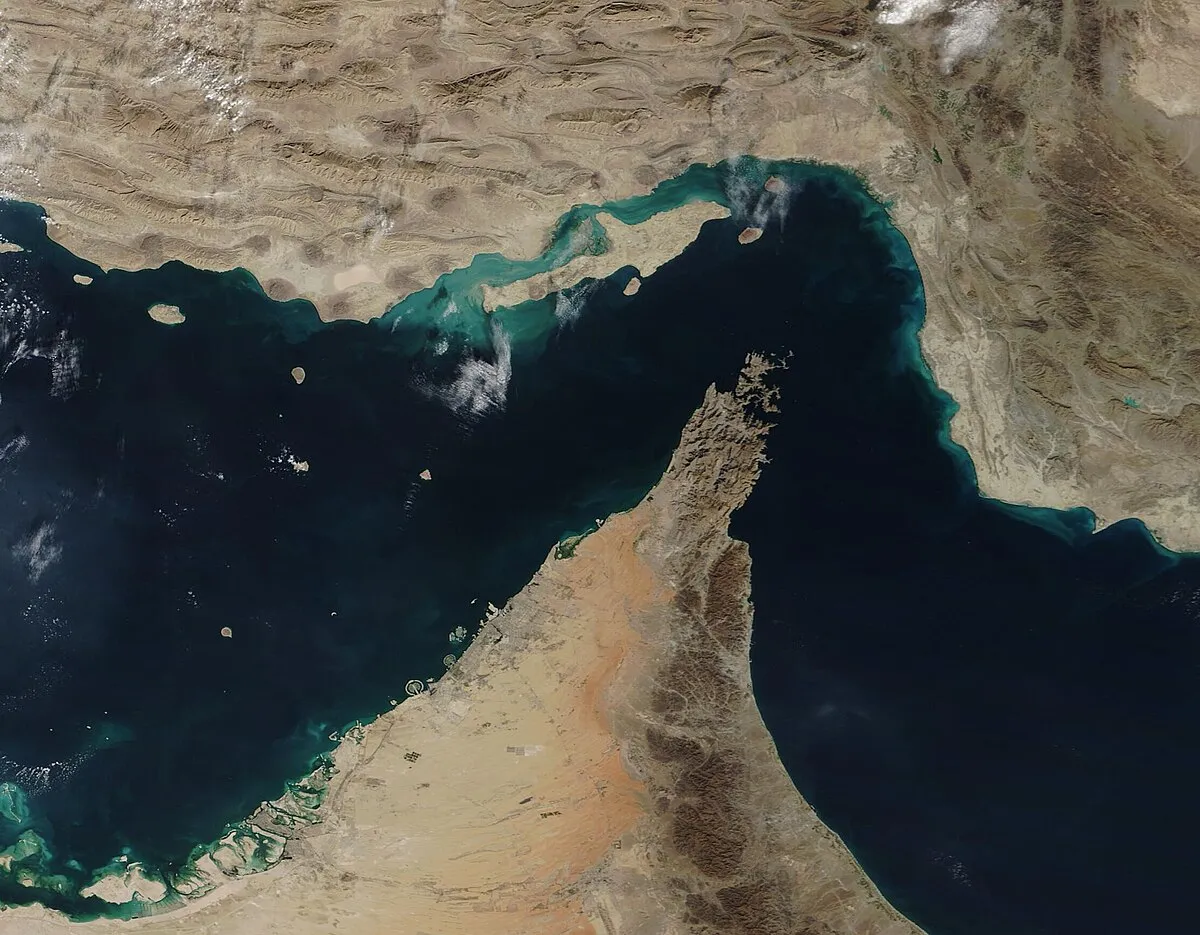 Disrupted
Strait of Hormuz
Tankers cross under US protection; Iran still attacks ships. 4 ships a day, against 92 in 2023.
Disrupted
Strait of Hormuz
Tankers cross under US protection; Iran still attacks ships. 4 ships a day, against 92 in 2023.