
Country profile · Eastern Europe
 Belarus
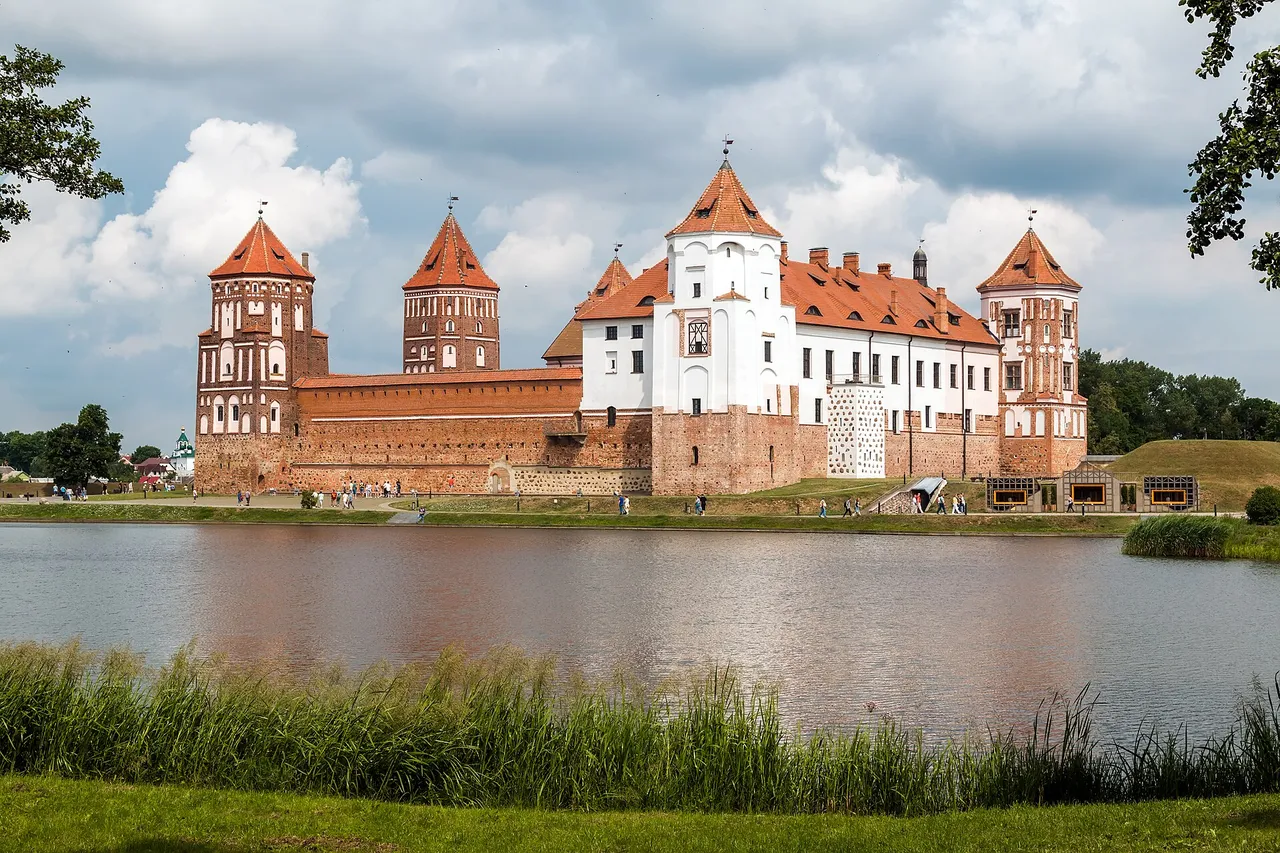
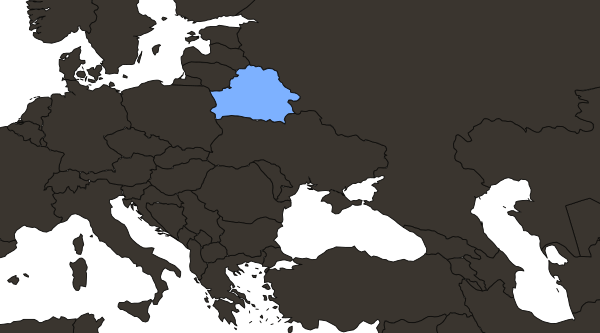
Belarus has about 9 million people (UN, 2025). President Alexander Lukashenko has ruled since 1994 and won a seventh term in January 2025, in an election the EU called a sham. Russia is Belarus's only treaty ally and buys about two-thirds of its exports. Since 2025 Belarus has freed hundreds of political prisoners in deals with the United States.
Where Belarus ranks
All rankings →Which alliances is Belarus in?
All alliances →Who runs Belarus?
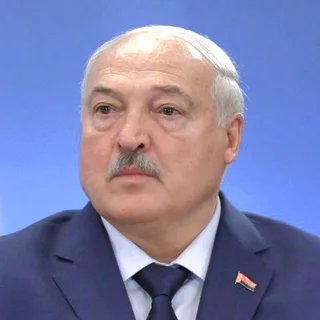
President Alexander Lukashenko was born on August 30, 1954, in Kopys, a small town in the Vitebsk region. He studied history, served as a political officer in the Soviet border troops and ran a state farm from 1987. He won the presidential runoff of July 10, 1994 with about 80%. It was the only presidential election in Belarus that outside observers count as free. A 2004 referendum removed term limits. After the August 2020 election, which officially gave him 80.1%, the largest protests in the country's history broke out, and more than 33,000 people were detained that year. On January 26, 2025 he won a seventh term with 86.82% against four hand-picked rivals. The EU called it a sham. Parliament has no opposition members (chart). Since April 2024 Lukashenko has also chaired the All-Belarusian People's Assembly, a body that can remove a president. In 2025 he told TIME magazine that he no longer plans to run again. The opposition leader, Sviatlana Tsikhanouskaya, lives in exile in Vilnius and Warsaw.
- Belaya Rus, the pro-Lukashenko party 51
- Independents, all pro-government 40
- Three other loyal parties 19
Photo (December 2024): Kremlin.ru, Wikimedia Commons, CC BY 4.0 (cropped)
Who are Belarus's allies and rivals?
Russia is Belarus's only treaty ally. A security treaty in force since March 2025 lets Russia use nuclear weapons to defend Belarus, even against a conventional attack that threatens its sovereignty. In February 2022 Russian troops attacked toward Kyiv from Belarus, and Russia fired missiles from Belarusian soil. The Belarusian army has never entered Ukraine. China declared an "all-weather" strategic partnership with Belarus in 2022, and Chinese troops held a drill near Brest, close to the Polish border, in July 2024. In March 2026 President Alexander Lukashenko became the first Belarusian president to visit North Korea, and he signed a friendship treaty there. Belarus's three NATO neighbors treat it as a threat. Poland has built a 5.5-meter steel fence along 186 km of the border. Since October 2025, smuggling balloons from Belarus have closed Vilnius airport in Lithuania more than 20 times. In October 2026 armed men pushed migrants across the border into Latvia. Even so, the Polish and Belarusian foreign ministers met in September 2026, for the first time in about a decade.
Allies and partners
 RussiaTreaty ally; buys about two-thirds of exports
 ChinaStrategic partner since 2022; second-biggest trade partner
 KazakhstanFellow member of Russia's military and trade blocs
 North KoreaFriendship treaty signed in Pyongyang, March 2026


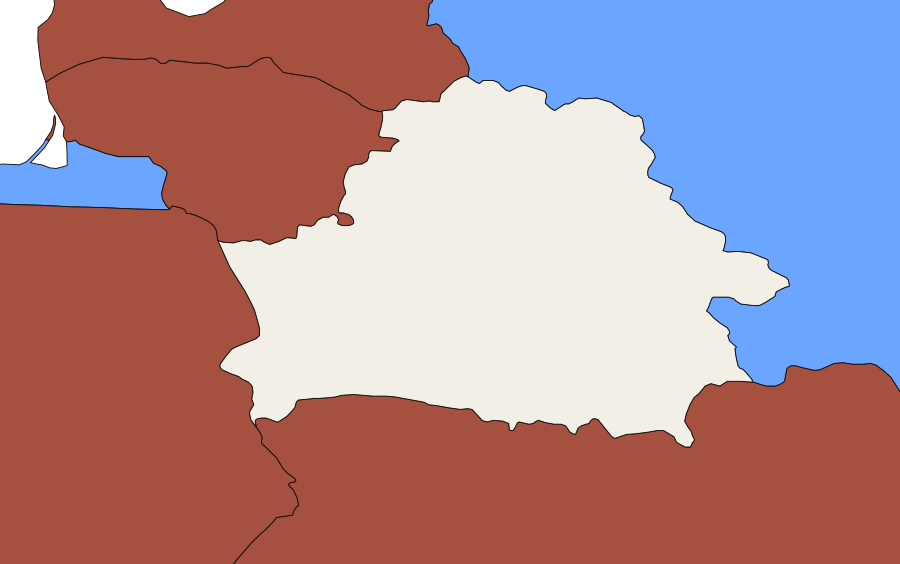
- Asipovichy Army depot that the Federation of American Scientists calls the most likely site for Russian nuclear warheads. Not confirmed.
- Krichev Former air base where Russia put its Oreshnik missiles in December 2025. About 5 km from the Russian border.
- Astravets Russian-built nuclear power plant about 50 km from Vilnius. It produced about 40% of Belarus's electricity in 2025.
- Suwalki Gap Strip of Poland and Lithuania, about 65 km wide, between Belarus and Kaliningrad. NATO's only land link to the Baltic states.
- Belarus
- Partner
- Rival
Who does Belarus trade with?
Belarus exported $41.4 billion of goods in 2025 and imported about $48.5 billion (Belstat). It has not published its trade by country since 2022, so the chart uses estimates. President Alexander Lukashenko says about 65% of exports go to Russia, up from 45% in 2019. The EU took more than a quarter of Belarus's exports in 2019 and about 1% in 2025. China sold Belarus $7.2 billion of goods in 2025 and bought $1.7 billion (Chinese customs). Belarus refines Russian crude oil at two refineries and sells the fuel. In the first seven months of 2026, after Ukrainian drones hit Russian refineries, its gasoline sales to Russia rose about 25-fold. Belarus mined about 12% of the world's potash, a fertilizer, in 2025 (US Geological Survey). Lithuania stopped carrying it to the port of Klaipeda in February 2022, so Belarus now ships it through Russian ports near St. Petersburg. A Russian loan of $10 billion paid for the Astravets nuclear plant. The economy grew 1.3% in 2025, and the IMF expects 1.9% in 2026.
 Azerbaijan
Goods, 2025, estimated. Belarus stopped publishing trade by country in 2022. Totals: Belstat. Russia: official statements. Others: partners' customs data (UN Comtrade, China customs).
Are there Russian nuclear weapons in Belarus?
Russia and Belarus say so, but no independent source has confirmed it. A referendum in February 2022 removed Belarus's non-nuclear status from its constitution. On March 25, 2023 President Vladimir Putin announced that Russia would station tactical nuclear weapons in Belarus. In June 2023 he said the first warheads had arrived, and President Alexander Lukashenko has said "several dozen" are there. Researchers at the Federation of American Scientists think a depot near Asipovichy is the most likely storage site, but they cannot confirm that warheads are there. Russia keeps control of the warheads. Belarus has adapted its Su-25 jets to carry them. In December 2025 Lukashenko said that Russia's Oreshnik missile, with a range of about 5,000 km, had arrived and was going on combat duty. Researchers located it at a former air base near Krichev, close to the Russian border. A Belarusian officer said the first battalion has three launchers. Putin said Russia controls the Oreshnik but that Belarus can choose its targets.
Why is the US easing sanctions on Belarus?
To get political prisoners out. Since June 2025, five releases brokered by US envoys have freed 464 people. In June 2025, 14 were freed, including Siarhei Tsikhanouski, the husband of the opposition leader. In September 2025, 52 were freed, and the US eased its sanctions on the national airline, Belavia. In December 2025, 123 were freed, including Ales Bialiatski, who won the Nobel Peace Prize in 2022. The US then allowed dealings with the potash maker Belaruskali. In March 2026, 250 were freed, and the US lifted its sanctions on Belaruskali and its ban on Belarusian government debt. In September 2026, 25 more were freed. Most freed prisoners were forced to leave the country. Viasna, a banned Belarusian human rights group, counted 1,131 political prisoners at the end of 2025 and 876 at the end of September 2026. At least 509 people were jailed on political charges in 2025. The EU has kept its sanctions, and Lithuania still refuses to let Belarusian potash through Klaipeda.